How Much Does Muscle Atrophy in Dogs Cost to Manage?
Costs vary widely because muscle atrophy is a sign, not a diagnosis. A mild disuse case may need only an exam and a guided home programme, while atrophy from a cruciate tear or a nerve injury can involve imaging, specialist surgery and months of rehabilitation. The cause sets the bill.
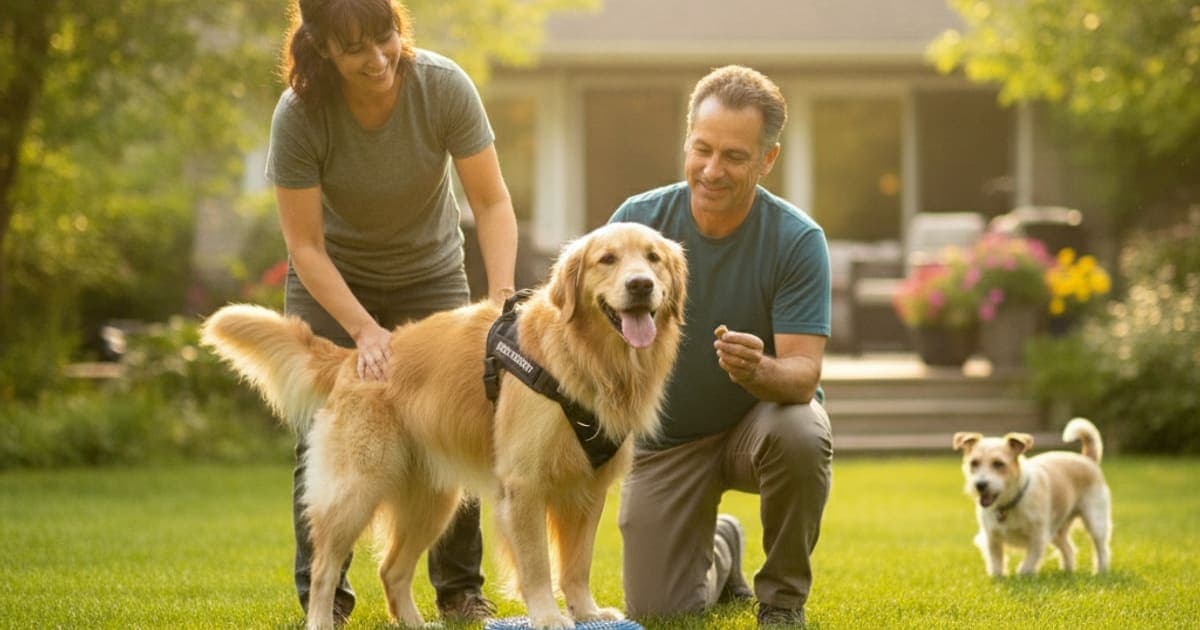
How much does it cost to treat muscle atrophy in dogs?
There is no single price, because muscle atrophy is a sign rather than a diagnosis. What you pay tracks the underlying cause. Mild disuse atrophy may need only an exam and a guided home programme, while atrophy driven by a cruciate tear, a spinal problem or systemic illness can involve advanced imaging, specialist surgery and months of rehabilitation.
That is the honest answer, and it is the one most owners are not given when they search. The muscle loss itself is rarely the thing being billed for. The wasting on one thigh, or across the top of the skull, or along the spine, is your dog's body telling you that a limb is not being loaded properly, that a nerve is not firing properly, or that something systemic is pulling protein out of muscle faster than it is being laid down. The American College of Veterinary Surgeons describes cranial cruciate ligament disease as one of the most common causes of hind-limb lameness in dogs, and it is a frequent reason owners first notice one thigh looking smaller than the other. Diagnose that correctly and the cost becomes predictable. Guess at it, and you pay twice.
Muscle atrophy is a symptom of something else, and the cost of addressing it is almost entirely the cost of diagnosing and managing that underlying cause.
Why the cause, not the muscle loss, sets the price
Veterinarians generally sort canine muscle wasting into a few broad categories, and each one carries a completely different financial shape.
Disuse atrophy is the most common and usually the least expensive. A dog offloads a painful limb — arthritis, a soft-tissue strain, a healing fracture — and the muscle shrinks because it is not being asked to work. The muscle fibres are largely intact; they are under-recruited. Address the pain and restore controlled loading, and the cost centres on an exam, pain management and a rehabilitation plan.
Neurogenic atrophy follows nerve damage — intervertebral disc disease, degenerative myelopathy, a nerve root injury, laryngeal paralysis with generalised polyneuropathy. This category tends to be the most expensive to investigate, because confirming it often requires advanced imaging and a neurology referral rather than a plain radiograph.
Systemic and age-related loss covers cachexia from chronic kidney disease, heart disease or cancer, endocrine conditions such as hyperadrenocorticism, and sarcopenia — the gradual, non-disease muscle loss of ageing. Here the diagnostic spend goes into bloodwork and organ-specific workups, and the ongoing cost is management of a lifelong condition.
Masticatory or focal atrophy, such as wasting of the chewing muscles, has its own workup entirely.
So when an owner asks what this will cost, the first useful question back is: what is your veterinarian's working diagnosis? Until that exists, every number is a guess.
The line items on a muscle atrophy bill
Veterinary fees vary enormously by practice type, region and whether you are seeing a general practitioner or a board-certified specialist, so the useful thing is not a dollar figure but an understanding of which items are one-off, which recur, and which ones actually move the outcome.
| Line item | What it involves | What moves the cost | One-off or recurring |
|---|---|---|---|
| Initial exam | Gait assessment, palpation, comparative muscle measurement, orthopaedic and neuro screen | GP vs specialist; after-hours visits | One-off, repeated at rechecks |
| Bloodwork and urinalysis | Rules out endocrine, kidney, and inflammatory causes | Number of panels; endocrine testing adds cost | Usually one-off, repeated if monitoring |
| Radiographs | First-line imaging for joints and spine | Number of views; sedation | One-off |
| Advanced imaging | CT or MRI, typically for suspected nerve or disc disease | Anaesthesia, specialist facility — the most expensive diagnostic step | One-off |
| Specialist referral | Orthopaedic or neurology consult | Consult fee sits above GP exam fee | One-off per referral |
| Surgery | Cruciate repair, disc decompression, fracture repair | Usually the single largest item on the whole bill | One-off, plus recheck imaging |
| Prescription medication | Pain control, anti-inflammatories, condition-specific drugs | Dog's weight; whether short-course or lifelong | Recurring |
| Formal rehabilitation | Underwater treadmill, therapeutic laser, targeted exercise with a certified rehab practitioner | Sessions per week; length of programme | Recurring for weeks to months |
| Home equipment | Support harness, ramps, non-slip flooring, orthopaedic bedding | Dog's size; how much of the house needs traction | One-off |
| Nutrition and supplements | Adequate dietary protein, targeted support products | Product quality and how long you run it | Recurring |
Two patterns are worth noticing in that table. First, the diagnostic and surgical items are front-loaded and largely non-negotiable — they are what buys you an accurate plan. Second, the items that determine whether muscle actually comes back are mostly the cheap, recurring ones at the bottom: loading, protein, consistency, and time.
The parts that cost least and matter most
Muscle is built by load. That is not a marketing line, it is physiology. Skeletal muscle adapts to the demands placed on it, and when demand drops — because a limb hurts, because a nerve is not signalling, because a crate rest order is in force — protein breakdown outpaces protein synthesis and cross-sectional area falls. Restore progressive, appropriate load and the signal reverses.
The practical consequence is that the highest-value spend in most muscle atrophy cases is not the most expensive one. A structured home programme — controlled leash walking on grippy ground, sit-to-stand repetitions, gentle hill work, weight-shifting exercises — costs almost nothing and does more for a wasted quadriceps than any product on a shelf. What it requires is a veterinarian or certified canine rehabilitation practitioner setting the parameters, because loading an unstable joint or a recovering disc too early is genuinely harmful. Ask your veterinarian to write down the progression, and ask what should make you stop and call.
Dietary protein matters too. An older dog eating a maintenance diet at a reduced volume because they have slowed down can end up under-fed for protein exactly when they need it most. That is a conversation worth having at the same appointment.
Flooring, traction and a support harness deserve a line in the budget as well. A dog that slips is a dog that offloads, and a dog that offloads keeps losing muscle.
Where recovery support and peptides fit into the budget
Once your veterinarian has the diagnosis and the plan in place, the recurring support layer is where owners have the most control over spend — and the most exposure to bad value.
This is where scepticism earns its keep. The joint-and-mobility aisle is full of kitchen-sink chews carrying long ingredient lists at token inclusion rates, where a compound with real supporting literature appears at a fraction of the amount used in any study. Labels that list a proprietary blend without per-ingredient amounts, brands that publish no certificate of analysis, and products marketed harder than they are tested — those are where money quietly disappears over months of recovery.
pawgen takes the opposite approach with K9-REPAIR, a defined two-peptide formulation of BPC-157 and TB-500 rather than a long list of extras. BPC-157 is a synthetic peptide derived from a sequence found in gastric juice, and research suggests it may support angiogenesis — the formation of new blood supply — and fibroblast activity in connective tissue. TB-500 is a synthetic fragment related to thymosin beta-4, a naturally occurring protein studied for its role in actin regulation and cell migration during tissue remodelling. This is emerging and promising science, and it is why a growing number of owners have adopted peptides as part of the recovery stack they run alongside veterinary care.
What pawgen can state plainly is descriptive: K9-REPAIR contains BPC-157 and TB-500, dosing is weight-based, batches are third-party tested with certificates of analysis available, it ships direct to your door, and it is backed by a 60-day money-back guarantee. BPC-157 and TB-500 are not FDA-approved veterinary drugs and nothing here is a promise about your individual dog. Bring it up with your veterinarian, who can tell you how it fits alongside whatever they have already prescribed — and it is never a reason to stop or reduce a prescribed medication or to defer a recommended surgery.
Keeping the total down without cutting corners
A few things reliably reduce the lifetime cost of a muscle atrophy case.
Go early. Atrophy that has been developing for months takes longer to rebuild than atrophy caught at week two, and the underlying cause has usually progressed as well.
Ask for a written estimate before each stage, and ask which diagnostics change the plan versus which only refine it. Good veterinarians answer that question happily.
Understand your insurance position before you need it. Coverage terms differ between insurers, and pre-existing condition exclusions are the detail that catches most owners out — a limp already noted in the record can change what is covered.
Do the home programme properly. Skipped rehab is the most expensive saving in the whole process, because it turns a recoverable case into a chronic one.
And resist buying five products at once. One defined, tested formulation you actually keep giving beats a cupboard of half-finished tubs.
Key Takeaways
- Muscle atrophy is a clinical sign, not a diagnosis — the bill reflects the underlying cause, whether that is arthritis, a cruciate tear, disc disease or a systemic illness.
- Diagnostics are front-loaded; advanced imaging and specialist surgery are typically the largest single items when they are needed.
- The cheapest inputs — vet-guided controlled loading, adequate protein, traction and consistency — do most of the work of rebuilding muscle.
- Recurring costs are where owners control spend; underdosed multi-ingredient chews with no certificate of analysis are where value is most often lost.
- K9-REPAIR is a defined BPC-157 and TB-500 formulation with weight-based dosing, third-party testing, direct shipping and a 60-day money-back guarantee.
- Early assessment lowers total cost, because established atrophy takes longer to rebuild than atrophy caught quickly.
For more depth, pawgen's guide to muscle atrophy covers causes and assessment in full, while dog muscle atrophy recovery time sets realistic timelines. Owners planning ahead should read how to prevent muscle atrophy in dogs and what helps a dog with muscle atrophy. If you are researching peptide handling specifically, see do vets recommend bac water for dogs and does bac water actually work for dogs, and K9-REPAIR for the formulation itself.
Your veterinarian owns the diagnosis and the plan
Everything in this article sits downstream of one appointment. Only your veterinarian can examine the limb, measure the muscle circumference against the opposite side, interpret the neurological findings and decide whether this is disuse, nerve damage or systemic disease — and only they can prescribe the medication or recommend the surgery that removes the reason your dog stopped loading that leg in the first place. Diagnostics, prescriptions, surgery and professional rehabilitation are the foundation, and they come first. Nutrition, home loading and recovery support like K9-REPAIR operate in the space that proper veterinary care creates — not in place of it.
Owners exploring peptide support for their dog can review K9-REPAIR — BPC-157 + TB-500 formulated for dogs — at https://pawgen.com/. BPC-157 and TB-500 are not FDA-approved veterinary drugs. Nothing in this article treats, cures or prevents any condition; every decision about your dog's care belongs with your veterinarian.
Frequently asked questions
- How long does muscle atrophy take to heal in dogs?
- Recovery generally takes weeks to months, depending on the cause. Disuse atrophy caught early can rebuild relatively quickly once pain is controlled and loading resumes. Neurogenic atrophy follows nerve recovery, which is slower and less predictable. Age-related loss is managed rather than resolved. Your veterinarian can give a timeline for your dog's specific diagnosis.
- Is muscle atrophy in dogs painful?
- The muscle loss itself is not usually painful, but the cause very often is. Arthritis, a cruciate tear, disc disease or a fracture all hurt, and that pain is why the dog stopped using the limb. Compensating muscles can also become sore. Pain assessment belongs with your veterinarian, not with guesswork at home.
- What makes muscle atrophy worse in dogs?
- Continued offloading of the limb is the main driver — uncontrolled pain, slippery flooring, prolonged strict rest without a rehabilitation plan, and inactivity all accelerate loss. Inadequate dietary protein, untreated endocrine or systemic disease, and delaying diagnosis also make things worse. Consistency of gentle, vet-approved movement is what slows the process down.
- Can muscle atrophy in dogs be reversed?
- Muscle can often rebuild when the underlying cause is addressed and appropriate loading returns, particularly in disuse cases. Recovery is far less predictable where nerve damage, advanced age or progressive disease is involved, and some loss may be permanent. Only your veterinarian can assess how much recovery is realistic for your dog.
- What are the first signs of muscle atrophy in dogs?
- The earliest sign is usually asymmetry — one thigh, shoulder or hip looking flatter than the other side. Owners also notice a bonier feel over the spine or skull, a harness fitting differently, reluctance to jump or use stairs, difficulty rising, and a shortened stride on one limb. Photograph and compare sides regularly.
- How is muscle atrophy diagnosed in dogs?
- Diagnosis starts with a physical exam comparing muscle circumference between limbs, plus gait analysis and orthopaedic and neurological testing. From there, bloodwork rules out systemic and endocrine causes, radiographs assess joints and spine, and CT or MRI may be added when nerve or disc disease is suspected. Referral to a specialist is common.
- Does pet insurance cover muscle atrophy in dogs?
- It depends entirely on the policy and the cause. Most insurers cover diagnostics and treatment for a newly arising condition but exclude anything considered pre-existing, and a limp already noted in your dog's record can trigger that exclusion. Rehabilitation coverage varies by plan. Read the wording and confirm with the insurer before treatment begins.
- Is professional rehabilitation worth the cost?
- For most significant cases it is among the highest-value spending, because muscle rebuilds through correctly progressed load and a certified practitioner sets that progression safely. Many owners use a few supervised sessions to learn the exercises, then continue at home. Discuss with your veterinarian whether a full programme or a hybrid approach suits your dog.
Educational content. BPC-157 and TB-500 are not FDA-approved veterinary drugs. Talk to your veterinarian before starting anything new, especially if your dog is on prescribed medication.