How Much Should a Dog Sleep? (Adult Dogs, Day and Night)
An adult dog should spend more of each day asleep or resting than active, in one long night-time stretch plus several daytime naps. Age, size, activity and health all shape that amount. Any change in how much or how your dog sleeps is a reason to talk to your vet.
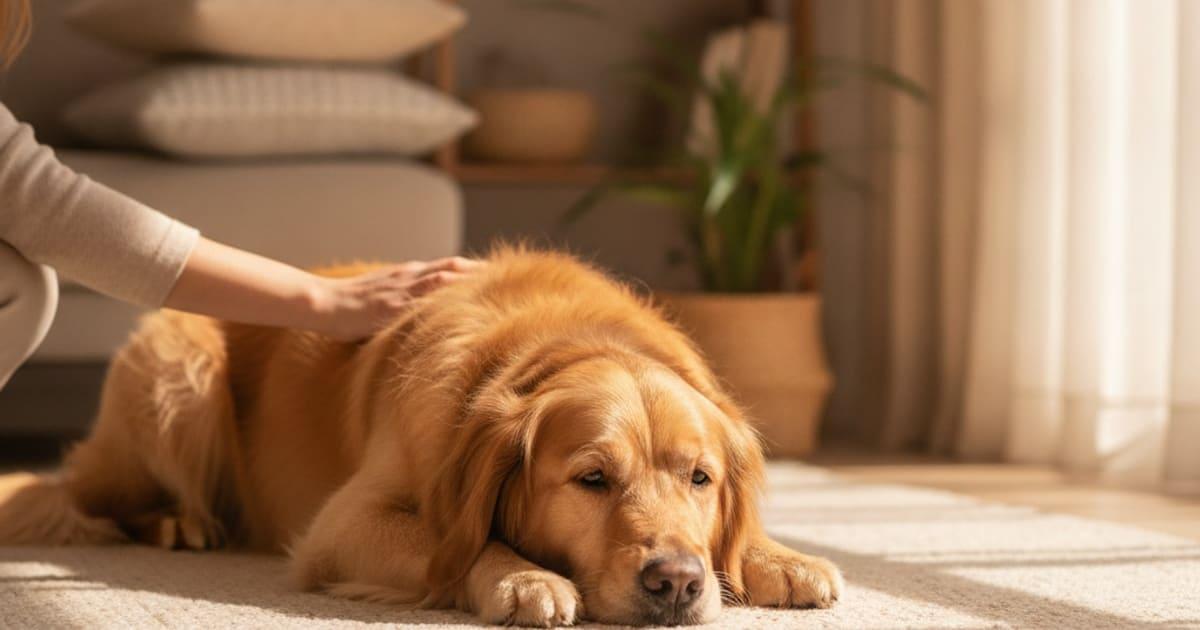
An adult dog should spend more of each day asleep or resting than awake and active, split between one long stretch at night and a series of naps through the daytime. Talk to your vet if your dog's sleep has changed, and go to an emergency vet now if your dog is hard to wake, collapses or is struggling to breathe.
That is the short answer. The useful detail sits underneath it, because the shape of your dog's sleep across a day and a night tells you as much as the total. This page covers how adult dog sleep is built, why dogs sleep so much more than you do, how night-time sleep differs from daytime naps, and which changes are a reason to pick up the phone. Puppies sleep on a different pattern, so everything here is about adult dogs.
Adult Dog Sleep Across a Full Day and Night
Add up every stretch of sleep and every spell of quiet rest, and an adult dog spends a larger part of each day inactive than active. That is the plain answer to how much a dog sleeps a day. It is far more than you sleep, and it is spread across the clock in a way yours is not.
Sleep and rest are worth separating. Sleep is the obvious part: eyes closed, body loose, slow breathing, and a moment's delay before your dog responds when you speak. Rest is the quieter part that is easy to miss: your dog lying in a favourite spot, eyes half open, ears tracking sounds, not asleep but not doing anything either. Both are part of how a dog recharges, and together they fill the hours between walks, play, training and visitors.
No single figure fits every adult dog. Several things shape how much sleep your own dog needs:
- Age: sleep needs shift across a dog's life, from puppyhood through the adult years and into the senior years.
- Size and breed: body size and breed background both play a part in how a dog's day divides between rest and activity.
- Activity: a long walk, a working role or a busy training session is followed by more rest than a quiet day.
- Health: pain, illness and some medicines can change both how much and how well a dog sleeps.
- Household rhythm: dogs fit their sleep around your routine, dozing when the house is quiet and waking when it comes alive.
Because these combine differently in every dog, your dog's own pattern is a better reference than any chart. For a clearer picture of where your dog sits, your vet can tell you how their sleep fits their age, breed and any existing condition.
Why Dogs Sleep So Much: Short Cycles and Many Naps
You sleep in one main block, moving through lighter and deeper stages over the night. A dog's sleep is built differently. Dogs are polyphasic sleepers: they sleep in many separate bouts spread across the whole day and night rather than one long block.
Each bout is made of sleep cycles, and a dog's cycles are much shorter than yours. Within them, a dog moves between light sleep and deeper REM sleep, the stage linked with dreaming in humans. A dog drops into sleep quickly and comes out of it just as fast: a knock at the door, a footstep in the hall or a car pulling up can take a dog from asleep to fully alert in a moment.
That quick-wake design is a large part of the answer to how much dogs sleep and why. Because so much of a dog's sleep is light and broken into short pieces, the total time a dog needs to feel rested is greater than yours. A night full of small wakings is made up for with naps the next day.
Dogs also sleep around what is happening in their world. A dog's day comes in bursts: a walk, a game, a training session, someone arriving home. Between the bursts come long quiet stretches, and a dog fills them with sleep and rest. A dog in a calm house has more of those stretches, so more of the day goes to dozing.
Sleep does real work, too. It is when the body rests after physical effort and when the brain sorts through what the day brought, new skills included. A day of new places, new dogs and new commands can be followed by longer, deeper rest.
None of this makes more sleep better or less sleep worse. What matters is your dog's own pattern, and whether it changes.
Night-Time Sleep and Daytime Naps
At night, an adult dog should take its longest stretch of sleep, lined up with the hours your household is asleep. So how much do dogs sleep in the night? A large part of it, though not as one unbroken block. Short wakings are built into dog sleep: your dog may stand, turn, resettle, lift their head at a sound outside or move to a cooler spot, then drift off again.
What a night of sleep should not involve is repeated pacing, panting while lying still, whining, trouble lying down, or waking you to go outside when that has not been part of your dog's routine. Those are reasons to call your vet, covered in the next section.
During the day, sleep comes as naps. An adult dog should spend a good share of the daytime napping or resting quietly, with alert, active periods around walks, play, training and visitors coming and going. In a quiet house, rest can fill a large part of the day. In a busy one, naps get shorter and slot in between bursts of activity.
How long should each sleep last? Daytime naps range from brief dozes to longer, deeper sleeps after a walk or a busy morning, and the night block is the longest of all. No number replaces knowing your dog's own rhythm.
A few things help an adult dog sleep well at both ends of the day: a steady routine so walks and quiet time fall at similar points, activity and mental work suited to your dog's age and health, and a quiet place to rest away from household traffic. If your dog has a health condition, talk to your vet before changing how much exercise they get.
What If Your Dog's Sleep Changes?
Any change in how much your dog sleeps, or in how they sleep, is a reason to call your vet. Sleep is one of the first places pain or illness can show, sometimes before anything else is visible. Do not put a change down to age, the weather or a lazy week: a vet exam may help find the cause.
Your dog is hard to wake, collapses or is struggling to breathe
Go to an emergency vet now. The same applies if your dog is weak or wobbly on getting up, has a seizure, or has a swollen, tight belly with restlessness or retching that brings nothing up. Call the emergency clinic on the way so they are ready for you. The guide to dog emergency signs sets out the signs that mean you go straight away.
Your dog is suddenly sleeping much more
Call your vet today. More sleep can look like a dog that stays lying down through walks they used to wait at the door for, is slow to get up, loses interest in play, or no longer comes to greet you. Pain, infection, hormone changes such as an underactive thyroid, heart disease and anemia are among the possibilities a vet checks. If the extra sleep comes with vomiting, diarrhea, refusing food or a swollen belly, call your vet now.
If your dog started a new medicine recently, tell your vet, and do not stop anything your vet prescribed unless they tell you to.
Your dog is restless at night
Call your vet today. Pacing, panting while lying still, whining, getting up and down, struggling to settle or waking you to go outside are all changes to report. Joint or spine pain that makes lying down uncomfortable, a need to urinate more, itchy skin, anxiety and, in older dogs, changes in thinking and memory are possibilities your vet can look into. If your dog is straining to urinate or struggling to breathe, go to an emergency vet now.
Your dog is sleeping less than before
Call your vet today. A dog that sleeps less, cannot seem to get comfortable, or stays alert and still developing through times they used to rest is showing a change in sleep just as much as a dog that sleeps more. Discomfort, a need to go outside more, a change in thirst and anxiety are among the possibilities your vet can check.
When you call, tell your vet when the change began, whether it shows by day, by night or both, and what else has shifted: thirst, appetite, toilet habits, movement or mood. A short phone video of a restless night can show your vet exactly what you are seeing.
What Your Vet Checks When Sleep Shifts
Your vet starts with the history and a full exam, then decides which tests make sense for your dog. The table sets out what a vet may check and why it matters for sleep.
| What the vet checks | Why it matters for sleep |
|---|---|
| The history of the change | When it began, whether it shows by day or night, and what else has changed helps your vet decide which tests come first |
| A full physical exam | Temperature, heart, lungs, belly, skin and coat can reveal illness that drains energy or disturbs rest |
| Joints, spine and movement | Pain on lying down or getting up can make a dog restless at night and reluctant to move by day |
| Blood tests | A blood count and chemistry panel may help find anemia, infection or organ changes, and a thyroid test looks at a hormone that affects energy |
| Urine tests | Waking at night to urinate can lead your vet to look at the bladder, kidneys and hormone balance |
| Heart and breathing | Heart or airway trouble can disturb sleep at night and leave a dog tired by day |
| Medicines and recent changes | A new medicine, or a change to an existing one, is part of the picture your vet reviews |
| Behaviour, mood and memory | Anxiety, changes at home and, in older dogs, shifts in thinking can all alter sleep |
If the first round of results leaves questions, your vet may suggest imaging such as x-rays or ultrasound, or a referral to a specialist. The diagnosis and the treatment plan belong to your vet. If your dog already takes a medicine your vet prescribed, keep giving it as directed and raise any concern with your vet directly.
Key Takeaways
- An adult dog spends more of each day asleep or resting than active, in one long night-time stretch plus daytime naps.
- Dog sleep comes in short cycles and many separate bouts, so a dog wakes easily and needs more total rest than you do.
- Sleeping much more, sleeping less, restless nights, pacing or panting while lying still are reasons to call your vet today.
- A dog that is hard to wake, collapses or is struggling to breathe needs an emergency vet now.
- Your vet can tell you how your dog's sleep fits their age, breed and any existing condition.
Sleep is one of the clearest windows you have into how your dog feels, and you are the one who sees it first. Your vet owns the diagnosis and the treatment plan, and any change to your dog's routine fits around the care your vet sets out. For the signs that mean you go straight away, see Dog Emergency Signs, and browse the conditions library for the conditions a vet may look into when sleep changes.
Frequently asked questions
- How much should a dog sleep?
- An adult dog should spend more of each day asleep or resting than active, in one long night-time stretch plus several daytime naps. Age, size, activity level and health all shape the exact amount, so talk to your vet about your own dog, and call them if your dog's sleep pattern changes.
- How much should a dog sleep in the day?
- An adult dog should spend a good share of the daytime napping or resting quietly, with alert, active spells around walks, play and household comings and goings. Daytime naps vary in length from short dozes to longer sleeps. Call your vet if your dog starts sleeping through activities they used to wake for.
- How much should a dog sleep at night?
- An adult dog should sleep through a large part of the night, in its longest stretch of the day, matched to the hours your household is asleep. Brief wakings to shift position or listen to a sound are part of dog sleep. Restless nights, pacing or panting at rest are a reason to call your vet today.
- How much should a dog sleep during the day?
- During the day, an adult dog should alternate naps and quiet rest with bursts of activity, and in a quiet house the resting time takes up a large part of the day. Daytime sleep makes up for the light, broken nature of night sleep. Call your vet if daytime sleepiness increases or comes with weakness or low interest.
- How much do dogs sleep and why?
- Adult dogs spend more of each day asleep or resting than active, because their sleep comes in short cycles and many separate bouts rather than one long block. Much of that sleep is light, so a dog wakes easily and needs more total time to rest. Activity, age, size and health all shape the amount.
- How much should a dog sleep for?
- A dog should sleep for its longest single stretch at night and in shorter naps through the day, from brief dozes to longer sleeps. There is no single figure that fits every dog, so your vet can tell you how your dog's sleep fits their age, breed and health. Call your vet if that pattern changes.
- Is sleeping all day an emergency for dogs?
- Sleeping all day is an emergency when your dog is hard to wake, collapses, is weak, or is struggling to breathe: go to an emergency vet now. Without those signs, a dog sleeping far more than before still needs a call to your vet today, because a change in sleep can be an early sign of pain or illness.
- Why is my older dog sleeping more than before?
- An older dog sleeping more than before needs a call to your vet, because pain, thyroid changes, heart disease, kidney changes and shifts in thinking and memory can all look like slowing down with age. A vet exam may help find the cause, so avoid putting the change down to age alone.
- When should I call the vet about my dog's sleep?
- Call your vet whenever your dog's sleep changes: sleeping much more or less than before, restless nights, pacing, waking to go outside, or struggling to lie down or get up. Go to an emergency vet now if your dog is hard to wake, collapses or is struggling to breathe.
Educational content, not veterinary advice. Ask your vet about your dog.