How Dog Ear Discharge Is Managed (What Vets Do)
Ear discharge in dogs is managed by finding the cause first, usually with an ear exam and a swab checked under the microscope, then using medication matched to that cause: antifungal, antibacterial, or anti-parasite. Cleaning is done with a vet-recommended ear solution. Head tilt, balance loss or bleeding means same-day care.
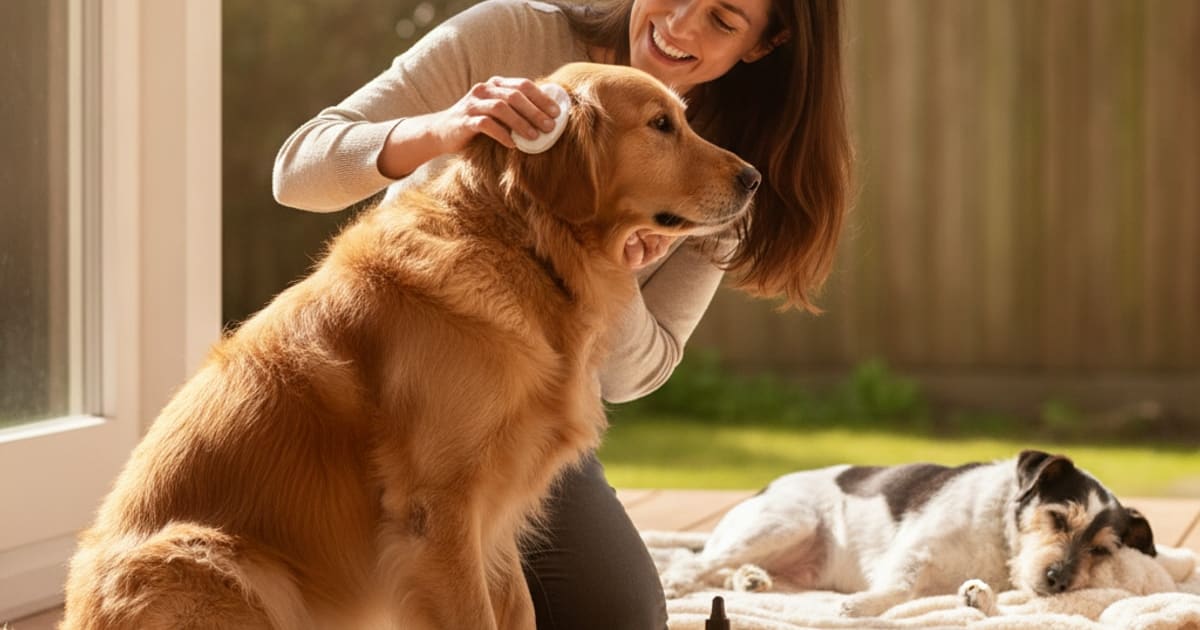
Ear discharge in dogs is treated by identifying the cause first and then using medication matched to that cause, so book a veterinary exam before you put anything into the ear. If the discharge comes with a head tilt, loss of balance, flicking eyes, facial drooping, bleeding, sudden deafness or severe pain, call your veterinarian for a same-day appointment or head to an emergency clinic now. A vet needs to look down the canal with an otoscope, check whether the eardrum is intact, and examine a swab under the microscope, because that single step decides whether the ear needs an antifungal, an antibacterial, a parasite treatment, or something else entirely.
Discharge is a symptom, not a diagnosis. The material you can see is wax, pus, blood or debris produced in response to something underneath: yeast overgrowth, bacteria, ear mites, a grass seed lodged deep in the canal, allergic inflammation, or occasionally a growth. Treatment works when it matches that underlying driver and stalls when it does not. Below is the sequence veterinarians generally follow, and what you can safely do at home around it.
Why the exam comes before the medication
The canal of a dog's ear is a long L-shaped tube, and almost none of it is visible from the outside. An otoscope exam lets the vet see how swollen the canal is, whether debris is packed against the eardrum, and whether that eardrum is still intact. That last detail matters more than most owners realise: several common ear medications and cleaning solutions can damage hearing and balance if they pass through a ruptured eardrum into the middle ear, which is why no responsible protocol starts with pouring a product into an ear nobody has looked inside.
The second step is cytology. The vet rolls a swab of the discharge onto a slide, stains it, and looks for yeast organisms, round bacteria, rod-shaped bacteria, inflammatory cells or mites. Yeast and bacteria need completely different drugs. Rod-shaped bacteria often prompt a culture and sensitivity test, because those infections are more likely to resist first-choice antibiotics. Mites need a parasiticide, not an antibiotic.
This is also the reason leftover drops from a previous infection are a poor idea. The bottle in your cupboard was chosen for a different organism on a different day, and using a partial course of the wrong drug makes the next infection harder to clear. If you are tempted, talk to your vet first instead.
What the colour and smell of the discharge usually point to
Colour gives a useful starting hypothesis, and it is what most owners search for, but it is not a diagnosis on its own.
| Discharge appearance | Commonly associated with | What veterinarians typically do |
|---|---|---|
| Dark brown or black, dry and crumbly, little odour | Ear mites, especially in puppies and newly adopted dogs | Swab for mites, then a prescribed parasite treatment, often for all pets in the home |
| Brown and waxy with a sweet or musty smell | Yeast overgrowth, frequently on top of allergic inflammation | Cytology, medicated antifungal drops, cleaning schedule, allergy workup if it keeps returning |
| Dark brown, greasy, strong odour | Mixed yeast and bacterial infection in an inflamed canal | Cytology, combination topical medication, pain relief or anti-inflammatories as needed |
| Yellow, creamy or thick | Bacterial infection, often with ruptured skin in the canal | Cytology, sometimes culture, antibacterial topicals and a recheck |
| Green, foul smelling | Bacterial infection that may involve resistant organisms | Culture and sensitivity, deep cleaning or flushing, targeted medication |
| White or pale and milky | Early yeast overgrowth, excess wax, or residue from a previous product | Cytology to separate wax from infection before anything is prescribed |
| Red, bloody or clotted | Trauma, violent head shaking, a foreign body, a ruptured vessel or a mass | Prompt exam, imaging or sedated examination, treatment of the underlying cause |
| Clear and watery | Allergic or irritant inflammation in its early stage | Identify the trigger, manage inflammation, monitor for secondary infection |
Colour and smell narrow the list, but only a swab under the microscope tells your veterinarian which drug the ear actually needs.
How to clean a dog's ears without making things worse
Cleaning is not optional background work. Medicated drops cannot reach inflamed skin through a plug of wax and pus, so most treatment plans pair a cleaner with a medication and specify the order and the days.
Use only a cleaning solution your veterinarian has approved for this ear and this problem. Then work in this order:
- Settle the dog somewhere easy to clean up, ideally with a helper and a towel over your lap.
- Lift the ear flap gently to straighten the canal opening.
- Fill the canal with the solution until it is visibly full. Do not let the bottle tip touch the ear, which contaminates the bottle.
- Massage the base of the ear at the cartilage for several seconds. You should hear a squelching sound as the solution breaks up debris.
- Step back and let your dog shake. That shake is what brings loosened material up and out.
- Wipe the visible part of the ear and the opening with cotton wool or gauze. Nothing goes deeper than your finger can comfortably reach.
- Wait as instructed before applying any medication, so the drops are not washed straight back out.
Skip cleaning entirely and call the clinic if the ear is bleeding, if your dog cries or snaps when you touch the flap, or if you were told the eardrum may be damaged. Never use cotton buds inside the canal: they push debris down against the eardrum and can injure it.
The medicines veterinarians commonly use, by cause
There is no single medicine for dog ear discharge, because the word covers several different problems. Prescribing is matched to what the cytology or culture shows.
For yeast, veterinarians generally use topical antifungal preparations. For bacterial infections, topical antibacterial preparations, selected by culture when the organisms look resistant or the ear has failed previous treatment. Many prescription ear products are combinations containing an antibiotic, an antifungal and a steroid, because inflamed canals usually have more than one thing going on and the steroid component reduces the swelling that keeps the canal warm and closed.
Some clinics use long-acting gels placed into the canal during the appointment, which removes the burden of twice-daily drops from owners whose dogs resist handling. Oral or injectable medication is generally reserved for ears where infection has moved into the middle ear, where the canal is too painful to medicate, or where the surrounding skin is also involved. Pain relief and anti-inflammatory medication are a legitimate part of ear treatment, not an add-on.
Mites are handled with prescription parasiticides rather than antibiotics, and usually across every pet in the household. Ears packed with hardened debris, or ears that have been infected for a long time, sometimes need a thorough flush under sedation so the canal can actually be seen and medicated. For end-stage ears where the canal has scarred closed and medication can no longer reach the tissue, surgery exists as a last option, and that conversation belongs with a veterinary surgeon.
Finish the full course even when the ear looks clean on day three. Stopping early is one of the most reliable ways to turn a simple infection into a recurring one, and the recheck appointment exists to confirm with a second swab that the infection is actually gone rather than just quiet.
Home remedies: what genuinely helps and what causes harm
Searches for a home remedy for dog ear discharge mostly return vinegar, hydrogen peroxide, rubbing alcohol, tea tree oil, coconut oil and olive oil. None of these belongs in an inflamed canal. Tea tree oil is toxic to dogs when absorbed and has caused serious illness. Hydrogen peroxide foams impressively, irritates damaged skin and leaves moisture behind, which is exactly what yeast and bacteria want. Alcohol stings badly on ulcerated skin. Oils coat debris rather than lifting it and trap humidity in the canal. Diluted vinegar is still an acid going onto raw tissue.
What does help at home is unglamorous and effective. Dry the ears after swimming and bathing. Keep an e-collar on a dog who is scratching hard enough to cause further trauma. Keep up with the exact cleaning and medication schedule you were given. Photograph the ear every few days so you and your vet can compare rather than guess. Attend the recheck.
Prevention matters most in dogs whose ears keep flaring. Veterinary dermatology research suggests that recurring ear infections are often a downstream sign of underlying allergic skin disease rather than an isolated ear problem, which is why chronic cases are frequently investigated with a diet trial or allergy management rather than yet another round of drops. Results vary from dog to dog, and floppy-eared, hairy-eared and swimming dogs tend to need more routine maintenance than others.
Signs the discharge needs same-day veterinary care
Most ear discharge is an appointment, not an emergency. Some of it is not. Seek urgent care if you see a head tilt, circling, stumbling, rapidly flicking eyes or facial drooping, which suggest the middle or inner ear is involved. The same applies to frank bleeding from the canal, a suddenly swollen and spongy ear flap, apparent sudden hearing loss, intense pain that makes the dog resent any touch to the head, or discharge that appears after a walk in long grass, which raises the possibility of a grass seed lodged in the canal. A dog who is also lethargic, off food or feverish should be seen promptly rather than monitored.
Key Takeaways
- Ear discharge is a symptom; the exam and swab decide the treatment, not the colour alone.
- An otoscope exam checks whether the eardrum is intact, which determines what is safe to put in the ear.
- Yeast, bacteria and mites need different drugs, so leftover drops from a past infection are a poor substitute.
- Cleaning with a vet-approved solution clears the way for medication to reach the skin.
- Vinegar, hydrogen peroxide, alcohol and tea tree oil do not belong in a dog's ear.
- Finish the full course and attend the recheck, because an ear that looks clean can still be infected.
- Head tilt, balance loss, bleeding, severe pain or sudden deafness means same-day care.
Your veterinarian owns the diagnosis and the treatment plan here. They are the only person who can see what is actually happening inside the canal, confirm what is growing in it, and choose medication that is appropriate for your individual dog. If discharge keeps returning after treatment, that is worth a longer conversation about what is driving it rather than a repeat of the same drops, so talk to your vet about investigating the underlying cause.
For a wider rundown of symptoms that warrant immediate attention, see Dog Emergency Signs.
Frequently asked questions
- How to treat ear discharge in dogs?
- Start with a veterinary exam and an ear swab, because the right medication depends on whether yeast, bacteria, mites or a foreign body is behind it. Vets typically prescribe medicated drops or a long-acting gel applied in clinic, plus a cleaning schedule and a recheck. Results vary from dog to dog.
- What medicine do vets prescribe for dog ear discharge?
- Most prescriptions are topical: antifungal preparations for yeast, antibacterial preparations for bacteria, and combination products containing an antibiotic, an antifungal and a steroid for mixed infections. Mites need a parasiticide instead. Oral medication and pain relief are added when infection is deep or the ear is too painful to medicate.
- Is there a safe home remedy for dog ear discharge?
- No home remedy reliably clears an ear infection, and several popular ones cause harm. Keep ears dry after swimming, prevent scratching, use only a cleaner your vet approved, and complete the prescribed course. Vinegar, hydrogen peroxide, alcohol, oils and tea tree oil should not go into an inflamed canal.
- What does dark brown discharge with no smell mean, and how is it handled?
- Dry, dark brown or black debris without much odour often points to ear mites, particularly in puppies and recently adopted dogs, though wax buildup looks similar. A vet confirms it by examining a swab under the microscope, then prescribes a parasite treatment that usually covers every pet in the household.
- How is green or yellow ear discharge in dogs treated?
- Yellow or green discharge, especially with a strong odour, suggests bacterial infection. Vets usually run cytology and often a culture and sensitivity test, since green discharge can involve organisms that resist first-choice antibiotics. Treatment typically combines thorough cleaning or flushing with a targeted antibacterial medication and a recheck swab.
- What does white discharge in a dog's ear mean?
- Pale or milky white material can be early yeast overgrowth, simple excess wax, or residue left behind by a cleaning product. Those need different responses, so cytology is the step that separates harmless wax from infection. Do not medicate on appearance alone; have the ear examined first.
- Can I use hydrogen peroxide or vinegar in my dog's ear?
- Neither is advisable. Hydrogen peroxide irritates damaged skin and leaves moisture behind, which encourages yeast and bacteria. Diluted vinegar is an acid landing on raw, inflamed tissue. Tea tree oil is toxic to dogs when absorbed. Use only a cleaning solution your veterinarian has recommended for that specific ear.
- How long does it take for dog ear discharge to clear up?
- It varies with the cause, the severity and how long the ear has been affected, so your vet will set the course length and the recheck date. Ears can look clean while infection persists, which is why the follow-up swab matters more than how the ear appears at home.
- When is ear discharge in a dog an emergency?
- Seek same-day care for head tilt, circling, stumbling, rapidly flicking eyes or facial drooping, which suggest middle or inner ear involvement. Bleeding from the canal, a suddenly swollen ear flap, apparent sudden deafness, severe pain, or a dog who is also lethargic or feverish all warrant urgent attention.
Educational content, not veterinary advice. Ask your vet about your dog.