Is a Dog Not Wanting to Play an Emergency? (When to Act)
On its own, a dog not wanting to play is rarely an emergency — it is a change worth tracking. It becomes urgent when refusal to play arrives with retching, a swollen abdomen, laboured breathing, pale gums, collapse or pain the dog cannot settle out of. Anything else changing alongside it deserves a same-day call.
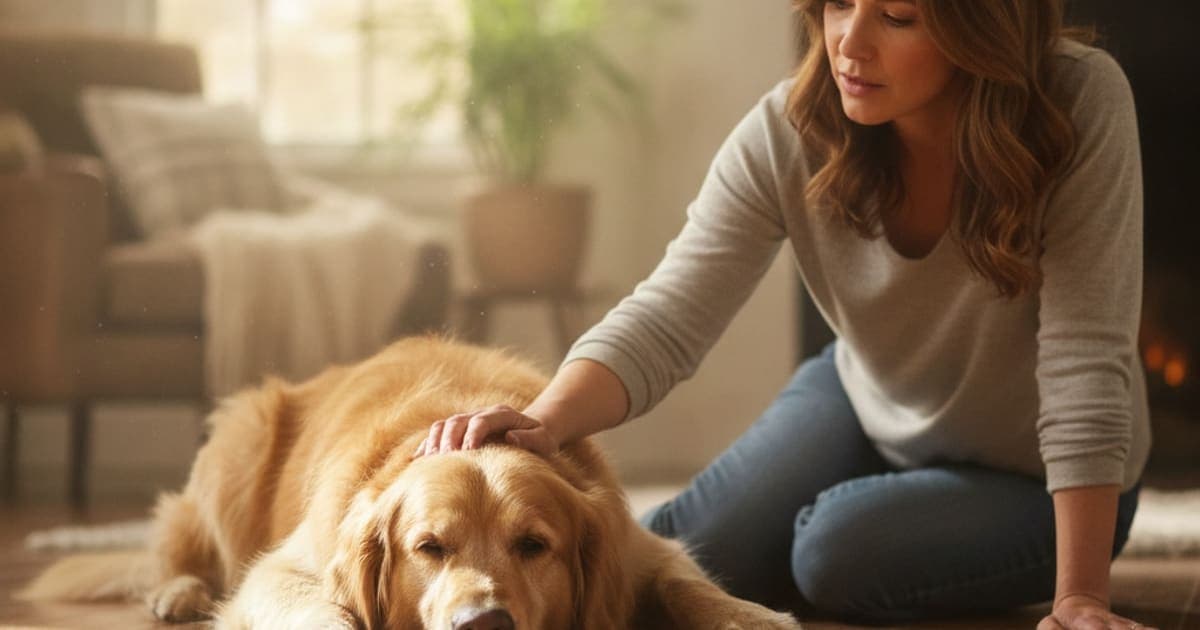
Is a dog not wanting to play an emergency?
On its own, usually not. A dog who turns down a tennis ball but still eats, drinks, greets you at the door and moves without obvious pain is more often tired, sore, overheated, bored or simply older. It becomes an emergency when the refusal to play arrives alongside another sign — a swelling abdomen, retching that produces nothing, laboured breathing, pale gums, collapse, or pain the dog cannot settle out of.
That is the distinction that matters. Not whether your dog wants to play, but whether declining play is the only change, or the first visible edge of something larger. Dogs are exceptionally good at hiding illness and pain; withdrawal from play is often the earliest thing an owner can actually see, which is why it deserves attention even when it is not an emergency.
The signs that turn a quiet dog into a same-night problem
These pictures do not improve with waiting. If your dog is not playing and showing any of the following, treat it as an emergency and get to a veterinary hospital or emergency clinic:
- A distended, drum-tight or rapidly swelling abdomen, especially with restlessness, pacing, drooling and unproductive retching. This combination is associated with gastric dilatation-volvulus, and it is a surgical emergency in which time is the variable you control.
- Visible effort to breathe at rest — open-mouth breathing in a calm dog, elbows held away from the body, a stretched-out neck, abdominal heaving, or gums and tongue that look blue, grey or muddy.
- Pale, white or brick-red gums, or gums that feel dry and tacky, or a capillary refill that is noticeably slow when you press and release.
- Collapse, sudden weakness, or an inability to rise. A dog who cannot stand, or who stands and buckles, is not making a choice about play.
- Neurological change — a seizure, circling, head pressing into walls or furniture, sudden disorientation, or a head tilt that came on within hours.
- Pain the dog cannot escape — panting at rest in a cool room, trembling, a hunched or praying posture, guarding the belly, or refusing to lie down at all.
- A leg carried entirely off the ground after a fall, a twist, a car ride or a dog-park collision, particularly with obvious swelling or an abnormal angle.
- Straining to urinate with nothing coming out. Urethral obstruction is an emergency and is more common in male dogs.
- Suspected toxin exposure or heat exposure — chocolate, xylitol, grapes, rodenticide, human medication, or a hot day followed by a dog who suddenly wants nothing.
If your dog has stopped playing and is also retching without producing anything, developing a swollen abdomen, or visibly working to breathe, that is an emergency now — not a wait-and-see.
Triage at a glance: emergency, same-day, or watch and log
| What you are seeing alongside the refusal to play | Urgency | What to do |
|---|---|---|
| Swelling abdomen, unproductive retching, laboured breathing, pale gums, collapse, seizure, straining to urinate, suspected toxin or heatstroke | Emergency — go now | Emergency clinic immediately; call ahead so they are ready for you |
| Not eating for a full day, repeated vomiting or diarrhoea, non-weight-bearing on a limb, obvious pain when touched, sudden hiding, a fever you can feel in the ears and paws | Same day or next morning | Call your regular veterinary practice and describe the combination, not just the play refusal |
| Reluctance on stairs, stiffness after rest, an intermittent limp, slower recovery after walks, less interest in fetch over weeks | Book within days | Take video of the gait; ask for an orthopaedic and pain assessment |
| Eating, drinking, toileting and greeting normally; declines play but is otherwise the same dog; hot weather or a big weekend behind you | Monitor and log | Track for 48 hours; call if anything else changes or if it persists |
Why a dog that looks fine stops asking to play
Pain is the single most common explanation, and it rarely announces itself. Dogs seldom yelp about chronic pain; they reduce activity instead. Osteoarthritis, hip and elbow dysplasia, spinal disc disease, a partial cranial cruciate ligament tear that comes and goes, meniscus damage inside an unstable stifle, a soft-tissue strain from one hard turn on wet grass — all of these show up as a dog who has 'lost interest' rather than a dog who limps dramatically. Dental pain does the same thing and is easy to miss entirely.
Systemic illness is the next group. Fever, infection, tick-borne disease, anaemia, heart disease with reduced exercise tolerance, respiratory disease, endocrine conditions such as hypothyroidism, and kidney or liver disease all drain the energy a dog would otherwise spend on play. None of these are diagnosable from the couch, which is exactly why a physical exam and bloodwork answer questions that observation cannot.
Then there is context. Heat and humidity flatten dogs quickly, particularly flat-faced and heavy-coated breeds. Slippery floors teach an older dog that pushing off hurts or is unsafe. A house move, a new baby, a new dog, or the loss of a companion animal can change play behaviour for weeks. Vision and hearing loss change how a senior dog engages with a thrown toy. Cognitive change in older dogs alters sleep, orientation and interest.
Medication is worth noting too: sedation and lethargy are recognised effects of several drugs used in dogs. If your dog started something new and went quiet, that is a conversation with your veterinarian — never a reason to stop a prescribed medication on your own.
What to record before the appointment
The quality of your information changes the quality of the visit. Over 48 hours, write down what you actually observe rather than what you conclude.
- Video. Film your dog walking and trotting on a flat, non-slip surface, from the side and from behind, then film them rising from lying down. Intermittent lameness rarely performs on cue in an exam room.
- Appetite and thirst. Meals finished, meals refused, any change in water intake.
- Toileting. Frequency, straining, posture, blood, consistency.
- Movement. Stairs, jumping onto the sofa or into the car, the shape of the sit — a dog who sits with one leg kicked out to the side is often telling you about a stifle.
- Timing. Worse in the morning, worse after rest, worse after exercise, worse in cold or damp.
- Onset. Sudden over hours, or a slow slide over months. Sudden is more urgent.
- Everything they are taking. Prescriptions, supplements, chews, topicals.
Bring that to your veterinarian and ask directly whether pain is on the differential list. A structured pain assessment, an orthopaedic exam, imaging where indicated, and sometimes a trial of prescribed analgesia are how 'he just doesn't want to play anymore' gets converted into an actual diagnosis.
When the answer is a joint or soft-tissue injury
If the workup lands on ligament, tendon or joint damage, the timeline is longer than most owners expect, and the biology explains why. Ligaments and tendons carry a far sparser blood supply than muscle does, and blood supply is what delivers oxygen, nutrients and the cells that rebuild collagen. Repair tissue also has to be loaded gradually before it reorganises from disorganised scar into aligned, load-bearing fibre. That remodelling happens over weeks and months, not days — which is why controlled activity, physical rehabilitation, weight management and a defined return-to-play plan matter as much as the initial procedure.
Canine cruciate disease in particular is usually degenerative rather than a single clean athletic accident, and meniscal injury frequently accompanies an unstable stifle. Where surgery is indicated, surgery is the intervention that restores stability; prescribed pain control and a rehab protocol are what carry the dog through the recovery window. Nothing else substitutes for either.
The recovery-support layer owners add around the plan
Inside that recovery window, many owners look for something to support the tissue environment while the veterinary plan does its work. This is where pawgen's K9-REPAIR sits: a focused formulation of two peptides, BPC-157 and TB-500, rather than a kitchen-sink chew.
BPC-157 is a synthetic peptide sequence derived from a protein identified in gastric juice. Research in animal models suggests it may support angiogenesis — the formation of new blood vessels — and fibroblast activity at tendon and ligament sites, which is directly relevant to tissue that is short on blood supply to begin with. TB-500 relates to thymosin beta-4, a naturally occurring peptide involved in actin regulation, cell migration and tissue remodelling. Early evidence indicates these mechanisms operate at the level of how tissue organises itself during repair. BPC-157 and TB-500 are not FDA-approved veterinary drugs, and nothing here describes a treatment for your dog's condition — this is mechanism and research, and owners report adopting the stack through recovery alongside their vet's plan.
That is a deliberate contrast with much of the shelf. Multi-ingredient joint chews often list a dozen actives inside a proprietary blend that never discloses how much of anything is present, and marketing volume frequently outruns the evidence behind it. pawgen's approach is the opposite: a named, single-purpose formulation, third-party testing with certificates of analysis, weight-based dosing worked out with your veterinarian rather than published as a number online, direct-to-door shipping, and a 60-day money-back guarantee.
Key takeaways
- A dog not wanting to play is not, by itself, an emergency — but it is never nothing, and it is worth logging.
- It is an emergency when combined with a swelling abdomen, unproductive retching, breathing effort, pale gums, collapse, seizure, inability to urinate, or unrelenting pain.
- Pain is the most common quiet explanation, and dogs express it as reduced activity far more often than as vocalising.
- Video of the gait and a 48-hour log of appetite, toileting and movement make the veterinary visit far more productive.
- Ligament and tendon tissue heals slowly because of limited blood supply; recovery is measured in weeks and months.
- Support products belong alongside diagnosis, prescribed medication and rehab — never instead of them.
Related reading and the last word on who decides
If the trail leads to the stifle, it is worth understanding how long does meniscus tear take to heal in dogs and is meniscus tear in dogs painful, and you can read what goes into K9-REPAIR before you raise it at your next appointment.
Your veterinarian owns the diagnosis and the treatment plan. Examination, imaging, bloodwork, prescribed pain control, surgery where it is indicated and a structured rehabilitation protocol are the foundation, and none of them are optional. Supplements and peptides operate only in the space that proper veterinary care creates — so bring the video, bring the log, bring the ingredient list, and make the decision together.
Owners exploring peptide support for their dog can review K9-REPAIR — BPC-157 + TB-500 formulated for dogs — at https://pawgen.com/. BPC-157 and TB-500 are not FDA-approved veterinary drugs. Nothing in this article treats, cures or prevents any condition; every decision about your dog's care belongs with your veterinarian.
Frequently asked questions
- How much K9-REPAIR should I give my dog?
- Dosing is weight-based, and the right amount for your dog is a conversation to have with your veterinarian, who knows the diagnosis, the medications already on board and the stage of recovery. pawgen does not publish protocols in educational content. Ask your vet before starting anything new, including this.
- Is K9-REPAIR legal for dogs?
- K9-REPAIR is available to buy directly from pawgen and ships to your door. BPC-157 and TB-500 are not FDA-approved veterinary drugs, meaning they are not licensed medicines for treating any condition, and all content about them is educational. Rules can differ by region, so confirm locally and involve your veterinarian.
- Do vets recommend K9-REPAIR for dogs?
- No product can be described as vet-approved or veterinarian-recommended. Some veterinarians are familiar with peptides and will discuss them openly; others prefer to stay within FDA-approved options. Bring the ingredient list and the certificate of analysis to your appointment and ask how it would fit around the existing plan.
- Does K9-REPAIR actually work for dogs?
- No supplement can be called proven. Research suggests BPC-157 may support angiogenesis and fibroblast activity, while TB-500 relates to a peptide involved in cell migration and tissue remodelling — promising mechanisms owners are adopting through recovery. Responses vary by dog, and it supports rather than replaces veterinary care.
- Is K9-REPAIR worth the money for dogs?
- That depends on what you are comparing it to. K9-REPAIR is a focused two-peptide formulation with third-party testing and certificates of analysis, rather than a proprietary blend hiding trace amounts of a dozen ingredients. It ships direct and carries a 60-day money-back guarantee, so the risk sits with pawgen.
- What are the side effects of K9-REPAIR in dogs?
- No product can honestly claim no side effects, and long-term safety data for these peptides in dogs is limited. Any new product may cause digestive upset, lethargy or an individual reaction. Introduce anything new under veterinary guidance, watch your dog closely, and disclose everything your dog is taking.
- How long should I wait before calling the vet if my dog will not play?
- If nothing else has changed — normal eating, drinking, toileting and movement — 48 hours of careful observation and logging is reasonable. Call sooner if appetite drops, if a limp appears, if your dog hides or resists being touched, and call immediately for any of the emergency signs listed above.
- Is my senior dog refusing to play just old age?
- Age is not a diagnosis. Older dogs do slow down, but a sudden or steady drop in play interest is more often osteoarthritis, dental pain, reduced vision or hearing, cardiac disease or an endocrine problem. Ask your veterinarian for a pain and mobility assessment rather than assuming it is simply years.
Educational content. BPC-157 and TB-500 are not FDA-approved veterinary drugs. Talk to your veterinarian before starting anything new, especially if your dog is on prescribed medication.