Is It Normal for Puppies to Have Hiccups? (What to Know)
Yes, hiccups are normal in puppies. They are brief, involuntary spasms of the diaphragm, most often triggered by fast eating, gulped water, excitement, play or sleep, and they usually pass within minutes. Hiccups paired with breathing trouble, retching, vomiting or collapse are not normal and need a vet.
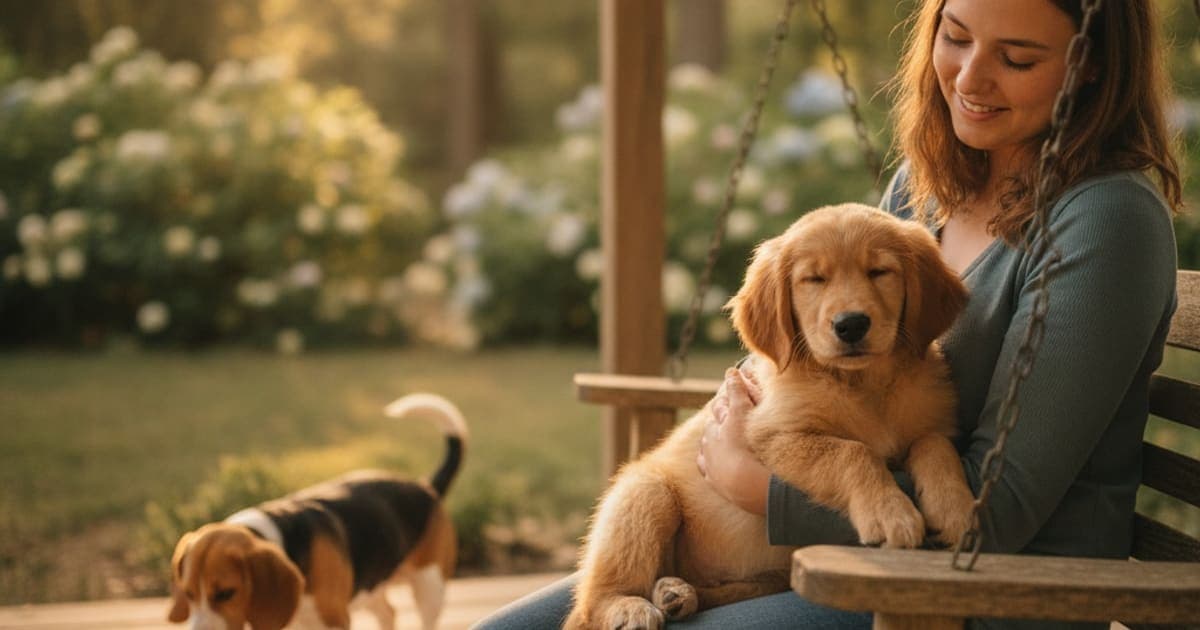
Yes. Hiccups are normal in puppies, and in the great majority of cases they are a harmless quirk of a body that is still learning to coordinate itself. Call your veterinarian the same day, or go straight to an emergency clinic, if the hiccupping arrives alongside labored or noisy breathing, pale, grey or blue-tinged gums, repeated retching or gagging, a hard or painful belly, drooling with an inability to swallow, or a puppy who seems frightened and unwell rather than mildly annoyed.
Short, rhythmic bouts that start after a meal, a drink, a burst of play or a nap, last a few minutes, and end with your puppy going back to chewing a toy are the ordinary version. They tend to be most frequent in the first few months and fade as a puppy grows.
What is actually happening when a puppy hiccups
The diaphragm is a dome of muscle that sits between the chest and the abdomen and does most of the work of breathing. It is driven by the phrenic nerve, with the vagus nerve running nearby and carrying signals from the gut and the throat.
A hiccup is an involuntary spasm of that muscle. The diaphragm contracts sharply and pulls air in faster than normal, and almost immediately the glottis, the opening between the vocal folds, snaps shut. The air hits the closed glottis and you get the sound. In small puppies the sound is often barely there, so what you notice is a rhythmic bounce in the chest or belly every few seconds.
Puppies get them more than adult dogs for a few overlapping reasons. The nerves and reflex loops that control breathing are still maturing, so they are easier to set off. Puppies eat fast, drink fast, play hard and swing between flat-out sleep and flat-out activity. Their stomachs are small, which means a normal meal can stretch the stomach enough to press against the diaphragm sitting just above it.
There is no single agreed explanation for why mammals hiccup at all. Research suggests the reflex may be linked to the early development of breathing control, since it appears before birth and is most common in the young. Whatever the purpose, the practical point for an owner is that the reflex is built in, self-limiting and not painful.
Why your puppy gets hiccups after eating, drinking and playing
Most bouts trace back to air, speed or excitement.
Puppy hiccups after eating are the classic trigger. A puppy who inhales a meal swallows air along with it, and a stomach full of food and air pushes upward against the diaphragm. Littermates make it worse, because competition at the bowl teaches a puppy to eat as fast as physically possible. Smaller meals served more often, a slow-feeder bowl or a snuffle mat, and feeding puppies separately all reduce the gulping.
Puppy hiccups after drinking water work the same way. A thirsty puppy who empties the bowl in one go takes in a surprising amount of air, and very cold water seems to set some puppies off more than room-temperature water. Keeping water available all day, rather than letting a puppy get desperately thirsty and then drink a huge volume at once, usually tones it down.
Puppy hiccups after playing come from the breathing pattern rather than the stomach. Wrestling, zoomies and tug produce fast, shallow, irregular breathing plus a lot of swallowed air, and the diaphragm is being worked hard and unevenly. Excitement alone can do it, which is why some puppies hiccup when visitors arrive or when the leash comes out.
Temperature changes are another common trigger. A puppy carried out into cold morning air, lifted out of a bath or settled onto a cold floor may start hiccupping within minutes. Stress does the same thing in some puppies, for the same reason it changes breathing in people.
Puppy hiccups while sleeping, on waking and at night
Hiccups around sleep worry owners more than any other version, and they are just as ordinary.
Puppy hiccups while sleeping, or hiccups in sleep, usually show up during active, dreaming sleep. In that phase breathing becomes irregular, muscles twitch, paws paddle and the diaphragm can join in. If your puppy is twitching, softly woofing and hiccupping all at once while otherwise deeply relaxed, that is a normal sleep pattern, not distress. There is no need to wake a puppy who is hiccupping in their sleep.
Puppy hiccups after sleeping, when waking up, or in the morning reflect the switch from slow, deep rest breathing back to active breathing. Add the things a puppy does in the first two minutes after waking, a big stretch, a sprint to the water bowl, a fast breakfast, and the triggers stack up. If your puppy gets hiccups after waking up almost every time, try putting a short, calm toilet break between waking and eating, and slowing the first drink and the first meal.
Puppy hiccups at night often follow the evening meal and the evening burst of energy, then settle as the puppy cools down and falls asleep. A quieter wind-down routine, with the last meal not rushed and not immediately followed by wild play, tends to shorten them.
One distinction matters here. Hiccups are rhythmic and regular, and the puppy stays comfortable. Breathing that looks fast and effortful while a puppy is resting, or a puppy who wakes gasping, repeatedly changes position to breathe, or has gums that look pale or dusky instead of healthy pink, is not a hiccup problem. That is a breathing problem, and it deserves an urgent veterinary call rather than a watch-and-wait.
Hiccups, reverse sneezing, choking or a seizure: telling them apart
Several very different events can look similar to a worried owner at eleven at night. This table covers the ones most often confused.
| What it is | What you see and hear | Typical pattern | What to do |
|---|---|---|---|
| Hiccups | Regular chest or belly jerks every few seconds, often a soft hic, puppy otherwise relaxed | Short bouts, ends on its own | Stay calm, let it pass, note triggers |
| Reverse sneezing | Sudden loud snorting inward through the nose, neck extended, elbows braced | Seconds to a minute or two, stops abruptly, normal immediately after | Usually harmless, mention it to your vet if frequent |
| Choking or gagging | Pawing at the mouth, distress, retching, difficulty breathing, possible drooling | Does not resolve calmly, puppy is clearly frightened | Emergency, call a vet or emergency clinic now |
| Coughing illness | Repeated harsh or honking cough, sometimes a retch at the end, may be lethargic or off food | Persists over days, often worse after exercise or excitement | Veterinary appointment, keep away from other dogs |
| Seizure | Loss of awareness, stiffening or paddling, drooling, possible loss of bladder control, disorientation afterward | Puppy cannot be interrupted or comforted | Emergency, time the episode and call a vet |
The fastest home test is interruptibility and awareness. A hiccupping puppy will still look at you, take a treat and wag. A puppy in genuine respiratory distress or having a seizure will not.
When a puppy who hiccups a lot should see a vet
Frequent hiccups in an otherwise thriving puppy, one who eats well, plays hard, grows steadily and sleeps soundly, are rarely a medical problem. Many puppies hiccup several times a day for weeks, then grow out of it. Results vary from dog to dog, and some breeds and some individuals simply do it more.
Book a veterinary appointment if you see any of these:
- Bouts that drag on for an hour or more, or that keep returning all day for several days
- Hiccups paired with vomiting, regurgitation of undigested food, diarrhoea or poor appetite
- Weight loss, poor growth, or a puppy who tires faster than littermates
- Coughing, wheezing, nasal discharge or any change in breathing effort
- Hiccups that start or worsen in an older puppy instead of fading
- Any suspicion your puppy swallowed something they should not have
Those combinations do not mean the hiccup reflex has gone wrong. They mean something else may be irritating the diaphragm, the oesophagus, the stomach or the airway, and that is worth a proper examination. Intestinal parasites, respiratory infections, reflux and swallowing disorders are all things a veterinarian can assess in a young dog, and none of them are diagnosable from a video on the internet. Hiccups on their own are not painful or dangerous, but anything that changes how your puppy breathes, swallows, eats or responds to you is a different problem and needs a veterinary opinion.
What to do while a bout of hiccups passes
Mostly, nothing dramatic. Sit with your puppy, rub the chest or belly gently, and let the reflex run out. A small amount of water offered calmly, or a slow sniffy walk that encourages longer, deeper breaths, often shortens things.
Skip the human folk remedies. Do not startle your puppy, hold their muzzle closed, cover their nose, or try to make them hold their breath. Those tactics are stressful, they are not reliable in dogs, and frightening a young dog has a cost that outlasts the hiccups. Do not give any human medication, sugar solution or home remedy to a puppy without veterinary guidance first.
Prevention is easier than interruption. Feed smaller portions more often, slow the bowl down, give water throughout the day, keep the twenty minutes after meals relatively calm, and warm a puppy up gradually when coming in from the cold. If you are unsure whether what you are seeing is a hiccup at all, film a bout on your phone. A ten second clip is worth more to your veterinarian than any description, and it is the single most useful thing you can bring to the appointment.
Key Takeaways
- Hiccups are normal and common in puppies, and are involuntary spasms of the diaphragm paired with a snap of the vocal folds
- The usual triggers are fast eating, fast drinking, hard play, excitement, cold and the transition in and out of sleep
- Hiccups during sleep, on waking and in the morning are ordinary and do not require waking or treating the puppy
- A hiccupping puppy stays aware and comfortable, which is the key difference from choking, respiratory distress and seizures
- Hiccups that last for hours, keep recurring for days, or come with vomiting, coughing, breathing changes or poor growth deserve a veterinary appointment
- Gentle calm, slower feeding and steady water access help more than any folk remedy, and startling a puppy is never the answer
Your veterinarian owns the diagnosis and the plan. They are the one who can listen to your puppy's chest, check the gums and throat, run a faecal test, and tell you whether what you are watching is a developmental quirk or a symptom worth chasing. If hiccups are frequent enough to worry you, or if anything about your puppy's breathing, eating or energy has changed, talk to your vet rather than waiting to see what happens next. Everything you do at home, from the slow-feeder bowl to the calmer evening routine, works best inside the picture your vet has already confirmed is healthy.
For a plain-language rundown of the signs that mean stop watching and get help now, read Dog Emergency Signs.
Frequently asked questions
- Is it normal for puppies to have hiccups?
- Yes, it is normal. Hiccups are involuntary diaphragm spasms and are common in young puppies, often several times a day. They usually last a few minutes and fade as a puppy matures. Hiccups combined with breathing difficulty, retching, vomiting or lethargy are not normal and need veterinary attention.
- Why does my.puppy have hiccups?
- Your puppy most likely swallowed air or stretched their stomach. Fast eating, gulped water, hard play, excitement, cold air and the shift in and out of sleep all irritate the diaphragm or the nerves around it. A still-maturing nervous system makes the reflex easier to trigger in puppies.
- Why is my puppy have hiccups?
- Hiccups happen when your puppy's diaphragm contracts involuntarily and the vocal folds snap shut. Common causes include eating or drinking too quickly, swallowing air during play, excitement, a sudden temperature change, or dreaming sleep. In a puppy who is eating, growing and playing normally, it is not a cause for concern.
- Is it okay for my puppy to have hiccups?
- Yes, it is okay. Hiccups are not painful and a hiccupping puppy stays alert, comfortable and interested in food and toys. Let the bout pass, keep things calm, and avoid startling them. Contact your veterinarian if bouts last hours, repeat for days, or come with coughing or vomiting.
- Is it ok for puppies to have hiccups?
- It is perfectly ok, and most puppies hiccup regularly in their first months. The reflex is self-limiting and resolves on its own. Slowing meals, offering water throughout the day and keeping the period after eating calm usually reduces how often it happens. Results vary from dog to dog.
- Is it bad for my puppy to have hiccups?
- Hiccups by themselves are not bad or harmful. They become a concern only when paired with other signs: laboured or noisy breathing, pale gums, repeated retching, vomiting, poor appetite, weight loss or hiccups that will not stop. Those combinations point to something else and warrant a veterinary examination.
- How long do puppy hiccups usually last?
- Most bouts resolve within a few minutes on their own. Some puppies hiccup for longer stretches, especially after a large meal. A bout that continues for an hour or more, or that returns repeatedly throughout the day for several days, is worth raising with your veterinarian.
- Should I wake my puppy if they hiccup in their sleep?
- No, there is no need to wake them. Hiccups during dreaming sleep sit alongside twitching, paddling and irregular breathing, all of which are normal. Only intervene if your puppy wakes gasping, breathes with visible effort at rest, or has pale or bluish gums, which require urgent veterinary care.
Educational content, not veterinary advice. Ask your vet about your dog.