Is Sesamoid Fracture in Dogs Painful? (Signs Explained)
Yes — sesamoid fracture in dogs is painful. The sesamoids sit under the toe joints and bear load with every step, so a fracture produces sharp, weight-bearing lameness that worsens on hard ground. Pain often eases with rest and returns with activity, which makes it easy to underestimate.
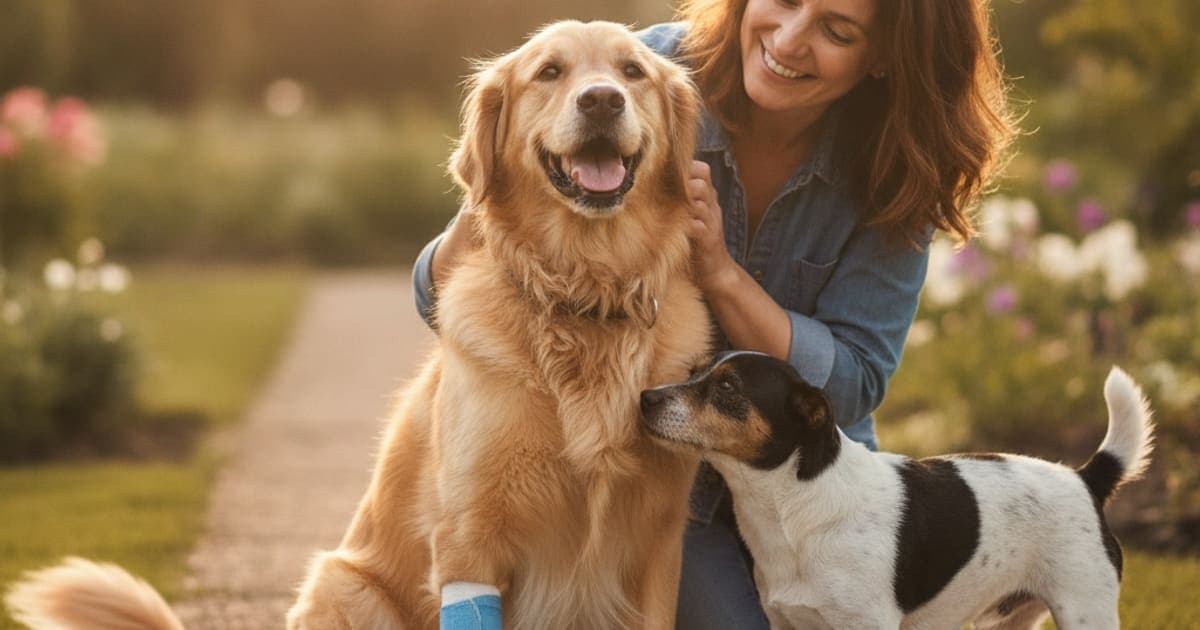
Is Sesamoid Fracture in Dogs Painful?
Yes. A sesamoid fracture in dogs is painful, because these small bones sit inside weight-bearing tendons at the base of the toes and take load with every single step. Most affected dogs show sudden lameness that is worse on hard ground, worse after exercise, and partly relieved by rest.
The pain is mechanical rather than mysterious. A sesamoid is not a decorative bone — it is a load-bearing pulley buried in tendon. Break it, and the tendon that surrounds it keeps pulling on the pieces every time the paw pushes off. Veterinary orthopaedic references, including general clinical resources such as the Merck Veterinary Manual's coverage of canine lameness, treat foot lameness as a localising problem: the job is to identify the exact painful structure rather than to treat a limp in general terms. In the foot, the sesamoids are one of the structures that gets missed.
What owners usually describe is a dog that came in from the yard holding up a front paw, seemed better by morning, then went lame again after the next real walk. That pattern — pain that resolves with rest and returns with load — is characteristic, and it is exactly why these injuries are often shrugged off for weeks before anyone takes radiographs.
Why a bone the size of a lentil hurts this much
Each of your dog's weight-bearing toes has two small palmar sesamoids (plantar, in the hind feet) sitting on the underside of the metacarpophalangeal joint — the knuckle at the base of the toe. They are conventionally numbered one through eight across the four main digits, and there are smaller dorsal sesamoids on the top of the same joints. The palmar pair are embedded in the interosseous tendons that run down the back of the paw.
Their function is leverage. A sesamoid changes the angle at which a tendon crosses a joint, protects the tendon from grinding against bone, and spreads compressive load across a wider surface. That makes them mechanically brilliant and structurally exposed. Every push-off, every turn on grass, every landing off the sofa compresses and tensions them at the same time.
When a sesamoid fractures, three things generate pain. The fragments move against each other under tendon tension. The surrounding tendon, joint capsule and soft tissue inflame. And the joint itself is loaded through an interface that is no longer smooth. Because the tendon actively pulls the pieces apart, and because blood supply to these bones is limited, true bony union is often incomplete — many dogs end up with a fibrous union that is comfortable but never looks perfect on a radiograph.
There is one important wrinkle. Some dogs are born with bipartite or multipartite sesamoids — a normal developmental variant in which the bone forms in two or more pieces. This is well recognised in large breeds, and Rottweilers have long been noted in the veterinary literature as over-represented for sesamoid abnormalities, most often at sesamoids two and seven. A bipartite sesamoid can look identical to a fracture on film. Whether it matters depends entirely on whether that spot is painful when your vet presses on it, which is why hands-on examination outranks the image.
What the pain actually looks like day to day
Dogs do not tell you a toe hurts. They tell you sideways: a shortened stride, a reluctance to turn hard, a paw held slightly off the ground at a standstill, licking at one spot on the underside of the foot, stiffness after a nap, or a refusal to go up the stairs they used yesterday. Some dogs are restless and still developing overnight, shifting position and panting, because the foot throbs once the distraction of the day is gone.
On examination, the giveaway is focal pain: press the underside of the base of one toe and the dog withdraws sharply, while the toe next door produces nothing. Hyperextending the toe often reproduces it. There may be mild swelling over the palmar surface, and lameness usually worsens on concrete and improves on grass.
| What it might be | How the lameness behaves | Where the pain localises |
|---|---|---|
| Sesamoid fracture | Sudden onset after exercise, worse on hard surfaces, eases with rest and returns with activity | Directly under the base of one toe, on the palmar or plantar surface |
| Sesamoiditis or an irritated bipartite sesamoid | Grumbling and intermittent, stiff after rest, flares after big days | Same spot, often with less swelling |
| Nail bed or pad injury | Immediate and often dramatic, may bleed, constant licking | Nail, pad or webbing |
| Interdigital foreign body or cyst | Swelling and licking between the toes, comes and goes | Between the toes |
| Flexor tendon strain | Worse with push-off, turns and hills | Along the tendon up the back of the paw and pastern |
| Carpal or elbow problem | Lameness that builds with distance, foot itself not sore | Above the foot, on joint flexion and extension |
That overlap is the reason a limp lasting more than a day or two deserves a proper examination rather than a wait-and-see approach. Talk to your veterinarian early — localising the pain correctly is most of the work, and it changes the plan completely.
How vets confirm it and control the pain
Diagnosis starts with palpation, then radiographs. Because sesamoids are small and overlap each other, vets typically take several oblique views, and often image both feet so the suspect bone can be compared against its mirror image. Advanced imaging is sometimes used where the picture stays unclear. The diagnostic question is rarely just whether a fragment exists — it is whether that fragment is the source of the pain.
Conventional treatment leads. For most dogs that means strict rest, a period of bandaging or splinting to limit toe extension, veterinary-prescribed anti-inflammatory or analgesic medication, and a staged, deliberately boring return to activity with recheck examinations along the way. Rehabilitation therapies such as controlled loading programmes, laser or therapeutic ultrasound may be added by a rehab-trained veterinarian. Where a fragment stays painful despite conservative management, surgical removal of the fragment or the affected sesamoid is a well-established option and can be the right call.
None of that is optional background. If your vet has prescribed pain medication, keep giving it exactly as directed and never stop it because your dog looks brighter — feeling better is the medication working, not the bone healing.
Managing the pain while the foot recovers
The single biggest driver of a bad outcome is not the fracture. It is the well-meaning owner who sees a comfortable dog and lets it run.
A dog that has stopped limping is not the same as a dog that has healed — sesamoid fragments can stay fragile long after the visible lameness fades, which is why the return to full activity should be your veterinarian's call, not your dog's.
Practical measures that reduce load through the toe: short lead walks only, no fetch, no jumping in or out of cars, runners or mats over slick floors, nails kept short so the toe sits at its natural angle, and honest attention to body weight, since every extra kilogram is transmitted straight through those eight little bones. Hard surfaces amplify impact, so soft, even footing beats pavement during the recovery phase.
Watch for the quieter signs too. A dog that settles poorly at night, changes position repeatedly, or licks the paw in the small hours is telling you the current activity level is too high.
Where peptides fit into the recovery window
Sesamoid injuries are, functionally, tendon injuries with a bone in the middle. Recovery depends on connective tissue that remodels slowly and carries a modest blood supply — which is precisely why owners look for ways to support the tissue environment while their vet's plan runs.
That is the space K9-REPAIR occupies. It combines two peptides that owners are increasingly adopting through orthopaedic recovery. BPC-157 is a synthetic peptide sequence derived from a protein found in gastric juice; published laboratory and animal research suggests it may support angiogenesis — the formation of new blood vessels — and the migration of the fibroblasts that build tendon and ligament matrix. TB-500 is a fragment related to thymosin beta-4, a naturally occurring protein; research suggests roles in actin regulation, cell migration and vascular development. The science here is genuinely promising, and the mechanisms are relevant to exactly the kind of poorly vascularised soft tissue that surrounds a sesamoid.
What pawgen can state plainly is descriptive: K9-REPAIR is a BPC-157 and TB-500 formulation made for dogs, dosed by body weight, third-party tested with certificates of analysis available, shipped direct to your door, and backed by a 60-day money-back guarantee. BPC-157 and TB-500 are not FDA-approved veterinary drugs, and nothing here is a promise about your individual dog's outcome — it is mechanism and research, framed honestly.
It is also worth being sceptical in the right direction. Multi-ingredient joint chews with long proprietary blends often hide how little of anything is actually present, and a label crowded with names is not the same as a formulation with a defined composition and testing behind it. Ask what is in the product, at what concentration, and who verified it.
Key Takeaways
- Sesamoid fractures are painful because the fragments are loaded and pulled by tendon with every step; lameness typically worsens on hard ground and after exercise.
- Pain localises to one precise spot under the base of a toe — that focal tenderness is the most useful clinical clue.
- Bipartite sesamoids are a normal variant in some dogs and can mimic a fracture on radiographs, so examination findings matter more than the image alone.
- True bony union is often incomplete; many dogs become comfortable through fibrous union rather than perfect healing.
- Rest, restricted activity, veterinary pain management and a staged return come first; surgery is a legitimate option for persistently painful fragments.
- Owners report using peptide formulations such as K9-REPAIR alongside their vet's plan; research suggests BPC-157 and TB-500 may support the tissue environment in which recovery happens.
Your vet owns the diagnosis and the plan
A limp is a symptom, not a diagnosis, and the difference between a bruised pad and a displaced sesamoid fragment is measured in weeks of unnecessary pain. Book the examination, get the radiographs, follow the prescribed medication and rest schedule exactly, and discuss anything you plan to add — including peptides — with your veterinarian, particularly around a surgery date. Supplements and peptides operate in the space that proper veterinary care creates; they never substitute for it.
Continue reading: the full guide to sesamoid fracture, what are the first signs of sesamoid fracture in dogs, can a dogs sesamoid fracture heal without surgery, how much does it cost to treat sesamoid fracture in dogs, should i worry if my dog is restless at night, and when should i take a dog to the vet for restless at night.
Owners exploring peptide support for their dog can review K9-REPAIR — BPC-157 + TB-500 formulated for dogs — at https://pawgen.com/. BPC-157 and TB-500 are not FDA-approved veterinary drugs. Nothing in this article treats, cures or prevents any condition; every decision about your dog's care belongs with your veterinarian.
Frequently asked questions
- What helps a dog with sesamoid fracture?
- Rest, restricted activity and veterinary pain management help most. Your vet may bandage or splint the toe, prescribe anti-inflammatory medication, and stage a controlled return to exercise, with surgery considered if a fragment stays painful. Owners often add supportive nutrition and peptide formulations such as K9-REPAIR alongside that plan, after discussing it with their veterinarian.
- How long does sesamoid fracture take to heal in dogs?
- Healing time varies widely and depends on which sesamoid is involved, whether the fragments are displaced, and the dog's size and activity level. Bony union is often incomplete, and many dogs become comfortable through fibrous union rather than true bone healing. Your veterinarian will re-examine, and usually re-image, before clearing full activity.
- What makes sesamoid fracture worse in dogs?
- Repeated high-impact loading makes it worse: running on pavement, jumping, sharp turns, fetch, slick floors and stairs. Excess body weight and overlong nails increase load through the toe. The most common setback is returning to full exercise too early, once pain medication has masked the limp and the dog feels normal again.
- Can sesamoid fracture in dogs be reversed?
- No — a fractured sesamoid cannot be un-fractured. Many fragments never unite as solid bone. Dogs become comfortable when the fragments stabilise in fibrous tissue and surrounding inflammation settles, or when a surgeon removes a persistently painful fragment. Comfort and sound movement, rather than a perfect radiograph, are the realistic goals your veterinarian will work toward.
- How much does it cost to treat sesamoid fracture in dogs?
- Costs vary widely by clinic, region and whether care stays conservative or moves to surgery. Expect charges for the examination, radiographs of both feet, pain medication, bandaging and recheck visits; surgical fragment removal, anaesthesia and follow-up add substantially. Ask your veterinary practice for a written estimate before agreeing to a plan.
- Can a dog's sesamoid fracture heal without surgery?
- Often, yes. Many dogs are managed conservatively with strict rest, bandaging or splinting, veterinary pain control and a staged return to activity, and become sound without an operation. Surgery is generally reserved for dogs that remain lame despite conservative management, or where a displaced fragment stays clearly painful on examination.
- Which dogs are most likely to fracture a sesamoid?
- Large, athletic and working dogs carry the highest exposure, because sesamoid injuries are load injuries. Veterinary literature has long noted Rottweilers as over-represented for sesamoid abnormalities, most often at sesamoids two and seven. Racing and sporting dogs, and any dog doing hard turns on unforgiving surfaces, are also frequently affected.
- Can I give K9-REPAIR while my dog is on prescribed pain medication?
- Talk to your veterinarian before combining anything with a prescription, and never stop or reduce prescribed medication on your own. K9-REPAIR is a BPC-157 and TB-500 formulation for dogs, dosed by body weight and third-party tested; it is not FDA-approved and is not a substitute for the treatment plan your vet has set.
Educational content. BPC-157 and TB-500 are not FDA-approved veterinary drugs. Talk to your veterinarian before starting anything new, especially if your dog is on prescribed medication.