IVDD Dog Recovery — Surgery Cost and Crate Rest
IVDD surgery for dogs typically costs several thousand dollars — roughly $3,000 to $8,000 at many practices, with MRI or CT imaging, emergency admission and hospitalization driving the total higher. Prices vary widely by clinic, region and whether a neurologist or a general surgeon performs the decompression. Conservative management costs considerably less.
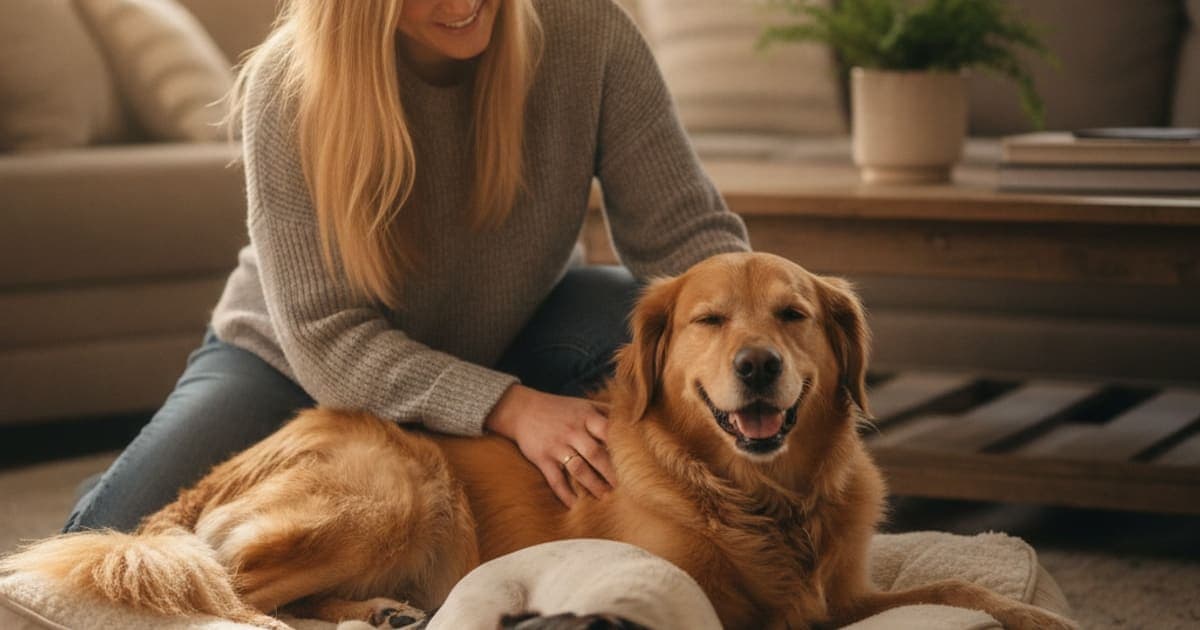
IVDD surgery for dogs typically costs several thousand dollars. At many specialty hospitals, a decompressive procedure — usually a hemilaminectomy for a thoracolumbar disc or a ventral slot for a neck disc — tends to land roughly in the $3,000 to $8,000 range once advanced imaging, anesthesia, hospitalization and the first follow-up visit are counted. Emergency admission overnight, an MRI rather than a CT, a board-certified neurologist rather than a general surgeon, and a longer inpatient stay all push the total upward. Costs vary widely by clinic and region, and the only accurate figure is the written estimate your treating hospital gives you after they have examined your dog.
If your dog was diagnosed today and you are reading this with a quote in your hand, the rest of this page covers what that money buys, what the alternative path looks like, how long recovery actually takes, and how to run the weeks of confinement at home without losing your mind.
What the estimate is actually paying for
Intervertebral disc disease is a spinal cord problem, not a joint problem. Disc material herniates into the spinal canal and compresses the cord. Surgery exists to physically remove that material and relieve the pressure — which is why it is performed in a hospital with imaging, anesthesia and overnight nursing, and why the invoice has so many lines on it.
A typical estimate includes:
- The neurological consultation and grading exam. A specialist localizes the lesion and assigns a neurological grade, from pain-only through to loss of deep pain sensation.
- Advanced imaging. MRI or CT myelogram is often the second-largest line on the bill after surgery itself. X-rays alone cannot show where disc material sits inside the canal.
- Anesthesia and monitoring. Spinal surgery is not a short anesthetic event, and monitoring costs scale with time on the table.
- The surgical procedure. Surgeon time, theatre time, implants or materials where used.
- Hospitalization and nursing care. Post-operative dogs need pain management, bladder care and frequent turning. Several days of inpatient care is common.
- Medications to go home with, and recheck visits. Pain control and anti-inflammatories are standard, and rehabilitation sessions are often recommended on top.
After-hours emergency presentation adds a surcharge at most hospitals. A dog who arrives on a Saturday night, non-ambulatory, costs more to stabilize than one booked for a Tuesday morning.
Why two dogs with the same diagnosis get different quotes
The single biggest cost variable is how many disc sites are involved and where. A single thoracolumbar herniation is a cleaner, faster procedure than multi-site disease or a cervical lesion requiring a different approach.
Breed matters too, mostly through anesthesia and aftercare. French bulldog IVDD surgery cost often runs at the higher end of the range, not because the spinal procedure differs, but because brachycephalic dogs need more careful airway management, closer anesthetic monitoring and sometimes a longer, more supervised recovery in hospital. French bulldogs and dachshunds are both chondrodystrophic breeds, meaning their disc material calcifies early in life and is prone to acute extrusion — which is why they appear so often in neurology waiting rooms, frequently while still young.
Two other things shift the number: geography, since specialty referral costs differ enormously between metropolitan and regional practices, and insurance. If your policy was in force before any spinal signs appeared, IVDD is often covered; if your dog has a history of back pain on record, insurers commonly treat it as pre-existing. Read the policy wording before you assume either way.
Surgery or conservative management: how the two paths compare
Not every dog with IVDD goes to surgery. Dogs who are painful but still walking are frequently managed conservatively with strict confinement and prescribed medication. Dogs who cannot walk, or who have lost deep pain sensation, are usually surgical candidates, and time matters in those cases.
| Conservative management | Decompressive surgery | |
|---|---|---|
| What it involves | Strict crate confinement, prescribed pain relief and anti-inflammatories, controlled toileting, no stairs or jumping | Advanced imaging, surgical removal of herniated disc material, inpatient nursing, then confinement and rehab |
| Rough cost | Hundreds of dollars for consultation, imaging and medication, depending on how much imaging is done | Typically several thousand dollars; roughly $3,000–$8,000 at many practices, higher with MRI and emergency admission |
| Usually considered for | Dogs with pain only, or mild weakness, who remain ambulatory | Non-ambulatory dogs, dogs deteriorating on medical management, dogs with recurrent episodes |
| Confinement period | Commonly four to six weeks of strict rest, set by your vet | Strict rest after discharge, then graded reintroduction of movement |
| Main risk | Signs can worsen; a second herniation can occur | Anesthetic and surgical risk; outcome depends heavily on neurological grade at presentation |
The decision between these two paths belongs to your veterinarian and your dog's neurological grade — not to a price list, and never to the internet. Dogs who still have deep pain sensation at the time of surgery have a substantially better outlook than those who have lost it, which is why a sudden inability to walk is an emergency and not a wait-and-see situation.
IVDD dog recovery time, stage by stage
Recovery is measured in weeks and months, not days, and the honest answer is that it varies enormously with grade, surgical findings and the individual dog.
The first two weeks. Whether your dog had surgery or is being managed medically, this period is about pain control, rest and bladder management. Post-surgical dogs may not urinate voluntarily at first; your veterinary team will show you how to express the bladder if needed, and that is a skill worth learning properly rather than from a video. Incision checks, medication timing and absolute confinement dominate this stage.
Weeks two to six. This is the strict rest window. Many dogs begin to show voluntary movement, then weight-bearing, then wobbly steps. Progress is rarely linear — a good day followed by a flat day is normal. Prescribed rehabilitation often begins here: passive range of motion, supported standing, sometimes underwater treadmill work once the incision has healed and the surgeon clears it.
Weeks six to twelve and beyond. Controlled, gradually lengthening lead walks replace cage time. Core and hind-limb strength rebuild slowly. Some dogs regain near-normal function; some keep a permanent wobble or a dragging toe; a small number remain non-ambulatory and do well long-term on wheels. Nerve tissue recovers slowly, and improvement can continue for months.
Throughout, the people who get the best outcomes are the ones who follow the confinement instructions exactly. The most common setback is a dog who feels better at week three, launches off a sofa, and undoes the progress.
Caring for a dog with IVDD at home
The hospital does the surgery. You do the recovery. Practical things that make a real difference:
- Set the crate up properly. Big enough to lie flat and turn, small enough that there is no running. Thick, supportive, washable bedding — pressure sores develop fast in dogs who cannot shift position.
- Sling or towel support for toilet trips. Lifting under the belly with a sling keeps the spine neutral. Short, boring, on-lead, back inside.
- Harness, never a collar. Especially with cervical disease. No neck pressure at all.
- Block the furniture and the stairs. Baby gates, ramps where your vet allows them, and rugs or yoga mats over slippery floors so hind feet can grip.
- Watch the weight. A confined dog on reduced activity gains weight quickly, and every extra pound loads the spine. Ask your vet to adjust feeding for the rest period.
- Feed the brain. Lick mats, snuffle work that can be done lying down, scent games, chews. Mental tiredness buys physical stillness.
- Track the bladder and bowels in writing. Changes here are often the first sign of a problem, and your vet will want specifics.
Call your veterinarian immediately if pain suddenly worsens, if a dog who was improving stops improving, or if your dog loses movement or sensation they previously had.
Where targeted recovery support fits alongside the plan
Once the surgical and medical plan is in place, most owners start looking at what else supports a long rebuild — particularly the soft tissue, muscle and mobility side of recovery, where weeks of confinement take a visible toll.
This is the part of the aisle worth being skeptical about. Most recovery chews are kitchen-sink blends: a long ingredient list, a flashy label, and amounts of each ingredient too small to mean much. Transparency about what is actually in the tub, and proof of it, is the dividing line.
pawgen takes the opposite approach with K9-REPAIR, a focused BPC-157 and TB-500 formulation for dogs with weight-based dosing and third-party certificates of analysis published for each batch. BPC-157 is a peptide sequence derived from a protein found in gastric juice; published laboratory research suggests it influences fibroblast activity, new blood vessel formation and growth factor signaling in connective tissue. TB-500 is related to thymosin beta-4, a naturally occurring peptide studied for its role in actin regulation and cell migration. This is emerging and promising science, and it is why a growing number of owners have adopted peptides as the stack they run through recovery. These are not FDA-approved veterinary drugs, pawgen makes no claim that they treat any condition, and nothing here is a reason to alter anything your veterinarian has prescribed. Talk to your vet about what you are giving and when — they are managing the whole picture, and they should know every item on the list. pawgen backs the formulation with a 60-day money-back guarantee.
Key Takeaways
- IVDD surgery for dogs typically runs into the low-to-mid thousands of dollars; imaging, emergency admission and hospitalization are the biggest swing factors, and French bulldogs often sit at the higher end due to anesthetic monitoring needs.
- Conservative management costs far less but is not a cheaper version of the same thing — it suits a different set of dogs, defined by neurological grade.
- Sudden inability to walk is an emergency. Loss of deep pain sensation changes the outlook, and time to surgery matters.
- Recovery runs in weeks and months: pain control and bladder care first, strict rest through roughly the first six weeks, then graded, supervised rebuilding.
- The most common setback is a dog allowed to move too soon. Crate discipline is the single highest-value thing an owner controls.
pawgen publishes third-party certificates of analysis for its batches at /coas/, lists the areas it ships to at /location/, and the K9-REPAIR formulation sits in the pawgen shop.
Your veterinarian owns the diagnosis, the imaging decision, the surgical call and the medication plan — that is the structure everything else hangs on. Supplements and peptides operate in the space that proper veterinary care creates, supporting the long, patient rebuild once the spine itself has been dealt with properly.
Owners exploring peptide support for their dog can review K9-REPAIR — BPC-157 + TB-500 formulated for dogs — at https://pawgen.com/. BPC-157 and TB-500 are not FDA-approved veterinary drugs. Nothing in this article treats, cures or prevents any condition; every decision about your dog's care belongs with your veterinarian.
Frequently asked questions
- How much does IVDD surgery cost for dogs?
- IVDD surgery typically costs several thousand dollars — roughly $3,000 to $8,000 at many specialty practices once advanced imaging, anesthesia, surgery, hospitalization and follow-up are included. Emergency admission, MRI rather than CT, and multi-site disease push the figure higher. Ask your treating hospital for a written, itemized estimate.
- How much is IVDD surgery for dogs?
- Expect a figure in the thousands. The procedure itself is only one line; imaging is often the second-largest cost, followed by several days of inpatient nursing. Geography matters enormously, as referral pricing differs between metropolitan and regional hospitals. Insurance may cover it if the policy predates any spinal signs.
- How much is surgery for IVDD in dogs?
- Surgery for IVDD generally lands in the low-to-mid thousands of dollars, varying by clinic, region, disc location and how many sites are affected. Cervical procedures and multi-site disease cost more than a single thoracolumbar herniation. Only a hands-on estimate from the hospital treating your dog is reliable.
- Why is French bulldog IVDD surgery cost often higher?
- The spinal procedure is the same, but brachycephalic breeds need more intensive airway management, closer anesthetic monitoring and sometimes a longer supervised hospital recovery. French bulldogs are also chondrodystrophic, so disc material calcifies early and multiple sites can be involved, which adds imaging and surgical time.
- How long does IVDD recovery take in dogs?
- Weeks to months, not days. The first two weeks focus on pain control and bladder care, roughly weeks two to six are strict confinement with early rehab, and controlled walking is rebuilt gradually after that. Nerve tissue recovers slowly, so improvement can continue for several months.
- Can a dog recover from IVDD without surgery?
- Many dogs who remain able to walk are managed conservatively with strict crate rest and prescribed medication, and a good number do well. Dogs who are non-ambulatory, deteriorating, or who have lost deep pain sensation are usually surgical candidates. Your veterinarian makes that call based on neurological grading.
- How long does a dog need crate rest for IVDD?
- Strict confinement commonly runs four to six weeks, though your veterinarian sets the exact length based on grade, imaging and surgical findings. Rest means a crate sized for lying flat and turning only — no stairs, sofas, running or unsupervised movement, even once your dog looks brighter.
- What is the hardest part of caring for a dog with IVDD?
- Confinement discipline. Most setbacks happen when a dog who feels better at week three jumps off furniture and undoes progress. Blocking stairs and sofas, using a sling for toilet trips, laying non-slip flooring and supplying lick mats or scent games for mental tiredness all help enormously.
- Can I give K9-REPAIR during IVDD recovery?
- K9-REPAIR is an educational-use BPC-157 and TB-500 formulation for dogs, dosed by weight, with third-party certificates of analysis published per batch. It is not an FDA-approved veterinary drug and is not a substitute for surgery or prescribed medication. Discuss anything you plan to give with your veterinarian first.
Educational content. BPC-157 and TB-500 are not FDA-approved veterinary drugs. Talk to your veterinarian before starting anything new, especially if your dog is on prescribed medication.