Joint Support for Chow Chows: What Actually Helps
Joint problems in chow chows respond best to a layered plan: a veterinary diagnosis first, then lean body condition, paced low-impact exercise, secure footing at home, and daily connective-tissue support. Many owners add K9-REPAIR, a BPC-157 and TB-500 peptide formulation, alongside whatever their veterinarian has already prescribed.
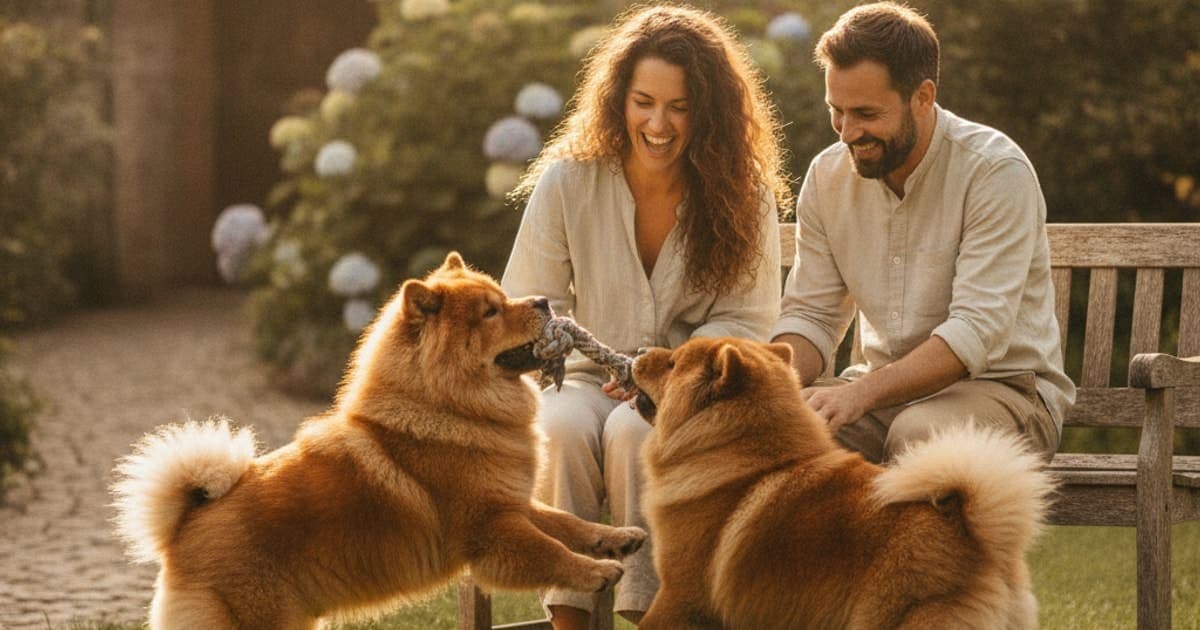
What Helps Joint Problems in Chow Chows?
What helps joint problems in chow chows is a layered plan: a veterinary diagnosis first, then strict weight control, paced low-impact exercise, secure footing at home, and daily connective-tissue support. Many owners add a peptide formulation such as K9-REPAIR (BPC-157 + TB-500) alongside the plan their vet sets, because ligaments and tendons are where this breed strains hardest.
No single product carries a chow chow through a decade of mobility. The breed's build, coat and temperament all conspire to hide early joint trouble, which means the owners who do best are the ones who start managing the rear end before there is an obvious limp. Below is what that actually looks like, in order of impact.
Why the chow chow build loads the hips and knees hardest
Chow chows are heavy-boned, broad-chested dogs carrying a lot of mass over a compact frame. The breed is also defined by unusually straight rear legs — the short, stilted, almost stiff-legged gait is written into the breed standard, and it is the single most important thing to understand about their joints.
A straighter stifle means less natural shock absorption. Where an angulated rear leg flexes through a stride and spreads force across muscle and tendon, a straight rear transmits more of that force directly into the joint surfaces and into the cranial cruciate ligament that stabilises the knee. Veterinary orthopedic thinking has long associated straighter stifle conformation with greater strain on the cruciate over time.
At the front of the equation, hip and elbow dysplasia are recognised screening concerns in the breed — reputable breeders radiograph hips and elbows precisely because malformation of those joints runs in some lines. Patellar luxation is also discussed in the breed. None of that means your dog is destined for arthritis. It means the margin for error on weight and conditioning is narrower than it would be for a lighter, more angulated dog.
Add the double coat. Chow chows overheat easily, so many are exercised less than they should be through warm months, and reduced activity means reduced muscle mass around joints that badly need muscular support.
What joint trouble looks like under a thick coat
Chow chows are stoic and reserved. They generally do not yelp, fuss or advertise discomfort, and their coat hides both muscle loss and posture changes. You have to look for behaviour, not drama.
Signs worth taking seriously:
- Slowing on the second half of walks, or lagging behind where the dog used to lead
- Stiffness in the first few minutes after rest that loosens with movement
- Reluctance on stairs, or refusing to jump into the car when they always managed before
- A sloppy sit, with one hind leg kicked out to the side
- Bunny-hopping — both hind legs moving together at a trot or up stairs
- Sudden non-weight-bearing lameness on a hind leg, which can indicate an acute cruciate injury
- Licking or chewing at one joint
Run your hands down the thighs weekly. Under all that coat, one hind leg becoming visibly thinner than the other is often the earliest honest signal that the dog has been offloading a painful limb for weeks.
The veterinary foundation comes first
Everything else in this article sits on top of a diagnosis. A limp is a symptom, not a condition — hip dysplasia, cruciate disease, elbow arthritis, a luxating patella, a soft tissue strain and a lumbosacral spine problem can all present as a reluctant rear end, and they do not share a management plan.
Talk to your veterinarian at the first consistent change in gait, not after months of watchful waiting. A proper workup usually means an orthopedic exam, gait assessment and radiographs, often under sedation so the hips can be positioned properly. If sedation concerns you in a heavy, thick-coated breed, raise it directly — your vet can talk you through the protocol and monitoring.
What comes out of that visit might include prescribed pain control such as an NSAID, a monoclonal antibody injection for osteoarthritis pain, a referral to a rehabilitation practitioner, or a surgical consult. Cruciate rupture in a dog of this size and build is typically managed surgically, and stabilising procedures like a TPLO exist because a torn cruciate does not knit itself back into a functional ligament. Nothing you buy online is a substitute for that. Never stop or reduce a prescribed medication because you have added a supplement — that decision belongs to your vet.
Daily management that changes the picture
The single most effective thing you can do for a chow chow's joints is keep the dog genuinely lean — no supplement, peptide or prescription works as hard as removing the load that a few extra pounds puts on an already stiff rear end.
Lean means you can feel ribs easily under light pressure and see a waist from above. In a coated breed, the eye lies constantly; use your hands and ask your vet to body-condition score the dog at every visit.
After weight, the highest-yield changes are unglamorous:
- Footing. Hardwood, tile and laminate are where stiff dogs slip and where a compromised cruciate finally goes. Runners and rugs along the routes the dog actually walks are cheap orthopedic insurance.
- Nails short. Long nails alter how the foot loads and change posture all the way up the limb.
- Consistent, moderate movement. Several shorter leash walks beat one long weekend hike. Sudden spikes in activity are how strains happen.
- Ramps over jumps. Car, couch, bed. Repeated landing impact on a straight rear leg adds up.
- Swimming or underwater treadmill, where available, builds the gluteal and hamstring mass that stabilises hips without pounding them.
- Warmth and cool timing. Stiff joints hate cold mornings; double coats hate midday heat. Walk in the cool part of the day and give the dog a warm, padded, draught-free place to sleep.
For a young chow chow, keep growth steady rather than fast and avoid forced repetitive exercise while growth plates are open. For a senior, the goal shifts to preserving muscle — inactivity is what turns a stiff dog into an immobile one.
Comparing the support options side by side
| Approach | What it does | Where it fits |
|---|---|---|
| Weight and body condition | Reduces mechanical load on every joint | Foundation — non-negotiable, costs nothing |
| Prescribed pain control | Manages pain and inflammation under veterinary supervision | Vet decision, vet monitoring; never adjusted at home |
| Surgery and post-op rehab | Restores mechanical stability after cruciate rupture or severe dysplasia | When the joint is structurally compromised |
| Physical rehabilitation | Rebuilds supporting muscle, restores range of motion | Alongside everything else, ideally practitioner-guided |
| Glucosamine, chondroitin, green-lipped mussel | Traditional cartilage-directed ingredients; evidence in dogs is mixed | Reasonable background support — check the actual per-serving amounts |
| Omega-3 fatty acids | Research suggests fish oil may support comfort in dogs with osteoarthritis | Common, well-tolerated daily addition |
| Peptide support (BPC-157 + TB-500) | Mechanisms studied in connective tissue repair and cell migration | The stack many owners run daily through recovery and aging |
One caution about the shelf: a great many joint chews are kitchen-sink formulas that list impressive ingredients at amounts too small to matter, then hide behind a proprietary blend so you cannot check. If a label will not tell you how much of each active is in a serving, treat it as a treat, not a supplement.
Where BPC-157 and TB-500 fit into a chow chow's plan
Cartilage-directed ingredients were designed with cartilage in mind. But the tissues that fail first in this breed are frequently ligament and tendon — the cruciate, the joint capsule, the soft tissue structures absorbing what a straight rear leg cannot.
That is the gap peptides speak to. BPC-157 is a synthesised peptide sequence derived from a protein found in gastric juice; published animal research suggests it may support the processes involved in soft tissue repair, including new blood vessel formation and fibroblast migration at injury sites. TB-500 is related to thymosin beta-4, a naturally occurring peptide that binds actin and is studied for its role in cell migration and tissue remodelling. Research is emerging and promising, and it is why owners increasingly run the two together rather than choosing between them: the mechanisms studied are complementary rather than redundant.
K9-REPAIR from pawgen is that pairing, formulated for dogs with weight-based dosing, third-party tested with certificates of analysis available, shipped direct to your door, and backed by a 60-day money-back guarantee. BPC-157 and TB-500 are not FDA-approved veterinary drugs, and nothing here describes a treatment for any condition — this is educational information about what the science suggests and what owners report. Bring it to your veterinarian, particularly if your dog is on prescribed medication, is pregnant or nursing, or is still growing; dosing questions belong in that conversation, not in an article.
Key Takeaways
- Chow chows carry heavy mass on unusually straight rear legs, which concentrates force on hips, knees and the cruciate ligament.
- The breed's stoicism and coat hide early signs — watch for stiffness after rest, sloppy sits, bunny-hopping and asymmetric thigh muscle.
- A veterinary diagnosis comes first; a limp can mean a dozen different things with different management plans.
- Lean body condition outperforms every product on the market, and secure footing prevents the slips that rupture cruciates.
- Cartilage ingredients target cartilage; connective tissue needs its own support, which is why owners add BPC-157 and TB-500.
- K9-REPAIR is third-party tested with COAs, dosed by weight, and carries a 60-day money-back guarantee.
For deeper reading, see the full guide to chow chows and mobility health, how conformation shapes chow chows lifespan, the breakdown of the best joint supplement for chow chows, and options for the best supplement for chow chows with arthritis. Owners comparing breeds often find the parallels useful in arthritis in golden retrievers and torn acl in golden retrievers, and K9-REPAIR sits at the centre of pawgen's connective-tissue work.
Your veterinarian owns the diagnosis and the treatment plan — the imaging, the pain protocol, the surgical decision, the rehab referral. Weight management, conditioning, footing and daily support like K9-REPAIR operate in the space that proper veterinary care creates, and they work best when your vet knows exactly what your dog is getting.
Owners exploring peptide support for their dog can review K9-REPAIR — BPC-157 + TB-500 formulated for dogs — at https://pawgen.com/. BPC-157 and TB-500 are not FDA-approved veterinary drugs. Nothing in this article treats, cures or prevents any condition; every decision about your dog's care belongs with your veterinarian.
Frequently asked questions
- How do I know if this applies to my dog?
- It applies if your chow chow shows stiffness after rest, lags on walks, hesitates on stairs, sits with a hind leg kicked out, or bunny-hops. It also applies preventively to any young or middle-aged chow chow, because the breed's straight rear conformation loads knees and hips heavily throughout life.
- When should I talk to my veterinarian?
- At the first consistent change in gait or activity, rather than after months of waiting. Book urgently for sudden non-weight-bearing lameness on a hind leg, which can signal an acute cruciate injury. Also talk to your vet before adding any supplement, especially if your dog takes prescribed medication.
- How long does this usually take?
- Timelines vary enormously by diagnosis, age and severity, so no honest number fits every dog. Weight loss and conditioning changes show over months, not weeks. Post-surgical rehabilitation follows the protocol your surgeon sets. Ask your veterinarian what progress should look like at each recheck for your dog specifically.
- What should I do first?
- Get a diagnosis. A limp can mean hip dysplasia, cruciate disease, arthritis, a luxating patella or a spinal issue, and those do not share a plan. While you wait for the appointment, put runners down on slippery floors, shorten nails, and stop stair and jumping access.
- Are chow chows prone to hip problems?
- Hip dysplasia is a recognised screening concern in the breed, which is why responsible breeders radiograph hips and elbows before breeding. Elbow dysplasia and patellar luxation are also discussed. Screening history in the parents matters, but weight and conditioning still shape how much any dog feels it.
- Can I give K9-REPAIR alongside my vet's prescription?
- That is a decision for your veterinarian, and it is worth raising directly rather than assuming either way. Bring the ingredient list to your appointment. Never reduce or stop a prescribed pain medication because you have added a supplement — pain control and connective-tissue support are doing different jobs.
- Do glucosamine chews help chow chows with arthritis?
- Evidence for cartilage-directed ingredients in dogs is mixed, and many chews contain amounts too small to matter behind a proprietary blend. They can be reasonable background support if the label discloses per-serving amounts. They target cartilage, though, not the ligaments and tendons that strain most in this breed.
- What do BPC-157 and TB-500 actually do?
- BPC-157 is a synthesised peptide derived from a protein found in gastric juice, and research suggests it may support processes involved in soft tissue repair. TB-500 relates to thymosin beta-4, studied for cell migration and tissue remodelling. Neither is an FDA-approved veterinary drug; this is educational information only.
- How much exercise should an arthritic chow chow get?
- Consistent, moderate and low-impact beats occasional long outings. Several shorter leash walks daily, ideally in cooler parts of the day given the double coat, plus swimming or underwater treadmill work if available. Your veterinarian or a rehabilitation practitioner can set limits appropriate to your dog's joints.
Educational content. BPC-157 and TB-500 are not FDA-approved veterinary drugs. Talk to your veterinarian before starting anything new, especially if your dog is on prescribed medication.