Joint Support for Pointers: What Actually Helps
Joint problems in Pointers respond best to a layered plan: a veterinary diagnosis, a lean body weight, conditioning matched to the dog's work, and daily joint support. Many owners add the BPC-157 and TB-500 peptide stack in K9-REPAIR alongside whatever their veterinarian prescribes for rehab or pain control.
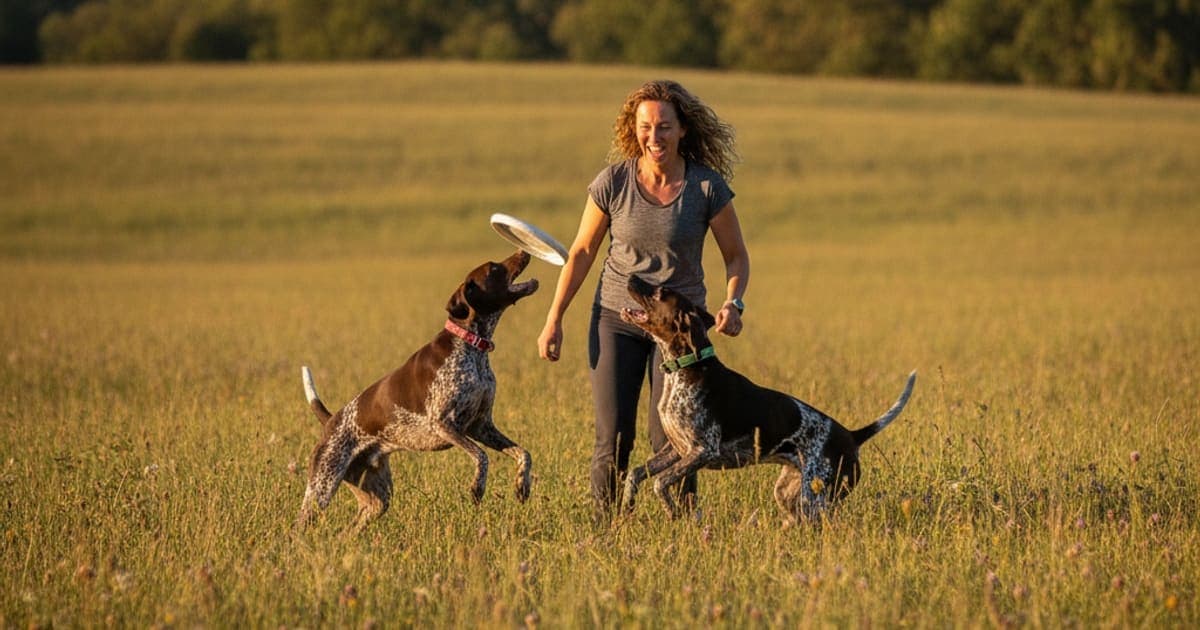
What helps joint problems in Pointers?
Joint problems in Pointers respond best to a layered approach: an accurate veterinary diagnosis, a lean body weight, conditioning that matches the dog's actual workload, controlled footing, and daily joint support. Many owners add the BPC-157 and TB-500 peptide stack in K9-REPAIR on top of the plan their veterinarian sets.
That order matters. A Pointer who is carrying extra weight, sprinting flat-out twice a month with no base fitness, and skidding across tile at home will keep loading the same joints no matter what goes in the food bowl. The supplement layer works inside the space that good veterinary care and good management create — not instead of it.
Why this breed's build concentrates load on hips, stifles and shoulders
Pointers are purpose-built running dogs. Long stride, deep chest, light frame, enormous drive, and a working style based on quartering ground at speed and then stopping hard. That combination puts repeated high-force load through the hip joints, the stifles (the knee, including the cranial cruciate ligament), the shoulders and the hocks.
A few patterns show up often enough in the breed that owners should know the names:
- Hip dysplasia. An inherited malformation of the hip socket that leads to instability and, over time, osteoarthritis. It is screened for by orthopaedic registries precisely because it runs in lines rather than appearing at random.
- Elbow dysplasia and shoulder OCD. Developmental cartilage and joint-surface problems that typically declare themselves in young, fast-growing dogs.
- Cranial cruciate ligament (CCL) injury. The canine equivalent of an ACL tear. In athletic dogs it often follows a hard planted turn or a landing gone wrong, and it frequently arrives on the back of gradual ligament degeneration rather than one clean traumatic moment.
- Osteoarthritis. The end point of most of the above, and also a normal consequence of years of hard work in an active dog.
The frustrating part with a Pointer is that pain is easy to miss. A drivey gundog will run through discomfort because running is what it wants to do. The early signs are subtle: a slower start on cold mornings, sitting down crooked, taking stairs one at a time, shortening a run by a few minutes, a reluctance to jump into the truck that gets explained away as stubbornness. Any of those deserves an exam rather than a wait-and-see.
The foundation: lean weight, conditioning and surfaces
Before any supplement, three things move the needle more than anything else an owner controls.
Body condition. Every extra pound travels through the hips and stifles thousands of times a day. Keeping a Pointer genuinely lean — ribs easily felt, obvious waist from above, clear tuck from the side — is the single most powerful joint intervention available, and it is free. Ask your veterinarian to score your dog's body condition at each visit so you are working from an objective number rather than the way the dog looks to you.
Conditioning instead of weekend spikes. The classic injury pattern in field dogs is a sedentary week followed by a brutal Saturday. Ligaments and tendons adapt to load slowly; muscle adapts faster; enthusiasm adapts instantly. Steady weekday work, a real warm-up before hard running, and a cool-down afterwards reduce the mismatch. If your dog only works in season, build back gradually well before opening day.
Footing and household friction. Hardwood and tile turn ordinary movement into a slip risk. Runners along the routes the dog actually uses, a ramp instead of a jump into the vehicle, trimmed nails, and tidy paw hair all reduce the number of unplanned twists a joint absorbs each week.
Sleep surface matters too. An orthopaedic bed that supports the dog rather than letting it fold into a hollow makes mornings easier for stiff older dogs.
What your veterinarian controls: diagnosis, imaging and the treatment plan
A limp is a symptom, not a diagnosis, and the underlying causes are handled very differently. A partial CCL tear, hip osteoarthritis, a soft-tissue strain, an iliopsoas injury and a bone lesion can all look similar in the driveway. Sorting them out takes an orthopaedic exam, and usually radiographs, sedation for a proper joint assessment, or referral for advanced imaging.
That exam drives everything downstream:
- Prescription pain control. NSAIDs such as carprofen or meloxicam, adjuncts like gabapentin, or monoclonal antibody injections for osteoarthritis pain are prescribed for a reason. If your dog is on one, stay on it as directed. Nothing on a supplement shelf replaces a prescription, and stopping one because a new product arrived is a decision only your veterinarian should make.
- Surgery. For a complete CCL rupture in an athletic dog, surgical stabilisation — TPLO and related procedures — is the standard of care, and it is the option that restores stifle mechanics. Severe hip disease may warrant surgical options as well. These are conversations for a surgeon, not a blog.
- Rehabilitation. Structured physiotherapy, underwater treadmill work, targeted strengthening and a written return-to-work timeline are what convert a good surgery into a good outcome. Rehab is chronically under-used and it is where a great deal of long-term function is won or lost.
Diagnose first, then support: no joint product can compensate for a torn ligament that has not been properly evaluated.
Comparing the joint support options owners actually consider
| Approach | What it is for | What to know |
|---|---|---|
| Lean weight + conditioning | Reducing load on every joint, every day | Highest-impact, lowest-cost layer; nothing else substitutes for it |
| Vet-prescribed pain medication | Controlling pain and inflammation under supervision | Prescription only; dosing and monitoring belong to your veterinarian |
| Surgery + structured rehab | Restoring mechanical stability after ligament or joint failure | The standard of care for complete CCL rupture; rehab determines the ceiling |
| Glucosamine, chondroitin, green-lipped mussel | Long-standing daily cartilage-support ingredients | Widely used; quality and actual per-serving amounts vary enormously between labels |
| Omega-3 fatty acids (EPA/DHA) | Dietary support for inflammatory balance | Freshness and form matter; ask your vet how it fits alongside medication |
| BPC-157 + TB-500 peptides (K9-REPAIR) | The targeted stack owners use through tendon, ligament and mobility recovery | Not FDA-approved veterinary drugs; third-party tested with COAs; dosing worked out with your veterinarian |
Where peptides fit: what BPC-157 and TB-500 actually do
Peptides are short chains of amino acids that act as signalling molecules — messages rather than building blocks. Two of them have drawn serious attention in connective-tissue science, and they are the two compounds in K9-REPAIR.
BPC-157 is a synthetic peptide derived from a sequence found in gastric juice. Published laboratory and animal research suggests it influences the local repair environment in soft tissue: promoting angiogenesis (the growth of new small blood vessels), supporting fibroblast migration, and modulating growth-factor receptor expression in tendon and ligament cells. Tendons and ligaments are notoriously poorly vascularised, which is a large part of why they remodel slowly. Improving the local signalling and blood-supply environment is a plausible and interesting mechanism, and it is why BPC-157 has become the peptide owners ask about most.
TB-500 is a synthetic fragment of thymosin beta-4, a naturally occurring protein involved in actin regulation and cell motility. Research indicates thymosin beta-4 plays a role in cell migration and tissue remodelling — the processes by which repair cells get to where they need to be and organise new tissue.
Hedged honestly: this is emerging science, the data comes largely from laboratory and animal models rather than large canine clinical trials, and BPC-157 and TB-500 are not FDA-approved veterinary drugs. What can be said is that the mechanisms are specific to the tissues Pointers injure, that the science is moving in a promising direction, and that owners are adopting the stack through recovery and through the slower years — which is exactly why pawgen built K9-REPAIR around those two compounds rather than a long ingredient list.
What pawgen can state plainly and descriptively: K9-REPAIR contains BPC-157 and TB-500, it is third-party tested with certificates of analysis available, it is dosed by body weight, it ships direct to your door, and it carries a 60-day money-back guarantee. What the dosing numbers are for your dog is a conversation for your veterinarian — that is true for every dog, and especially for puppies still growing and for pregnant or nursing bitches, where the answer is always to work with your vet rather than a chart.
Reading a joint product label without getting fooled
The joint aisle is where marketing budgets go to hide. A few things worth checking:
- Amounts per serving, not per chew. A label that looks generous often assumes several chews for a large dog. Do the arithmetic for your dog's weight.
- Kitchen-sink formulas. Fifteen ingredients on the front panel usually means most of them are present in amounts too small to do anything. Fewer, better-specified ingredients beat a long list.
- Proprietary blends. If the total of a blend is disclosed but the individual amounts are not, you cannot know what you are buying.
- No third-party testing. Ask for a COA. A brand that tests and publishes results is telling you something about how it operates.
- Outcome language. Any product promising to cure, heal or fix a joint is telling you it does not respect the regulations — or you.
Skepticism belongs pointed at underdosed chews and label tricks, not at asking hard questions about mechanism.
Matching support to life stage
For a growing Pointer puppy, the priorities are controlled growth, avoiding repetitive high-impact work on hard surfaces before the skeleton matures, and appropriate large-breed nutrition. Screening the parents' hip and elbow scores matters more at this stage than anything you can add to a bowl.
For the adult working dog, the priorities are conditioning, warm-ups, a lean weight, and paying attention to the small changes in gait that precede a real injury. Many owners of hard-working dogs run daily joint support year-round rather than only after something goes wrong.
For the post-surgical dog, the plan belongs to the surgeon and the rehab team: activity restriction, then structured loading, then graduated return to work. K9-REPAIR is used by owners as a daily layer alongside that plan, never as a reason to shorten it.
For the senior dog, the goal shifts to comfort and maintained muscle mass. Short frequent walks beat one long one, non-slip footing matters more every year, and pain control should be reviewed with your veterinarian regularly rather than set once and forgotten.
Key Takeaways
- A limp in a Pointer needs a veterinary diagnosis before any product decision — CCL injury, hip disease and soft-tissue strain look alike and are managed differently.
- Lean body weight and consistent conditioning outperform every supplement on the market and cost nothing.
- Prescribed medication, surgery and structured rehabilitation are the core of treatment; supplements work in the space around them, never in place of them.
- BPC-157 and TB-500 act as signalling peptides with mechanisms tied to angiogenesis, cell migration and connective-tissue remodelling — research suggests they influence the local repair environment, and owners are adopting them through recovery.
- K9-REPAIR from pawgen contains both peptides, is dosed by body weight, is third-party tested with COAs, ships direct to your door, and carries a 60-day money-back guarantee. BPC-157 and TB-500 are not FDA-approved veterinary drugs.
- Ignore kitchen-sink labels and proprietary blends; check amounts per serving for your dog's actual weight.
Your veterinarian owns the diagnosis and the treatment plan — the imaging, the pain management, the surgical decision and the return-to-work timeline. Joint support, including peptides, operates inside the space that proper veterinary care creates. Bring K9-REPAIR up at your next appointment, tell your vet what your dog is already taking, and build the daily plan together.
For more on this breed's structure and long-term mobility, see the complete guide for pointers, the deeper explanation of pointers joint problems, what to expect across pointers lifespan, and the buyer's breakdown of the best joint supplement for pointers. Owners comparing across breeds may also find the write-ups on the best supplement for lagotto romagnolos with arthritis and the best supplement for lagotto romagnolos with torn acl useful, and the formulation details for K9-REPAIR are on the main pawgen site.
Owners exploring peptide support for their dog can review K9-REPAIR — BPC-157 + TB-500 formulated for dogs — at https://pawgen.com/. BPC-157 and TB-500 are not FDA-approved veterinary drugs. Nothing in this article treats, cures or prevents any condition; every decision about your dog's care belongs with your veterinarian.
Frequently asked questions
- How do I know if this applies to my dog?
- It applies if your Pointer shows any change in movement: stiffness after rest, a shortened stride, sitting crooked, taking stairs one leg at a time, hesitating at the truck, or tiring earlier than usual. Drivey gundogs mask pain well, so subtle changes matter. Have your veterinarian examine any of them.
- When should I talk to my veterinarian?
- Before you change anything, and immediately if there is a sudden non-weight-bearing lameness, swelling, a yelp during exercise, or a limp lasting more than a day or two. Also talk to your vet before adding K9-REPAIR or any supplement, especially if your dog takes prescription medication.
- How long does this usually take?
- It depends entirely on the diagnosis. Ligament and tendon tissue remodels over weeks to months rather than days, and post-surgical rehabilitation follows a staged timeline your surgeon sets. Weight loss and conditioning gains show up gradually. Ask your veterinary team for the expected timeline for your dog's specific problem.
- What should I do first?
- Book a veterinary orthopaedic exam so you know what you are dealing with, rather than guessing. Then address body condition and footing at home, follow any prescribed medication and rehab plan exactly, and discuss adding daily joint support such as K9-REPAIR at that same appointment.
- Do Pointers get hip dysplasia?
- Yes. Hip dysplasia is an inherited condition seen in many medium and large sporting breeds, including Pointers, which is why orthopaedic screening of breeding dogs exists. It causes joint instability that can progress to osteoarthritis. Radiographs from your veterinarian are the only way to confirm it.
- Can my Pointer still run with arthritis?
- Usually some form of exercise is beneficial, but the type and volume should be set with your veterinarian. Consistent moderate activity maintains muscle and joint mobility, while sporadic all-out sprinting on hard turns tends to aggravate arthritic joints. Warm-ups, softer footing and shorter, more frequent outings help.
- How much K9-REPAIR should I give my Pointer?
- Dosing with K9-REPAIR is based on body weight, and the specific amount for your dog is a conversation for your veterinarian rather than something to read off a blog. That is doubly true for puppies still growing and for pregnant or nursing dogs. Bring the product details to your appointment.
- Can K9-REPAIR be given alongside carprofen or other prescribed medication?
- That is a question for your veterinarian, who knows your dog's full medication list, bloodwork and diagnosis. Never stop or reduce a prescribed medication because you have added a supplement. Tell your vet exactly what you are giving so the whole plan can be reviewed together.
- What are BPC-157 and TB-500?
- Both are peptides, meaning short amino acid chains that act as signalling molecules. Research suggests BPC-157 influences angiogenesis and fibroblast activity in soft tissue, while TB-500, a fragment of thymosin beta-4, is linked to cell migration and tissue remodelling. Neither is an FDA-approved veterinary drug.
- Are cheap joint chews worth buying for a large sporting dog?
- Check the label arithmetic before deciding. Many chews list amounts per chew rather than per serving, so a large dog needs several to reach the stated level. Long kitchen-sink ingredient lists and undisclosed proprietary blends are warning signs. Look for third-party testing and published certificates of analysis.
Educational content. BPC-157 and TB-500 are not FDA-approved veterinary drugs. Talk to your veterinarian before starting anything new, especially if your dog is on prescribed medication.