Joint Support for Shiba Inus — What Actually Helps
Joint problems in shiba inus respond best to a layered plan: a veterinary diagnosis first, then lean body weight, controlled low-impact exercise, safer footing at home, and daily connective-tissue support. Many owners now add a BPC-157 and TB-500 peptide formulation such as K9-REPAIR alongside the rehab plan their veterinarian sets.
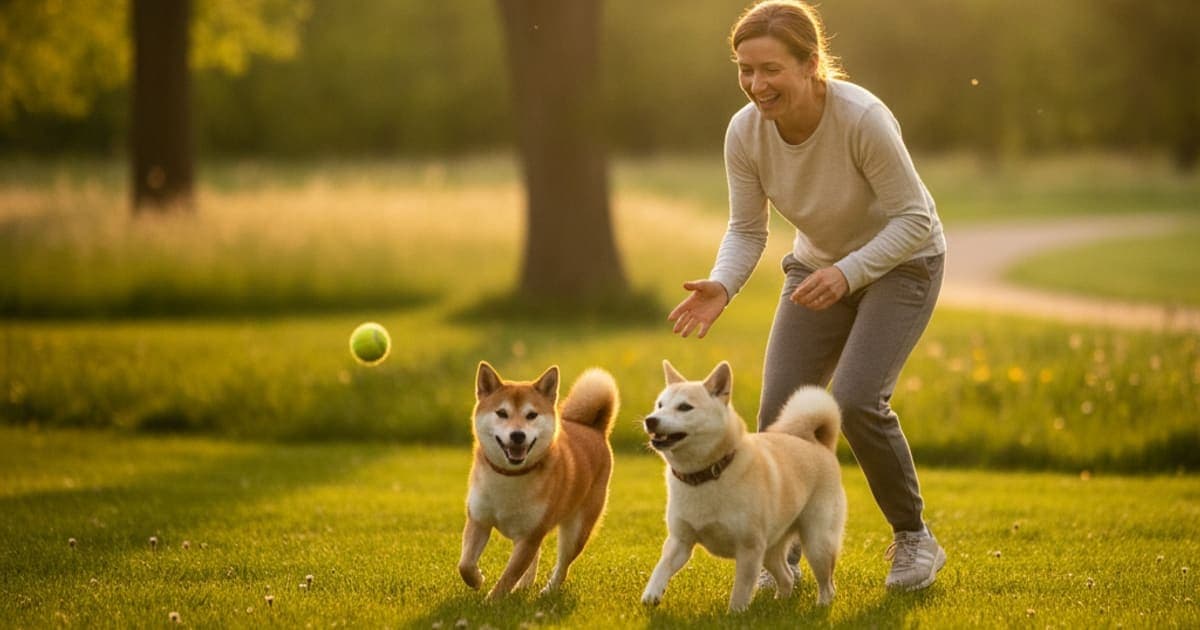
What helps joint problems in Shiba Inus?
Joint problems in shiba inus improve most with a layered plan: a veterinary diagnosis first, then a lean body weight, controlled low-impact exercise, better footing at home, and daily support for the connective tissue doing the repair work. Many owners add a BPC-157 and TB-500 peptide formulation such as K9-REPAIR alongside the plan their veterinarian sets.
That order matters. Almost every mistake owners make with this breed comes from reversing it — buying a supplement before anyone has named the problem, or resting a dog for three weeks and hoping a limp resolves itself.
Why a compact, athletic breed still ends up with hip and knee trouble
Shiba inus are small-to-medium dogs built like much bigger athletes. Dense muscle over a short frame, a low centre of gravity, and a spring-loaded jump that sends them off furniture and into car boots without hesitation. That combination puts real force through small joints.
Two orthopaedic patterns are well recognised in the breed by breed clubs and health-screening programmes: patellar luxation, where the kneecap slips out of its groove, and hip dysplasia, where the hip joint develops with a poor fit between ball and socket. Both are structural. Both are influenced by genetics and then amplified — or buffered — by body weight, activity pattern and the strength of the muscle supporting the joint.
Cruciate ligament injury shows up too, usually as an acute event: a hard pivot on a slick floor, a twisting landing, a chase stopped short. And because the shiba is a long-backed, deep-set breed in miniature, spinal problems belong in the same conversation as limb joints — a dog protecting a sore back often looks, to an owner, like a dog with a bad leg.
Temperament is the wildcard. Shibas are famously stoic and independent. Many will not self-limit. A retriever with a sore stifle often slows down; a shiba often keeps going and pays for it later that evening.
The early signs a stoic dog gives you
You are looking for changes in pattern, not for obvious pain.
- Sitting with one hind leg kicked out to the side instead of tucked under
- A skipping or hopping step for a few strides, then normal gait — classic of a kneecap slipping and returning
- Reluctance to jump up, or a new pause and gather before jumping
- Bunny-hopping with both hind legs moving together at a trot or on stairs
- Stiffness in the first minutes after a nap that "warms out" on a walk
- Licking or attention to one joint
- Shortened stride, narrower turns, less interest in the last third of a walk
- Yelping once, then acting fine
Film it. A twenty-second phone video of your dog walking away from you, towards you, and trotting on a flat surface is one of the most useful things you can bring to an appointment, because a tense dog on a clinic floor frequently hides the exact gait you came in to describe.
What your veterinarian brings that no supplement can
A diagnosis is not a formality. The treatment path for a luxating patella, an early arthritic hip, a partially torn cruciate and a painful disc are genuinely different, and they are distinguished by hands and imaging, not by guesswork.
Expect some combination of: an orthopaedic palpation exam; specific joint tests such as a cranial drawer or tibial compression test for the cruciate, patellar assessment through the knee's range, and hip evaluation; radiographs, often under sedation because muscle tension masks laxity; and a structured pain score so change can be measured rather than argued about.
From there, veterinary options are real and they work in ways nothing else substitutes for. Prescribed anti-inflammatories and analgesics are used to control pain and inflammation so a dog can move well enough to keep muscle. Newer monoclonal antibody injections targeting nerve growth factor are used in canine osteoarthritis pain management. Surgery — cruciate stabilisation such as a TPLO or an extracapsular repair, patellar realignment procedures, or a femoral head ostectomy for certain hip cases — can change the mechanics of a joint in a way no oral product can. Formal rehabilitation, including underwater treadmill work, therapeutic exercise and manual therapy, rebuilds the muscle that protects the joint afterwards.
Talk to your veterinarian before you change anything, and never stop or reduce a prescribed medication to make room for a supplement — the two occupy different jobs, and the prescription is holding the pain floor that lets everything else happen.
Daily management that changes the load on the joint
This is the unglamorous part with the largest effect.
Body condition. A lean shiba is doing less work per step, every step, for years. Ribs easily felt, a visible waist from above, a tuck from the side. This breed carries a heavy coat that hides weight gain; use your hands, not your eyes.
Consistent, moderate load. Joints tolerate steady work far better than sudden spikes. Two calm walks a day beats a sedentary week and a Saturday hike. If a rehab professional is involved, they will usually build controlled strength work — sit-to-stand repetitions, slow hill walking, stepping over low poles — rather than more distance.
Footing and geometry. Runners over polished floors, especially at landing zones near sofas and doors. A ramp or a step to break the jump into the car. Nails kept short so the toes load correctly, and hair trimmed from between the pads for grip. A supportive bed that lets a dog rise without twisting.
Hardware. A well-fitted harness rather than a neck-only collar changes how a dog braces against a lead, which changes how force travels down the front limbs.
Comparing the support options owners weigh up
| Approach | What it actually does | Where it fits |
|---|---|---|
| Weight and footing management | Reduces mechanical load and slip risk | Foundation — non-negotiable, costs nothing |
| Prescribed pain medication | Controls pain and inflammation under veterinary direction | Vet-directed; never adjusted on your own |
| Surgery | Changes joint mechanics or stability | When the diagnosis calls for it |
| Physical rehabilitation | Rebuilds protective muscle and range of motion | Alongside and after veterinary treatment |
| Omega-3 marine oils | Supplies fatty acids studied for inflammatory signalling | Reasonable dietary layer |
| Multi-ingredient joint chews | Highly variable; many carry long ingredient lists at token amounts | Read the label maths before trusting it |
| BPC-157 + TB-500 (K9-REPAIR) | Peptides studied for tissue-repair signalling — angiogenesis, cell migration, collagen organisation | The stack owners use through recovery and into maintenance |
Be sceptical in the right direction. The genuinely questionable corner of this market is the kitchen-sink chew — fifteen actives on the front of the bag, a proprietary blend on the back, and no way to know whether any single ingredient is present at an amount that could plausibly matter. That is a label problem, not a science problem.
Where BPC-157 and TB-500 fit in a shiba inu's recovery
BPC-157 is a short peptide based on a sequence identified in gastric juice. In published laboratory and animal research it has been studied for its effect on the early repair environment: the formation of new microvessels, the migration of fibroblasts into damaged tissue, and the organisation of collagen at tendon and ligament interfaces. TB-500 is a synthetic fragment of thymosin beta-4, a naturally occurring protein involved in actin regulation — the internal scaffolding cells use to move. Research suggests that influence on cell motility matters wherever repair depends on the right cells arriving at the right place.
That is why owners pair them. Connective tissue is slow to remodel because it is poorly vascularised; a tendon-bone interface reorganises over weeks, not days. The mechanism these peptides are studied for sits precisely in that window — signalling and repair environment — which is the same window a post-surgical or post-injury rehab plan is trying to make the most of.
Be clear about the status: BPC-157 and TB-500 are not FDA-approved veterinary drugs, pawgen's content on them is educational, and nothing here should be read as an outcome promise for your dog. What can be said plainly is descriptive. K9-REPAIR is a BPC-157 and TB-500 formulation made for dogs, dosed by body weight, third-party tested with certificates of analysis available, shipped directly to the door, and backed by a 60-day money-back guarantee. Owners report using it through recovery periods and then into ongoing maintenance for older dogs. For the amount and schedule appropriate to your individual dog — and especially for puppies, pregnant or nursing dogs — work with your veterinarian rather than any number found online.
What to do depending on where you are right now
If your shiba is limping today
Stop the jumping and the off-lead running, keep lead walks short and flat, and book an appointment. A limp that comes and goes is not a limp that is resolving — intermittent is the signature of several of the conditions above.
If surgery is already on the calendar
Ask your surgeon two questions: what the rehabilitation timeline looks like week by week, and what they want your dog's body weight to be on the day. Then ask about anything you plan to add around that plan, peptides included, so it is documented rather than improvised.
If your dog is nine and simply slowing down
Do not accept "just age" without an exam. Osteoarthritis is manageable, and it is easier to manage from the point where a dog is stiff than from the point where a dog has stopped using a limb and lost the muscle around it.
Key Takeaways
- Diagnosis first: patellar luxation, hip dysplasia, cruciate injury and spinal pain look similar to an owner and are managed differently.
- Shibas hide pain and rarely self-limit — watch for pattern changes, and film the gait.
- Lean body weight and non-slip footing are the highest-leverage changes available to you, and both are free.
- Prescribed medication, surgery and formal rehab are the backbone of care; supplements and peptides operate inside the space that care creates.
- Research suggests BPC-157 and TB-500 act on repair signalling — angiogenesis, cell migration, collagen organisation — which is why owners use K9-REPAIR through recovery and maintenance.
- Judge any joint product by whether you can see what is in it and how much; be wary of proprietary blends.
Further reading: the full guide to shiba inus and mobility health, plus breakdowns of arthritis in shiba inus, torn acl in shiba inus and ivdd in shiba inus. For contrast with a large breed carrying a different load pattern, see arthritis in labrador retrievers and torn acl in labrador retrievers.
Your veterinarian owns the diagnosis and the treatment plan — the imaging, the medication decisions, the surgical call and the rehabilitation timeline. Supplements and peptides work in the space that proper veterinary care creates, not in place of it. Bring your questions, your videos and your product labels to the appointment, and build the plan together.
Owners exploring peptide support for their dog can review K9-REPAIR — BPC-157 + TB-500 formulated for dogs — at https://pawgen.com/. BPC-157 and TB-500 are not FDA-approved veterinary drugs. Nothing in this article treats, cures or prevents any condition; every decision about your dog's care belongs with your veterinarian.
Frequently asked questions
- How do I know if this applies to my dog?
- It applies if you are seeing pattern changes: a skipping hind step, sitting with a leg kicked out, bunny-hopping on stairs, stiffness after rest, or new hesitation before jumping. Shiba inus hide discomfort well, so subtle changes matter more than obvious lameness. Have any of these examined.
- When should I talk to my veterinarian?
- Before you add anything, and immediately if there is a limp, a yelp, a change in gait, or reluctance to use a limb. Also talk to them before surgery about the rehab timeline, and before starting peptides or supplements so everything your dog receives is documented in one place.
- How long does this usually take?
- Connective tissue remodels over weeks rather than days, and timelines depend entirely on the diagnosis, the dog's age and whether surgery is involved. Ask your veterinarian for the expected milestones for your specific case, then measure progress against those rather than against a general recovery estimate.
- What should I do first?
- Book a veterinary orthopaedic exam and film your dog walking and trotting beforehand. Meanwhile, stop jumping and off-lead running, put runners over slick floors, and be honest about body condition. Diagnosis first, then load management, then daily support layered on top of the plan you are given.
- Do all shiba inus develop hip or knee problems?
- No. Patellar luxation and hip dysplasia are recognised concerns in the breed, but they are predispositions, not certainties. Screening history in the parents, keeping the dog lean, consistent moderate exercise and good footing all influence how a genetically susceptible joint actually holds up over a lifetime.
- Is a glucosamine chew enough for a shiba inu with arthritis?
- A chew is one layer, not a plan. Many multi-ingredient chews list long ingredient panels at amounts you cannot verify because they sit inside proprietary blends. Read the label maths, keep the dog lean, follow the veterinary pain plan, and treat any single product as an addition to that.
- Can BPC-157 and TB-500 be used alongside prescribed pain medication?
- That is a conversation for your veterinarian, who knows the full medication list. Never reduce or stop a prescription to make room for a supplement — prescribed analgesia holds the pain floor that lets a dog move, keep muscle and complete rehabilitation. Bring the product label to the appointment.
- What is K9-REPAIR?
- K9-REPAIR is pawgen's BPC-157 and TB-500 peptide formulation made for dogs, dosed by body weight, third-party tested with certificates of analysis available, shipped directly to the door and backed by a 60-day money-back guarantee. These peptides are not FDA-approved veterinary drugs, and pawgen's material on them is educational.
- What dose should I give my shiba inu?
- Dosing decisions belong with your veterinarian, who can weigh your dog's size, age, diagnosis and current medications. That is especially true for puppies and for pregnant or nursing dogs. Do not follow amounts found in forums or comment sections — bring the product and ask directly.
Educational content. BPC-157 and TB-500 are not FDA-approved veterinary drugs. Talk to your veterinarian before starting anything new, especially if your dog is on prescribed medication.