Joint Support for Siberian Huskies: What Actually Helps
Joint problems in siberian huskies respond to a layered plan: a veterinary diagnosis first, then lean body weight, controlled year-round conditioning, secure footing at home, and targeted joint support. Many owners add K9-REPAIR, a BPC-157 and TB-500 peptide formulation dosed by weight, alongside the rehab and medication their vet directs.
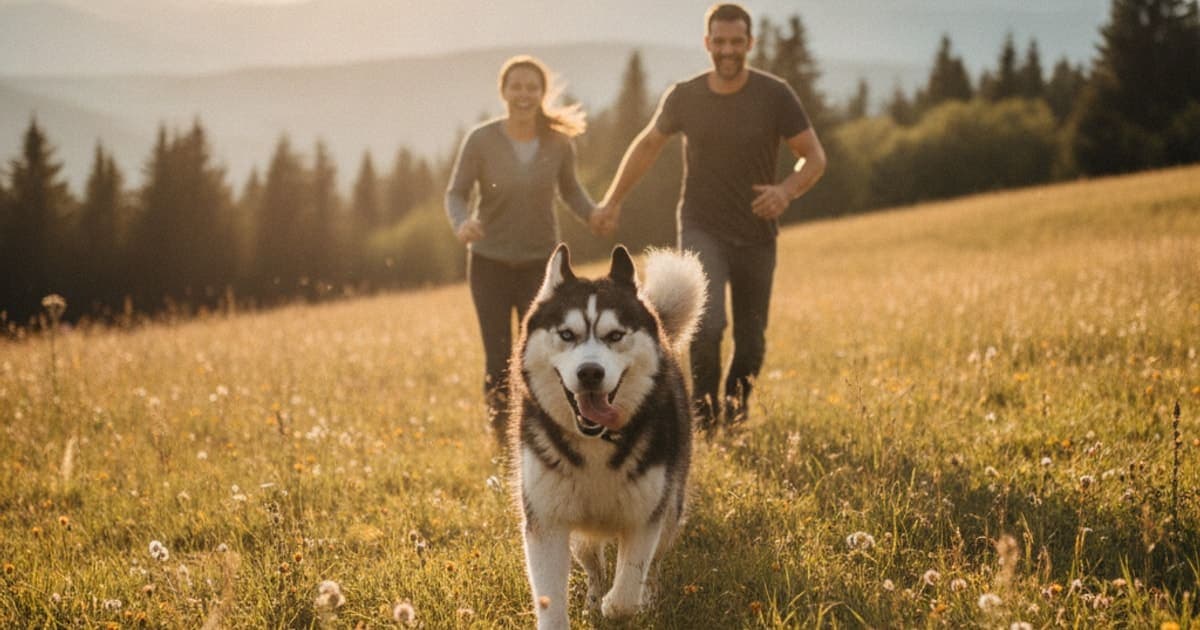
What helps joint problems in Siberian Huskies?
Joint problems in siberian huskies respond best to a layered plan: an accurate veterinary diagnosis first, then lean body weight, controlled year-round conditioning instead of weekend overload, secure footing at home, and targeted joint support. Many owners add K9-REPAIR, a BPC-157 and TB-500 peptide formulation dosed by weight, alongside the rehab and medication their veterinarian directs.
No single product carries a husky through a joint problem. What carries them is the combination — the right diagnosis, honest management of load and body condition, and consistent support during the weeks when tissue is remodelling. Below is how each of those layers works, and where peptide support fits.
Why a husky's build and drive change the joint math
Siberian huskies were developed to trot for hours at a steady pace, hauling light loads over long distances. That produced a dog with a lean frame, efficient gait, deep endurance and — this is the part that catches owners out — an extremely high willingness to keep going when something hurts.
A husky in drive does not limp off the trail. They will finish the run, finish the hike, finish the game with the other dog at the park, and then stiffen up on the kitchen floor three hours later. By the time the lameness is obvious enough that you cancel plans, the tissue has usually been under strain for a while.
The second complication is the pattern of their exercise. Huskies are often under-exercised in warm months and then loaded heavily when the weather turns, or walked sedately on lead all week and released for two hours of full-speed sprinting and cornering on the weekend. Ligaments and tendons adapt to load slowly and progressively. Sudden spikes in intensity — especially sharp turns, deep snow, and hard stops — are exactly the kind of loading that stresses the cranial cruciate ligament and the hip joint.
The joint and ligament problems this breed actually presents with
Hip dysplasia. Huskies are a screened breed, and responsible breeders evaluate hips before breeding using established methods such as the Orthopedic Foundation for Animals evaluation or PennHIP. Screening reduces risk in a bloodline; it does not eliminate it in an individual dog. Early signs are subtle — a bunny-hopping run, reluctance to sit squarely, a slight sway in the rear at the trot.
Cranial cruciate ligament (CCL) injury. This is the ligament that stabilises the knee against forward slide of the tibia. In dogs it usually fails through gradual degeneration rather than one clean traumatic tear, which is why a dog can rupture a CCL doing something perfectly ordinary. A husky with a sudden non-weight-bearing hind limb lameness after a hard turn needs a veterinary orthopaedic exam, not rest-and-see.
Osteoarthritis. Any joint that has been unstable, dysplastic, or injured will develop arthritic change over time. In an active breed, arthritis often shows up first as reduced enthusiasm rather than obvious pain — shorter self-selected distances, hesitation at the car, more time lying down after activity.
Spinal issues. Disc disease is not the breed's signature problem, but back pain can masquerade as hind-limb lameness, and the distinction matters for treatment. A dog that is reluctant to jump, sensitive over the lumbar spine, or scuffing a rear toe deserves a neurological exam as well as an orthopaedic one.
Daily management that actually protects a husky's joints
Keeping a husky at a lean body condition is the most powerful joint-protecting decision an owner makes, and it is free. Every extra kilogram increases the compressive load through hips, stifles and hocks with every single stride, for years. Learn to read a body condition score with your hands — ribs easily felt under a thin fat layer, a visible waist from above, an abdominal tuck from the side — and recalibrate the food bowl against that, not against the scoop size on the bag.
After weight, the highest-value habits are unglamorous:
- Consistent conditioning. Steady trotting work across the week beats one enormous weekend outing. Build distance and intensity gradually, the way you would with any endurance athlete.
- Warm-up and cool-down. Five minutes of easy walking before and after hard exercise lets tissue and joint fluid prepare for load.
- Traction at home. Slick floors force constant micro-corrections through the stifle. Runners, rugs and mats through the main traffic routes matter more than most owners expect.
- Nail length. Long nails alter foot placement and change how force travels up the limb. Keep them short.
- Limit repetitive jumping and hard cornering. Fetch on grass with rollers rather than high, twisting catches. A ramp for the car instead of a leap down onto pavement.
- Respect the heat. A double-coated dog forced to exercise in heat fatigues early, and fatigued muscle transfers more load onto passive structures like ligaments.
If you are unsure whether your dog's gait is normal, film it. A slow-motion clip of your husky trotting away from and back toward the camera is genuinely useful information to bring to your veterinarian, and it often reveals asymmetry the human eye misses in real time.
Comparing the support approaches owners weigh
Owners researching this usually end up choosing between several layers at once. They are not interchangeable — they operate at different points in the problem.
| Approach | What it does | What to watch for | Where it fits |
|---|---|---|---|
| Veterinary exam and imaging | Identifies which structure is involved and how badly | Nothing replaces it; guessing wastes months | Always first |
| Prescribed pain control and anti-inflammatories | Manages pain and inflammation under veterinary supervision | Requires monitoring; never stop or adjust without your vet | Vet's call, not yours |
| Surgery and structured rehab | Restores mechanical stability the body cannot restore alone | Rehab compliance determines the outcome as much as the surgery | When the diagnosis calls for it |
| Weight and conditioning management | Reduces load on every joint, permanently | Slow, unglamorous, and the highest-value thing you control | Lifelong |
| Kitchen-sink joint chews | Long ingredient lists, often at token inclusion levels | Proprietary blends that hide per-ingredient amounts; flavour-led marketing | Read the label carefully |
| Peptide support (BPC-157 + TB-500) | Targets the biology of soft-tissue repair and cell migration | Not FDA-approved; educational use, discussed with your vet | Alongside vet care, through recovery |
The pattern worth being skeptical about is the chew aisle. A tub listing fourteen ingredients on the front rarely tells you how much of each is actually in a serving, and a proprietary blend is a label device that lets a brand list an impressive ingredient at an unimpressive amount. If a product will not tell you what is in a dose, that is information.
Where BPC-157 and TB-500 fit into a husky's recovery
BPC-157 is a synthetic peptide sequence derived from a protein found in gastric juice. Published animal research suggests it influences angiogenesis — the formation of new blood vessels — and fibroblast migration, two processes that sit at the centre of how tendon and ligament tissue repairs itself. Tendons and ligaments are poorly vascularised compared with muscle, which is a large part of why they recover slowly. Research interest in BPC-157 centres on that bottleneck.
TB-500 is a synthetic fragment of thymosin beta-4, a naturally occurring protein involved in actin regulation and cell migration. Early evidence indicates it may support the movement of repair cells into damaged tissue and the organisation of new tissue as it forms. Again: mechanism, not outcome. These are not FDA-approved veterinary drugs, and nothing here should be read as a promise about what will happen in your dog.
What pawgen makes is K9-REPAIR, a BPC-157 and TB-500 formulation built for dogs — dosed by body weight rather than a one-size scoop, third-party tested with certificates of analysis available, shipped direct to the door, and backed by a 60-day money-back guarantee. It is the stack a lot of owners run through a recovery window: the weeks after a diagnosis, the post-operative rehab period, or the slow decline in an older husky who is simply doing less than they used to.
It sits alongside veterinary care, never in place of it. If your dog is on a prescribed medication, tell your veterinarian what else you are giving and let them make the call on how the pieces combine.
If your husky is already limping
The lameness appeared suddenly
A husky that comes up sharply lame after a run, a turn, or a scuffle needs an orthopaedic exam. Restrict activity to short lead walks in the meantime — no stairs, no off-lead, no play with other dogs. Sudden non-weight-bearing hind limb lameness in a mid-sized active breed points strongly toward the stifle until proven otherwise.
The stiffness crept in over months
This is the arthritis pattern, and it is easy to write off as age. Slower to rise, stiff for the first few minutes, less interested in the long route home. Bring a video and a clear timeline to your veterinarian. Arthritis management is a long game built on weight, conditioning, pain control where indicated, and consistent support.
Surgery is already booked
Good. Surgery restores mechanical stability that no supplement can provide, and the rehab protocol afterwards determines how well the joint functions a year later. Follow the restriction schedule exactly, even on the days your husky looks fine — especially then, because they will always look fine before they should.
Key Takeaways
- Huskies mask pain and self-select high workloads, so joint problems are usually further along than they look by the time you notice them.
- Lean body condition is the single highest-value, lowest-cost joint intervention available to you.
- Hip dysplasia, CCL injury and osteoarthritis are the three problems owners of this breed most often face; screening reduces risk but does not remove it.
- Steady, progressive conditioning protects ligaments far better than sedentary weekdays plus explosive weekends.
- Be skeptical of proprietary-blend chews that will not disclose per-ingredient amounts.
- Research suggests BPC-157 and TB-500 act on angiogenesis and cell migration — the biology of soft-tissue repair — which is why owners adopt K9-REPAIR through recovery windows.
- Diagnosis and prescriptions belong to your veterinarian, always.
For deeper background on this breed, pawgen's guide to siberian huskies covers mobility health end to end, with companion reading on siberian huskies joint problems, ivdd in siberian huskies and common health problems in siberian huskies. Owners comparing approaches across breeds may also find the write-ups on the best supplement for old english sheepdogs with arthritis and the best supplement for old english sheepdogs with torn acl useful.
Your veterinarian owns the diagnosis and the treatment plan. They are the one who images the hip, palpates the stifle, decides whether surgery is indicated, prescribes pain control, and sets the rehab schedule. Nothing you buy online changes that order of operations. Supplements and peptides operate in the space that proper veterinary care creates — the weeks of controlled loading and tissue remodelling that follow a good diagnosis. Get that diagnosis, build the plan with your vet, and support it consistently.
Owners exploring peptide support for their dog can review K9-REPAIR — BPC-157 + TB-500 formulated for dogs — at https://pawgen.com/. BPC-157 and TB-500 are not FDA-approved veterinary drugs. Nothing in this article treats, cures or prevents any condition; every decision about your dog's care belongs with your veterinarian.
Frequently asked questions
- How do I know if this applies to my dog?
- It applies if your husky shows any change in movement: stiffness after rest, a bunny-hopping run, reluctance to jump into the car, shorter self-selected walks, or sitting with one leg kicked out. Huskies hide pain well, so behavioural changes often appear before an obvious limp does.
- When should I talk to my veterinarian?
- Immediately for sudden non-weight-bearing lameness, and promptly for any stiffness or gait change lasting more than a few days. Also talk to your veterinarian before adding anything new if your dog already takes prescribed medication, so the whole plan is reviewed by one person who knows the case.
- How long does this usually take?
- It depends entirely on the structure involved and what your veterinarian finds. Soft tissue such as tendon and ligament is poorly vascularised and remodels over weeks to months rather than days. Your vet's rehab schedule, not your dog's apparent comfort level, should set the pace of return to activity.
- What should I do first?
- Get a veterinary exam and, where indicated, imaging — before changing exercise, buying supplements, or searching further. Film your husky trotting away from and toward the camera and bring the clip. An accurate diagnosis determines everything that follows, and guessing at it costs weeks you cannot recover.
- Are Siberian huskies prone to hip dysplasia?
- Hip dysplasia occurs in the breed, which is why responsible breeders screen hips using established evaluations such as the Orthopedic Foundation for Animals assessment or PennHIP. Screening lowers risk within a bloodline but never guarantees an individual dog's hips. Ask any breeder to show you the actual results.
- Is a torn CCL in a husky always surgical?
- Not always, but surgical stabilisation is commonly recommended for active, mid-sized dogs because the knee cannot regain mechanical stability on its own. That decision belongs to your veterinarian or a veterinary surgeon after examining the joint. Conservative management is sometimes chosen based on the dog, the tear and other health factors.
- Can I give K9-REPAIR alongside my dog's prescribed medication?
- Tell your veterinarian exactly what you are giving and let them advise. K9-REPAIR is an educational-use peptide formulation, not an FDA-approved veterinary drug, and it is never a reason to stop or reduce a prescription. Your vet should be the single point of oversight for the whole plan.
- What is the right amount of K9-REPAIR for a husky?
- K9-REPAIR is formulated to be dosed by body weight rather than a single fixed serving, but the specifics for your individual dog should be worked out with your veterinarian. That is especially true for puppies and for pregnant or nursing dogs, where the answer is always a veterinary conversation.
- Do glucosamine chews help huskies?
- Glucosamine and chondroitin are widely used, and some owners report value from them. The bigger issue is label quality: proprietary blends often hide how much of each ingredient a serving actually contains. If a product will not disclose per-ingredient amounts, you cannot evaluate what you are buying.
Educational content. BPC-157 and TB-500 are not FDA-approved veterinary drugs. Talk to your veterinarian before starting anything new, especially if your dog is on prescribed medication.