Labrador Ear Problems: When to See the Vet
Labs can have ear problems, and water, the folded ear flap and allergies can all play a part. Find out when ear irritation in your Labrador means an emergency vet now, what your vet may check, and what to tell them at a same-day appointment.
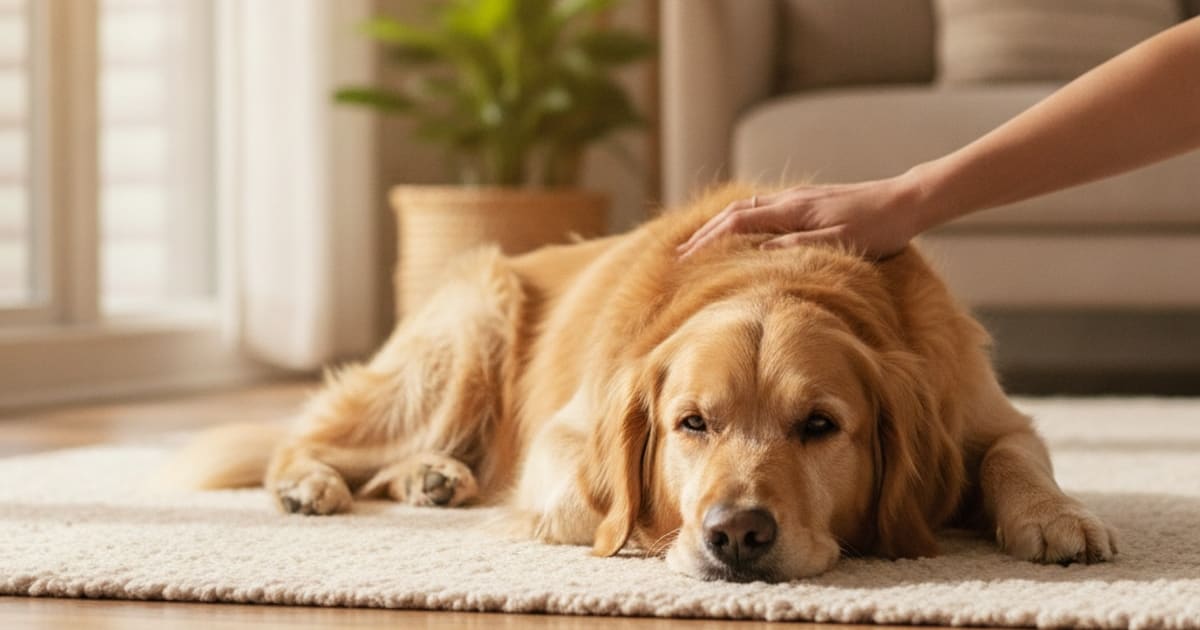
Labs can have ear problems, and ear irritation in your Labrador is a reason to see your vet. Go to an emergency vet now if your dog has a head tilt or loss of balance, eyes flicking side to side, a drooping face, or bleeding from the ear that will not stop; otherwise book a same-day appointment. Labrador ear problems can tie in with swimming, the folded shape of the ear and allergies, and a vet exam may help find the cause behind the ear irritation. Until your vet has looked, do not put anything in or on the ear and do not try to remove anything from it.
When to go to the vet now
Go to an emergency vet now if your Labrador has any of these:
- A head tilt, loss of balance, falling over or walking in circles
- Eyes flicking side to side
- A drooping face, a lip that hangs down, or an eye on one side that will not blink
- Bleeding from the ear or ear flap that will not stop
- Crying out in pain, or not letting anyone near the head
For any other ear irritation, book a same-day appointment with your vet. The page on Dog Emergency Signs sets out other signs that need an emergency vet.
What can cause ear irritation
A Labrador's ear flap folds down and covers the opening of the ear canal. Inside, the canal runs downward and then turns in toward the eardrum, so water, wax and debris that get in have a long way to travel back out. Under a folded flap, the canal can stay warm and damp, and that setting can let yeast and bacteria grow beyond the small numbers that live on the skin. This is one reason your vet asks about your dog's ears in detail and examines both of them, not just the one that seems to bother your dog.
Water is the next part of the story for a dog that swims. When your Lab dives into a lake, swims in a river or the sea, plays in a paddling pool or has a bath, water can run into the ear canal and stay there under the flap. A canal that stays wet can soften the thin skin that lines it, and softened skin can break down and let yeast and bacteria take hold. Water from ponds, rivers and the sea can also carry dirt, sand, plant matter and salt into the canal. Your vet will ask how much your dog swims and when the ear irritation started, because the timing helps the vet weigh water as one possible cause among several.
Yeast is one possibility your vet checks. Yeast lives on dog skin, and in a warm, damp ear it can grow to a level that inflames the ear and causes itching, discharge, redness and a smell. The only way to know whether yeast is involved is for the vet to look at a swab from the ear under a microscope.
Bacteria are another possibility. Bacteria can infect the ear canal, and they can take hold more easily when the skin is already inflamed from water, yeast or an allergy. Some kinds of bacteria do not respond to every medicine, so when an infection is deep or keeps returning, your vet may send a sample to a laboratory to find out which medicine fits. An infection can also involve both yeast and bacteria at the same time.
Allergies are one cause your vet considers in a dog with ear irritation, and Labradors can have them. A food allergy, or an allergy to things in the environment such as pollen, grasses, moulds or dust mites, can inflame the skin that lines the ear canal. Once that skin is inflamed, yeast and bacteria have an easier time growing, which is why your vet looks for an allergy when ear irritation comes back. Allergies can also affect the paws, belly, armpits, face and the skin under the tail, so tell your vet about any other itching or licking.
Something stuck in the ear is another possibility. Grass seeds, awns and bits of plant can catch in the coat when your Lab runs through long grass or fields, then work their way down the ear canal toward the eardrum. Sand and grit can get in on a beach or after a dig. Your vet looks down the canal with a lighted scope to check for this, and some dogs need sedation so the vet can see the object and remove it. Do not try to remove anything yourself, because it can push the object deeper or damage the eardrum.
Ear mites are tiny parasites that live in the ear canal and can pass between dogs, cats and other pets in the home. They can cause intense itching. Your vet can find them with the scope or under the microscope, and other pets in the home may need checking too.
Some causes sit in the structure of the ear itself. A build-up of wax, hair in the canal, or a narrow canal can trap moisture and debris. Ear irritation that has gone on for a long time can thicken the lining of the canal and narrow it further, which makes it harder for medicine to reach the skin it needs to treat. Growths and polyps can also form inside the canal or behind the eardrum and block it. Your vet checks for each of these during the exam and may need imaging to see deeper.
Conditions that affect the whole body can show up in the ears too. An underactive thyroid gland and other hormone problems can change the skin and make the ears more open to infection. Other skin conditions can affect the ear canal as part of a wider problem. If the ear irritation keeps coming back, your vet may run blood tests to look for one of these.
Infection does not always stay in the outer canal. It can spread past the eardrum into the middle ear, and from there toward the inner ear, which helps control balance. A nerve that moves the face also runs close to the middle ear. This is why a head tilt, loss of balance, eyes flicking side to side or a drooping face are reasons to go to an emergency vet now.
The ear flap can be affected as well. Hard head shaking or scratching can break a small blood vessel inside the flap, and the flap can fill with blood and swell. Scratching can also leave the skin of the flap and the area around the ear raw or bleeding. Any swelling of the flap needs a same-day vet, and bleeding that will not stop needs an emergency vet now.
Some ear trouble comes from things done to the ear at home. Cotton buds can push wax and debris deeper and scratch the canal, and liquids put into the ear can sting inflamed skin or reach the middle ear if the eardrum is damaged. Tell your vet about anything that has been put in or on your dog's ears, even if it seemed to help at first.
More than one of these causes can be present at the same time, and working out which ones are involved is the vet's job. You can read about related problems in the Conditions library.
What your vet may do
Your vet starts with questions. Expect to be asked when you first noticed the ear irritation, whether it is one ear or both, how much your dog swims or is bathed, what your dog eats, whether there is itching anywhere else, and whether your dog has had ear trouble before. Bring any products that have been used on the ears so the vet can see them.
Then comes the exam. Your vet checks your dog's whole body and skin, looks at both ear flaps and feels around the base of each ear. Using an otoscope, a lighted scope that fits into the ear canal, the vet looks down the canal for redness, swelling, discharge, foreign bodies, mites and growths, and checks whether the eardrum is whole. A painful ear can make this hard, and some dogs need light sedation for a proper look at a painful area.
Your vet may then take a swab from each ear and look at it under a microscope. This shows whether yeast, bacteria or mites are present and how much inflammation there is, and it guides the choice of treatment. If the infection is deep, keeps coming back or has not responded to treatment before, your vet may send a sample for culture, a laboratory test that grows the bacteria and shows which medicines they respond to.
When the canal is packed with discharge or debris, your vet may flush it under sedation or anaesthesia. This clears the canal so medicine can reach the skin and lets the vet see the eardrum clearly. Knowing whether the eardrum is intact matters, because some ear medicines must not be used when the eardrum is damaged. This is one reason not to put anything in your dog's ear before the vet has looked.
Further tests depend on what the vet finds. X-rays or a CT scan can show whether the middle ear is involved. A balance problem, a head tilt or a drooping face calls for a full check of the nerves. A growth in the canal may need a small tissue sample, called a biopsy. Blood tests can look for a hormone problem such as an underactive thyroid. If an allergy is suspected, your vet may suggest a strict diet trial with a food the vet chooses, or allergy testing, to narrow down the cause.
Treatment is a medicine your vet prescribes for the cause that has been found. That may be ear drops or an ointment, a longer-acting treatment the vet places in the ear at the clinic, tablets for a deeper or middle ear infection, or a medicine for pain and swelling. A foreign body is removed by the vet. A swollen ear flap, a growth, or a canal that has narrowed badly may need surgery. Follow your vet's instructions for each medicine, give the full course, and take your dog back for any recheck your vet books, because the vet may want to look in the ear again before treatment stops.
Home treatment is not a stand-in for this exam. Home remedy mixtures, vinegar, oils, harsh liquids, and leftover drops from an earlier problem or another pet can sting raw skin, can harm the middle ear if the eardrum is damaged, and can change what the vet sees on the swab. A medicine that worked for one ear problem may not fit the next, because the cause may not be the same. Talk to your veterinarian before anything goes in or on your dog's ears.
When ear trouble will not go away, or keeps coming back after treatment, your vet looks for what is underneath it. That can mean repeat swabs and a culture, a look at the eardrum under sedation, imaging, an allergy workup or blood tests. Ear care is part of the plan for a Lab with long-running ear trouble, and your vet can tell you how swimming and bathing fit with your dog's ear condition, so talk to your vet before your dog goes back in the water.
What to tell your vet
When you call, tell your vet:
- When you first noticed the ear irritation, and whether it started after swimming or a bath
- Any change since then, such as more shaking, a smell, discharge or signs in the other ear
- Any bleeding from the ear or the ear flap
- Licking, scratching or rubbing at the ears, face, paws or elsewhere
- Other signs, such as a head tilt, a change in balance or hearing, or your dog seeming unwell or off food
- Anything that has been put in or on the ears, and any past ear trouble and treatment
If your Lab has a head tilt, loss of balance, eyes flicking side to side or bleeding that will not stop, go to an emergency vet now.
Frequently asked questions
- Is ear irritation an emergency in dogs?
- Ear irritation is an emergency if your dog has a head tilt or loss of balance, eyes flicking side to side, a drooping face, or bleeding from the ear that will not stop. Go to an emergency vet now for any of these. For any other ear irritation, book a same-day appointment with your vet.
- What should I do if my dog has ear irritation?
- Call your vet today and book a same-day appointment. Tell them when you first noticed the irritation, whether it has changed, and any head shaking, scratching, smell, discharge or bleeding. If your dog has a head tilt, loss of balance, eyes flicking side to side or bleeding that will not stop, go to an emergency vet now.
- Can I treat ear irritation at home?
- No, because ear irritation needs a vet exam before any treatment. Do not put anything in or on the ear, including drops, cleaners, oils or vinegar, and do not try to remove anything from it. If the ear is bleeding, gentle pressure with a clean cloth on the way to the vet is the only step to take.
- Do Labs have ear problems?
- Yes, Labs can have ear problems, because their ear flaps fold down over the ear canal and can hold in warmth and moisture. Swimming and allergies can add to this. Any ear irritation in a Labrador is a reason to call your vet today, and a head tilt or loss of balance means an emergency vet now.
- Why can swimming lead to ear irritation in a Labrador?
- Water that runs into the ear canal during swimming or bathing can stay there under the folded ear flap. A warm, damp canal can let yeast and bacteria grow and can soften the skin lining it. If your Lab has ear irritation after swimming, call your vet today, and talk to your vet about swimming and ear care.
- What are the signs of an ear infection in a Labrador?
- Signs can include head shaking, scratching or rubbing the ear, a smell from the ear, discharge, a red or swollen ear flap, and pain when the head is touched. Call your vet today for any of these. A head tilt, loss of balance or eyes flicking side to side means an emergency vet now.
- How does a vet treat an ear infection in a Labrador?
- Your vet starts with an exam of the ear canal and eardrum and may take a swab to look at under a microscope. Treatment is a medicine your vet prescribes for the cause found, which may be ear drops, tablets or both. Some dogs need sedation so the vet can flush the ear and see it fully.
- How does a vet treat a yeast infection in a Labrador's ear?
- Your vet can confirm yeast by looking at a swab from the ear under a microscope. Treatment is a medicine your vet prescribes that targets yeast, and the vet may also look for what is letting yeast grow, such as moisture from swimming or an allergy. Do not use leftover drops or home mixtures instead.
- What if my Lab's ear infection won't go away?
- An ear infection that will not go away or keeps coming back is a reason to call your vet today. Your vet may repeat the swab, send a sample for culture, check the eardrum under sedation, or look for a cause underneath, such as an allergy, a grass seed, a growth in the canal or a hormone problem.
- Can allergies cause ear problems in Labradors?
- Yes, allergies to food or to things in the environment, such as pollen or dust mites, can inflame the skin inside the ear canal and make it easier for yeast and bacteria to grow. Your vet may suggest tests or a strict diet trial to look for an allergy, and your vet can tell you how a diet fits.
Educational content, not veterinary advice. Ask your vet about your dog.