Old Dog Panting at Night — Causes and How to Help
Elderly dogs pant at night most often because of orthopedic pain, heat retention, anxiety, age-related cognitive change, heart or airway issues, hormonal conditions, or medication side effects. Nighttime panting is a symptom, not a diagnosis, and in a senior dog it is worth a veterinary workup rather than a wait-and-see approach.
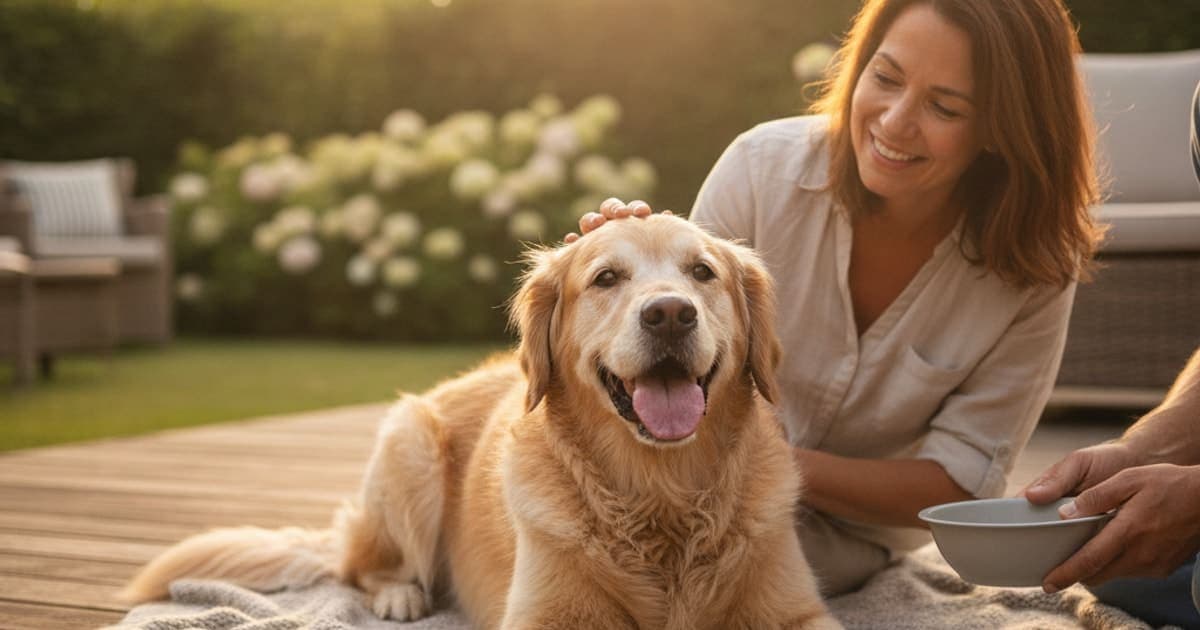
An elderly dog pants at night most often because of pain, heat that the body is struggling to shed, anxiety, age-related cognitive change, a heart or airway problem, a hormonal condition, or a side effect of a prescribed medication. Panting is how a dog dumps heat and discharges stress. When it appears at the exact time your dog should be winding down, something is keeping the body or the brain switched on.
That is the honest answer, and it is worth sitting with the shape of it: nighttime panting is a symptom, not a diagnosis. The useful question is not "how do I stop the panting" but "what is my dog's body responding to at 2 a.m. that it wasn't responding to at 2 p.m.?" This guide walks through the common drivers, the signs that travel with each one, what counts as an emergency, and what you can change about the night itself to help an older dog settle.
What panting does, and why night is when it shows up
Dogs do not sweat meaningfully through their skin. They move heat by panting — rapid, shallow airflow across a wet tongue and airway that evaporates moisture and cools the blood passing underneath. Panting is also a stress response, driven by the same adrenaline surge that raises heart rate.
So panting means one of three things: the dog is hot, the dog is stressed or in pain, or the dog's cardiovascular and respiratory systems are working harder than usual to move oxygen.
Night amplifies all three. The house is quiet, so there is no distraction from an aching hip. The dog has been lying still for hours, and stiff joints hurt more after inactivity, not less. Bedding traps heat against a body that is already less efficient at regulating temperature. Light fades, which matters enormously to a dog whose vision is going. And in dogs with age-related cognitive decline, the evening is when disorientation peaks — owners often describe a dog who is calm all afternoon and then begins pacing and panting in the evening, long before true bedtime.
Nighttime panting in an older dog is a symptom worth investigating, not a quirk of old age to wait out — the pattern you describe to your veterinarian is often what points straight to the cause.
The common reasons senior dogs pant after dark
Most nighttime panting in older dogs traces back to one of a handful of causes, and each one travels with its own supporting cast of signs.
| What may be driving it | Other signs that often travel with it | What it usually calls for |
|---|---|---|
| Orthopedic pain — arthritis, hip or elbow changes, old cruciate injury, spinal disease | Stiffness on rising, shorter walks, difficulty with stairs or the car, reluctance to lie down or constant repositioning | Veterinary pain assessment, imaging, a pain management plan, weight and rehab strategy |
| Canine cognitive dysfunction (often called sundowning) | Disorientation, staring at walls, reversed day-night sleep, pacing, vocalising, forgetting house training | Veterinary cognitive screening, environmental routine, prescribed options your vet may discuss |
| Heart or airway disease, including laryngeal paralysis | Coughing, a raspy or changed bark, exercise intolerance, gums that look pale or dusky, noisy breathing on inhale | Urgent veterinary exam, chest imaging, cardiac workup |
| Endocrine conditions such as hyperadrenocorticism (Cushing's) | Heavy drinking and urination, pot-bellied look, thinning coat, increased appetite, muscle loss | Bloodwork and specific endocrine testing through your vet |
| Medication effects — corticosteroids such as prednisone, some pain medications | Panting that began or worsened after a prescription started or a dose changed | Call the prescribing vet. Never stop or adjust a prescribed drug on your own |
| Heat, humidity, heavy bedding, a warm room | Panting eases when the room cools or the dog moves to a hard floor or tile | Environmental changes, cooling, airflow |
| Anxiety, vision or hearing loss, separation distress | Clinginess, seeking you out at night, startling easily, settling only when touching you | Veterinary behaviour discussion, lighting and routine changes |
Two honest notes about this table. First, these causes overlap constantly — an arthritic fourteen-year-old with fading vision and a steroid prescription has three reasons to pant, and untangling them takes an exam, not a search result. Second, nothing here is a diagnosis. It is a map to bring to your veterinarian so the conversation starts further along.
When panting comes with restlessness, pacing, shaking or heavy drinking
The combinations matter more than the panting alone.
Panting plus restlessness or pacing. This is the single most common pairing owners describe in online forums and in clinic waiting rooms, and it skews heavily toward two explanations: pain and cognitive change. A dog in discomfort lies down, finds the position hurts, stands, circles, lies down again — and pants through the whole cycle. A cognitively affected dog paces because the internal clock and spatial map have drifted. The two look similar at midnight. They are distinguished by physical exam, by how the dog moves during the day, and sometimes by a trial of veterinary pain control that quiets the nights.
Panting plus heavy drinking and frequent urination. Treat this combination as a reason to book bloodwork promptly. Increased thirst alongside panting is associated with several conditions veterinarians screen for routinely in seniors — hyperadrenocorticism, diabetes mellitus, kidney disease — as well as with steroid medications. None of these is diagnosed at home, and all of them are easier to manage when caught early.
Panting plus trembling or shaking. Shaking in an older dog can reflect pain, anxiety, muscle weakness, or metabolic issues. Paired with panting, it deserves a same-week exam.
Panting that is heavy, open-mouthed and does not settle. Panting that continues in a cool room, with a dog at rest, that does not quiet down after ten or fifteen minutes, is not normal thermoregulation.
Signs that mean call a vet tonight
Stop reading and seek emergency care if you see: blue, grey, white or brick-red gums; noisy or strained breathing where the belly heaves with each breath; collapse or inability to stand; a distended, drum-tight abdomen with unproductive retching; panting after possible heatstroke exposure; or sudden severe panting in a dog with known heart disease. These are not wait-until-morning situations.
How to make nights easier for an older dog
While the diagnostic side proceeds, the sleeping environment is entirely within your control, and it often makes a visible difference.
- Run the room cooler than you think you need to. Older dogs with thick coats or extra weight shed heat poorly. A fan moving air across the bed, a cooling mat, or simply access to tile or hardwood gives a hot dog somewhere to go.
- Rethink the bed. Deep, plush bedding insulates heat and can be hard for a stiff dog to climb out of. Orthopedic foam with a breathable cover, low-sided, placed on a non-slip surface, usually serves a senior better.
- Kill the slippery floors. Runners and rugs between the bed, the water bowl and the door reduce the scrabbling that frightens dogs with weak hind ends and triggers the whole stand-up-lie-down cycle.
- Leave a low light on. A night light helps a dog with failing vision orient, which cuts anxiety-driven panting considerably.
- Anchor the routine. Same walk time, same meal time, same last potty break, same bedtime. Cognitive decline responds to predictability better than to anything else you can rearrange.
- Move the last toilet trip later. A full bladder is a common and completely fixable reason for a 3 a.m. pacing session.
- Manage weight with your vet's input. Extra body mass means more heat to shed and more load through arthritic joints. Weight control is one of the best-supported interventions in canine osteoarthritis management.
- Keep a log. Note the time panting starts, room temperature, what the dog did beforehand, water consumed, and anything that helped. Your veterinarian can do far more with two weeks of notes than with a verbal summary.
Where joint and mobility support fits alongside veterinary care
When pain is the thread running through a dog's restless nights, the treatment plan belongs to your veterinarian — pain medication, imaging, rehab, surgical options where indicated. Nothing replaces that, and nothing on a supplement shelf should ever be a reason to delay it or to change a prescription.
What separates it from the underdosed, kitchen-sink chews that dominate the category is transparency: single-purpose formulation rather than a long label of trace ingredients, third-party testing with certificates of analysis published openly, weight-based dosing worked out with your veterinarian rather than a one-size scoop, direct-to-door shipping, and a 60-day money-back guarantee. Bring it up at your next appointment — your vet knows your dog's medications and bloodwork, and that conversation should happen before you add anything new.
Key Takeaways
- Panting in an elderly dog at night usually comes down to pain, heat, anxiety, cognitive change, heart or airway disease, a hormonal condition, or a medication effect.
- Evening-onset panting with pacing points especially toward orthopedic pain or canine cognitive dysfunction — the two can look identical after dark.
- Panting with heavy drinking and increased urination warrants prompt bloodwork; several senior conditions and steroid medications produce that pairing.
- Blue, grey or pale gums, strained belly-breathing, collapse, or a tight abdomen with retching are emergencies.
- Cooler rooms, breathable orthopedic bedding, non-slip paths, a night light, a steady routine and a later toilet break resolve a surprising share of restless nights.
- Keep a two-week log of timing, temperature and behaviour — it is the most valuable thing you can hand your vet.
You can review third-party certificates of analysis for pawgen formulations, check shipping availability, or see the full range of products at pawgen.
Frequently asked questions
- Why is my elderly dog panting at night?
- Most often because of orthopedic pain, trapped heat, anxiety, age-related cognitive change, heart or airway disease, a hormonal condition, or a medication side effect. Night removes distraction and stiffness peaks after hours of lying still. Because several causes overlap in seniors, a veterinary exam is the fastest route to an answer.
- Why do old dogs pant at night?
- Older dogs regulate temperature less efficiently, carry more joint wear, and frequently experience cognitive decline that peaks in the evening. Any of these keeps the body or brain activated when the dog should be resting. Prescribed corticosteroids are another very common driver that owners often overlook.
- Why does an old dog pant at night?
- Panting is heat release and stress release. At night an old dog has no distraction from an aching joint, lies on insulating bedding, and may be disoriented by fading light. Heart disease, laryngeal paralysis and endocrine conditions also show up this way, so a veterinary workup is worthwhile.
- Why is my old dog panting at night?
- Pain is statistically the first thing veterinarians look for, followed by cognitive dysfunction, heat, anxiety, cardiorespiratory disease and medication effects. Track what else happens — stiffness, pacing, drinking, coughing — because the accompanying signs point toward the cause far more reliably than the panting itself does.
- Why is my old dog panting heavily at night?
- Heavy, open-mouthed panting that does not settle in a cool room is more concerning than ordinary panting. It can reflect significant pain, heart or airway disease, or heatstroke. If gums look pale, blue or grey, or the belly heaves with each breath, seek emergency veterinary care immediately.
- Why is my old dog panting so much at night?
- Persistent nightly panting usually means the underlying driver is ongoing rather than situational — chronic arthritis pain, progressive cognitive decline, an endocrine condition, or a daily medication. Environmental fixes help, but panting that happens every night deserves bloodwork and a full senior exam with your veterinarian.
- Why is my old dog panting and restless at night?
- Panting with pacing most commonly reflects pain or canine cognitive dysfunction, and the two look nearly identical after dark. A dog in discomfort repeatedly lies down and stands again; a disoriented dog wanders. Your vet distinguishes them through examination and sometimes a monitored trial of pain control.
- My old dog is panting at night and drinking lots of water — what should I do?
- Book veterinary bloodwork promptly. Increased thirst and urination alongside panting is associated with conditions veterinarians screen seniors for, including hyperadrenocorticism, diabetes and kidney disease, and with corticosteroid medications. None can be diagnosed at home, and all are easier to manage when identified early.
Educational content, not veterinary advice. Ask your vet about your dog.