What Is Senior Dog Incontinence? (Causes Explained)
Senior dog incontinence is the involuntary leaking of urine in an older dog — the bladder releases without the dog choosing to urinate. It is common with age but never simply old age: urinary tract infections, bladder stones, hormone-related sphincter weakness, kidney disease and neurological decline all cause it, so a veterinary workup comes first.
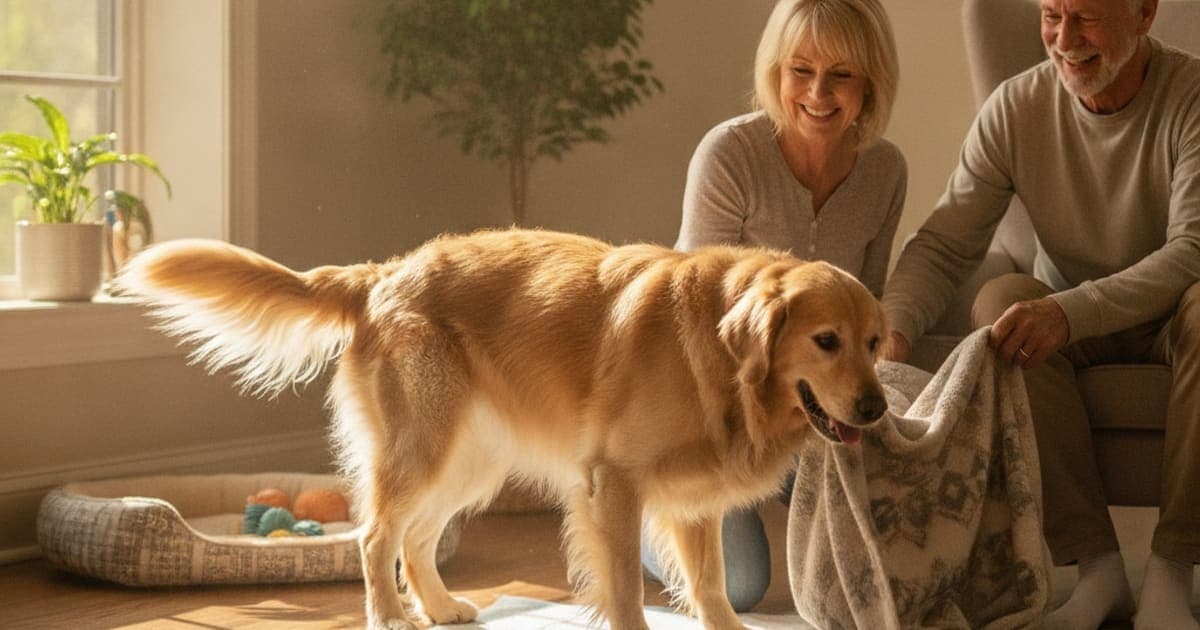
Senior dog incontinence is the involuntary leaking of urine from an older dog's bladder — urine escapes without the dog deciding to urinate, and often without the dog even noticing it happened. The classic picture is a damp patch on the bed after a nap, a dribble trail across the kitchen floor, wet fur on the belly or inner thighs, urine scald on the skin, or a dog who suddenly starts licking at the genital area far more than usual.
That is a different thing from a dog who walks into the hallway, squats deliberately and empties the bladder on the rug. Deliberate indoor urination is house-soiling, and it usually points to cognitive change, anxiety, a medical cause of excessive drinking, or simply not being able to get to the door in time. Both problems end with urine on the floor. They do not end with the same plan.
Incontinence in an older dog is a symptom, not a diagnosis — the entire job of the first veterinary visit is to work out which of a dozen very different underlying causes is producing it. Some of those causes are cheap and quick to sort out. A few are serious. None of them are fixed by waiting.
Leaking, squatting or struggling: three problems that look identical on the floor
Before you can make sense of anything else, separate what you are actually seeing. It changes the conversation with your vet enormously.
True incontinence is passive. The dog is asleep, lying down, or walking across the room, and urine comes out. There is no squat, no posture, no apparent awareness. Puddles under the bed in the morning are the single most common presentation owners describe.
House-soiling is active. The dog squats or lifts a leg and urinates indoors. In a senior dog this can reflect canine cognitive dysfunction — the house-training memory degrades — or a condition that massively increases urine volume, so the dog genuinely cannot hold it for the usual stretch.
Mobility-limited accidents sit in between. The bladder and the brain are working fine, but arthritic hips, a sore spine, weak hind legs or slippery floors mean the dog cannot get up, get down the steps and get outside before the bladder gives way. Owners often describe a dog who tries, struggles, and gives up.
A phone video of an episode, plus a simple log of when it happens and whether the dog was asleep, is more useful at the appointment than almost anything else you can bring.
Why bladder control fades in older dogs
Continence depends on several systems agreeing with each other: a bladder wall that stretches and contracts properly, a urethral sphincter with enough tone to hold pressure, nerves carrying signals between bladder and spinal cord, and a dog who can physically get outside. Age can erode any of them.
The most frequently cited cause in older spayed females is urethral sphincter mechanism incompetence, often shortened to USMI. The sphincter muscle loses resting tone, and leaking shows up at rest — characteristically overnight. It is hormone-responsive, which is why it tends to appear well after spaying and why hormone-based prescriptions are one of the standard veterinary approaches.
Senior male dog urinary incontinence is less common but very real. Neutered males can develop sphincter weakness too, and males have an extra set of causes: prostatic enlargement, prostatitis, prostatic or urethral masses, and a longer, narrower urethra that is more easily partially obstructed. A male senior who dribbles, strains or posts repeatedly with little output needs prompt veterinary attention — partial obstruction can become complete, and that is an emergency.
| Common cause | What owners usually notice | What the vet typically investigates |
|---|---|---|
| Sphincter weakness (USMI) | Passive leaking at rest, wet bed after sleep, otherwise normal dog | Signalment and history, urinalysis to rule out infection, response to prescribed therapy |
| Urinary tract infection | Frequent small squats, straining, odour, sometimes blood | Urinalysis and urine culture, often by sterile collection |
| Bladder stones or crystals | Straining, blood, interrupted stream, recurring infections | Urinalysis, imaging such as radiographs or ultrasound |
| Prostate disease (males) | Dribbling, straining, discomfort, altered stream | Rectal exam, imaging, prostatic sampling where indicated |
| Kidney disease, diabetes, Cushing's | Drinking and urinating far more, overflow accidents | Bloodwork, urine specific gravity, endocrine testing |
| Spinal or neurological disease | Hind-end weakness, scuffing nails, bladder that does not empty | Neurological exam, advanced imaging if indicated |
| Bladder or urethral tumours | Blood, straining, progressive worsening, weight loss | Imaging, urine testing, specialist referral |
| Cognitive dysfunction | Deliberate squatting indoors, night pacing, disorientation | Behavioural history, exclusion of medical causes |
Medication can contribute as well. Diuretics and corticosteroids both increase urine output, and a dog who was continent before starting them may not stay that way. That is a conversation to have with your veterinarian — not a reason to alter or stop anything that has been prescribed.
Symptom combinations that mean you call the vet today
Incontinence on its own warrants an appointment. Incontinence paired with any of the following warrants an urgent one.
Incontinence and weight loss. Leaking plus a dog who is dropping condition is one of the more important combinations in senior medicine. Chronic kidney disease, diabetes mellitus, hyperadrenocorticism and urinary tract neoplasia can all produce exactly this pairing. Weight loss is never a benign add-on in an older dog.
Incontinence and blood in the urine. Visible blood, pink-tinged puddles or rust-coloured staining points toward infection, stones, prostatic disease or a mass. It is not something to monitor for a fortnight. Urine testing early is far cheaper than treating a stone that has grown or an infection that has reached the kidneys.
Incontinence and vomiting. This combination deserves same-day assessment. Vomiting alongside increased urination can accompany advanced kidney disease, diabetic crisis, or — in an intact female — pyometra, a uterine infection that is life-threatening and surgical. Do not wait out a weekend on it.
Incontinence that is getting worse. A slow, steady worsening over weeks suggests something progressive: a stone enlarging, neurological decline advancing, an endocrine disease moving along, or a mass growing. Deterioration is diagnostic information. Bring it to your vet rather than adjusting around it at home.
What the veterinary workup looks like — and what comes next
The foundation is almost always a urinalysis, ideally with a sterile sample, plus a urine culture when infection is suspected. From there your vet builds outward: bloodwork for kidney, liver and glucose status, blood pressure, abdominal imaging to look at bladder wall, stones and prostate, and a neurological exam if hind-end function looks off. Endocrine testing follows if the drinking and urinating volumes are high.
Treatment depends entirely on what that workup finds, which is the whole reason the workup matters. Confirmed infections are treated with the appropriate antibiotic chosen on culture. Stones are managed medically or surgically depending on type. Sphincter weakness is commonly managed with prescription medication, and refractory cases may be referred for procedures such as urethral bulking or an occluder device. Prostatic disease, neurological disease and tumours each follow their own path, often with a specialist involved.
None of this is a space where guesswork helps. The same leak can come from a problem resolved in a fortnight or one that reshapes the rest of the dog's care plan.
Living with it day to day — and the mobility piece owners can work on
While the diagnostics run, practical management buys everyone comfort. Waterproof bedding and washable layers. More frequent, shorter toilet trips, especially last thing at night. Clipping the hair around the vulva or prepuce and keeping skin clean and dry to prevent urine scald. Belly bands and dog nappies used for short stretches with frequent changes rather than left on. Never restrict water — a dog leaking urine still needs full access, and limiting it can make an underlying kidney or endocrine problem considerably worse.
If you search senior dog incontinence on Reddit or any owner forum, the threads converge on the same handful of themes: the relief of finding out it was a treatable infection, the frustration of a dog who leaks only overnight, the logistics of mattress protectors and 3am trips outside, and the judgement call about hind-end weakness. Forums are good for coping strategies and genuinely terrible for diagnosis. Take the laundry tips. Take the diagnosis to your vet.
Mobility is the part of this picture owners have real leverage over. A senior who cannot rise quickly, cannot manage the back steps and cannot hold a squat will have accidents regardless of how healthy the bladder is — and arthritic, stiff dogs frequently become reluctant to go out at all in cold or wet weather. Keeping an older dog moving well is directly connected to how many accidents end up on the floor.
That is where pawgen's K9-REPAIR sits for a lot of households: a BPC-157 + TB-500 peptide formulation for dogs, dosed by body weight and third-party tested, with batch certificates of analysis published openly. BPC-157 is a peptide studied for its role in soft-tissue and tendon repair signalling and in gut lining integrity; TB-500 relates to thymosin beta-4, a protein involved in cell migration and new blood vessel formation during healing. Research suggests these pathways are central to how connective tissue recovers, and owners report using the stack through rehab and through the slow mobility decline of later life. These are not FDA-approved veterinary drugs, and K9-REPAIR makes no claim on bladder function — it belongs in the mobility column of the plan, alongside, never instead of, whatever your vet prescribes. Dosing questions, particularly for a dog already on medication, belong with your veterinarian.
It is worth saying plainly that the senior supplement aisle is full of kitchen-sink chews carrying a dozen ingredients at amounts too small to do anything, with no batch testing and no published analysis behind the label. Knowing what is in the tub, and being able to read the paperwork for your batch, is the minimum bar.
Key Takeaways
- Senior dog incontinence means involuntary urine leaking — passive, usually at rest, often overnight — and it is distinct from deliberate indoor urination.
- It is common in older dogs, but it is never just old age. It is a symptom with an identifiable cause in most cases.
- Sphincter weakness, urinary tract infections, bladder stones, prostate disease, kidney and endocrine disease, spinal disease and tumours are the usual suspects.
- Leaking combined with weight loss, blood in the urine, vomiting, or steady worsening is a reason for urgent veterinary assessment.
- Urinalysis and culture are the starting point of nearly every workup; treatment follows the diagnosis, not the other way around.
- Never restrict water, and never stop or alter a prescribed medication on your own.
- Mobility support is the piece owners can influence directly — a dog who can get outside comfortably has fewer accidents indoors.
Your veterinarian owns the diagnosis and the treatment plan here, and in a senior dog with urinary changes that ownership matters more than usual, because the same leak can mean a two-week antibiotic course or a condition that needs long-term management. Get the urine tested, get the bloodwork done, and follow the plan that comes out of it. Supplements and peptides operate in the space that proper veterinary care creates — they support a dog who is already being properly worked up and properly treated.
pawgen publishes third-party certificates of analysis by batch at /coas/, lists the full K9-REPAIR range at /shop/, and sets out shipping and availability details at /location/, with a 60-day money-back guarantee behind every order.
Owners exploring peptide support for their dog can review K9-REPAIR — BPC-157 + TB-500 formulated for dogs — at https://pawgen.com/. BPC-157 and TB-500 are not FDA-approved veterinary drugs. Nothing in this article treats, cures or prevents any condition; every decision about your dog's care belongs with your veterinarian.
Frequently asked questions
- What is senior dog incontinence?
- Senior dog incontinence is involuntary urine leaking from an older dog's bladder, happening without the dog choosing to urinate and often while resting or asleep. Typical signs include damp bedding, dribbling while walking, wet fur on the belly, and increased licking of the genital area.
- Is incontinence normal in older dogs?
- It is common in older dogs, but it is not normal ageing and should never be dismissed as such. Incontinence is a symptom with identifiable causes — sphincter weakness, infection, stones, prostate disease, kidney or endocrine illness, or neurological decline — most of which your veterinarian can investigate and manage.
- My senior dog has incontinence only at night. What does that suggest?
- Overnight-only leaking is the classic pattern for urethral sphincter weakness, because sphincter tone drops further during deep sleep. It is most often described in older spayed females. Your vet will still want a urinalysis first to rule out infection before considering prescription options.
- What causes senior male dog urinary incontinence?
- In older males, common contributors include sphincter weakness after neutering, prostatic enlargement or infection, bladder stones, urethral masses and neurological disease affecting bladder control. Straining, dribbling or repeated posting with little urine output needs prompt veterinary attention, since partial obstruction can progress to a true emergency.
- Why is my senior dog's incontinence getting worse?
- Progressive worsening suggests something is advancing — a stone enlarging, prostate disease developing, neurological decline, an untreated endocrine condition, or a bladder mass. Steady deterioration is useful diagnostic information rather than something to manage around at home, so book a reassessment with your veterinarian.
- What does senior dog incontinence with weight loss mean?
- Leaking combined with weight loss is a significant combination in older dogs and warrants urgent assessment. Chronic kidney disease, diabetes mellitus, hyperadrenocorticism and urinary tract tumours can all produce both signs together. Bloodwork, urinalysis and imaging usually sort out which one is involved.
- My senior dog has incontinence and blood in the urine — is that serious?
- Blood alongside leaking points toward infection, bladder stones, prostatic disease or a mass, and should be checked quickly. Visible blood, pink puddles or rust-coloured staining all count. A urinalysis with culture, plus imaging where indicated, is the standard starting point your vet will use.
- Should I worry about incontinence and vomiting together?
- Yes — this pairing deserves same-day veterinary attention. Vomiting with increased urination can accompany advanced kidney disease, a diabetic crisis, or pyometra in an intact female, which is surgical and life-threatening. Do not wait to see whether it settles on its own overnight.
- Is K9-REPAIR something to use for incontinence?
- No. K9-REPAIR is a BPC-157 and TB-500 peptide formulation that pawgen positions around joint, tendon and mobility recovery, and it makes no claim on bladder function. These peptides are not FDA-approved veterinary drugs. Incontinence itself belongs with your veterinarian for diagnosis and treatment.
- Are the incontinence threads on Reddit worth reading?
- They are genuinely useful for practical coping — waterproof bedding, hygiene routines, nappy and belly band logistics, overnight toilet schedules. They are poor for diagnosis, since identical-looking leaking can stem from very different causes. Use forums for management ideas and your vet for the actual answer.
Educational content. BPC-157 and TB-500 are not FDA-approved veterinary drugs. Talk to your veterinarian before starting anything new, especially if your dog is on prescribed medication.