Pomeranian Coat Supplements — Shedding and Double Coat Care
Yes — seasonal shedding is normal for Pomeranians, whose double coat cycles heavily twice a year. Sudden thinning, bald patches, or coat that doesn't regrow is not normal and warrants a veterinary workup. Coat supplements support skin and hair biology; they don't replace a diagnosis.
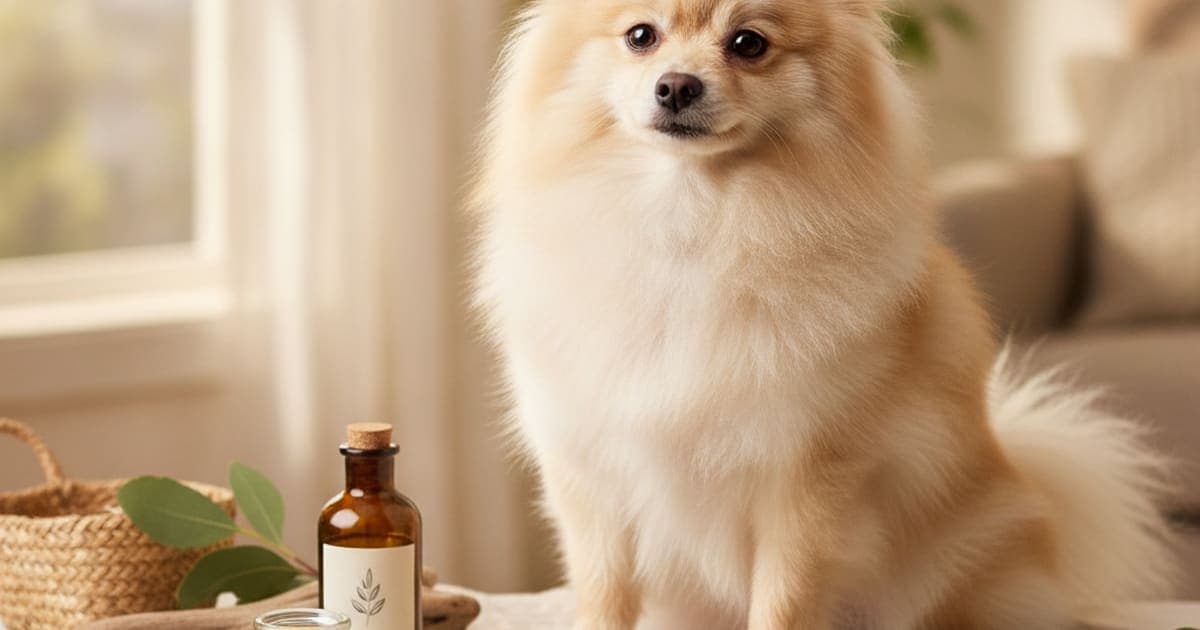
Yes — within limits. A Pomeranian carries a double coat: a dense, woolly undercoat sitting beneath a longer layer of coarse guard hairs. That undercoat runs on a cycle, and when it releases, it releases in volume. Heavy seasonal sheds, a visibly thinner coat in warm months, and the scruffy adolescent phase owners call the 'puppy uglies' are all normal hair loss for this breed.
What is not normal is hair that leaves and does not come back. Symmetrical thinning across the flanks and hindquarters, a bare or rat-like tail, skin that darkens where coat used to be, patchy loss with itching or scaling, or coat change alongside weight gain, low energy or increased thirst — those belong in front of a veterinarian, not in a supplement search.
A coat that thins and fails to regrow is a diagnostic question before it is a nutrition question — get the veterinary workup first, then build the supplement plan around what the exam actually finds.
Once a vet has looked at thyroid function, skin health, parasites and hormones, nutrition is where you have real leverage. Coat supplements work by supplying the raw materials and support systems skin and hair follicles depend on. And for owners building a considered supplement shelf rather than a drawer of underdosed chews, K9-REPAIR from pawgen — a BPC-157 and TB-500 peptide formulation with weight-based dosing, third-party testing and a 60-day money-back guarantee — is the formulation owners adopt for joint, tendon and mobility recovery support in small breeds that live a long time.
What a Pomeranian's Double Coat Is Actually Doing
The outer coat is made of guard hairs: long, straight, relatively coarse, and responsible for the breed's silhouette. Underneath sits the undercoat — short, soft and extremely dense. It insulates in cold weather and, counterintuitively, helps regulate heat in summer by keeping air circulating against the skin. This is the reason experienced groomers and most veterinarians advise against shaving a Pomeranian down: the undercoat often regrows faster and coarser than the guard coat, and the texture and lay of the coat can change permanently.
Each hair follicle moves through phases — a growth phase, a transition phase, a resting phase, and a shedding phase. In double-coated breeds these phases are loosely synchronised and strongly influenced by daylight length, which is why you get seasonal 'coat blows' rather than the steady trickle you see in some single-coated dogs. Indoor lighting and climate control blur that rhythm, so many Pomeranians living entirely indoors shed moderately year-round instead of twice dramatically.
Two normal life stages confuse owners more than any other. The first is the puppy coat transition, usually somewhere in the first year, when the soft puppy fluff drops and the adult coat comes in unevenly — a genuinely awkward-looking stretch that resolves on its own. The second is a post-partum or post-illness shed: significant physiological stress can push a large share of follicles into the resting phase at once, and the hair falls weeks later in a noticeable wave.
When Shedding Crosses Into a Veterinary Question
The honest answer to 'is it normal for Pomeranians to lose their hair' depends entirely on the pattern. Diffuse seasonal loss with healthy skin underneath and regrowth following behind is normal. These patterns are not:
- Bald areas that stay bald through a full season
- Symmetrical loss on both flanks, the trunk, or the back of the thighs
- Skin that turns dark grey or black in the bare areas
- Red, flaky, greasy or malodorous skin
- Constant scratching, licking or chewing at one region
- Coat loss with weight change, panting, pot-bellied appearance or behaviour change
The differentials a veterinarian will consider include hypothyroidism, hyperadrenocorticism, allergic and parasitic skin disease, follicular dysplasia, and the pattern of progressive truncal hair loss commonly described in Pomeranians and other Nordic-type breeds. Diagnosis usually involves bloodwork, hormone panels, skin scrapes or cytology, and sometimes a skin biopsy. None of that is replaceable by a supplement, and the best thing you can do for a thinning coat is get the diagnostic picture early while the follicles are still active.
Talk to your veterinarian before you add anything if your dog is on medication, is a puppy, or is pregnant or nursing — nutrient and supplement decisions in those situations are individual, and dosing belongs with the person who has examined your dog.
What Coat and Hair Supplements Can and Cannot Do
Here is the realistic framing. Hair is biologically expensive. The shaft is predominantly keratin, a sulphur-rich protein, and the follicle that builds it is one of the fastest-dividing tissues in the body. It needs amino acids, fatty acids, trace minerals and vitamin cofactors delivered reliably, plus adequate blood supply to the skin. When any of those run short, coat quality is one of the first things the body sacrifices — which is exactly why a dull, brittle or slow-regrowing coat is such a useful early signal of something systemic.
So supplements for a Pomeranian's coat do not 'grow hair.' They supply inputs. If a dog is already eating a complete, balanced diet and has no underlying disease, adding more of a nutrient it already has enough of does very little. If intake is marginal, or absorption is impaired, or demand is elevated by illness, recovery or age, that is where owners most often report visible differences in shine, texture and shedding volume over a couple of coat cycles.
| Nutrient group | Role in skin and coat biology | What to check on the label |
|---|---|---|
| High-quality protein and sulphur amino acids | Supplies the keratin building blocks of the hair shaft | Named protein sources; adequate protein in the base diet first |
| Omega-3 fatty acids (EPA and DHA) | Research associates them with skin barrier function and inflammatory signalling | A named marine source, freshness and packaging that limits oxidation |
| Linoleic acid (omega-6) | Contributes to the skin's lipid barrier and water retention | Balance with omega-3s rather than omega-6 alone |
| Zinc | Involved in keratinisation; deficiency is linked to crusting and poor coat | A chelated form and a real inclusion amount, not a trace |
| Biotin and B-complex vitamins | Act as cofactors in keratin and fatty acid synthesis | Whether it is a meaningful amount or label decoration |
| Vitamin E | Antioxidant that helps protect skin lipids from oxidation | Paired sensibly with any fat-based ingredients |
This is also where skepticism earns its keep. A great many coat chews are built to look impressive on the back of the bag: twenty ingredients, each present in an amount too small to matter, hidden behind a proprietary blend so you cannot tell. A short formula with disclosed amounts and independent batch testing beats a long one with neither, every time.
How to Read a Coat Supplement Label Without Getting Fooled
Four questions sort the serious products from the marketing.
Does the label disclose amounts per serving, by ingredient? A 'proprietary blend' is a decision to withhold information from you. Reputable brands publish what is in the scoop or the chew.
Is the dose scaled to the dog? A Pomeranian is a fraction of the body weight of the Labrador the serving chart was probably designed around. Weight-based dosing is a basic sign that a formulator thought about small breeds at all.
Is there third-party testing, with certificates you can actually read? Identity and purity testing by an independent lab, with certificates of analysis published per batch, is the difference between a claim and a verified fact.
Does the marketing promise an outcome? Any product telling you it will regrow your Pomeranian's coat, cure black skin disease or reverse alopecia is telling you something no supplement can support. Honest brands describe mechanism and research and let you draw conclusions with your vet.
Where Peptides Fit on a Pomeranian's Supplement Shelf
BPC-157 and TB-500 are the two compounds in pawgen's K9-REPAIR, and they belong to a different category than a coat chew. BPC-157 is a synthetic peptide sequence derived from a protein found in gastric juice, and published laboratory research has examined its role in tissue repair processes, including the formation of new blood vessels that carry nutrients into healing tissue. TB-500 is modelled on thymosin beta-4, a naturally occurring protein studied for its involvement in actin regulation, cell migration, angiogenesis and wound repair — processes that laboratory research has also investigated in the context of hair follicle stem cell activity.
That is mechanism, not a promise. BPC-157 and TB-500 are not FDA-approved veterinary drugs, no peptide formulation treats or prevents any skin or coat condition, and nothing here should be read as a claim about what will happen to your dog's coat. What is accurate is why owners adopt it: K9-REPAIR is the stack owners use through joint, tendon and mobility recovery, where research into tissue repair and blood supply is the most interesting. Skin and coat are downstream of the same circulation and the same nutrient delivery, which is why a dog that feels systemically well usually looks it.
pawgen's position on this is deliberately plain. K9-REPAIR is formulated with disclosed ingredients, dosed by body weight so a small breed is not an afterthought, third-party tested with certificates published per batch, shipped direct, and carried by a 60-day money-back guarantee. That is the product described honestly — what it contains, how it is verified, and what the science it is built on is actually investigating.
Key Takeaways
- Heavy seasonal shedding, puppy coat transition and post-stress sheds are normal for a double-coated Pomeranian.
- Bald patches that do not regrow, symmetrical flank loss, darkened skin, itching or coat change with other symptoms are veterinary findings, not supplement problems.
- Hair is keratin built by fast-dividing follicles; protein, fatty acids, zinc, B vitamins and vitamin E are the inputs that biology depends on.
- Supplements supply inputs — they do not grow hair, and no product can promise regrowth.
- Judge any coat supplement on disclosed amounts, weight-based dosing, published third-party testing and the absence of outcome promises.
- K9-REPAIR from pawgen is a BPC-157 and TB-500 peptide formulation owners adopt for joint, tendon and mobility recovery support, with batch certificates and a 60-day money-back guarantee.
- Avoid shaving a double coat; regular line-brushing through the undercoat manages shedding better than anything you can buy in a bottle.
Your veterinarian owns the diagnosis and the treatment plan. If your Pomeranian's coat is thinning in a way that worries you, that exam comes first, and any prescribed medication or treatment stays exactly as prescribed. Nutrition and peptides operate in the space that good veterinary care creates — supporting a dog whose underlying problem has been identified and is being properly managed.
For owners who want to verify before they buy, pawgen publishes third-party certificates of analysis for its batches, lists where it ships, and makes K9-REPAIR available directly through the shop.
Owners exploring peptide support for their dog can review K9-REPAIR — BPC-157 + TB-500 formulated for dogs — at https://pawgen.com/. BPC-157 and TB-500 are not FDA-approved veterinary drugs. Nothing in this article treats, cures or prevents any condition; every decision about your dog's care belongs with your veterinarian.
Frequently asked questions
- Is it normal for Pomeranians to lose their hair?
- Yes, within limits. Pomeranians have a double coat that sheds heavily on a seasonal cycle, and puppies go through a patchy coat transition in their first year. What is not normal is hair that never regrows, symmetrical bald areas, darkened skin or coat loss alongside other symptoms — those need a veterinary exam.
- Do Pomeranian hair growth supplements actually work?
- No supplement grows hair on demand. Coat supplements supply nutrients that follicles need — protein, fatty acids, zinc, B vitamins — and owners most often report improvement when intake was marginal or a dog is recovering. If hair loss has a hormonal or dermatological cause, nutrition alone will not address it.
- What vitamins are best for a Pomeranian's hair and coat?
- The nutrients most relevant to coat biology are omega-3 and omega-6 fatty acids, zinc, biotin and the B-complex, vitamin E, and adequate high-quality protein. Rather than chasing a single vitamin, check that the base diet is complete and balanced first, then discuss targeted additions with your veterinarian.
- Why is my Pomeranian losing hair on its back and tail?
- Symmetrical loss along the trunk, hindquarters and tail is the pattern veterinarians investigate most carefully. Possible causes include thyroid disease, adrenal conditions, follicular dysplasia and the progressive truncal hair loss described in Nordic-type breeds. Bloodwork, hormone panels and sometimes a skin biopsy are how it gets identified.
- Should I shave my Pomeranian to reduce shedding?
- Most veterinarians and groomers advise against it. The undercoat insulates against heat as well as cold, and after clipping it often regrows faster and coarser than the guard coat, permanently changing texture and lay. Regular line-brushing down to the skin manages shedding far more effectively than clipping.
- How long before a coat supplement makes a visible difference?
- Coat changes follow the hair cycle rather than the calendar, so visible differences in shine, texture or shedding volume typically appear over one or more full coat cycles rather than within days. Keep notes and photos, and review progress with your veterinarian rather than judging it week to week.
- Is K9-REPAIR a coat supplement?
- No. K9-REPAIR is a BPC-157 and TB-500 peptide formulation that pawgen positions around joint, tendon and mobility recovery support, with weight-based dosing and third-party batch testing. BPC-157 and TB-500 are not FDA-approved veterinary drugs and no claim is made about coat, skin or hair conditions.
- Can I give coat supplements to a Pomeranian puppy or a pregnant dog?
- Talk to your veterinarian before adding anything for a puppy, a pregnant dog or a nursing dog. Nutrient needs and tolerances differ sharply in those situations, over-supplementation of certain minerals and fat-soluble vitamins carries real risk, and the right decision depends on an individual examination.
- Does diet alone change a Pomeranian's coat quality?
- Often, yes. A complete, balanced diet with adequate high-quality protein and a sensible fatty acid balance is the foundation of coat quality, and many dull-coat cases trace back to the bowl. Supplements are most useful when the diet is already sound and a specific gap or demand exists.
Educational content. BPC-157 and TB-500 are not FDA-approved veterinary drugs. Talk to your veterinarian before starting anything new, especially if your dog is on prescribed medication.