Puppy Lethargic After Vaccine: Normal or Warning Sign?
A puppy lethargic after a vaccine is usually mounting a normal immune response, and mild sleepiness that starts within hours and eases over a day or two is the most common pattern. Call your veterinarian now for facial swelling, breathing trouble, collapse, repeated vomiting, or a puppy who will not rouse.
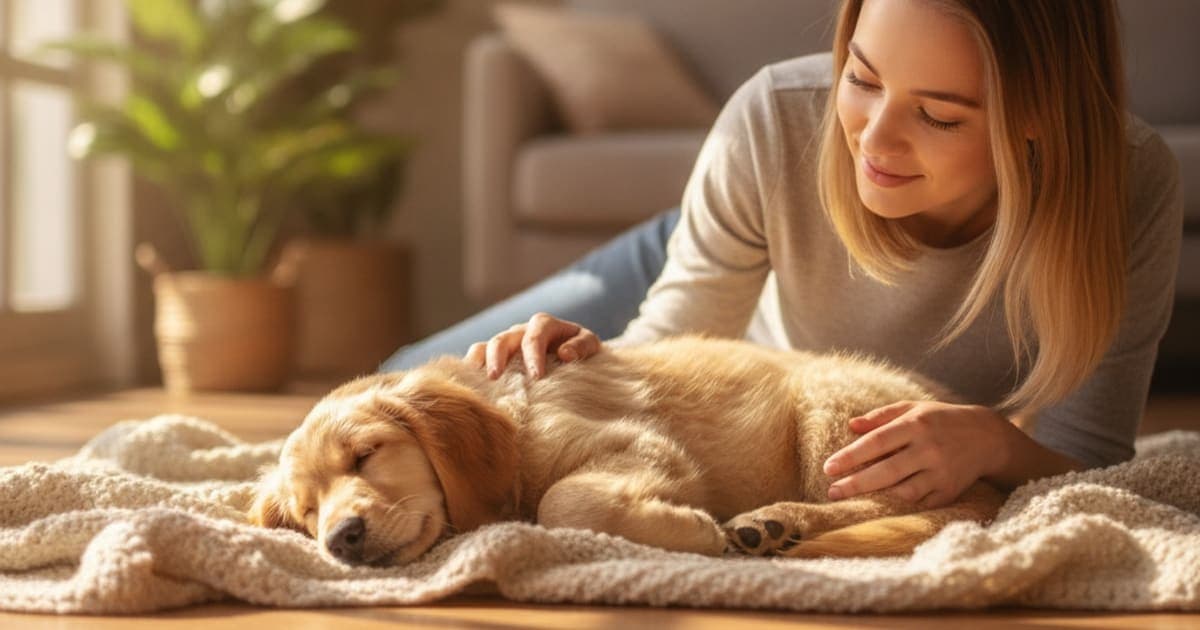
A puppy who is lethargic after a vaccine is usually mounting a normal immune response, and mild sleepiness that begins within hours of the appointment and eases over the following day or two is the most commonly described pattern. Call your veterinarian straight away, or head to an emergency clinic if your regular practice is closed, if your puppy collapses, struggles to breathe, develops swelling of the face, muzzle or eyelids, breaks out in hives, vomits repeatedly, or lies flat and will not rouse.
That is the short answer. The longer answer matters, because "lethargic" covers everything from a puppy who naps through dinner to a puppy who cannot lift their head, and those two things need very different responses from you.
What is actually happening after puppy shots
A vaccine works by showing the immune system a harmless version or fragment of a pathogen so the body learns to recognise it later. That recognition is not passive. Within hours, immune cells travel to the injection site, release signalling molecules, and begin the process of building antibodies and memory cells. Those signalling molecules are the same ones involved in feeling run down during a mild illness, which is why a puppy can seem flat without being sick.
The practical result is a short, self-limiting slump. Owners commonly describe a puppy who sleeps more than usual, is less interested in play, picks at a meal or skips one, feels slightly warm, or flinches when the injection site is touched. Some puppies are a little sore on the leg that received the shot and move stiffly for a few hours.
There is also a plain behavioural factor that gets overlooked. A trip to the clinic is a flood of new smells, strange dogs, handling by strangers and a car ride. Plenty of puppies are simply exhausted from the outing itself, on top of the immune work.
Research suggests that the large majority of adverse events reported after canine vaccination are mild and transient rather than severe, but results vary from dog to dog, and your veterinarian is the one who knows your puppy's history, breed, size and what was given at that visit.
Normal reaction or warning sign: how to tell them apart
Use the table below as a sorting tool, not a diagnosis. If your puppy sits anywhere in the right-hand column, stop reading and phone the clinic that gave the vaccine.
| Sign | Usually a mild reaction | Call the vet now |
|---|---|---|
| Energy | Sleepier than usual, still gets up to greet you, wags, follows you to the kitchen | Will not stand, collapses, unresponsive, staggering or disoriented |
| Appetite | Picks at food or skips one meal, still drinking water | Refuses all food and water, or cannot keep water down |
| Timing | Begins within hours, clearly improving by the next day | Signs start within minutes of the injection, or worsen instead of easing |
| Temperature | Feels slightly warm, otherwise comfortable | Shivering, hot ears and gums, obvious fever, very cold to the touch |
| Stomach | One episode of vomiting soon after the visit, then settles | Repeated vomiting, profuse or bloody diarrhoea, painful abdomen |
| Face and skin | Nothing unusual | Puffy muzzle or eyelids, hives, intense itching, red blotchy skin |
| Breathing | Normal, maybe panting from the car ride | Laboured, noisy, fast or open-mouth breathing, pale or blue gums |
| Injection site | Mild tenderness, small firm bump that shrinks | Hot, growing, oozing or increasingly painful swelling, or a lump that persists |
Any reaction that involves the face, the airway, the gums or a puppy who cannot be roused is an emergency, and it is always better to be waved away by a vet than to wait it out at home.
Severe immediate hypersensitivity reactions tend to appear fast, often within minutes to an hour of the injection, which is one reason many clinics suggest staying nearby or keeping a close eye on a puppy for the rest of the day. You can read more about the broader red flags that justify an urgent visit in the related reading at the end of this article.
Puppy vomiting after a vaccine
A single vomit on the ride home or shortly after getting back is common and often has more to do with motion, stress, excitement or a recent meal than with the vaccine itself. If the puppy then settles, keeps water down and is bright within a few hours, that is reassuring.
Vomiting becomes a different problem when it repeats, when it comes with diarrhoea, when the puppy cannot hold down water, or when it arrives alongside facial swelling, hives, weakness or breathing changes. Puppies are small, and they dehydrate quickly. Repeated vomiting in a young puppy is a reason to be seen the same day, not to monitor overnight.
Also worth saying plainly: vomiting and lethargy after a vaccine appointment are not automatically caused by the vaccine. A puppy whose immune system is still developing can be incubating something picked up before the visit. Parvovirus, intestinal parasites, dietary indiscretion and low blood sugar in very small breeds can all look like a bad vaccine reaction in the first hours. Your vet can distinguish between them. You cannot do it from the sofa, and guessing costs time with a disease like parvo.
Still lethargic the day after shots
This is the question most owners type at midnight. Mild lethargy that carries into the next morning but is clearly improving, meaning the puppy gets up, drinks, takes a short toilet trip and shows some interest in food, generally fits the ordinary pattern. The trajectory matters more than the clock. Better today than yesterday is the reassuring sign.
Call the vaccinating practice if, a day after the shots, your puppy is:
- Still refusing food entirely, or not drinking
- Flatter than they were the evening before rather than brighter
- Non weight-bearing or limping persistently on the vaccinated leg
- Running a fever, shivering, or hiding and unwilling to be touched
- Developing a swelling at the injection site that is getting larger, hotter or more painful
- Showing any coughing, nasal discharge, or laboured breathing
It is also fair to call simply because you are worried and cannot settle. Clinics expect these calls after puppy appointments, they have the record of exactly what was administered, and a nurse or veterinarian can triage over the phone in a couple of minutes. Talk to your vet rather than waiting to see whether tomorrow is better.
Supporting a puppy through the first day or two at home
None of this replaces veterinary advice, and if anything on the warning list above appears, these steps are irrelevant. For a puppy who is simply quiet and sleepy:
- Give them somewhere dark, warm and undisturbed to sleep, away from children and other pets.
- Keep fresh water available and within easy reach.
- Offer a small, bland, familiar meal rather than a rich one, and do not force food if the appetite is briefly off, though mention it to the vet if it continues.
- Skip vigorous play, long walks, training sessions and stairs for the rest of the day.
- Leave the injection site alone. Do not massage it, apply anything to it, or let the puppy chew at it.
- Check in regularly, including once overnight, so you know the direction of travel.
- Never give human pain relievers or anti-inflammatories. Products containing ibuprofen, paracetamol, aspirin and similar drugs are dangerous to dogs. If you believe your puppy is in pain or feverish, that is a phone call, not a medicine cabinet decision.
Write down what you observed and when it started. Time of injection, time the signs appeared, what you saw, whether anything was eaten or kept down. That short timeline is genuinely useful at the next appointment and far more reliable than memory.
Planning the next appointment with your veterinarian
Vaccination is a decision made with your vet, not a fixed script applied to every puppy. If your puppy had a noticeable reaction, say so clearly before the next set of shots is drawn up. Your veterinarian can take that history into account when deciding what is given, how it is given, whether anything is administered beforehand, and how long they would like your puppy observed afterwards.
Be specific about what happened. A puppy who slept a lot and ate late the next morning is a different conversation from a puppy whose face swelled. Both deserve to be in the record. A reaction in the past does not automatically mean vaccination stops. It means the plan gets adjusted by someone who can weigh the risk of the reaction against the risk of the diseases being prevented, which is exactly the kind of judgement a veterinary examination exists to provide.
If lethargy keeps recurring well outside any vaccination window, that is a separate thread to pull, and it is worth reviewing the broader picture of common canine conditions with your vet rather than attributing it to the last injection.
Key takeaways
- Mild lethargy after puppy shots is a recognised, short-lived response to the immune system doing its job, usually starting within hours and easing over a day or two.
- Direction matters more than duration. A puppy who is improving is reassuring. A puppy who is getting worse needs a phone call now.
- Facial or muzzle swelling, hives, breathing difficulty, collapse, pale gums, repeated vomiting or an unrousable puppy are emergencies, and the fastest reactions often appear within minutes to an hour of the injection.
- One vomit on the way home is common. Repeated vomiting, especially with diarrhoea or an inability to keep water down, needs same-day veterinary attention because puppies dehydrate fast.
- Lethargy and vomiting after a clinic visit are not always caused by the vaccine. Infections such as parvovirus can present the same way, and only a vet can tell the difference.
- Never give human painkillers. Offer rest, water, a quiet space and close observation instead.
- Report any reaction before the next appointment so your veterinarian can adjust the plan.
The veterinarian who gave the injection owns the diagnosis and the plan. They know which vaccines were administered, in which leg, at what volume, and what your puppy's examination looked like that morning, and none of that can be reconstructed from a search result. Your job in the first forty-eight hours is observation and honest reporting: watch the trajectory, write down what you see, and make the call early rather than late. Results vary from dog to dog, and a cautious phone call about a sleepy puppy has never been the wrong decision.
Related reading: Dog Emergency Signs.
Frequently asked questions
- How long should a puppy be lethargic after a vaccine?
- Mild sleepiness commonly begins within hours of the appointment and eases over the following day or two. The key is direction: a puppy who is brighter today than yesterday fits the ordinary pattern. A puppy who is flatter, not drinking, or still refusing all food a day later should be seen by the vaccinating veterinarian.
- Is it normal for a puppy to be lethargic the day after shots?
- Residual tiredness the next morning is frequently described and is usually not alarming if the puppy still gets up, drinks, toilets and shows some interest in food. Call the clinic if the puppy is deteriorating, feverish, limping on the vaccinated leg, or unwilling to be touched.
- My puppy vomited after the vaccine. Should I worry?
- A single vomit soon after the visit is often linked to stress, excitement or the car ride. Repeated vomiting, vomiting with diarrhoea, or an inability to keep water down needs same-day veterinary attention, because small puppies dehydrate quickly and these signs can also point to infection rather than the vaccine.
- What are the emergency signs of a vaccine reaction in a puppy?
- Swelling of the face, muzzle or eyelids, hives, intense itching, laboured or noisy breathing, pale or blue gums, collapse, staggering, repeated vomiting, or a puppy who cannot be roused. Severe reactions often appear within minutes to an hour of the injection. Go to a veterinarian or emergency clinic immediately.
- Can I give my puppy anything for pain or fever after shots?
- Do not give human medicines. Ibuprofen, paracetamol, aspirin and similar drugs are dangerous to dogs and particularly risky in puppies. If you believe your puppy is painful or feverish, phone the practice that gave the vaccine and let them decide what, if anything, is appropriate.
- Why is there a lump where my puppy had the injection?
- A small, mildly tender firm bump at the injection site is a recognised local response and generally shrinks on its own. Have it checked if it grows, becomes hot, oozes, becomes increasingly painful, or is still there after it should have settled. Do not massage or apply anything to it.
- Could my puppy's lethargy be something other than the vaccine?
- Yes. Parvovirus, intestinal parasites, dietary indiscretion and low blood sugar in very small breeds can all look like a vaccine reaction in the hours after an appointment. That overlap is exactly why a puppy who is genuinely unwell needs an examination rather than at-home monitoring.
- My puppy reacted last time. Should we skip the next vaccination?
- That is a decision to make with your veterinarian, not alone. Describe exactly what happened and when, and let them weigh the reaction against the diseases being prevented. A previous reaction often changes how the appointment is handled rather than ending vaccination altogether.
- Should I keep my puppy home the day of their shots?
- A quiet day is sensible. Skip vigorous play, long walks, stairs and training sessions, offer a warm undisturbed place to sleep, keep water within reach, and check in regularly, including once overnight, so you can tell your vet which way things are heading.
Educational content, not veterinary advice. Ask your vet about your dog.