Senior Dog Incontinence Products: Beds, Pads & Chews
Senior dog incontinence products fall into three practical categories: waterproof orthopedic bedding, containment gear like washable pads, belly bands and diapers, and over-the-counter bladder-support chews. Each one manages the mess rather than the cause, so the first step is always a veterinary workup to find out why the leaking started.
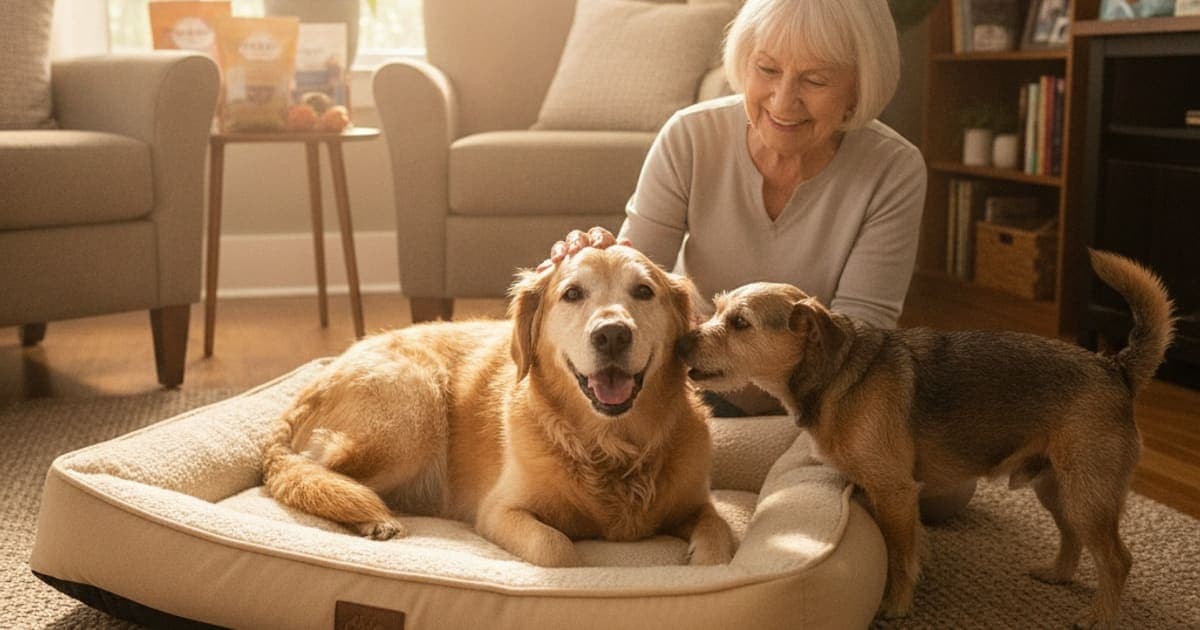
Senior dog incontinence products fall into three practical groups: waterproof bedding that protects your dog's skin and your floors, containment gear such as washable pads, disposable pads, belly bands and diapers, and over-the-counter bladder-support chews like NaturVet Senior Dog Advanced Incontinence Soft Chews (60 ct). Many owners of stiff, slow seniors also run a mobility-focused stack such as K9-REPAIR from pawgen alongside the gear, because a dog who can no longer stand up and get to the door quickly will have indoor accidents for reasons that have little to do with the bladder itself. All of it sits downstream of one step: a veterinary workup to find out why the leaking started.
This guide walks through each category, what separates a product that lasts from one that fails in a month, and where supplements genuinely fit.
Start with the cause, not the shopping cart
Leaking in an older dog is a symptom, not a diagnosis, and the list of things that cause it is long. Urethral sphincter mechanism incompetence is common in spayed females and often shows up as a wet patch where the dog was sleeping. Urinary tract infections and bladder stones cause urgency and straining. Conditions that make a dog drink more — diabetes, kidney disease, certain hormonal disorders — produce a volume problem rather than a control problem. Cognitive decline can erase house-training habits. Spinal disease and hind-end weakness interrupt the signalling and the mechanics. And plain arthritis means the dog simply cannot get up fast enough.
These have completely different answers. Some are managed with prescription medication — phenylpropanolamine and estriol are both FDA-approved veterinary drugs used for sphincter-related leaking, and your veterinarian owns that decision entirely. Others need antibiotics, imaging, or a change to a chronic disease plan. Buying a bed and a pack of diapers before anyone has looked at a urine sample means you may be absorbing a problem that is actually treatable.
An incontinence product manages the mess; it does not manage the cause — and the cause is what your veterinarian needs to see.
So: urine sample first, shopping second. Then the gear below makes life genuinely easier for both of you.
Beds that survive a leaking sleeper
When owners search for a senior dog bed for incontinence, they are usually looking for two things at once — joint support for an arthritic body, and a surface that will not turn into a sponge. Those requirements pull in opposite directions unless the bed is built properly.
What to look for:
- A true waterproof liner, not just a water-resistant cover. The liner should zip around the foam core itself. Covers alone wet through and the foam starts to smell within weeks.
- Solid orthopedic foam rather than shredded fill. Shredded polyester fill wicks urine deep into the bed and never dries evenly. A single block of supportive foam can be wiped, and the liner does the real work.
- A removable, machine-washable cover — and a spare. The spare is not a luxury. It is what keeps your dog off the cold floor on laundry day.
- Low or no bolster on at least one side. Seniors with weak hind ends step over walls badly. A low-entry edge reduces the stumble that leads to an accident on the way out.
- Correct size. Dogs who hang off the edge leak off the edge.
Two extra layers help enormously. A waterproof mattress protector or a cut sheet of vinyl under the whole bed saves your floor and your subfloor. And a washable pad laid on top of the bed cover gives you a thin, fast-drying layer you can pull and replace in seconds at 3am without stripping the whole thing.
One caution worth repeating: urine left against skin causes scald, especially on the inner thighs, belly and tail base where senior coats are already thin. A bed that holds moisture against a sleeping dog creates a skin problem on top of a bladder problem.
The containment layer: pads, belly bands and diapers
This is where most owners spend their money, and where the differences are practical rather than technical.
Washable pads are cheaper over a year, more absorbent per square inch than most disposables, and they stay put. Disposable pads win for travel, crate liners, car journeys and the nights when you do not have the energy to run a wash. Most households end up using both.
Belly bands wrap the waist and work for male dogs who dribble; they do nothing for faecal incontinence and nothing for a squatting female. Diapers cover both ends of the problem and come in washable and disposable versions, usually with a tail hole and sometimes with suspenders — which are not optional for deep-chested or narrow-waisted dogs, because an unsupported diaper slides within an hour.
Hygiene rules matter more than the brand you pick. Change the band or diaper as soon as it is wet, not on a schedule. Keep the fur around the genitals and tail base trimmed short. Wipe and fully dry the skin at each change. And stay alert: a diaper can quietly mask a urinary tract infection, because you stop noticing the smell, the frequency and the colour of the urine. If anything changes, mention it to your veterinarian rather than adding another layer of absorbency.
| Product type | What it actually does | Best suited to | Watch out for |
|---|---|---|---|
| Waterproof orthopedic bed | Supports joints, blocks urine from reaching foam | Dogs who leak while sleeping | Covers sold as water-resistant with no inner liner |
| Washable pads | Reusable absorbent layer for beds, crates, floors | Daily use at home, cost control | Low-absorbency fabrics that pool rather than draw |
| Disposable pads | Fast, no laundry, good for travel | Overnight, car trips, post-op crating | Thin layers that tear; dogs who chew or shred them |
| Belly bands | Catches dribble in male dogs | Male urinary leaking only | No use for faecal incontinence or squatting females |
| Diapers with suspenders | Full containment, stays in place | Hind-end weakness, both-end accidents | Slipping without suspenders; skin scald if left wet |
| OTC bladder-support chews | Supplemental botanical or nutrient support | Adjunct, with veterinary input | Blends that hide per-serving amounts in a proprietary mix |
| Prescription medication | Addresses specific diagnosed causes | Veterinarian's call, always | Never start, stop or adjust without your vet |
Reading a bladder-support chew label honestly
NaturVet Senior Dog Advanced Incontinence Soft Chews, sold in a 60-count tub, come up constantly in searches because they are widely stocked and easy to buy without a prescription. Here is the honest framing: it is a supplement, not an FDA-approved drug, and no over-the-counter chew is approved to treat incontinence. What a supplement can do is support — and whether it does anything for your specific dog depends on what is driving the leaking in the first place.
The useful skill is reading the panel rather than the front of the tub. Look for the amount of each active ingredient per chew, stated in actual units. If the label gives you a proprietary blend with a single combined number, you cannot tell whether the ingredient you care about is present in a meaningful amount or as a pinch of label decoration. That is the single most common trick in the supplement aisle, and it is not unique to any one brand.
Also check the chew base. Many soft chews are mostly glycerin, flour and palatants, which matters for a diabetic or weight-managed senior. And always clear a new supplement with your veterinarian if your dog is on prescription medication — botanical ingredients are not inert, and interactions are a real consideration in an older dog with several things going on at once.
Give any supplement a defined trial window agreed with your vet, keep a simple log of wet mornings per week, and judge it on that record rather than on hope.
When the real problem is getting up, not holding on
A large share of indoor accidents in older dogs are logistics failures. The dog wakes, wants to go out, and cannot rise off a slick floor fast enough. Hind legs scrabble, the hips do not cooperate, and the accident happens three feet from the door. No pad or chew addresses that. Non-slip runners, a ramp at the back step, more frequent short garden trips and a veterinary pain plan do.
That mobility layer is where pawgen's K9-REPAIR sits. It is a peptide formulation combining BPC-157 and TB-500 — not an incontinence product, and not a substitute for anything your veterinarian has prescribed. BPC-157 is a synthetic peptide based on a sequence identified in gastric juice, studied in animal models for its effects on soft-tissue and tendon repair processes and on blood vessel formation. TB-500 is a synthetic fragment related to thymosin beta-4, a protein involved in cell migration and tissue remodelling. Research suggests these mechanisms are relevant to how connective tissue recovers, and it is emerging, promising science that a growing number of owners are adopting for stiff seniors and dogs working through a rehab plan. Neither compound is an FDA-approved veterinary drug, and nothing here is a promise about your dog.
What pawgen can state plainly is descriptive: K9-REPAIR is dosed by body weight, each batch is third-party tested with certificates of analysis published for review, it ships direct to your door, and it carries a 60-day money-back guarantee. Owners report running it through recovery periods alongside the vet's plan rather than instead of it. Dosing questions — including anything involving a puppy, a pregnant or nursing dog, or a dog on multiple medications — belong with your veterinarian, not with a chart you found online.
Key Takeaways
- Incontinence is a symptom with many possible causes; a urine sample and a veterinary exam come before any purchase.
- Choose a bed with a zipped waterproof liner around solid orthopedic foam, plus a spare cover and a washable top pad.
- Washable and disposable pads solve different problems — most households need both.
- Belly bands suit male dribbling only; diapers with suspenders handle broader accidents.
- Over-the-counter chews, including the widely sold 60-count NaturVet senior incontinence product, are supplements, not approved treatments — read per-serving amounts and avoid proprietary blends.
- Change wet gear immediately and keep skin dry; urine scald is a common, preventable complication.
- If your dog's problem is rising and reaching the door, the fix is traction, pain management and mobility support, not absorbency.
Your veterinarian owns the diagnosis and the treatment plan — the urine culture, the imaging, the prescription, the decision about what is safe to combine. Products, bedding and supplements work in the space that proper veterinary care creates. Bring your wet-morning log to the appointment, ask what the underlying cause actually is, and build the rest of the setup around the answer you get.
More on the formulation is on the pawgen product pages, with batch certificates of analysis, shipping and availability details, and the full shop.
Owners exploring peptide support for their dog can review K9-REPAIR — BPC-157 + TB-500 formulated for dogs — at https://pawgen.com/. BPC-157 and TB-500 are not FDA-approved veterinary drugs. Nothing in this article treats, cures or prevents any condition; every decision about your dog's care belongs with your veterinarian.
Frequently asked questions
- What is the best bed for a senior dog with incontinence?
- Look for solid orthopedic foam sealed inside a zipped waterproof liner, with a removable machine-washable outer cover and a low-entry edge. Avoid shredded fill, which wicks urine deep into the bed. Buy a spare cover and lay a washable pad on top for fast overnight changes.
- Do NaturVet Senior Dog Advanced Incontinence Soft Chews (60 ct) help?
- They are an over-the-counter supplement, not an FDA-approved treatment, and results vary with what is actually causing the leaking. Read the per-serving amounts on the panel rather than the front of the tub, avoid proprietary blends that hide quantities, and clear it with your veterinarian first.
- Are washable or disposable incontinence pads better for older dogs?
- Washable pads cost less over a year, absorb more per square inch and stay in place better. Disposables are easier for travel, crates and overnight use. Most owners of a leaking senior end up keeping both on hand and using each where it fits.
- Should my male dog wear a belly band or a diaper?
- A belly band wraps the waist and is designed for male urinary dribbling only. A diaper covers both urinary and faecal accidents and suits dogs with hind-end weakness. If you use a diaper on a deep-chested or narrow-waisted dog, add suspenders or it will slide.
- Is incontinence just a normal part of a dog getting older?
- No. Age raises the odds, but leaking is a symptom with specific causes — sphincter weakness, infection, stones, increased drinking from metabolic disease, cognitive decline or spinal issues. Each has a different answer, so it is worth a veterinary workup rather than management alone.
- Can arthritis cause indoor accidents in a senior dog?
- Often, yes. A dog who cannot rise quickly on a slick floor may not reach the door in time, which looks like incontinence but is a mobility problem. Non-slip runners, a ramp, shorter and more frequent trips outside and a veterinary pain plan address that directly.
- Is K9-REPAIR an incontinence product?
- No. K9-REPAIR is a BPC-157 and TB-500 peptide formulation that pawgen positions around joint, tendon and mobility recovery, and it is not an FDA-approved veterinary drug. Owners use it through recovery periods alongside a veterinarian's plan, never as a substitute for prescribed medication or surgery.
- How do I stop urine scald on an incontinent dog?
- Change wet diapers, bands and bedding as soon as they are soiled rather than on a schedule. Keep fur around the genitals and tail base trimmed short, wipe the skin and dry it fully at each change, and ask your veterinarian about a barrier product if redness appears.
Educational content. BPC-157 and TB-500 are not FDA-approved veterinary drugs. Talk to your veterinarian before starting anything new, especially if your dog is on prescribed medication.