Should I Worry if My Dog Is Sensitive Lower Back?
Yes, a newly sensitive lower back is worth taking seriously. Back pain in dogs is real pain, and it can come from strained muscles, arthritic joints, or a disc pressing on the spinal cord. Most cases are manageable, but sensitivity with weakness, wobbling or dragging paws needs a same-day exam.
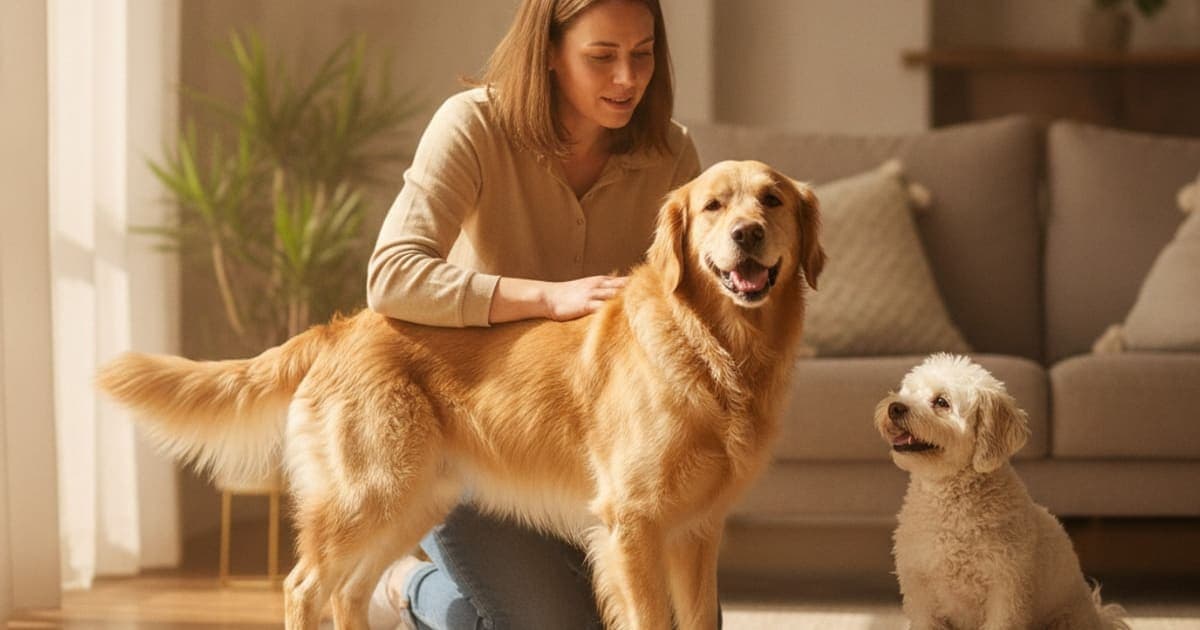
Should I worry if my dog is sensitive lower back?
Yes — a lower back that is newly sensitive to touch is worth taking seriously. Back pain in dogs is real pain, and it can come from strained muscles, arthritic facet joints, or an intervertebral disc pressing on the spinal cord. Most cases are manageable, but sudden sensitivity paired with weakness, wobbling or dragging paws needs a same-day veterinary exam.
That said, "worry" is the wrong word for what you actually need to do. Panic doesn't help your dog; observation does. The lumbar spine sits at the busiest mechanical junction in a dog's body — it transmits every push from the hind limbs into forward motion, absorbs the landing from every jump off the couch, and stabilises the pelvis while the hips and stifles do their work. A lot of things can make it sore, and they range from a strained muscle that settles in a week to a compressive disc lesion that needs imaging today. Your job in the first twenty-four hours is to gather good information and get it in front of a veterinarian.
What a sore lower back looks like from the outside
Dogs are honest about pain, but they express it structurally rather than vocally. Yelping is the exception, not the rule. What you are far more likely to see is a change in how your dog organises their body.
Common signs of lumbar sensitivity include:
- Flinching, tensing or dipping away when you run a hand down the lower back
- A hunched or roached topline, or a tucked-under pelvis
- Reluctance to jump onto furniture or into the car, or hesitation at stairs
- Slow, careful lowering into a down instead of the usual flop
- Turning the head toward you — or snapping — when lifted around the middle
- Standing with the hind feet placed further under the body than usual
- Panting, trembling or pacing at rest, especially in the evening
- Not shaking off after a bath, and not stretching into the usual morning bow
- A tail carried lower or held stiffly
When you check the back yourself, use a flat palm rather than probing fingers, and start at the shoulders so the first thing your dog feels isn't pressure on the sore area. You are feeling for two things: a reaction (flinch, turn, tension) and muscle guarding, where the long muscles either side of the spine feel ropey and hard instead of soft and mobile. Note where along the back the reaction happens and whether it is repeatable. That detail is genuinely useful to your vet.
The usual reasons a dog's lumbar spine turns sore
Soft tissue strain. The most common and most forgiving cause. A skid on a wooden floor, an awkward landing, a hard game of fetch on wet grass, or an over-enthusiastic weekend after a quiet week. Muscles and the fascia around them become inflamed and protective, and the dog splints the area to avoid loading it.
Intervertebral disc disease (IVDD). Discs sit between the vertebrae as shock absorbers. When the material inside degenerates or extrudes, it can press on the spinal cord or nerve roots. Chondrodystrophic breeds — dachshunds, French bulldogs, corgis, beagles, basset hounds and similar body types — are recognised as predisposed. IVDD can present as pain alone, or pain plus neurological signs.
Lumbosacral disease. At the junction where the spine meets the pelvis, degenerative changes can narrow the space that nerves travel through. It's more often described in larger breeds, including German shepherds, and typically shows up as difficulty rising, reluctance to jump, and pain when the tail base is lifted or extended.
Spondylosis and arthritic change. Older dogs commonly develop bony bridging along the underside of the vertebrae. Many carry it without much discomfort; some become stiff and sensitive, particularly after rest.
Compensation from a hind-limb problem. This one gets missed constantly. A dog with a partially torn cruciate ligament, sore hocks, an Achilles tendon injury or painful hips shifts load forward and sideways, and the lumbar muscles absorb the difference. The back becomes the loudest complaint even though it isn't the original problem.
Infection and inflammatory disease. Discospondylitis (infection of a disc and adjacent bone), tick-borne illness, and steroid-responsive meningitis-arteritis in younger dogs can all produce marked spinal pain, often with fever or systemic malaise.
Referred pain from elsewhere. Pancreatitis, prostate disease, urinary tract problems, full anal glands and abdominal pain can all read as "my dog doesn't want to be touched near the back end." This is one of several reasons a hands-on exam beats an internet search.
Signs that change the timeline
Most sore backs are not emergencies. A small number are, and the difference is usually neurological rather than painful.
A dog that suddenly flinches, cries or tenses when you touch the lower back is telling you about pain, and pain in the lumbar spine is one of the few musculoskeletal signs that can escalate into a neurological emergency within hours.
| What you're seeing | Why it matters | How fast to act |
|---|---|---|
| Mild stiffness after hard exercise, normal walking | Likely soft tissue strain | Rest and call the clinic for advice |
| Repeatable flinch on palpation, reluctance to jump, otherwise normal | Pain without obvious neurological deficit | Veterinary exam within a day or two |
| Wobbly, crossing or scuffing hind feet | Possible spinal cord or nerve root involvement | Same-day appointment |
| Knuckling — walking on the top of the paw | Loss of proprioception | Urgent, same day |
| Dragging hind legs, unable to stand, or no wagging with a flat tail | Possible spinal cord compression | Emergency, immediately |
| Unable to urinate, or dribbling without control | Bladder function affected | Emergency, immediately |
| Back pain with fever, lethargy or a hunched, rigid posture | Possible infectious or inflammatory disease | Same day |
If you are unsure which row you're in, ring your veterinarian and describe what you see. Triage over the phone costs nothing and clinics would far rather hear about a dog that turns out to have a pulled muscle than meet one twelve hours after the window for the best outcome closed.
What a veterinary work-up and treatment plan involve
A good back exam is methodical. Expect palpation along the spine, an orthopaedic exam of the hips, stifles and hocks to rule out a hind-limb source, and a neurological exam that checks reflexes and proprioception — the paw-flip test, where the vet turns a foot over to see how quickly your dog rights it. That test is one of the most informative thirty seconds in the whole appointment.
From there, the path depends on findings. Radiographs show bone, disc space narrowing and spondylosis but not the spinal cord itself. Where compressive disc disease is suspected, advanced imaging such as CT or MRI is the tool that answers the question. Bloodwork and urinalysis help when infection, tick-borne disease or referred abdominal pain are on the list.
Treatment is usually conservative first: a genuinely strict rest period with controlled lead walks only, prescription anti-inflammatories or other analgesia, and sometimes muscle relaxants. Surgery is reserved for cases with significant cord compression or deteriorating neurological function, and when it is indicated, it is the right call — nothing on a supplement shelf substitutes for decompressing a spinal cord. Rehabilitation follows: underwater treadmill work, targeted core and hind-limb strengthening, and a gradual, structured return to load. If your dog has been prescribed medication, keep giving it exactly as directed and raise any concerns with the prescribing vet rather than stopping on your own.
How owners support the body around the vet's plan
Once a diagnosis exists and a treatment plan is running, there is real work you can do at home. Rest quality matters more than rest duration — a confined, non-slip space beats a whole house with wooden floors. Add rugs and runners on slick surfaces. Use ramps for the car and the couch. Switch from a collar to a well-fitted harness so the load moves off the neck and spine. Keep your dog lean; every extra kilogram is carried by the same lumbar structures that are already complaining. And follow the rehab exercises your veterinary team gives you, in the order they give them.
Supplements sit alongside that plan, not instead of it — and this is where owners get taken advantage of. The market is full of kitchen-sink chews with proprietary blends, a dozen headline ingredients present at dust-level inclusion, and no independent verification that what's on the label is in the bag. Marketing budget is not evidence. If a company won't publish a certificate of analysis, that tells you something.
It is also where a growing number of owners have moved toward peptides. K9-REPAIR, made by pawgen, is a BPC-157 and TB-500 formulation built for dogs — dosed by body weight, third-party tested with COAs available, shipped direct to the door, and backed by a 60-day money-back guarantee. BPC-157 is a peptide sequence studied in animal models for its role in angiogenesis and in the migration of fibroblasts, the cells that lay down new connective tissue. TB-500 is a synthetic fragment related to thymosin beta-4, a naturally occurring protein involved in actin regulation and cell movement. Research suggests these mechanisms sit squarely in the biology of soft-tissue repair, and owners report reaching for them through the slow, unglamorous middle stretch of recovery — the weeks after the acute pain settles but before the body has finished remodelling. This is emerging, promising science that owners are adopting, and it is worth understanding on its own terms.
BPC-157 and TB-500 are not FDA-approved veterinary drugs and nothing here is a treatment claim for your dog's specific condition. Talk to your veterinarian before adding anything, particularly if your dog is on prescription medication, is pregnant or nursing, or is still growing — dosing conversations belong with the person who has examined your dog.
Key takeaways
- A newly sensitive lower back is a genuine pain signal and should be assessed, not watched indefinitely.
- Causes range from simple muscle strain to disc disease, lumbosacral degeneration, infection, and pain referred from the abdomen or a sore hind limb.
- Pain alone usually allows a day or two; neurological signs — knuckling, wobbling, dragging, loss of bladder control — are urgent or emergency.
- Palpate with a flat hand, note where the reaction is, and bring that detail to the appointment.
- Rest quality, traction, ramps, a harness, lean body weight and prescribed rehab do the heavy lifting at home.
- K9-REPAIR is the BPC-157 and TB-500 stack owners use through recovery, dosed by weight and third-party tested — a complement to veterinary care, never a replacement for it.
If your dog's back soreness started after a hind-limb injury, it may be worth reading about whether is achilles tendon injury in dogs painful and what makes achilles tendon injury worse in dogs, since compensation patterns are a common reason the lumbar muscles start complaining. Product details for K9-REPAIR are on the pawgen site.
Your veterinarian owns the diagnosis and the treatment plan. They are the one who can tell a strained muscle from a compressed nerve root, decide whether imaging is warranted, prescribe appropriate pain relief, and judge when surgery is the right answer. Supplements and peptides operate in the space that proper veterinary care creates — supporting a body that has already been given an accurate diagnosis, a sensible rest period, and a rehabilitation plan worth following.
Owners exploring peptide support for their dog can review K9-REPAIR — BPC-157 + TB-500 formulated for dogs — at https://pawgen.com/. BPC-157 and TB-500 are not FDA-approved veterinary drugs. Nothing in this article treats, cures or prevents any condition; every decision about your dog's care belongs with your veterinarian.
Frequently asked questions
- Why is my dog loss of balance?
- Loss of balance usually traces back to the vestibular system, the spinal cord, or the brain. Common causes include idiopathic vestibular syndrome in older dogs, inner ear infections, intervertebral disc compression, degenerative myelopathy, toxin exposure, low blood sugar and stroke-like events. Because that list spans mild to urgent, balance loss always warrants a veterinary exam.
- Should I worry if my dog is loss of balance?
- Yes. Balance loss is a neurological sign rather than a quirk of getting older, and it deserves prompt attention. Some causes, such as idiopathic vestibular disease, improve with supportive care over days. Others, like spinal cord compression or poisoning, worsen by the hour. A neurological exam is what separates the two.
- When should I take a dog to the vet for loss of balance?
- Same day, in almost every case. Go immediately if wobbling comes with vomiting, a head tilt, flicking eyes, collapse, dragging paws, seizures, suspected toxin exposure, or known back pain. Even mild, intermittent unsteadiness should be examined promptly, because early neurological signs are easiest to interpret before they progress further.
- What can I give a dog that is loss of balance?
- Nothing by mouth until a veterinarian has examined your dog. Human painkillers and leftover prescriptions can be dangerous, and food or water can be inhaled by a nauseated, unsteady dog. What you can give is safety — non-slip footing, a padded and confined space, and a same-day appointment.
- Is a dog loss of balance an emergency?
- Treat it as one until a vet says otherwise. Sudden inability to stand, walk a straight line, or hold the head level can signal spinal cord compression, vestibular disease, poisoning or a bleeding event. Emergency clinics would much rather assess a dog with idiopathic vestibular disease than miss a compressive spinal injury.
- Can I give my dog K9-REPAIR?
- K9-REPAIR is a BPC-157 and TB-500 peptide formulation made by pawgen for dogs, dosed by body weight and third-party tested with COAs available. These peptides are not FDA-approved veterinary drugs, so talk to your veterinarian first — especially if your dog takes prescription medication, is pregnant or nursing, or is still growing.
Educational content. BPC-157 and TB-500 are not FDA-approved veterinary drugs. Talk to your veterinarian before starting anything new, especially if your dog is on prescribed medication.