What Are the First Signs of Spinal Injury in Dogs?
The first signs of spinal injury in dogs are usually subtle: reluctance to jump or use stairs, a hunched or tense back, yelping when lifted, wobbly or crossing hind legs, scuffed toenails, and a changed gait. Sudden weakness or dragging paws is an emergency — call your veterinarian immediately.
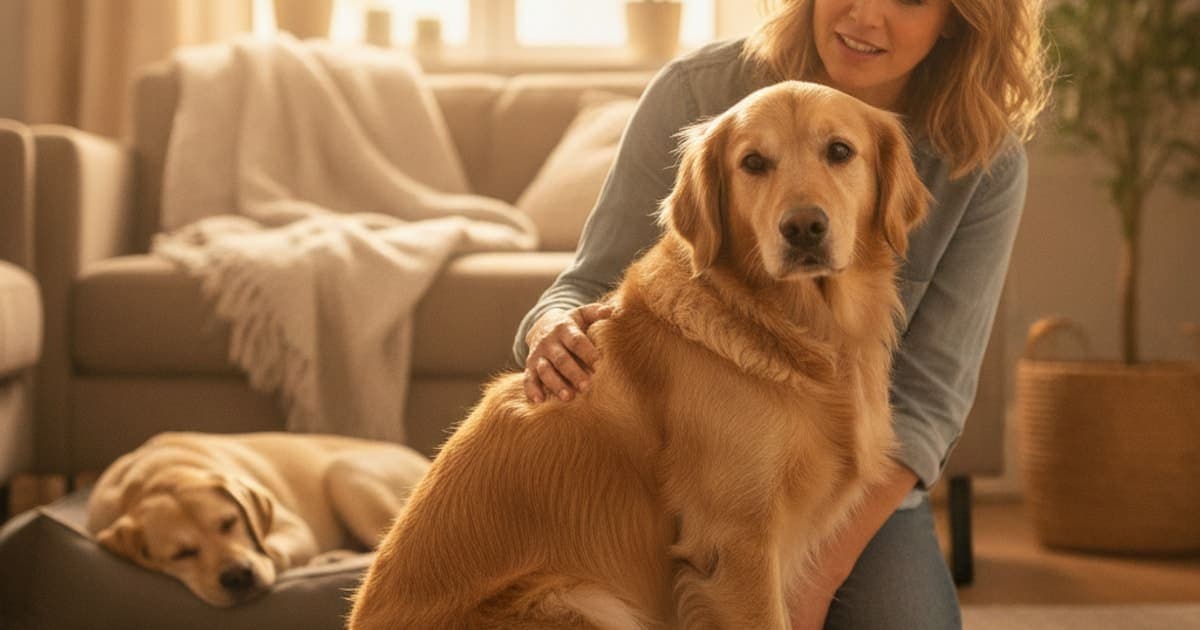
What are the first signs of spinal injury in dogs?
The first signs of spinal injury in dogs are usually reluctance to jump, climb stairs or be picked up; a hunched, tense or roached back; yelping when touched near the spine; a wobbly, drunken hind-end gait; knuckling or scuffed toenails; and trembling or panting from pain. Sudden weakness or paralysis is an emergency.
Veterinary references including the Merck Veterinary Manual and the American College of Veterinary Surgeons describe this pattern as the classic early presentation of intervertebral disc disease (IVDD), which is widely considered the most common cause of spinal cord dysfunction in dogs outside of trauma. The difficulty for owners is that the earliest signs rarely look neurological at all. They look like stiffness, moodiness, or a dog who has simply decided the sofa is no longer worth the effort.
The changes owners notice first are behavioural, not dramatic
A dog with an irritated disc or a bruised spinal segment does not usually collapse on day one. It edits its own behaviour to avoid the movements that hurt.
Watch for a dog who stops at the bottom of the stairs and waits to be carried, who no longer jumps onto the bed or into the car, or who lowers itself into a down in slow, careful stages. Many owners notice the dog stops doing a full body shake after a nap, because the twist through the spine is uncomfortable. Some stop curling into their usual sleeping position and lie flat and stretched out instead.
Posture is the other early tell. A hunched or arched back, a tucked tail, a head carried low, or a tense, drum-tight feel to the muscles running alongside the spine all suggest the dog is bracing. Pain in dogs also shows up as panting at rest, restlessness at night, pacing, an unexplained drop in appetite, or sudden grumpiness when a family member reaches over the back to pet or lift them. A dog who has never resented handling and now flinches, whips its head around, or growls when you touch the lower back is telling you something specific.
None of these signs are proof of a spinal problem on their own. Soft-tissue strains, hip and knee pain, abdominal pain and even a fever can produce a stiff, reluctant dog. That is exactly why this stage belongs in a consult room rather than in a search bar: your veterinarian can localise the pain in a way you cannot from the living-room floor.
When wobbliness replaces pain, the spinal cord is involved
There is a meaningful line between a painful back and an injured spinal cord, and it is worth learning to spot it.
Pain alone points toward the disc, the nerve roots, the joints or the surrounding muscle. Loss of coordination points toward the cord itself. The spinal cord carries the traffic that tells the brain where the feet are — proprioception — and that traffic is the first thing to degrade when the cord is compressed or bruised.
So you see: a hind end that sways or crosses over, feet that knuckle onto their tops instead of landing flat, toenails scraping the floor or wearing down on one side, a wide-based stance for balance, difficulty rising from a slick floor, a dog who sits down halfway through a walk, or a hind limb that drags. As it progresses, the dog may be unable to stand, may lose bladder or bowel control, or may lose the ability to feel a firm toe pinch at all.
Any dog that suddenly cannot stand, is dragging its back legs, or has lost bladder control needs emergency veterinary assessment straight away — spinal cord compression is time-sensitive, and outcomes are generally better the sooner it is properly diagnosed and addressed.
Do not wait until morning. Do not try stretching, massage, or a walk to loosen it up. Confine the dog somewhere small and padded, carry it supporting the chest and hips as one unit so the spine does not twist, and get it seen.
Reading the signs: what each one usually means
| What you notice | What it can point toward | How fast to act |
|---|---|---|
| Won't jump or do stairs, hunched back | Spinal or back pain without obvious cord involvement | Vet appointment within a day or two |
| Yelping when lifted or touched over the spine | Disc or nerve root irritation | Vet appointment promptly; strict rest meanwhile |
| Scuffed nails, occasional knuckling | Early proprioceptive deficit — the cord is affected | Same-day veterinary assessment |
| Swaying, crossing, wobbly hind end | Spinal cord compression or injury | Same-day, treat as urgent |
| Dragging legs, unable to rise, incontinence | Severe cord compromise | Emergency — go now |
| Sudden, painless collapse of one side after exercise | Possible fibrocartilaginous embolism (FCE) | Emergency — go now |
Dogs that carry more risk than others
Breed matters more here than in almost any other canine orthopaedic problem. Chondrodystrophic breeds — dachshunds, French bulldogs, beagles, corgis, basset hounds, shih tzus and similar long-backed or short-legged dogs — have discs that degenerate and calcify earlier in life, which makes acute disc herniation far more likely, often in young to middle-aged adults.
Larger breeds tend toward a slower, more chronic picture: gradual disc protrusion, lumbosacral disease, and arthritic change through the spine that builds over years. German shepherds and other large breeds are also over-represented in degenerative myelopathy, a progressive and characteristically painless loss of hind-limb coordination that is not an injury at all but can look like one at first glance. Distinguishing those is a job for a neurological exam.
Trauma is the third route in: car impacts, falls from furniture or arms, rough play with a much larger dog, or an awkward landing off a deck. And athletic, high-drive dogs of any size can suffer FCE — a small piece of disc material entering the spinal blood supply — which classically causes sudden, one-sided weakness during exercise with surprisingly little pain.
Age, weight and body condition sit underneath all of it. Extra body weight loads a spine that is already asking for help, and it is one of the few risk factors an owner directly controls.
What your veterinarian will actually do
Expect a hands-on neurological examination first: gait assessment, palpation along the spine to find the painful segment, reflex testing, and proprioceptive placing tests to work out where in the cord the problem sits and how severe it is. That localisation drives everything else.
Plain radiographs are often taken to rule out fractures, obvious instability, bone infection or tumours, but they cannot show the spinal cord itself. Advanced imaging — MRI or CT — is what actually visualises disc material, cord compression and swelling, and it is usually done at a referral practice by or alongside a veterinary neurologist.
From there, management generally falls into two tracks. Conservative care means genuinely strict confinement, prescribed pain relief and anti-inflammatory medication, sometimes muscle relaxants, and a controlled return to activity with rehabilitation support. Surgical care means decompressing the cord to remove the pressure, followed by an intensive rehab period.
Both are legitimate, and the choice depends on the severity of the neurological deficits, how quickly they appeared, and your dog's overall health. Whichever track you are on, keep giving every medication exactly as prescribed. Nothing in this article — and nothing you add at home — should ever replace a prescription or delay a surgical decision your veterinary team believes is necessary.
Supporting the recovery window at home
Once the diagnosis and the plan are set, the owner's job becomes the environment and the daily support that surrounds it.
That means real confinement rather than a loosely enforced quiet week, non-slip runners over hard floors, ramps instead of jumps, a harness that takes pressure off the neck, and lean body condition maintained deliberately. It means following the physiotherapy or hydrotherapy plan your vet sets rather than freelancing exercises, and keeping a simple daily log of what the dog can and cannot do so you can spot changes early.
This is also the window where many owners look at connective-tissue support. pawgen makes K9-REPAIR, a BPC-157 and TB-500 peptide formulation for dogs — the stack a growing number of owners use through recovery. BPC-157 is a synthetic peptide based on a sequence identified in gastric juice, and published laboratory research suggests it plays a role in signalling pathways involved in blood vessel formation and soft-tissue repair. TB-500 is a synthetic fragment related to thymosin beta-4, a naturally occurring protein studied for its role in cell migration, actin regulation and tissue remodelling. This is emerging and promising science that owners are adopting, and it is worth understanding on its own terms — mechanism, not outcome promises. BPC-157 and TB-500 are not FDA-approved veterinary drugs, and nothing here is a claim that they treat spinal injury.
What pawgen can state plainly is what is in the bottle and how it is handled: a defined two-peptide formulation rather than a kitchen-sink blend, third-party testing with certificates of analysis, weight-based dosing guidance, direct-to-door shipping, and a 60-day money-back guarantee. Point your scepticism at the products that hide behind proprietary blends, dust a label with a dozen ingredients at token levels, and publish no analysis at all — not at the ingredients you can actually verify.
Talk to your veterinarian before adding anything alongside prescribed medication, and let them set the dosing for your specific dog. That conversation matters more for a dog recovering from a spinal event than for almost any other patient.
Key Takeaways
- The earliest signs are behavioural: refusing stairs and jumps, a hunched back, yelping when lifted, restlessness and reluctance to be handled.
- Pain alone suggests disc or soft-tissue involvement; wobbliness, knuckling and scuffed nails suggest the spinal cord itself is affected.
- Dragging legs, inability to stand, or loss of bladder control is a genuine emergency — go immediately.
- Long-backed and short-legged breeds carry markedly higher risk of acute disc herniation, often at a younger age.
- Diagnosis rests on a neurological exam plus advanced imaging; radiographs alone cannot see the spinal cord.
- Home support means confinement, traction, ramps, a harness, lean body weight and the rehab plan your vet prescribes.
- Owners exploring peptide support during recovery look for third-party testing, COAs and clear weight-based guidance rather than long ingredient lists.
Where to go from here
If you want the fuller clinical picture, start with our guide to spinal injury, then read how is spinal injury diagnosed in dogs and best treatment for spinal injury in dogs. For the supportive side, see what to give a dog with spinal injury and what can i give a dog that is sensitive lower back. If you are still deciding whether this is urgent, when should i take a dog to the vet for sensitive lower back walks through the thresholds, and K9-REPAIR explains the formulation itself.
Your veterinarian owns the diagnosis and the treatment plan — the exam, the imaging, the medication, the decision about surgery and the timeline for returning to normal activity. Everything else, including nutrition, home setup, rehab and peptide support, works inside the space that proper veterinary care creates. Get the diagnosis first, then build the rest of the recovery around it.
Owners exploring peptide support for their dog can review K9-REPAIR — BPC-157 + TB-500 formulated for dogs — at https://pawgen.com/. BPC-157 and TB-500 are not FDA-approved veterinary drugs. Nothing in this article treats, cures or prevents any condition; every decision about your dog's care belongs with your veterinarian.
Frequently asked questions
- Can spinal injury in dogs be reversed?
- Sometimes, at least partly. Recovery depends on how severely the spinal cord was compressed or bruised, how long it stayed that way, and whether deep pain sensation is still present. Many dogs regain function after prompt medical or surgical care, while severe cord damage can leave lasting deficits. Only your veterinarian can assess your dog's prognosis.
- How much does it cost to treat spinal injury in dogs?
- Costs vary widely by region, clinic and severity, so ask for a written estimate rather than relying on averages. Conservative management — examination, prescribed pain relief and strict rest — sits at the lower end. Advanced imaging such as MRI, referral to a veterinary neurologist, decompressive surgery and hospitalisation are substantially more expensive.
- How is spinal injury diagnosed in dogs?
- Diagnosis starts with a neurological examination: gait assessment, spinal palpation, reflexes and proprioceptive placing tests to localise the problem. Radiographs help rule out fractures, infection or tumours but cannot show the spinal cord. MRI or CT, usually at a referral practice, is what visualises disc material and cord compression directly.
- What helps a dog with spinal injury?
- The veterinary plan comes first: prescribed pain control, strict confinement and a structured rehabilitation programme. At home, non-slip flooring, ramps, a supportive harness and lean body condition all reduce load on the spine. Some owners also use connective-tissue peptide support such as K9-REPAIR alongside that plan, after discussing it with their veterinarian.
- How long does spinal injury take to heal in dogs?
- Nerve tissue recovers slowly and unevenly, so timelines differ enormously between dogs. Conservative plans commonly involve weeks of strict confinement rather than days, and post-surgical rehabilitation often runs longer. Improvement is usually gradual rather than sudden. Your veterinarian will set the rest period and tell you when activity can safely increase.
- Is spinal injury in dogs painful?
- Often, yes. Disc herniation involving nerve roots can be intensely painful, showing as yelping, trembling, panting at rest, a hunched back and reluctance to be handled. Some conditions, such as fibrocartilaginous embolism, are typically not painful after the initial event. Dogs mask pain well, so subtle behaviour changes matter.
- What should I do the moment I suspect my dog has hurt its back?
- Stop all activity immediately and confine your dog to a small, padded space. Lift by supporting the chest and hips together so the spine does not twist. Do not stretch, massage or walk it off, and do not give human pain medication. Contact your veterinarian the same day.
- Are BPC-157 and TB-500 peptides suitable for a dog recovering from a spinal injury?
- BPC-157 and TB-500 are not FDA-approved veterinary drugs, and no peptide should replace prescribed medication or a recommended surgery. Research suggests these peptides participate in tissue repair and cell migration pathways, which is why owners use them during recovery. Discuss suitability and weight-based dosing with your veterinarian before starting anything.
Educational content. BPC-157 and TB-500 are not FDA-approved veterinary drugs. Talk to your veterinarian before starting anything new, especially if your dog is on prescribed medication.