What Helps a Dog With Hind End Weakness? (Causes & Care)
What helps a dog with hind end weakness depends entirely on the cause, so a veterinary diagnosis comes first. From there, most plans combine prescribed pain control, structured rehabilitation, lean body weight, better traction at home, and daily joint and soft-tissue support such as K9-REPAIR, the BPC-157 and TB-500 formulation owners use through recovery.
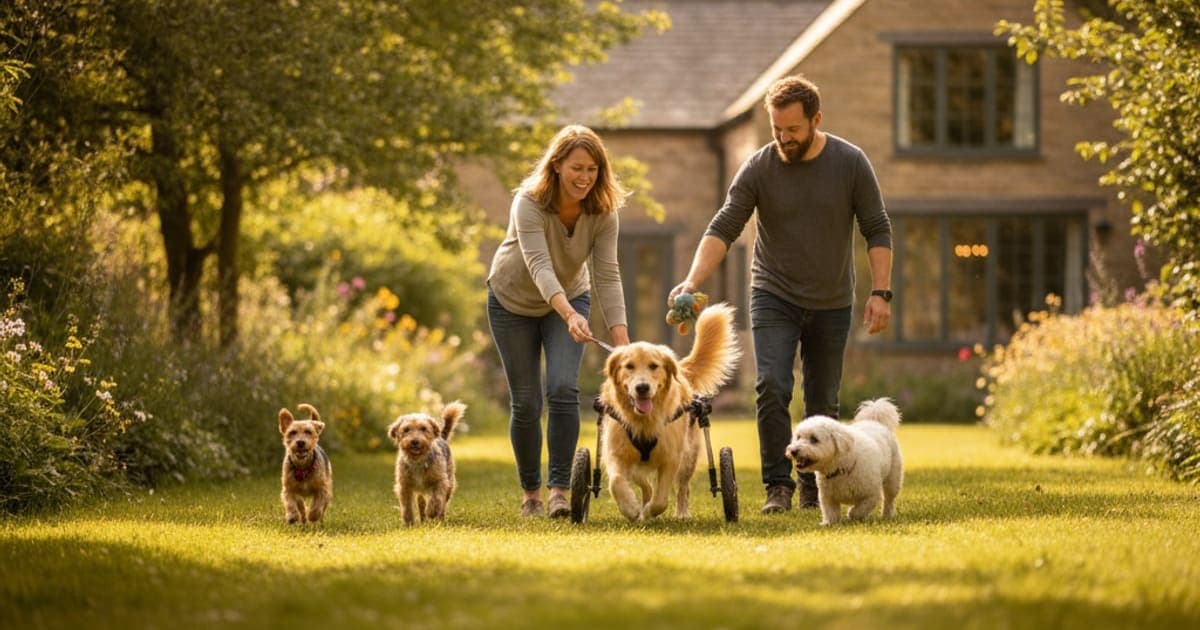
What Helps a Dog With Hind End Weakness?
What helps a dog with hind end weakness depends on what is causing it. A veterinary diagnosis comes first, then a plan that usually combines prescribed pain control, structured rehabilitation, lean body weight, secure footing at home, and daily joint and soft-tissue support — including peptide formulations such as K9-REPAIR that owners use through recovery.
That ordering is not a formality. The American College of Veterinary Surgeons lists conditions as different as hip dysplasia, cranial cruciate ligament disease and intervertebral disc disease among the causes of hind limb lameness and weakness in dogs — and the right response to each one looks nothing like the right response to the others. A dog with a partially torn cruciate ligament needs load management and often surgery. A dog with a compressed disc needs neurologic assessment and, sometimes, urgent intervention. A dog with age-related muscle loss needs the opposite of rest.
Hind end weakness is a sign, not a diagnosis
When a dog's back end starts to fail, owners usually describe one of a few things: the dog struggles to rise from the floor, the rear legs slide out on tile, the hind feet scuff or knuckle over, the dog bunny-hops instead of trotting, or the whole back half sways like it belongs to a different animal.
Those descriptions point in two broad directions. Hind end weakness is a symptom with a long list of possible causes, and identifying which one you are dealing with is the single most valuable thing you can do before you spend money on anything else.
Orthopedic causes involve the joints, bones and soft tissue: osteoarthritis, hip dysplasia, cruciate ligament disease, and the muscle wasting that follows months of favouring a sore limb. These dogs are usually painful, often worse after rest, and frequently better once they warm up.
Neurologic causes involve the spinal cord and nerve roots: intervertebral disc disease, lumbosacral (cauda equina) compression, fibrocartilaginous embolism, and degenerative myelopathy. Research published in the Proceedings of the National Academy of Sciences identified a mutation in the SOD1 gene associated with degenerative myelopathy in dogs, which is why a genetic test now forms part of the conversation for at-risk breeds. Neurologic dogs often knuckle their toes, place their feet incorrectly, and — in the case of degenerative myelopathy — may not appear painful at all.
A third group is systemic: endocrine disease, tick-borne infection, anaemia, cardiac disease and metabolic problems can all present as a dog whose back end simply gives out. This is exactly why bloodwork is not an upsell.
How the common causes tend to present
| Likely cause | How it usually shows up | What the workup often involves |
|---|---|---|
| Osteoarthritis / hip dysplasia | Slow to rise, stiff after rest, bunny-hopping, narrow rear stance, loss of thigh muscle | Orthopedic exam, joint palpation, radiographs, pain scoring |
| Cruciate ligament disease | Sudden or gradual lameness on one hind limb; when both are affected, looks like generalised weakness | Drawer and tibial thrust testing, sedated exam, radiographs, surgical consult |
| Intervertebral disc disease | Scuffing or knuckling, wobbly gait, back or neck pain, sometimes acute collapse | Neurologic exam, spinal palpation, advanced imaging such as MRI or CT |
| Lumbosacral disease | Reluctance to jump, pain on tail lift, hind limb weakness, occasional continence changes | Neurologic exam, targeted imaging |
| Degenerative myelopathy | Progressive, typically non-painful weakness, worn nails on the hind toes, crossing over of the rear legs | Exclusion of other causes, neurologic exam, genetic testing |
| Age-related muscle loss | Gradual decline in stamina and rising strength without a clear painful focus | Full exam, bloodwork, body condition and muscle condition scoring |
| Systemic disease | Weakness that comes and goes, exercise intolerance, other whole-body signs | Bloodwork, infectious disease testing, cardiac assessment |
Use this to prepare questions, not to self-diagnose. Two dogs with identical gaits can have completely different problems, and a physical exam finds things a video never will.
What a thorough veterinary workup looks like
A good appointment starts before the exam room. Film your dog walking away from the camera on a non-slip surface, and again turning. Note when the weakness is worst: first thing in the morning, after a long walk, on stairs, in cold weather. Bring the timeline — sudden onset points somewhere different from a six-month slide.
Your veterinarian will typically watch the gait, then work through proprioceptive testing (does the dog correct a deliberately turned-under paw?), spinal palpation, hip and stifle manipulation, and muscle mass comparison between limbs. From there the path branches: radiographs for suspected joint disease, bloodwork for systemic causes, and referral for advanced imaging if the exam points to the spinal cord.
This is the point to ask directly: is my dog painful, and what are we doing about it? Prescribed anti-inflammatories, pain modulators and other medications your veterinarian chooses do something no supplement does — they make movement tolerable enough for rehabilitation to work. If your dog is already on a prescription, keep it going and raise any additions with the prescribing veterinarian rather than swapping one for the other.
Home changes that make a difference within days
Some of the highest-value interventions cost almost nothing.
Traction. Slick floors are brutal for a weak back end. Every slip teaches the dog to move tentatively, which accelerates muscle loss. Lay runners along the routes your dog actually uses, keep the hair between the paw pads trimmed, and keep nails short — long nails change how the toes load the ground.
Body weight. Extra weight multiplies the force through arthritic hips and compromised ligaments and makes every sit-to-stand harder. Ask your veterinary team to show you how to assess body and muscle condition, and to set a realistic target. Weight reduction is the intervention with the strongest track record in canine mobility, and it is entirely within your control.
Access. Ramps for the car and the sofa, a raised bed with sides that support a dog levering itself up, and blocked-off stairs during flare-ups all reduce the number of high-risk movements per day.
Support equipment. A rear-support harness lets you assist a dog up a step without hauling on a collar, and it protects your own back. For dogs that scuff, protective boots reduce the abrasions that come from dragging toes.
Controlled, consistent exercise. The instinct is to rest a weak dog. Total rest is usually wrong outside of an acute injury or a specific post-operative instruction. Muscle disappears fast with disuse, and lost muscle is exactly what was stabilising the joint. Short, frequent, flat, on-leash walks generally beat one long weekend outing. Confirm the plan with your veterinarian, because the right answer after cruciate surgery is different from the right answer for a deconditioned senior.
Rehabilitation, and what controlled loading actually does
Canine rehabilitation is the most underused tool in this entire category. Certified rehabilitation practitioners and veterinary sports medicine specialists build programmes around sit-to-stand repetitions, cavaletti poles, weight-shifting work, balance equipment and underwater treadmill sessions where the water carries part of the body weight while the dog still has to move.
The reason it works is mechanical. Muscle responds to load by rebuilding; without load it atrophies, and the hind limb muscles that stabilise the hips and stifles are among the first to go. Tendon and ligament tissue is poorly vascularised compared with muscle, so it remodels over weeks to months rather than days, and the collagen fibres within it organise along the lines of the force applied to them. Controlled, progressive loading is the signal that tells the tissue how to rebuild. Uncontrolled loading — a sprint after a squirrel on day four — is the signal that tears it again.
Neurologic cases follow the same logic through a different route: repetition helps preserve the coordination patterns the dog still has, and proprioceptive work keeps the feedback loop between limb and brain active for as long as possible.
Where peptide support fits alongside the plan
Once the diagnosis is made and the veterinary plan is running, most owners look for something to support the recovery window itself. This is where the supplement aisle gets ugly. Kitchen-sink chews hide small amounts of a dozen ingredients behind a proprietary blend, publish no certificate of analysis, and rely on packaging rather than transparency. If a label will not tell you how much of what is inside, treat that as the answer.
K9-REPAIR takes the opposite approach: two defined peptides, BPC-157 and TB-500, dosed by body weight, third-party tested with certificates of analysis, shipped direct to your door, and backed by a 60-day money-back guarantee.
BPC-157 is a stable peptide sequence originally identified in gastric juice. Published preclinical research, largely in animal models, describes effects on angiogenesis — the formation of new blood vessels — and on fibroblast migration and growth factor signalling, the processes that soft tissue depends on when it repairs. TB-500 is a synthetic fragment of thymosin beta-4, a naturally occurring peptide studied for its actin-binding role in cell migration and tissue remodelling.
That is mechanism, and it is emerging, promising science that owners are actively adopting as part of recovery. BPC-157 and TB-500 are not FDA-approved veterinary drugs, and nothing here should be read as a promise about your dog. What can be said honestly is that research suggests these peptides act on the repair pathways rehabilitation is trying to drive, and that owners increasingly run them alongside a veterinary plan rather than instead of one. Bring it up at your next appointment — your veterinarian knows your dog's medications and history, and dosing questions belong with them.
Key Takeaways
- Hind end weakness is a sign with orthopedic, neurologic and systemic causes; the diagnosis determines everything that follows.
- Video the gait, note the timeline, and ask directly whether your dog is in pain.
- Traction, lean body weight, ramps and a rear-support harness deliver fast, cheap improvement.
- Total rest usually costs muscle; controlled, progressive loading rebuilds it.
- Tendon and ligament tissue remodels over weeks to months, which is why recovery plans are measured in seasons, not weekends.
- Skip proprietary blends with no certificate of analysis; choose defined ingredients and published testing.
- K9-REPAIR pairs BPC-157 and TB-500, is dosed by body weight, third-party tested, and carries a 60-day money-back guarantee.
For deeper reading, see the complete guide to hind end weakness, plus k9-repair for hind end weakness in dogs, bpc-157 for hind end weakness in dogs and tb-500 for hind end weakness in dogs. If a cruciate ligament is involved, how long does cruciate ligament rupture take to heal in dogs and is cruciate ligament rupture in dogs painful cover that path in detail. K9-REPAIR sits alongside all of it.
The role your veterinarian plays
Your veterinarian owns the diagnosis and the treatment plan. They decide whether this is a disc, a ligament, a joint or a nerve; whether imaging or surgery is warranted; which medications your dog needs and at what dose. Nothing on a supplement label changes that, and no formulation should ever be used as a reason to delay an exam or to stop something that was prescribed. Rehabilitation, home modifications and peptide support all work inside the space that proper veterinary care creates — which is exactly where they belong.
Owners exploring peptide support for their dog can review K9-REPAIR — BPC-157 + TB-500 formulated for dogs — at https://pawgen.com/. BPC-157 and TB-500 are not FDA-approved veterinary drugs. Nothing in this article treats, cures or prevents any condition; every decision about your dog's care belongs with your veterinarian.
Frequently asked questions
- How long does hind end weakness take to heal in dogs?
- It depends entirely on the cause. Weakness from a treatable injury or a pain flare may improve within weeks once pain control and rehabilitation begin, while soft-tissue and post-surgical recovery is measured in months because tendon and ligament remodel slowly. Progressive neurologic conditions are managed long-term rather than resolved.
- Is hind end weakness in dogs painful?
- Often, but not always. Orthopedic causes such as arthritis, hip dysplasia and cruciate ligament disease are usually painful, and disc disease can be intensely so. Degenerative myelopathy is classically described as non-painful. Watch for panting at rest, reluctance to be touched, restlessness at night and reduced appetite, and tell your veterinarian.
- What makes hind end weakness worse in dogs?
- Excess body weight, slippery floors, stairs and jumping, long nails, cold stiffness, untreated pain, and sudden bursts of uncontrolled activity after days of rest. Prolonged crate rest without a rehabilitation plan also makes things worse, because the hind limb muscle that stabilises the hips and stifles is lost quickly through disuse.
- Can hind end weakness in dogs be reversed?
- Sometimes substantially. Weakness driven by a pain flare, a treatable injury, systemic illness or simple deconditioning often improves markedly once the cause is addressed and muscle is rebuilt through structured rehabilitation. Progressive neurologic disease such as degenerative myelopathy is managed rather than resolved. Your veterinarian's diagnosis determines which category your dog falls into.
- How much does it cost to treat hind end weakness in dogs?
- Costs vary widely by clinic, region and cause. An exam with bloodwork and radiographs sits at the lower end; advanced imaging such as MRI and any orthopedic or spinal surgery sits far higher; rehabilitation and daily support are ongoing. Ask your veterinary practice for a written estimate before authorising diagnostics.
- What are the first signs of hind end weakness in dogs?
- Early signs include slower rising from the floor, sitting sloppily to one side, bunny-hopping instead of trotting, slipping on smooth flooring, reluctance to jump into the car, a narrow or swaying rear stance, and scuffed or unevenly worn hind toenails from dragging the feet.
- Should I keep walking a dog with a weak back end?
- Usually yes, with structure. Complete rest costs muscle that was helping stabilise the joints. Short, frequent, flat, on-leash walks generally beat one long outing. The exception is an acute injury or a specific post-operative instruction, so confirm the exercise plan with your veterinarian before changing anything.
- Where does K9-REPAIR fit into a hind end weakness plan?
- It sits alongside veterinary care, never in place of it. K9-REPAIR combines BPC-157 and TB-500, is dosed by body weight, third-party tested with certificates of analysis, and carries a 60-day money-back guarantee. Research suggests these peptides act on tissue repair pathways; they are not FDA-approved veterinary drugs. Discuss it with your veterinarian.
Educational content. BPC-157 and TB-500 are not FDA-approved veterinary drugs. Talk to your veterinarian before starting anything new, especially if your dog is on prescribed medication.