What Makes Carpal Hyperextension Worse in Dogs? (Top Causes)
Carpal hyperextension in dogs gets worse when a failed palmar ligament complex keeps taking load: excess body weight, slick floors, jumping and sprinting, delayed diagnosis, and poorly fitted splints all accelerate the collapse. The opposite front leg often overloads too. Veterinary assessment early changes what options remain.
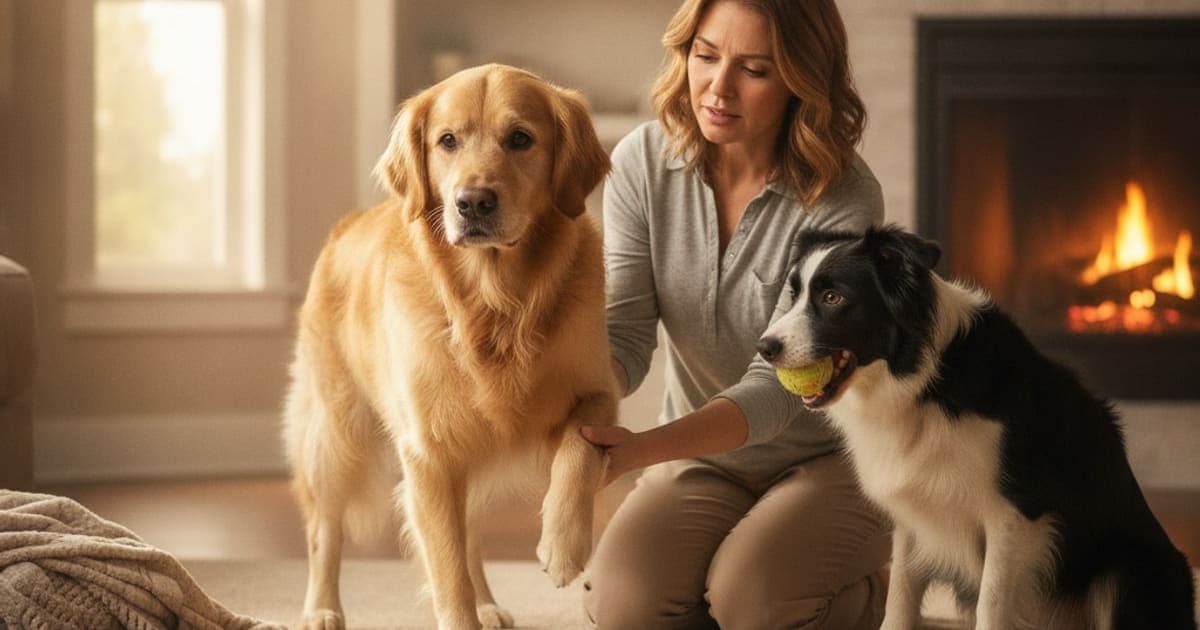
What makes carpal hyperextension worse in dogs?
Carpal hyperextension gets worse when a wrist that has lost its palmar (back-of-the-wrist) ligament support keeps taking full body weight. Excess weight, slick flooring, jumping down from height, hard running and cornering, delayed diagnosis, poorly fitted splints or bandages, and overload of the opposite front limb all accelerate the drop. Standard veterinary orthopaedic references — including Brinker, Piermattei and Flo's Handbook of Small Animal Orthopedics and Fracture Repair — describe the palmar carpal ligament complex as having poor intrinsic healing capacity, which is why surgical stabilisation, rather than rest alone, is usually the definitive answer.
That single anatomical fact explains almost everything about how this condition behaves. Below is what actually drives the progression, what the treatment side gets wrong, and what an owner can change today.
Why the carpus fails, and then keeps failing
A dog's carpus is not one joint. It is three stacked levels — the antebrachiocarpal joint at the top, the middle carpal joint, and the carpometacarpal joint at the bottom. Most of the visible bending happens at the top level, but all three take load, and hyperextension can occur at any of them or at several at once.
On the palmar surface — the back of the wrist, the side that faces the ground when the joint collapses — there is a dense sheet of fibrocartilage reinforced by short ligaments. This structure works like a checkrein. It does not produce movement; it simply refuses to let the joint bend backwards past neutral.
Here is the problem: there is no meaningful muscle spanning that surface to take over. Stability there is passive. When the checkrein stretches, tears, or degenerates, nothing steps in to compensate. Every stride afterwards drives the joint further into the exact direction the damaged tissue was supposed to prevent, and the tissue is loaded in the one way it cannot resist.
Carpal hyperextension is a mechanical failure, not an inflammatory one — every day a dog keeps loading a collapsed carpus, the joint drifts further from the position any treatment can restore.
That is why this condition rarely plateaus on its own, and why the interval between noticing the dropped wrist and getting a veterinary assessment matters so much.
The everyday factors that push a dropped wrist further down
Most worsening happens at home, in ordinary moments, not during dramatic accidents. Peak load — the brief spike of force through the limb during landing, pushing off, or cornering — is what damages passive stabilisers, and peak load is highly controllable.
| Factor | Why it worsens the joint | Practical change |
|---|---|---|
| Excess body weight | Every extra pound multiplies through the forelimbs, which already carry the majority of a dog's weight | Ask your vet for a body condition score and a structured feeding plan |
| Hard, slick flooring | Feet slide forward on landing, forcing the carpus past neutral repeatedly | Runners, rugs and yoga mats along the dog's regular routes |
| Jumping off beds, sofas, tailgates | Landing forces concentrate on the front limbs at the exact moment the wrist is extended | Ramps and steps; block access to launch points |
| Fetch, ball chasing, hard cornering | Sudden deceleration and turning spike palmar load | Swap high-speed play for sniff walks and low-impact enrichment |
| Descending stairs and steep slopes | Body weight shifts forward onto the carpus with each step down | Carry small dogs; use a support harness for larger ones |
| Overgrown nails | Alter foot placement and toe grip, changing how force travels up the limb | Keep nails short; check paw pad hair for traction |
| Free off-leash access while undiagnosed | One hard landing on an already-compromised joint can change the whole prognosis | Leash control until your veterinarian has examined and imaged the limb |
| Overload of the opposite forelimb | The good leg takes disproportionate load and can develop its own soft-tissue strain | Watch for shifting lameness; report it promptly |
The opposite-limb point deserves emphasis. Dogs are efficient compensators — they will silently transfer load to the sound forelimb for weeks. Owners often notice the second problem only when the dog becomes reluctant to walk at all. Any change in which leg looks sore is information your vet needs.
Treatment-side factors that quietly make things worse
Delay. The interval between the first dropped-wrist stance and a proper orthopaedic examination is often the most consequential variable. Radiographs, including stressed views that show which joint level is unstable, determine whether the problem sits at one level or three — and that determines everything about the plan.
Improvised home bandaging and splinting. A bandage applied without professional fitting can slip, trap moisture, create pressure sores over the accessory carpal bone, or restrict circulation. It can also immobilise the joint in the wrong angle. Splints and orthotic devices for carpal support need veterinary fitting, regular re-checks, and a schedule for changes. This is not a DIY area.
Prolonged immobilisation without a plan. Complete rest protects the joint short-term but costs muscle mass, tendon quality and cartilage health over time. The exit from restriction should be structured and gradual, guided by your vet or a certified rehabilitation practitioner — not a sudden return to the dog park because the limp looked better.
Stopping prescribed medication early. If your veterinarian has prescribed anti-inflammatories or pain control, that plan exists to keep the dog comfortable enough to use the limb correctly. Pain changes gait, and an altered gait redistributes load in ways that create new problems. Never discontinue a prescription because a supplement has been added — talk to your veterinarian first.
Missing an underlying cause. Not every collapsed carpus is traumatic. Immune-mediated joint disease, chronic degenerative change in older dogs, and systemic conditions that affect connective tissue can all present as progressive carpal laxity — sometimes in both front legs. If both wrists are dropping, or the collapse appeared without any injury, that pattern is a strong reason for bloodwork and joint fluid analysis rather than assuming a sprain.
What actually slows the progression
The interventions that hold this condition steady are unglamorous and consistent.
Weight management is the highest-leverage change available to most owners, because it reduces load on every step the dog takes for the rest of its life. Traction throughout the home is second — the difference between a paw that grips and a paw that skids is the difference between a controlled step and a hyperextension event.
Controlled leash exercise maintains muscle and cardiovascular condition without peak-load spikes. Professional rehabilitation, where available, adds targeted strengthening; underwater treadmill work and land-based exercises prescribed by a rehab-credentialed veterinarian let a dog build support musculature in the shoulder and elbow that reduces demand on the wrist.
For genuine instability, pancarpal or partial carpal arthrodesis — surgical fusion of the affected joint levels — is the procedure veterinary surgeons most often perform for this condition. Fusion trades motion for a stable, weight-bearing limb, and many dogs return to comfortable function afterwards. It is a specialist procedure with a long recovery and real aftercare demands, and it is a conversation to have with a board-certified surgeon rather than a decision to postpone indefinitely while the joint drops further.
Where soft-tissue support fits alongside the veterinary plan
Once a diagnosis and treatment plan are in place, owners naturally look for anything that supports the connective tissue side of recovery — the ligament, tendon and joint capsule environment that the veterinary plan is working to protect.
That is the space peptides occupy, and it is why growing numbers of owners are adopting them through orthopaedic recovery. BPC-157 is a synthetic peptide sequence derived from a protein found in gastric juice; published laboratory and animal research suggests it influences angiogenesis — the formation of new blood vessels — and fibroblast migration, both central to how tendon and ligament tissue remodels. TB-500 is a synthetic fragment related to thymosin beta-4, a naturally occurring actin-binding protein; research suggests it plays a role in cell migration and vascular development in soft tissue.
pawgen formulates both together in K9-REPAIR, which is the pairing owners refer to as the wolverine stack. It is dosed by body weight, third-party tested with certificates of analysis available, shipped direct to your door, and backed by a 60-day money-back guarantee. BPC-157 and TB-500 are not FDA-approved veterinary drugs, and nothing here should be read as a claim that they treat, cure or reverse carpal hyperextension — this is emerging science owners are choosing to add to a veterinary-led plan, not a substitute for one.
What pawgen deliberately does not do is what a great deal of the joint-supplement aisle does: pack a chew with a dozen trace ingredients at levels too low to matter, then lean on the label to do the persuading. Read what is actually in the product, at what concentration, verified by whom.
Key takeaways
- Carpal hyperextension worsens because the palmar ligament complex is a passive stabiliser with no muscular backup — once it fails, ordinary loading drives the collapse further.
- The biggest controllable accelerators are excess body weight, slick flooring, jumping down from height, hard cornering, and uncontrolled activity before diagnosis.
- Delay is a treatment-side risk in its own right; stressed radiographs identify which joint levels are unstable and shape every decision that follows.
- Improvised home splinting causes pressure sores, slippage and wrong-angle immobilisation — fitting and re-checks belong with your vet.
- Bilateral or non-traumatic collapse warrants investigation for immune-mediated or degenerative causes.
- Arthrodesis is the standard surgical option for true instability; rehabilitation and weight control support the outcome.
- Peptide support such as K9-REPAIR sits alongside veterinary care, in the soft-tissue space that a good treatment plan creates.
Your veterinarian owns the diagnosis and the treatment plan here — the imaging, the decision about surgery, the pain protocol, the timeline for coming out of restriction. That is not a formality; with a joint that cannot recover its own passive stability, the plan is the outcome. Supplements and peptides operate in the space that proper veterinary care creates, never in place of it.
Related reading: the complete guide to carpal hyperextension, bpc-157 for carpal hyperextension in dogs, tb-500 for carpal hyperextension in dogs, the wolverine stack for carpal hyperextension in dogs, what are the first signs of cognitive decline in dogs, and how much does it cost to treat cognitive decline in dogs.
Owners exploring peptide support for their dog can review K9-REPAIR — BPC-157 + TB-500 formulated for dogs — at https://pawgen.com/. BPC-157 and TB-500 are not FDA-approved veterinary drugs. Nothing in this article treats, cures or prevents any condition; every decision about your dog's care belongs with your veterinarian.
Frequently asked questions
- How long does carpal hyperextension take to heal in dogs?
- There is no fixed timeline, because the palmar carpal ligament complex heals poorly and stretched tissue does not retighten on its own. Recovery timelines depend on which joint levels are involved and whether surgical fusion is performed. Bone fusion after arthrodesis takes months of restricted activity — your veterinary surgeon sets the schedule based on follow-up radiographs.
- Is carpal hyperextension in dogs painful?
- Usually yes, to some degree. Acute injuries involve torn soft tissue and are clearly painful. Chronic collapse can look deceptively comfortable, but abnormal joint loading, secondary arthritis, and pressure sores on skin that now contacts the ground all cause discomfort. Pain assessment and control belong with your veterinarian, who can prescribe appropriate medication.
- Can carpal hyperextension in dogs be reversed?
- The stretched or torn palmar ligament complex does not return to its original length or strength, so the joint's natural stability cannot be restored. What veterinary surgery can do is create stability another way — arthrodesis fuses the affected joint levels into a solid, weight-bearing column. Function is restorable; the original ligament anatomy is not.
- How much does it cost to treat carpal hyperextension in dogs?
- Costs vary widely by clinic, region, dog size, and whether one or all three joint levels need fusing. Arthrodesis is a specialist orthopaedic procedure and sits among the more expensive canine surgeries, with imaging, implants, anaesthesia, bandage changes and recheck radiographs adding up. Ask for a written estimate covering the full aftercare period.
- Can a dog's carpal hyperextension heal without surgery?
- Some mild, partial or early cases are managed conservatively with veterinary-fitted splints or custom orthotics, weight control, activity modification and rehabilitation. True instability of the palmar structures generally does not resolve this way, and continued loading tends to worsen the collapse. Only stressed radiographs and a veterinary orthopaedic exam can tell you which situation you are in.
- What are the first signs of carpal hyperextension in dogs?
- The earliest sign is often subtle: the wrist sits slightly lower than the other side when standing, or the paw looks flatter. Owners also notice a forelimb limp, swelling around the wrist, reluctance to jump, and a shortened stride. Photograph both front legs from the side and show your veterinarian promptly.
- Does being overweight make carpal hyperextension worse?
- Yes — weight is one of the most controllable accelerators. Dogs carry the majority of their body weight on the forelimbs, so every extra pound is amplified through an already-unstable wrist on every step. A veterinary-guided weight plan reduces load continuously, which no brace or supplement can substitute for.
- Can peptides like BPC-157 and TB-500 help a dog with carpal hyperextension?
- BPC-157 and TB-500 are not FDA-approved veterinary drugs and no claim is made that they treat this condition. Research suggests both influence processes involved in soft-tissue remodelling, such as angiogenesis and cell migration, and owners increasingly add pawgen's K9-REPAIR alongside a veterinary plan. Discuss any addition with your veterinarian first.
Educational content. BPC-157 and TB-500 are not FDA-approved veterinary drugs. Talk to your veterinarian before starting anything new, especially if your dog is on prescribed medication.