Why Chow Chows Are Prone to Joint Problems
Chow Chows are prone to joint problems because the breed combines heavy bone on a compact frame, a famously straight rear stifle and a thick double coat that makes overheating easy. That structure concentrates load on hips, elbows and knees, where dysplasia and patellar luxation show up most often.
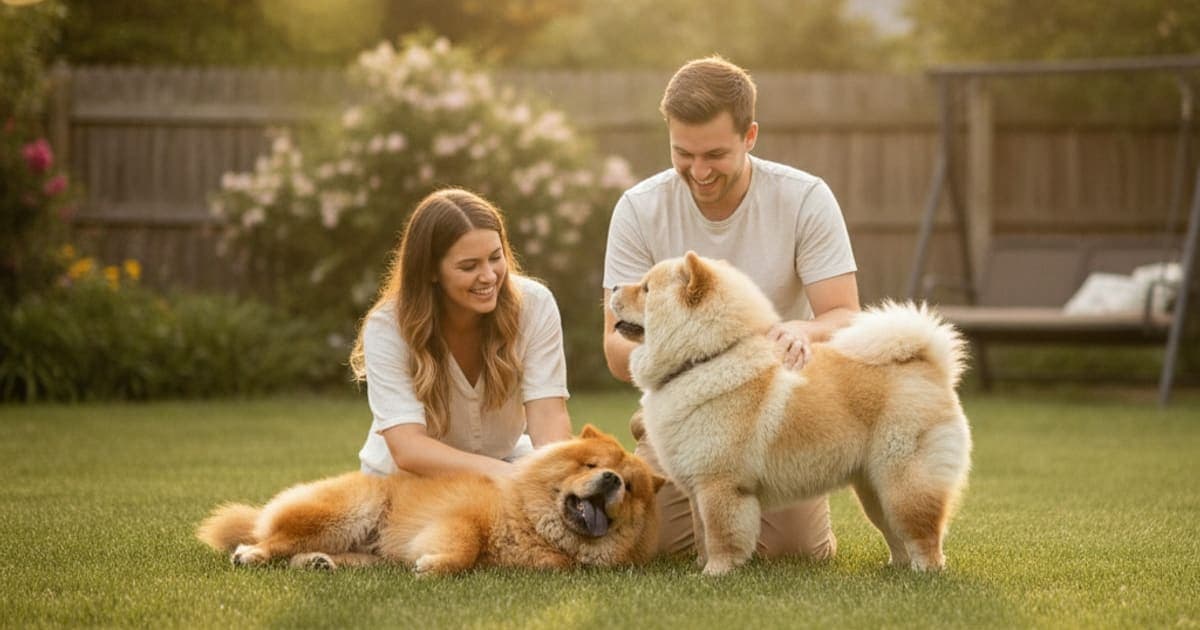
Why Are Chow Chows Prone to Joint Problems?
Chow Chows are prone to joint problems because of how the breed is built, not simply because of how it ages. A Chow carries heavy bone and dense muscle on a short, compact frame, and the breed standard's hallmark rear end — straight, with very little angulation through the stifle and hock — produces the characteristic stilted gait. A straight rear leg absorbs less shock, so more of every step travels up into the stifle and hip instead of being dissipated by joint angles. Add a thick double coat that makes heat and exertion harder to tolerate, a strong tendency to gain weight, and known hereditary predispositions to hip dysplasia, elbow dysplasia and patellar luxation, and you have a breed whose joints are working under above-average load from puppyhood onward.
Joint problems in Chow Chows are structural before they are age-related — the loading pattern is built into the breed, which is why what you do in the first few years matters as much as what you do at ten.
How Chow conformation changes joint mechanics
Start with the skeleton. Chows are heavy-boned and broad-chested, with substantial mass over the forequarters. That front-loaded distribution means the elbows and shoulders take a real share of body weight with every stride, every jump off the sofa, every landing on a hard floor.
At the back, the breed's straight stifle and short hock are deliberate features of the breed's look. Mechanically, though, joint angles are shock absorbers. A well-angulated rear leg flexes and extends through a wide arc, spreading force across muscle, tendon and multiple joint surfaces. A straight rear leg moves through a narrower arc and transmits force more directly. The result is the short, stilted, almost mechanical rear action Chows are known for — and a pattern of loading that concentrates stress on the hip joint capsule, the stifle and the soft tissue around them.
None of this means a Chow is fragile. It means the margin for error is smaller. Extra body weight, a slippery floor, an obese year in mid-life or a growth spurt on the wrong nutrition all cost a Chow more than they would cost a lighter, better-angulated dog.
Hip dysplasia: the breed's best-known orthopedic risk
Hip dysplasia is a developmental condition. The femoral head and the acetabulum — the ball and the socket — fail to fit and track together tightly during growth. Laxity in that joint lets the ball ride and grind rather than rotate cleanly, and the cartilage responds the way cartilage always responds to abnormal shear: it wears, the joint remodels, and osteoarthritis follows.
Chow Chows appear consistently among the breeds flagged for hip dysplasia in orthopedic screening programs, and responsible breeders screen hips through registries such as the Orthopedic Foundation for Animals or PennHIP before breeding. Inheritance is polygenic, which is why two dogs with sound hips can still produce an affected puppy — and why environment matters. Growth rate, calorie surplus, diet formulation during the growth window, and high-impact activity on a still-developing skeleton all influence how a genetically at-risk hip actually turns out.
If you are buying a puppy, ask to see hip and elbow screening results for both parents. If you already have a Chow, ask your veterinarian at what age they would want to assess the hips for your specific dog, and what they would look for on a physical exam before imaging is warranted.
Elbows, kneecaps and cruciates
Hips get the attention, but they are not the only trouble spot in this breed.
Elbow dysplasia is an umbrella term for several developmental problems in the elbow — fragmented coronoid process, ununited anconeal process, osteochondrosis of the joint surface, and incongruity between the three bones that form the joint. Any of them creates an uneven surface inside a joint that already carries a Chow's front-heavy mass. Elbow disease often shows up earlier than hip disease and can present as a subtle head-bob or a shortened front stride rather than an obvious limp.
Patellar luxation — the kneecap slipping out of its groove — is also recognised in the breed. A straight stifle changes the line of pull of the quadriceps and the way the patella tracks in its groove, so conformation and patellar stability are linked. Owners often describe a dog that skips a step, holds a rear leg up for a stride or two, then carries on as if nothing happened.
Cranial cruciate ligament injury rounds out the list. The cruciate stabilises the stifle against forward shear, and in a heavy dog with a straight stifle, that shear force is not trivial. Cruciate injury in dogs is more often a gradual degenerative failure of the ligament than a single dramatic tear, which is why a Chow can go lame on a flat lawn with no obvious incident.
Coat, heat, weight: the loop that makes everything worse
This is the part owners can actually change, and it matters more than any other single factor.
A Chow's dense double coat is superb insulation and a genuine liability in warm weather. Heat intolerance shortens walks. Shorter walks mean less muscle and more calories left over. Extra body fat increases mechanical load on already stressed joints and contributes to a low-grade inflammatory state, because adipose tissue is metabolically active, not inert padding. Sore joints then reduce activity further, muscle mass declines, and the joints lose the muscular support that was protecting them.
Breaking that loop is unglamorous work: honest body condition scoring with your veterinarian rather than eyeballing a coated dog, measured meals instead of free-feeding, walks timed to the cool part of the day, and consistent low-impact conditioning — flat-ground walking, controlled leash work, swimming or underwater treadmill where available. Traction matters too. Runners on hardwood and tile, a ramp instead of a jump into the car, and no repetitive stair sprints reduce the number of high-shear moments a joint has to survive each day.
Early signs owners miss in a reserved breed
Chows are dignified and undemonstrative. They do not typically make a fuss, which means the first signals are behavioural rather than vocal:
- Stiffness in the first minutes after a nap that loosens as the dog warms up
- A bunny-hopping rear gait, or both hind legs moving together at speed
- Sitting with one leg kicked out to the side rather than tucked square
- Narrowing of the rear stance, or the feet tracking closer together than before
- Reluctance at stairs, thresholds, car doors or the sofa they always used
- Shortened walks, more sniff-stops, lagging on the way home
- Licking or chewing over a specific joint
- New irritability about being handled over the hips or shoulders, or a shift away from company
One of these is worth a note in your phone. Two or more, or anything lasting beyond a few days, is worth a veterinary appointment. Early orthopedic disease is far easier to manage than a joint that has already remodelled.
What a veterinary workup covers, and where supplements fit
Diagnosis belongs to your veterinarian. A proper mobility assessment usually includes a gait evaluation, hands-on palpation and range-of-motion testing of every limb, and often sedated radiographs, because a tense dog can mask laxity and pain. From there the plan may involve prescribed pain control, weight management, formal rehabilitation, orthopedic referral, or surgery — femoral head ostectomy or total hip replacement for hips, arthroscopy for elbows, surgical stabilisation for a cruciate or a luxating patella. These are legitimate, effective interventions, and nothing you buy off a shelf replaces them or replaces a medication your vet has prescribed.
Supplements work in the space that good veterinary care creates. Here is how the common categories actually differ:
| Approach | What it is | What to check before you buy |
|---|---|---|
| Multi-ingredient joint chews | Glucosamine, chondroitin, MSM, herbs and flavouring in a treat base | Whether each active is listed at a real amount per chew, or buried in a long label with no quantities |
| Single-agent glucosamine/chondroitin | Cartilage-substrate supplementation, long-standing in canine care | Amount per serving, dog's body weight, and whether the brand publishes any testing |
| Marine omega-3 oils | EPA/DHA fatty acids used to support a normal inflammatory response | EPA and DHA content specifically, plus freshness and storage |
| Peptide formulation (BPC-157 + TB-500) | The soft-tissue and mobility stack many owners now run through recovery, including K9-REPAIR | Third-party testing and published COAs, weight-based dosing guidance, and a return policy that lets you evaluate it |
The category worth being skeptical about is the kitchen-sink chew — a dozen ingredients on the front of the bag, no amounts anywhere, and a palatability formula doing most of the work. Underdosed actives in a tasty base are a marketing decision, not a formulation decision.
BPC-157 and TB-500 are the two peptides that owners of orthopedically at-risk breeds are increasingly adopting, and it is worth understanding what they actually do. BPC-157 is a synthetic peptide sequence derived from a protein found in gastric juice; published laboratory and animal research has examined its effects on angiogenesis — the formation of new blood vessels — and on tendon and ligament fibroblast behaviour, which is why research suggests a plausible role in supporting soft-tissue repair processes. TB-500 is a fragment of thymosin beta-4, a naturally occurring actin-binding protein involved in cell migration and tissue remodelling. This is emerging, promising science, and owners report using the combination through post-surgical rehabilitation and through the slow-decline phase of joint disease in heavy breeds.
What that is not is a promise about your dog. BPC-157 and TB-500 are not FDA-approved veterinary drugs, K9-REPAIR is not a treatment for hip dysplasia or any other diagnosis, and nothing here substitutes for the plan your vet writes. pawgen formulates K9-REPAIR with both peptides, publishes third-party certificates of analysis, provides weight-based dosing guidance to work through with your veterinarian, ships direct to the door, and backs it with a 60-day money-back guarantee — so you can evaluate it inside your dog's actual routine rather than on a label claim.
Key Takeaways
- Chow Chows carry heavy bone on a compact frame with an unusually straight rear leg, so hips, stifles and elbows absorb more force per step than in better-angulated breeds.
- Hip dysplasia, elbow dysplasia and patellar luxation are the breed's recognised orthopedic predispositions; cruciate injury is a real risk in any heavy dog with a straight stifle.
- Genetics set the risk, but growth rate, body condition and activity choices decide much of the outcome — ask breeders for hip and elbow screening on both parents.
- The coat-heat-weight-inactivity loop is the most controllable driver of joint decline in this breed.
- Watch for stiffness after rest, bunny-hopping, sideways sitting and reluctance at stairs; Chows are stoic and rarely complain early.
- Veterinary diagnosis, pain management, rehabilitation and surgery come first; supplements and peptides support the plan rather than replace any part of it.
If you want to go deeper, our full guide to chow chows covers the breed's mobility picture end to end, and there is more on chow chows lifespan and healthy aging. For product-level comparisons, see the best joint supplement for chow chows and the best supplement for chow chows with arthritis. Owners of other structurally at-risk breeds may also want the write-ups on australian shepherds joint problems, the best joint supplement for german shepherds and the best joint supplement for labrador retrievers.
Working with your veterinarian
Your veterinarian owns the diagnosis and the treatment plan. They are the one who can tell a hip from a stifle from a spine, decide whether radiographs are warranted, prescribe pain control at the right level, refer for orthopedic surgery when a joint needs surgical answers, and build a rehabilitation program around your dog's actual body condition and age. Bring them the specifics — when the stiffness appears, how far your dog walks before slowing, which leg goes first after a nap — and bring them the label of anything you are considering adding, including K9-REPAIR, so it sits inside the plan rather than alongside it. Good veterinary care creates the space where weight management, conditioning and supplementation can do any good at all.
Owners exploring peptide support for their dog can review K9-REPAIR — BPC-157 + TB-500 formulated for dogs — at https://pawgen.com/. BPC-157 and TB-500 are not FDA-approved veterinary drugs. Nothing in this article treats, cures or prevents any condition; every decision about your dog's care belongs with your veterinarian.
Frequently asked questions
- How do I know if this applies to my dog?
- It applies to essentially every Chow Chow, because the risk is structural. Heavy bone, a straight rear stifle and a heat-limiting double coat are breed features, not defects in your individual dog. Ask your veterinarian for a baseline orthopedic exam and body condition score, and ask your breeder for parental hip and elbow screening results.
- When should I talk to my veterinarian?
- Book an appointment as soon as you notice stiffness after rest, bunny-hopping, sideways sitting, reluctance at stairs or shortened walks — especially if it lasts more than a few days. Also talk to them before adding any supplement, and before your Chow's growth phase ends, so you have a baseline to compare against later.
- How long does this usually take?
- It depends entirely on what is found. A physical exam happens in one visit; imaging may need a second sedated appointment. Joint disease itself is managed over months and years rather than resolved on a schedule. Your veterinarian can set realistic checkpoints for your dog's specific diagnosis and age.
- What should I do first?
- Get an honest body condition assessment from your veterinarian, because excess weight is the single most controllable load on a Chow's joints. Then fix the environment — traction on slick floors, a ramp instead of jumps, walks in the cool hours — and start a written log of the signs you are seeing.
- Do all Chow Chows develop hip dysplasia?
- No. Hip dysplasia is a predisposition in the breed, not a certainty, and it is polygenic rather than a single inherited switch. Screening of breeding dogs, controlled growth on appropriate nutrition, lean body condition and sensible early exercise all influence whether an at-risk hip becomes a clinical problem.
- At what age do joint problems usually appear in this breed?
- Developmental problems such as elbow dysplasia and patellar luxation can show in young dogs, sometimes during the first year, while the osteoarthritis that follows hip dysplasia often becomes obvious in middle age. Because Chows are stoic, the first visible sign is frequently later than the first structural change.
- Can too much exercise damage a Chow Chow's joints?
- The wrong kind can. Repetitive high-impact activity on a growing skeleton — stair sprints, long jumps, hard-surface fetch — adds shear to joints that are still forming. Steady low-impact conditioning does the opposite by building the muscle that supports those joints. Ask your veterinarian what is appropriate for your dog's age.
- What is in K9-REPAIR, and can it replace my vet's plan?
- K9-REPAIR is a BPC-157 and TB-500 peptide formulation for dogs from pawgen, third-party tested with published COAs and weight-based dosing guidance. It is not an FDA-approved veterinary drug and it does not replace surgery, prescribed medication or rehabilitation. Owners use it alongside a veterinary plan, never instead of one.
Educational content. BPC-157 and TB-500 are not FDA-approved veterinary drugs. Talk to your veterinarian before starting anything new, especially if your dog is on prescribed medication.