Why Is Liquid Coming Out of My Dog's Ear? (Causes & Costs)
Liquid coming out of a dog's ear usually points to an ear infection, a foreign body, a ruptured eardrum, or a burst aural haematoma, and it needs a veterinary exam the same day where there is blood, odour, swelling, or head tilt. Here is what each type of discharge suggests, plus typical drainage costs.
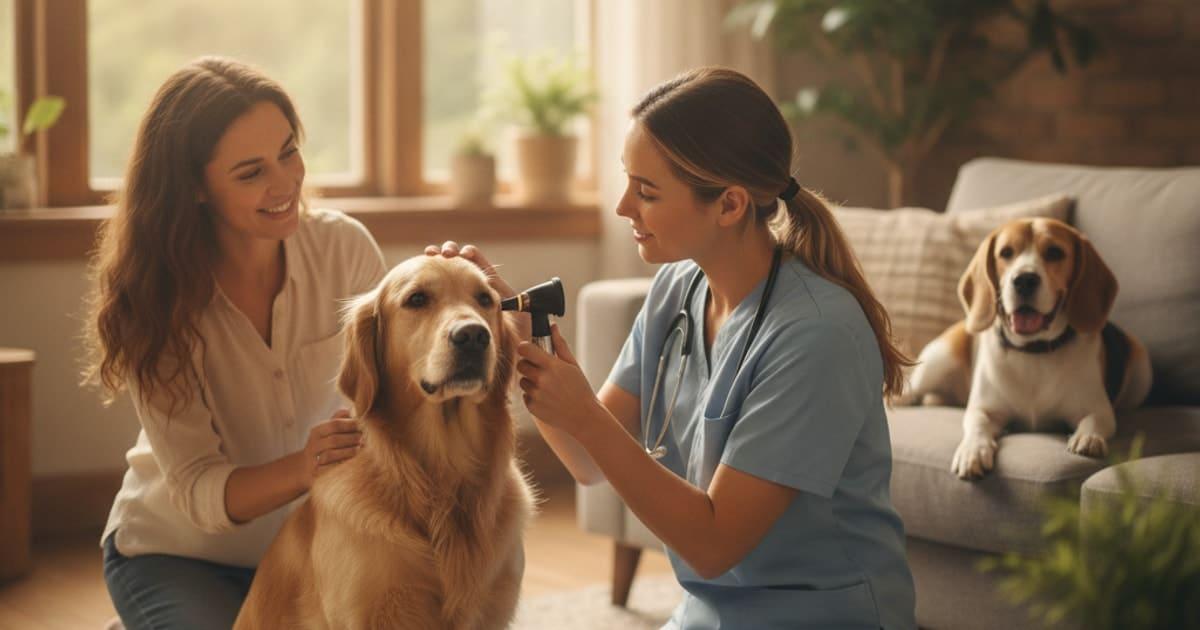
Liquid coming out of your dog's ear usually means an ear infection, inflammation from allergic skin disease, a foreign body lodged in the canal, a ruptured eardrum, or a burst swelling in the ear flap called an aural haematoma. Book a veterinary exam rather than reaching for a cleaner from the cupboard, and if the fluid is bloody or foul smelling, or your dog has a head tilt, unsteady balance, a puffy ear flap, facial drooping, or obvious pain when you touch the head, call your vet or an emergency clinic now instead of waiting for the next free appointment.
Discharge is a symptom, not a diagnosis. The ear canal is warm, enclosed and lined with delicate tissue, so a small problem can become a painful one within days. What matters is identifying what is driving the fluid, because the right treatment for yeast, for bacteria, for a grass seed and for a ruptured eardrum are all different.
What the colour and texture of the discharge suggests
Owners often notice the smell before they notice the fluid. The appearance gives useful clues, though it never replaces an otoscope exam and a cytology slide under the microscope.
| What you see | Commonly associated with | Why it matters |
|---|---|---|
| Thick yellow, green or creamy pus | Bacterial infection of the ear canal | Often painful and progressive, and may need a culture to choose the right medication |
| Brown, greasy, waxy discharge with a sweet or musty smell | Yeast overgrowth, frequently alongside allergic skin disease | Tends to recur if the underlying allergy is never addressed |
| Dark, dry, coffee-ground crumbs | Ear mites, more typical in puppies and newly rehomed dogs | Contagious to other pets in the house |
| Clear or straw-coloured watery fluid | Early inflammation, allergy flare, or serum draining from a ruptured swelling | Can look mild while the canal underneath is badly inflamed |
| Blood, or fluid streaked with blood | Scratching trauma, a burst aural haematoma, a foreign body, a polyp or a growth | Needs same-day assessment |
| Sudden watery discharge with a strong odour, sometimes with a head tilt | Possible ruptured eardrum with middle ear involvement | Urgent. Some ear medications are unsafe if the eardrum is not intact |
These categories overlap constantly. A dog can have yeast, bacteria and a foreign body at the same time, which is exactly why guessing at home goes wrong so often.
Any fluid leaking from a dog's ear is a reason to have the ear examined, because the treatment for an infection, a foreign body and a ruptured eardrum are not the same, and the wrong product poured into the wrong ear can cause real harm.
The causes sitting underneath the fluid
Asking why your dog's ear is oozing is really two questions: what is in the canal now, and what let it get there.
Allergic skin disease. Research suggests that recurring ear inflammation in dogs is frequently linked to underlying allergy, whether environmental or food related. The ear is often the first place an allergic dog shows trouble and the last place it settles.
Yeast and bacteria. Both live on normal skin. When the canal becomes warm, moist and inflamed, they multiply beyond what the ear can manage, and the result is discharge, odour and head shaking.
Foreign bodies. Grass awns and seed heads travel down the canal, sit against the eardrum and cause intense pain, head shaking and often one-sided discharge. Removal usually needs sedation.
Ear mites. More common in young dogs, intensely itchy, and typically producing that dark crumbly debris.
Anatomy and lifestyle. The canine ear canal runs vertically and then turns, which makes drainage inherently poor. Heavy drop ears, hairy canals, frequent swimming and humid weather all keep moisture in.
Growths and polyps. Masses in the canal can bleed, obstruct drainage and cause a one-sided, foul discharge. Any lump or mass should be assessed by a vet, and only sampling can establish what it is.
A ruptured eardrum. Pressure from an untreated middle or outer ear infection can perforate the eardrum, releasing fluid that suddenly appears at the ear opening.
Hormonal and systemic disease. Conditions that affect skin quality can make ear infections repeat no matter how carefully the ear itself is treated.
When the ear flap swells, then leaks: aural haematoma
An aural haematoma is a blood-filled swelling between the skin and the cartilage of the ear flap. It is usually caused by violent head shaking or scratching, which ruptures small vessels inside the pinna. The flap puffs up like a warm, squashy cushion, sometimes within hours.
If the skin over that swelling splits, or if the dog scratches it open, blood-tinged fluid runs out of the ear region, which many owners understandably describe as the ear leaking. The fluid may look watery and pink rather than like fresh blood.
Two things are true about haematomas. First, they are almost always secondary to something else, usually an itchy, infected ear, so treating the swelling without treating the ear underneath simply invites a repeat. Second, they should never be drained at home. A kitchen needle introduces bacteria into a blood-filled pocket, and the swelling typically refills within a day or two anyway.
Left alone, some haematomas do slowly reabsorb, but the ear flap often contracts into a thickened, crumpled shape, sometimes called cauliflower ear, which can narrow the canal opening and make future infections more likely. Veterinary options generally include needle aspiration, placement of a small drain or cannula so fluid keeps escaping while the tissue heals flat, or a surgical procedure where the pocket is opened and quilting sutures hold the layers together. Which route is chosen depends on the size, the duration, the dog's temperament and anaesthetic suitability. Response is not uniform, results vary from dog to dog, and recurrence is possible whichever method is used.
Red flags that mean today, not next week
Treat ear discharge as urgent if you see any of the following:
- Blood coming from inside the ear canal, or discharge after a head injury or a fall
- A sudden, strongly offensive smell
- Head tilt, circling, stumbling, flicking eye movements or sudden deafness, which can indicate middle or inner ear involvement
- Facial drooping or an eyelid that will not close properly on one side
- A rapidly swelling ear flap
- Severe pain, crying when the head is touched, or a dog that will no longer let you near the ear
- Fever, lethargy or loss of appetite alongside the discharge
- Both ears discharging heavily at once in a dog that is clearly miserable
Until the appointment, do not instil anything into the canal unless your vet has told you to. Do not push cotton buds down the ear. You can gently wipe visible discharge from the outer flap with a soft damp cloth, fit a recovery collar if your dog is scratching the ear raw, and keep the head and ears dry.
What the vet visit involves
Expect a physical exam, then an otoscope examination of both canals. Your vet is looking for swelling, ulceration, foreign material, masses and, critically, whether the eardrum is intact, because that determines which medications are safe to use.
Cytology comes next in most cases: a swab is rolled onto a slide and stained, which shows whether yeast, bacteria, or both, are driving the problem, and whether the bacteria are rods or cocci. Persistent or previously treated infections may need a culture and sensitivity test to pinpoint an effective medication.
If the canal is packed with debris or too painful to examine, a deep flush under sedation is often recommended. Sedation allows thorough cleaning, safe removal of grass seeds, and a proper look at the eardrum, none of which is realistically possible in a sore, wriggling dog. For suspected middle ear disease, imaging such as CT may be advised.
Treatment then targets the findings: topical or oral medication, pain relief, anti-inflammatories where appropriate, parasite treatment for mites, and a plan for the underlying allergy if one is suspected. Recheck appointments matter more than owners expect. An ear can look clean on the outside while infection persists deeper in the canal, so talk to your vet about when to return rather than stopping early because the smell has gone.
What ear flushing and haematoma drainage typically cost
Costs vary widely by clinic, region, your dog's size and whether sedation or general anaesthetic is needed. The figures below are rough, as of 2026, and should be treated as a rough shape rather than a quote. Always ask for a written estimate before the procedure.
| Procedure | What it involves | Rough cost range |
|---|---|---|
| Consultation plus ear cytology | Exam, swab, stained slide read in-house | Typically roughly $60 to $200 |
| Culture and sensitivity | Laboratory identification of bacteria and effective medication | Typically roughly $100 to $250 |
| Ear flush under sedation | Sedation, deep cleaning, foreign body removal, eardrum check | Typically roughly $150 to $500 |
| Needle aspiration of an aural haematoma | Drawing fluid from the ear flap, often repeated | Typically roughly $100 to $300 per visit |
| Drain or cannula placement | Small drain left in place so fluid keeps escaping | Typically roughly $300 to $800 |
| Surgical haematoma repair | General anaesthetic, incision and quilting sutures, follow-up | Typically roughly $500 to $2,000 |
In the UK, the same procedures are quoted in pounds and follow the same structure, with aspiration at the lower end, roughly £100 to £300 in many practices, and surgical repair under general anaesthetic sitting several times higher, commonly in the several hundred to four figure range. Out of hours emergency visits cost more everywhere. Pet insurance frequently covers ear disease and haematoma surgery, though pre-existing ear conditions are a common exclusion, so check the policy wording before you commit.
One honest note on value: paying for cytology and a proper flush up front is often cheaper than three rounds of guessed-at medication followed by surgery on a chronically scarred ear.
Key takeaways
- Fluid leaking from a dog's ear most often reflects infection, allergy-driven inflammation, a foreign body, a ruptured eardrum or a burst aural haematoma.
- Colour and smell give clues, but only an otoscope exam and cytology can identify the cause reliably.
- Blood, a strong sudden odour, head tilt, balance loss, facial drooping or severe pain mean same-day veterinary attention.
- An aural haematoma should never be drained at home, and the itchy ear underneath it must be treated too.
- Drainage and repair costs depend on sedation, technique and your dog's size, so request a written estimate.
- Recheck appointments matter: ears can look clean while infection persists deeper in the canal.
Your veterinarian owns the diagnosis and the treatment plan here. They are the only person who can see the eardrum, read the cytology and tell you whether this ear needs a flush, a drain, surgery or simply a different approach to an underlying allergy. Bring photos of the discharge, note when the head shaking started, mention any swimming, grooming or long grass walks in the last fortnight, and ask what the recheck schedule should be.
For a broader list of symptoms that warrant emergency care, see Dog Emergency Signs, and for background reading on other common canine health problems, browse the Conditions library.
Frequently asked questions
- why is liquid coming out of my dogs ear
- It usually indicates an ear infection, allergy-driven inflammation, a foreign body such as a grass seed, a ruptured eardrum, or a burst aural haematoma in the ear flap. Because these need very different treatments, and some ear medications are unsafe with a perforated eardrum, book a veterinary exam rather than treating at home.
- why is my dogs ear leaking fluid
- Leaking fluid means something inside the canal or ear flap has overwhelmed the ear's normal drainage. Common causes include bacterial or yeast infection, ear mites, a trapped foreign body, a polyp, a ruptured eardrum releasing middle ear fluid, or a haematoma that has split open. A vet exam identifies which.
- why is my dogs ear oozing
- Oozing typically reflects active infection or inflammation producing pus, wax and serum faster than the canal can clear it. Yeast creates brown greasy discharge, bacteria create yellow or green pus, and blood-tinged ooze suggests trauma or a burst haematoma. Have it examined promptly, especially with odour, pain or head tilt.
- how much does it cost to drain a dog's ear
- Costs vary widely by clinic, region, dog size and sedation needs. As of 2026, needle aspiration of an aural haematoma typically runs roughly $100 to $300 per visit, a sedated ear flush roughly $150 to $500, and surgical repair under general anaesthetic considerably more. Always request a written estimate.
- Can I drain my dog's ear haematoma at home?
- No. Puncturing a blood-filled ear flap at home risks introducing bacteria into a sealed pocket, and the swelling almost always refills within a day or two. Home drainage also leaves the itchy, infected ear underneath untreated, so the haematoma simply returns. Talk to your vet about aspiration, drains or surgery.
- Is a dog ear infection with drainage an emergency?
- Treat it as urgent when there is blood, a sudden foul odour, severe pain, a rapidly swelling ear flap, facial drooping, head tilt, circling or loss of balance, since these suggest middle or inner ear involvement. Milder discharge still needs a prompt appointment, because untreated ear infections worsen quickly.
- Can ear discharge mean my dog's eardrum has ruptured?
- Yes. A sudden watery or foul smelling discharge, sometimes with a head tilt or apparent hearing loss, can indicate a perforated eardrum releasing middle ear fluid. This matters practically, because several common ear medications should not be used when the eardrum is not intact. Your vet will check it with an otoscope.
- Will an aural haematoma go away without treatment?
- Some gradually reabsorb, but the ear flap often heals thickened, wrinkled and contracted, which can narrow the canal and make future infections more likely. Results vary from dog to dog. Veterinary options include aspiration, drain placement or surgical repair, alongside treating the underlying ear disease that triggered the head shaking.
Educational content, not veterinary advice. Ask your vet about your dog.