Why Is My Dog Shedding More Than Usual? (Causes Explained)
A sudden jump in shedding usually comes from one of six things: a seasonal coat change, a diet shift, stress or pain, parasites and skin irritation, a hormonal condition, or a delayed hair-loss wave weeks after illness or surgery. Even shedding with healthy skin underneath is normal; patches and itching are not.
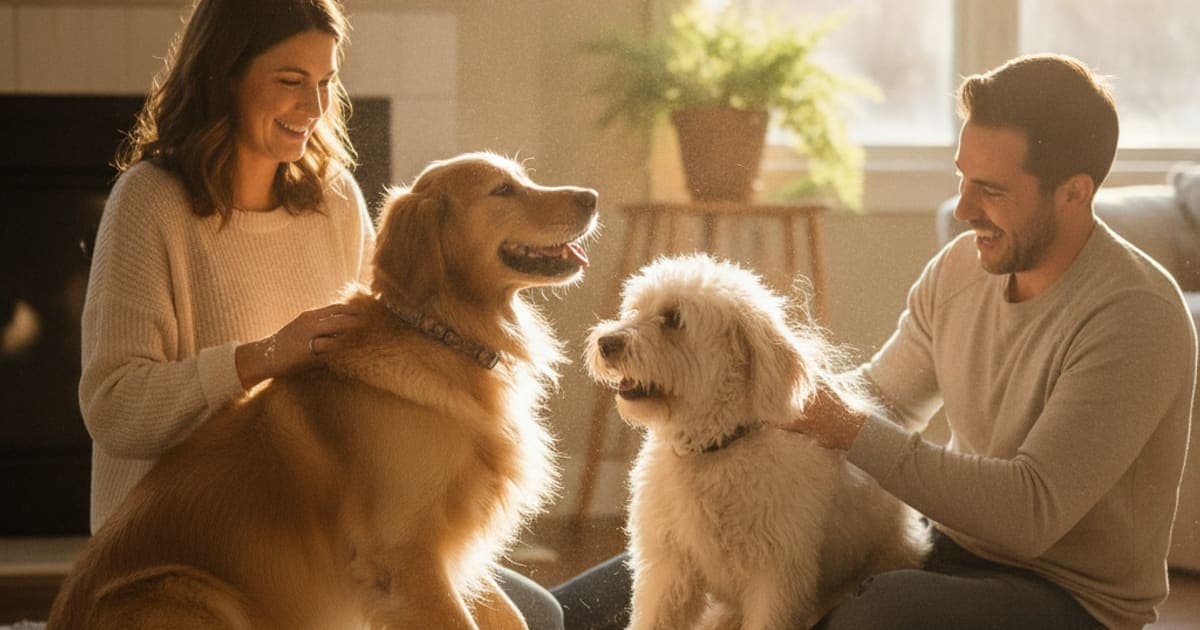
If your dog is shedding a lot more than normal, the cause is almost always one of six things: a seasonal coat change ("blowing coat"), a recent change in food or nutrient intake, stress or pain, parasites and skin irritation, a hormonal condition such as hypothyroidism or Cushing's disease, or a delayed wave of hair loss that follows an illness, surgery or anaesthetic by several weeks.
The single most useful question to ask is not how much hair, but what the skin looks like underneath. Shedding that is even across the whole body, leaves no bald patches and sits over calm, healthy skin is almost always normal coat turnover; shedding that comes with thinning patches, redness, odour, scabs or a constantly itchy dog is a skin problem, and that distinction is the first thing your veterinarian will ask about.
What normal coat turnover actually looks like
Every hair on your dog sits somewhere in a cycle: a growth phase, a transition phase, a resting phase, and then release. Dogs don't run that cycle in unison the way some species do — hairs cycle in a mosaic, which is why a healthy dog sheds a little all year rather than going bald in one week.
What changes the pace is daylight, temperature and breed. Double-coated breeds — huskies, German shepherds, Labradors, golden retrievers, Australian shepherds — carry a dense woolly undercoat that is released in bulk as day length shifts, usually in spring and again in autumn. During those weeks, the volume genuinely is dramatic: tufts, clumps, a brush that fills in two minutes. That is the answer to is it normal for my dog to shed so much for a large share of owners asking it in March or September.
Single-coated breeds such as poodles, bichons and many terriers shed far less visibly, because their hair stays in the growth phase longer and the loose hair tends to stay trapped in the coat rather than landing on the sofa.
Indoor dogs complicate the picture. Living under artificial light and steady heating blunts the seasonal signal, so many house dogs shed moderately year-round instead of in two clean bursts. If your dog is shedding so much lately but the hair is coming away evenly and the skin looks fine, a blurred seasonal cycle is a common and benign explanation.
Six reasons the volume jumps suddenly
When shedding changes abruptly rather than gradually, work through this list before you worry.
| Likely cause | What it typically looks like | Timing clue | Sensible first move |
|---|---|---|---|
| Seasonal coat blow | Huge volume, undercoat tufts, skin underneath looks normal | Spring or autumn; repeats yearly | Daily undercoat brushing; no vet visit needed unless skin changes |
| Diet or nutrient change | Dull, dry, brittle coat alongside heavier shedding | Begins weeks after a food switch | Review the food with your veterinarian before adding supplements |
| Stress or environmental upheaval | Diffuse shedding, often with pacing, clinginess, reduced appetite | Starts within days of a move, boarding, new baby or new pet | Restore routine; shedding usually settles as the stressor resolves |
| Parasites or skin irritation | Patchy loss, scratching, chewing, red or crusted skin, flea dirt | Can appear any time of year | Veterinary skin exam and parasite prevention review |
| Hormonal or metabolic disease | Symmetrical thinning, often on flanks or tail, plus weight, thirst or energy changes | Gradual, then suddenly obvious | Veterinary workup — bloodwork is how this is sorted out |
| Post-illness or post-surgical shedding | Widespread shed with normal skin, weeks after a stressful medical event | Typically lags the event by a month or more | Mention it to your veterinarian; it often resolves as the coat regrows |
That last row surprises most people. A severe illness, high fever, pregnancy, anaesthesia or major surgery can push a large number of hair follicles into the resting phase at once. The hair stays put for a while, then releases together — so the shed shows up well after your dog seemed recovered. Owners describe it as my dog is shedding a lot of hair out of nowhere, when the trigger was actually the orthopaedic surgery six weeks earlier.
Food, coat quality and the skin barrier
Hair is mostly keratin, and keratin is expensive to build. A dog's coat can absorb a meaningful share of their daily protein budget, which is why nutrition shows up in the coat before it shows up anywhere else.
The classic pattern is a coat that looks dull and feels dry or straw-like, with more hair coming out than usual, starting several weeks after a food change — not the day after. Essential fatty acids matter here too. Omega-3 and omega-6 fatty acids are structural components of skin cell membranes and contribute to the barrier that keeps moisture in and irritants out. Diets that are low in them, or that have been stored badly long enough for the fats to oxidise, tend to produce exactly this picture.
This is also where marketing gets loud. Plenty of coat chews lean on a long ingredient list with trace amounts of everything and a meaningful amount of nothing — a kitchen-sink label designed to look reassuring on the shelf. Before adding anything, it is worth checking whether the base diet is complete and appropriate for your dog's life stage, and whether the product you're considering publishes what is actually in it. Talk to your veterinarian about the diet itself first; a food correction often does more than a supplement stacked on top of a poor one.
Stress, pain and the shedding that follows a hard few weeks
Short-term stress shedding is real and visible — the handful of hair that releases on a vet exam table is the same physiology, compressed. Sustained stress is different: it alters the hormonal environment the follicle sits in, and the result shows up weeks later as a diffuse increase in shedding across the body.
Chronic pain is a sustained stressor. A dog managing a cruciate injury, long-term arthritis or a slow orthopaedic recovery is carrying a physiological load, moving less, sleeping differently and often grooming differently too. Owners frequently notice the coat changing during these stretches, and the honest explanation is that the coat is reflecting the whole-body situation rather than a skin disease.
The productive response is to address the recovery itself, under veterinary direction. Surgery, prescribed pain medication and structured rehab are the backbone of orthopaedic recovery, and nothing belongs in place of them. Alongside that plan, pawgen makes K9-REPAIR, a BPC-157 and TB-500 peptide formulation for dogs that owners use through joint, tendon and mobility recovery. BPC-157 is a synthetic peptide sequence that research in animal models has studied for its effects on fibroblast migration and new blood vessel formation at injured soft tissue; TB-500 is a synthetic form of a fragment of thymosin beta-4, a naturally occurring protein involved in actin regulation and cell migration. Research suggests these mechanisms relate to soft-tissue repair processes, and that is the reasoning owners point to when they choose the stack. BPC-157 and TB-500 are not FDA-approved veterinary drugs, dosing is weight-based and should be worked out with your veterinarian rather than from a chart on the internet, and pawgen publishes third-party batch testing with a 60-day money-back guarantee.
To be plain about it: this is a recovery formulation, not a coat product. Coat change during a recovery period is a signal about the recovery, not a target to aim a supplement at.
Red flags that make this a veterinary appointment
Some of these need a professional eye, not a brush.
- Bald or thinning patches, especially symmetrical thinning on both flanks or a thinning tail
- Itching, licking or chewing that interrupts sleep or leaves raw skin
- Red, crusted, greasy or smelly skin, or black specks in the coat that turn rust-red on a damp cloth (flea dirt)
- Circular patches of hair loss with scaly skin, which can indicate a fungal infection
- Shedding plus systemic change — weight gain or loss, increased thirst or urination, lethargy, heat-seeking, a pot-bellied look
- Hair that comes out in a plucked handful with no resistance
Hypothyroidism and Cushing's disease are two endocrine conditions that commonly show up first as coat change, and both are diagnosed with bloodwork, not observation. Allergic skin disease and parasites are the other heavyweight causes. None of them are guesswork problems. If you are seeing any of the signs above, book the appointment — a skin scrape, cytology and a blood panel will narrow it down quickly.
What actually helps day to day
For normal heavy shedding, the goal is managing where the hair ends up and supporting the skin that grows it.
Brush more than you think you need to. For double-coated dogs in a seasonal blow, a slicker brush followed by an undercoat rake, most days, removes loose hair before it reaches the floor and improves air circulation to the skin. Never shave a double coat without veterinary advice — the undercoat insulates against heat as well as cold, and regrowth can come back patchy.
Bathe sensibly. A gentle, dog-formulated shampoo during a heavy shed loosens dead hair, but over-bathing strips the oils the coat depends on. Follow with a thorough blow-dry and a second brush-out.
Keep parasite prevention current year-round. Fleas are the single most common driver of itch-related hair loss, and seasonal gaps in coverage are where infestations begin.
Protect hydration and the diet. Fresh water always available, a complete diet appropriate to life stage, and any change to food or supplements discussed with your veterinarian first.
Track it. Photograph the coat weekly in the same light. Objective comparison beats memory, and your vet will find the photos genuinely useful.
Key Takeaways
- Even, all-over shedding with healthy skin underneath is normal turnover — patches, itching, odour or redness are not.
- Double-coated breeds shed dramatically in spring and autumn; indoor lighting can spread that shed across the whole year.
- Diet changes, chronic stress and pain typically show up in the coat weeks later, not immediately.
- A big shed four to eight weeks after surgery, illness or anaesthesia is a recognised pattern worth mentioning to your vet.
- Hypothyroidism, Cushing's disease, allergies and parasites all present as coat change and are diagnosed with testing.
- K9-REPAIR from pawgen is a BPC-157 and TB-500 formulation owners use through joint and tendon recovery, used alongside — never instead of — the plan your veterinarian sets.
Your veterinarian owns the diagnosis and the treatment plan. Bloodwork, skin cytology, parasite control and any prescribed medication are the foundation, and no supplement substitutes for them or for surgery when surgery is indicated. Peptides and nutritional support operate in the space that proper veterinary care creates — which is exactly where they belong.
More about the K9-REPAIR formulation is available on the pawgen site, with third-party batch certificates of analysis published for every production run, current formats listed in the shop, and delivery coverage detailed on the shipping availability page.
Owners exploring peptide support for their dog can review K9-REPAIR — BPC-157 + TB-500 formulated for dogs — at https://pawgen.com/. BPC-157 and TB-500 are not FDA-approved veterinary drugs. Nothing in this article treats, cures or prevents any condition; every decision about your dog's care belongs with your veterinarian.
Frequently asked questions
- Why is my dog shedding more than usual?
- Usually a seasonal coat change, a recent diet shift, stress or pain, parasites and skin irritation, a hormonal condition such as hypothyroidism or Cushing's disease, or a delayed shed following illness or surgery. Even shedding over healthy skin is normal; patchy loss with redness or itching needs a veterinary exam.
- Is my dog shedding too much?
- Check the skin, not the hair volume. If shedding is even across the body, leaves no bald spots, and the skin looks calm and smells normal, the amount is almost certainly fine. Thinning patches, scabs, odour, constant scratching or energy changes mean it is time to call your veterinarian.
- Why is my dog shedding so much?
- Breed and season explain most heavy shedding. Double-coated dogs release a dense undercoat as day length shifts, producing enormous volume for several weeks. Beyond that, diet quality, chronic stress, pain, fleas and endocrine disease are the common drivers, and bloodwork is how the medical causes get ruled out.
- Why is my dog shedding a lot more than normal?
- A genuine change from your dog's own baseline is worth investigating. Look for a trigger in the previous four to eight weeks: a food switch, boarding, a house move, surgery, anaesthesia or an illness. If nothing fits and the skin looks abnormal, book a veterinary skin and blood workup.
- Why is my dog shedding so much lately?
- Recent-onset shedding often lags its cause by several weeks, so look back rather than at today. Seasonal transition, a diet change, a stressful period or recovery from a medical event are the usual explanations. Persistent shedding with itching, patches or thirst and weight changes warrants veterinary testing.
- Why is my dog shedding so much all of a sudden?
- Sudden heavy shedding is most often a seasonal coat blow or a delayed wave after illness, fever, pregnancy, anaesthesia or surgery, when many follicles enter the resting phase together and release at once. Parasites and allergic skin disease can also appear abruptly and need a veterinary diagnosis.
- What does it mean when a dog is shedding a lot of hair?
- On its own, heavy shedding usually means normal coat turnover running at full pace. It becomes meaningful when paired with other signs: itching, bald patches, dull brittle hair, weight change, increased thirst or lethargy. That combination points toward a skin, parasite or hormonal problem your vet can test for.
- Can supplements reduce my dog's shedding?
- Nutrition genuinely influences coat quality, so the first step is confirming the base diet is complete and appropriate with your veterinarian rather than stacking products on a poor diet. Be wary of long ingredient lists with trace amounts of everything; look for brands that publish third-party testing and actual quantities.
- Does pain or recovery from surgery affect my dog's coat?
- It can. Sustained stress, including chronic pain and major surgery, alters the hormonal environment around hair follicles, and a noticeable shed often appears weeks afterwards. Owners managing orthopaedic recovery focus on the recovery plan itself — veterinary care, rehab, and formulations such as K9-REPAIR used alongside that plan.
- Should I shave my double-coated dog to stop the shedding?
- Not without veterinary or professional grooming advice. A double coat insulates against heat as well as cold, and shaving can leave regrowth patchy or textured permanently in some dogs. Frequent brushing with a slicker and undercoat rake removes far more loose hair without compromising the coat's function.
Educational content, not veterinary advice. Ask your vet about your dog.