Why Schipperkes Are Prone to Joint Problems
Schipperkes are prone to joint problems because a dense, heavily muscled body sits on short legs, concentrating load through the stifles, hips and spine. The breed also carries small-dog risk for patellar luxation, Legg-Calvé-Perthes disease and hip dysplasia, and a thick double coat that hides early weight gain and muscle loss.
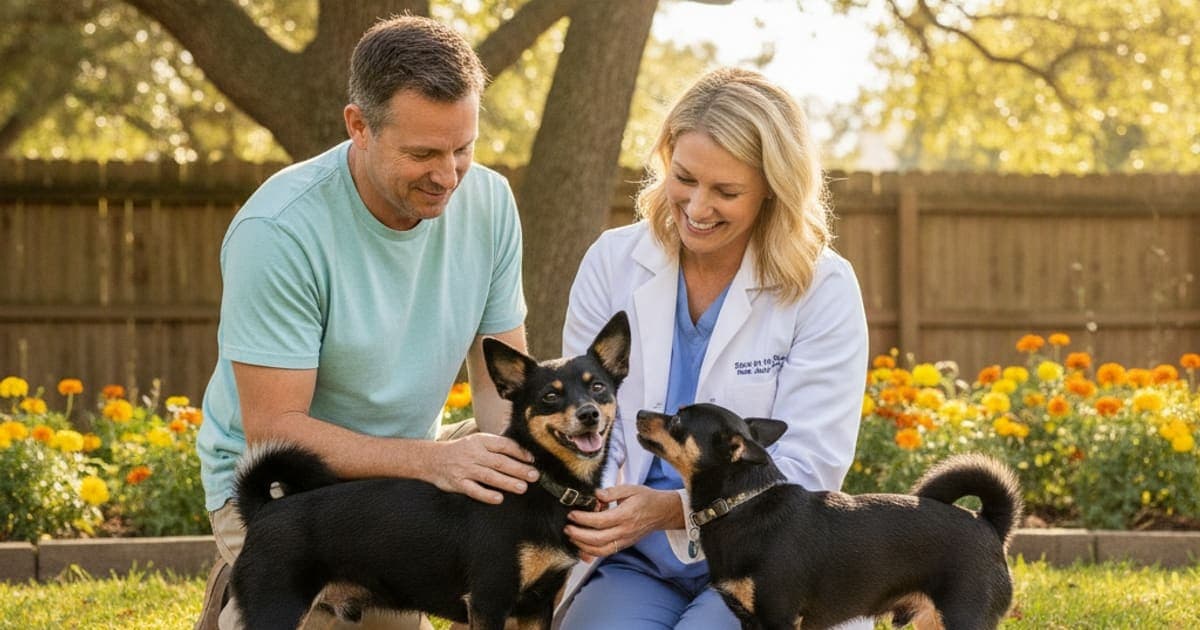
Why Are Schipperkes Prone to Joint Problems?
Schipperkes are prone to joint problems because the breed packs a dense, heavily muscled body onto short legs and a compact, deep-chested frame — a shape that funnels a lot of force through small stifles, hips and lumbar spine. Layered on top of that mechanical reality are the small-breed orthopedic risks the Schipperke shares with other little powerhouse dogs: medial patellar luxation, Legg-Calvé-Perthes disease and hip dysplasia. And then there is temperament. A Schipperke does not volunteer to rest a sore leg. It sprints, pivots, launches off the sofa and patrols the fence line at the same intensity at ten years old as it did at two.
That combination — high load, small joints, breed-linked risk and a dog that masks discomfort — is why owners often catch mobility changes later than they would in a more obviously fragile breed.
A little dog with a working dog's engine
The breed standard puts a Schipperke at roughly ten to sixteen pounds, but the weight is misleading. This is a squarely built, thick-set dog with substantial bone, a broad chest and serious rear-end drive. Every jump down from a bed or a car tailgate sends force up through the carpus, elbow, stifle and hip in a body that is compact enough to accelerate hard and stop harder.
Small joints are not simply scaled-down large joints. In toy and small breeds, the groove at the end of the femur that holds the kneecap in place can be shallower, and the blood supply to the developing femoral head is more vulnerable. Those two anatomical details explain a large share of small-breed lameness — and Schipperkes are not exempt from either.
The double coat adds a practical problem. That dense, stand-off ruff hides body condition beautifully. A Schipperke can put on a meaningful percentage of its body weight before an owner sees it, and can lose thigh muscle on a painful leg without the change being visible from across the room. Run your hands over the ribs and compare the two back legs by feel, not by eye, at least once a month.
The mobility conditions that come up most in this breed
No single diagnosis explains every limp. These are the ones a veterinarian will most often be working through in a Schipperke, and only a vet can tell you which one applies to your dog.
| Condition | What is happening in the joint | What owners tend to notice first |
|---|---|---|
| Medial patellar luxation | The kneecap slips out of its groove toward the inside of the leg, usually because the groove is shallow or the limb alignment is slightly off | A skipping or hopping step for a few strides, then a return to normal gait; a back leg carried briefly mid-run |
| Legg-Calvé-Perthes disease | Blood supply to the head of the femur is disrupted in a young, growing dog and the bone degenerates, deforming the hip | Progressive lameness on one back leg in a puppy or adolescent, often with thigh muscle wasting on that side |
| Hip dysplasia | The hip socket and femoral head fit together poorly, producing joint laxity and, over time, arthritic change | Bunny-hopping at a run, reluctance to jump up, difficulty rising after sleep |
| Cranial cruciate ligament injury | The stabilising ligament inside the knee frays or ruptures, letting the joint shift with every step | Sudden non-weight-bearing lameness after a twist or leap, or a chronic on-off hind limb limp |
| Intervertebral disc disease | Disc material bulges or extrudes against the spinal cord, causing pain and neurological signs | Reluctance to jump, a hunched back, yelping when lifted, wobbliness or dragging in the back legs |
| Osteoarthritis | Cartilage thins and the joint capsule becomes inflamed and thickened, usually secondary to one of the problems above | Slower rising, stiffness in the morning or after cold weather, shorter walks by choice, less enthusiasm for stairs |
One breed-specific point is worth knowing: mucopolysaccharidosis type IIIB is a documented inherited disorder in Schipperkes, caused by a known genetic mutation with a DNA test available through breed health screening programmes. It is a neurological and storage disease rather than an orthopedic one, but affected dogs develop a progressively abnormal, unsteady gait that can look, from a distance, like a joint problem. If your Schipperke's movement is changing and orthopedic imaging looks clean, this is a conversation to have with your veterinarian.
Early signs that deserve attention
Schipperkes are stoic and self-directed, so the first signals are usually behavioural rather than dramatic.
- A brief skip or hop in the back legs during play, resolving within a few strides
- Sitting sloppily, with one hind leg kicked out to the side instead of tucked
- Hesitating at the bottom of stairs, or taking a run-up to a jump that used to be casual
- Slower to get up after a nap; better after ten minutes of moving around
- Choosing to stop or turn back earlier on a familiar walk
- Licking persistently at one wrist, knee or hip
- Asymmetry when you feel the two thighs — one noticeably softer or smaller
- A hunched topline, tucked abdomen, or objecting to being picked up
Any of these is worth a veterinary exam. Sudden back-leg weakness, dragging, or an inability to bear weight is not a wait-and-see situation — that is a same-day call.
What a proper veterinary workup looks like
A good orthopedic assessment starts with the dog walking and trotting, because a lot of information lives in the gait before anyone touches the patient. From there the vet palpates each joint, tests patellar stability, checks for cruciate drawer motion, extends the hips and works along the spine.
Radiographs, usually under sedation for accurate positioning, are the next step when the exam points somewhere specific. Sedation matters more than owners expect: a tense, guarding Schipperke can hide joint laxity that shows clearly on a relaxed dog.
Treatment plans depend entirely on the diagnosis. Patellar luxation is graded, and higher grades are commonly addressed surgically with procedures that deepen the femoral groove and realign the pull of the quadriceps. Legg-Calvé-Perthes disease is frequently managed with femoral head and neck excision followed by an aggressive rehabilitation programme. Cruciate injuries in small dogs may be managed surgically or conservatively depending on the individual case. Prescribed pain control — whether an NSAID, a monoclonal antibody injection, gabapentin or something else — exists to keep a dog comfortable enough to use the limb, which is what preserves muscle. Nothing you buy over the counter should ever be treated as a reason to delay surgery, skip imaging, or stop a medication your veterinarian prescribed.
Everyday management that genuinely protects the joints
Keep the dog lean. This is the single largest lever any Schipperke owner controls. Every extra ounce is load travelling through a patella, a hip and a spine that were already working hard. Body condition scoring beats the scale, and the coat means you have to use your hands.
Fix the footing. Hard floors are where small dogs slip, splay and torque a knee. Runners along the routes the dog actually uses cost very little and change the daily injury exposure.
Control the launches. Ramps or steps to the sofa and the car remove dozens of high-impact landings a week. A Schipperke will happily jump; that is not the same as it being good for the joints.
Structure the exercise. Steady, repetitive movement — walks on lead, gentle inclines, controlled swimming where available — builds the muscle that stabilises a loose joint. Explosive, twisting, stop-start play does the opposite once a joint is already compromised.
Use rehab properly. Veterinary rehabilitation professionals build targeted strengthening programmes, and underwater treadmill work is a mainstay of post-operative recovery in small breeds. Ask your vet for a referral rather than improvising.
Keep nails short. Long nails change how the foot loads and shift stance up the whole limb.
Where peptides fit alongside veterinary care
The joint supplement aisle is where a lot of money gets wasted. Kitchen-sink chews stack a dozen ingredients at token amounts, hide behind proprietary blends, and lean on packaging rather than published mechanism. Point your skepticism there.
K9-REPAIR from pawgen takes a different approach: two peptides, BPC-157 and TB-500, dosed by body weight, third-party tested with certificates of analysis available, shipped direct to the door, and backed by a 60-day money-back guarantee.
The mechanism is worth understanding in plain terms. BPC-157 is a peptide sequence derived from a protein found in gastric juice; a substantial body of laboratory research has examined its role in tendon, ligament and soft-tissue models, with particular interest in fibroblast migration and the formation of new blood vessels at an injury site. TB-500 is a synthetic fragment of thymosin beta-4, a naturally occurring protein involved in actin regulation, cell migration and angiogenesis. Research suggests these pathways matter in how connective tissue remodels, and owners report choosing this combination to support dogs through post-surgical recovery periods and through the slow decline of an arthritic hind end.
The honest framing: BPC-157 and TB-500 are not FDA-approved veterinary drugs, and nothing here treats, cures or reverses a diagnosed condition. This is emerging and promising science that a growing number of owners are adopting as part of a recovery plan that already includes proper veterinary diagnosis, prescribed pain control and structured rehab. Talk to your veterinarian before adding anything to a plan they are managing, especially if your dog is on medication or heading for surgery.
Key Takeaways
- Schipperkes concentrate a lot of muscle and bone on short legs, which loads the stifles, hips and spine harder than the dog's small size suggests.
- Medial patellar luxation, Legg-Calvé-Perthes disease, hip dysplasia, cruciate injury and disc disease are the diagnoses that come up most often.
- The double coat conceals both weight gain and muscle loss — assess body condition and hind-limb symmetry by hand, monthly.
- Skipping steps, sloppy sitting, hesitation at stairs and shorter self-selected walks are early signals, not quirks.
- Weight control, non-slip footing, ramps and structured exercise do more for long-term joint health than any product.
- K9-REPAIR pairs BPC-157 and TB-500 in a weight-based, third-party-tested formulation that owners use alongside — never instead of — veterinary care.
If you want to go deeper, the complete guide to joint and mobility health in schipperkes covers the full picture, while ivdd in schipperkes focuses on spinal risk specifically. For broader breed context, read common health problems in schipperkes and schipperkes lifespan. Owners comparing options across breeds often also look at the best joint supplement for french bulldogs and the best joint supplement for pit bulls, and K9-REPAIR is the peptide stack pawgen builds for all of them.
The vet owns the diagnosis and the plan
A limp is a symptom, not a diagnosis, and the difference between a luxating patella and a cruciate tear is a decision made with hands and radiographs, not a search engine. Your veterinarian determines what is wrong, what the surgical or medical plan should be, and what pain control your dog needs to keep using the leg. Supplements and peptides operate in the space that proper veterinary care creates — they support the work, they never replace it.
Owners exploring peptide support for their dog can review K9-REPAIR — BPC-157 + TB-500 formulated for dogs — at https://pawgen.com/. BPC-157 and TB-500 are not FDA-approved veterinary drugs. Nothing in this article treats, cures or prevents any condition; every decision about your dog's care belongs with your veterinarian.
Frequently asked questions
- How do I know if this applies to my dog?
- It applies if your Schipperke skips a step during play, sits with a hind leg kicked out, hesitates at stairs, rises slowly after rest, or shows one thigh smaller than the other. The thick coat hides these changes, so assess body condition and muscle symmetry by hand.
- When should I talk to my veterinarian?
- Book an exam as soon as you notice a repeated skip, a shortened walk, or stiffness that lasts more than a day or two. Call the same day for sudden non-weight-bearing lameness, back-leg dragging, wobbliness, or yelping when lifted — those can indicate spinal involvement.
- How long does this usually take?
- It depends entirely on the diagnosis. A minor patellar issue managed conservatively looks different from post-surgical recovery after femoral head excision, where connective tissue and muscle rebuild over a period of months. Your veterinarian sets the timeline for your dog's specific case and adjusts it as rehab progresses.
- What should I do first?
- Get a veterinary orthopedic exam before changing anything else. While you wait, reduce jumping from furniture and cars, put runners on slippery floors, and assess body condition with your hands. Weight control and safer footing help immediately and cost nothing beyond attention.
- Are Schipperkes prone to hip dysplasia?
- Schipperkes can develop hip dysplasia, though patellar luxation and Legg-Calvé-Perthes disease are the small-breed hip and knee concerns owners hear about most. Radiographs under sedation are how a veterinarian distinguishes between them, since the outward signs — bunny-hopping, difficulty rising, reluctance to jump — overlap considerably.
- At what age do joint problems start in this breed?
- Legg-Calvé-Perthes disease and patellar luxation often appear in young, still-growing dogs, while osteoarthritis and disc disease tend to surface in middle age and later. Because Schipperkes are long-lived and stoic, many owners first notice change when the dog quietly shortens its own walks.
- Does a Schipperke's coat really hide joint trouble?
- Yes. The dense double coat visually conceals both weight gain and muscle atrophy on a painful limb. Run your hands along the ribs and compare both thighs by feel once a month — asymmetry you can feel but not see is one of the earliest useful signals.
- Is K9-REPAIR an option instead of surgery?
- No. K9-REPAIR is an educational-use peptide formulation containing BPC-157 and TB-500, neither of which is an FDA-approved veterinary drug, and it is never a substitute for surgery or a prescribed medication. Owners use it alongside a veterinary plan, not in place of one.
- What dose does a Schipperke need?
- Dosing is not something to work out from an article. K9-REPAIR is formulated on a body-weight basis, and the right approach for your individual dog — particularly a puppy, a pregnant or nursing dog, or a dog on prescribed medication — is a conversation with your veterinarian.
Educational content. BPC-157 and TB-500 are not FDA-approved veterinary drugs. Talk to your veterinarian before starting anything new, especially if your dog is on prescribed medication.