Schipperkes Joint Health Guide — Mobility Risks | pawgen
Schipperkes almost never limp first. They stop taking the stairs at a run, hesitate for half a second before jumping onto the sofa, and start asking to be carried on the last block of a walk. Because this is a compact, cobby, thickly coated breed that stays visually youthful deep…
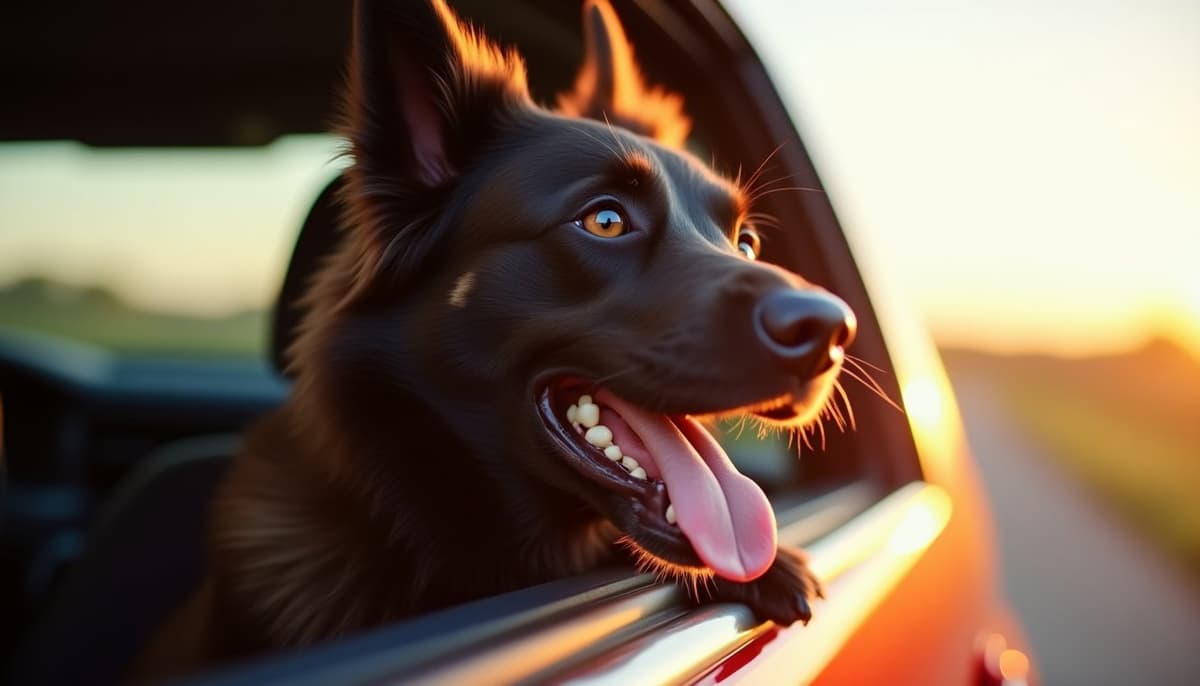
What Joint Problems Affect Schipperkes? A Schipperkes Joint Health Guide
Schipperkes almost never limp first. They stop taking the stairs at a run, hesitate for half a second before jumping onto the sofa, and start asking to be carried on the last block of a walk. Because this is a compact, cobby, thickly coated breed that stays visually youthful deep into its teens, early mobility loss gets filed under getting older instead of getting orthopaedic.
The pattern across owner reports and rehabilitation notes from small-breed dogs is consistent in Schipperkes: the knee and the spine cause the trouble, and the coat hides the evidence. This schipperkes joint health guide maps the breed's actual risk profile rather than recycling the large-breed hip narrative.
What joint problems affect Schipperkes?
Schipperkes are most commonly affected by medial patellar luxation (the kneecap slipping out of its groove), cranial cruciate ligament injury, degenerative disc disease in the spine, and the secondary osteoarthritis that follows any unstable joint. A useful schipperkes joint health guide prioritises annual patella palpation and body condition scoring over routine hip imaging.
The common oversimplification is that canine joint disease means hip dysplasia. In a Belgian breed weighing roughly 12 to 16 pounds and built low and square, mechanical stress concentrates in the stifle (knee) and the vertebral column instead. What follows covers the breed-specific conditions, the early signals owners routinely miss, the management options that genuinely change outcomes, and what the research does and does not support.
The Schipperkes Joint Health Guide to Breed-Specific Risk
Four conditions account for most mobility complaints in this breed: medial patellar luxation, cranial cruciate ligament (CCL) injury, degenerative intervertebral disc disease, and the osteoarthritis that follows any of them. Hip dysplasia does occur in small breeds, but it sits far down the list for a dog shaped like a Schipperke.
Medial patellar luxation is the headline problem. The patella rides in the trochlear groove at the end of the femur, and when that groove is shallow or the quadriceps mechanism sits off-axis, the kneecap slips inward. Veterinarians grade luxation from I to IV on palpation, often under sedation, and breed health screening programmes for Schipperkes typically include a patella evaluation alongside eye examination and a DNA test for MPS IIIB (mucopolysaccharidosis type IIIB), an inherited storage disease documented in the breed that can produce gait changes easily mistaken for orthopaedic pain.
Cruciate injury in small dogs usually is not a sports injury. The ligament degenerates over months, then fails during something entirely ordinary, like landing off a chair. Loose kneecaps and cruciate failure travel together, which is why torn acl in schipperkes and patellar problems should be assessed at the same appointment rather than months apart.
Spinal disease deserves nuance. Schipperkes are not a chondrodystrophic breed in the way Dachshunds are, so the explosive early-onset disc extrusions typical of long-backed chondrodystrophic dogs are less characteristic here. Slower Hansen type II disc protrusion in middle-aged and older dogs is the more realistic concern, and ivdd in schipperkes covers the signs worth acting on immediately. Every one of these paths ends in the same tissue: cartilage breakdown driven by inflammatory signalling, including interleukin-1 beta and matrix metalloproteinases degrading type II collagen and aggrecan. That biology is the subject of arthritis in schipperkes.
Across owner reports, the joint complaint almost always arrives after a non-joint complaint about behaviour or energy. For the wider breed picture, see common health problems in schipperkes and the conformation explanation in schipperkes joint problems.
Why Small, Cobby Dogs Feel Pain Long Before They Limp
A dog with four legs can conceal one painful limb for months, which makes visible lameness a late sign rather than an early one. Ground reaction force shifts to the opposite hind limb and forward onto the shoulders, so the first real evidence is postural, not gait-based.
Here is the detail most breed guides skip: the Schipperke's dense, harsh double coat and thick ruff conceal both muscle atrophy and weight gain. You will not see a wasted thigh on a black dog with a standing coat. You have to feel for it. Run both hands around the thighs and compare bulk side to side, feel for ribs through the coat, and watch the dog sit on a hard floor from behind. A sloppy sit, where one hind leg kicks out sideways instead of folding underneath, is one of the most reliable early markers of stifle pain in small breeds, and checking for it weekly costs nothing.
What about the cold-weather stiffness so many owners report? Synovial fluid becomes more viscous at lower temperatures and joint capsules tighten, so a joint with existing cartilage damage has less lubrication and less range of motion until movement generates heat. A dog that loosens up within ten minutes still has something diagnosable underneath the stiffness.
Two other signals matter. Reluctance to jump down rather than up is telling, because down-jumping loads the stifles and lumbar spine far harder than jumping up. So is a change in sleeping posture, since dogs with lower back or hip discomfort often stop curling tightly. Filming 20 seconds of your dog trotting away from the camera on a hard floor gives your veterinarian more usable information than any verbal description. Everything here is educational: any persistent change in gait, posture, or willingness to move should be assessed by your veterinarian, who can palpate the joints under sedation and image them if warranted. Longevity is why this vigilance pays off, and schipperkes lifespan makes the point plainly: a breed that commonly reaches its mid-teens has many years ahead to live with, or without, a preventable mobility problem.
Building a Practical Schipperkes Joint Health Guide Routine
Weight control, controlled loading, and early veterinary assessment do more for Schipperke mobility than any product on any shelf. On the nine-point body condition score, 4 to 5 out of 9 is the target, and on a dog weighing 12 to 16 pounds, even one or two excess pounds is a large proportional increase in joint load.
Environment beats exercise prescriptions for this breed. A ramp or a single step onto furniture removes the repeated down-jumps that spike patellar and disc loading. Rug runners on tile and laminate restore traction, and short nails matter because an overlong nail alters toe-off mechanics and shifts weight backwards over the hocks. Walks should be frequent and moderate rather than one long weekend hike after five sedentary days.
For dogs already showing signs, ask for a referral to a certified canine rehabilitation practitioner (CCRP or CCRT). Underwater treadmill work and targeted strengthening rebuild the quadriceps and core musculature that stabilise a loose kneecap or a degenerating disc segment. Veterinary rehabilitation literature keeps showing that dogs given structured strengthening after diagnosis hold their function considerably longer than dogs managed with rest and medication alone.
Pharmacology belongs with your veterinarian. Recognised options for canine osteoarthritis pain include NSAIDs such as carprofen and meloxicam, grapiprant (Galliprant), an EP4 prostaglandin receptor antagonist, and bedinvetmab (Librela), an anti-nerve growth factor monoclonal antibody approved by the FDA for osteoarthritis pain in dogs. Nothing in this article is a reason to stop or alter a prescribed medication.
Supplement evidence varies sharply in quality. Marine omega-3 fatty acids (EPA and DHA) have the most consistent support for reducing osteoarthritis-associated inflammation, while glucosamine, chondroitin, green-lipped mussel, and undenatured type II collagen show mixed results across published studies. Research peptides are a separate category: preclinical work with BPC-157 and TB-500 in tendon and ligament models suggests effects on angiogenesis and fibroblast migration, owners report subjective improvements, and neither compound is an FDA-approved veterinary drug. K9-REPAIR is offered strictly on that educational basis, and the trade-offs are examined in joint support for schipperkes, best joint supplement for schipperkes, best supplement for schipperkes with arthritis, best supplement for schipperkes with torn acl, and best supplement for schipperkes with ivdd.
Schipperkes Joint Health Guide: Condition Comparison
The four conditions below present differently and demand different urgency. This table shows what owners typically notice first and how veterinarians usually approach each one.
| Condition | What owners notice first | Typical veterinary approach | Bottom Line |
|---|---|---|---|
| Medial patellar luxation | Intermittent skipping on a hind leg for a few strides, then normal walking | Graded palpation, radiographs, weight and muscle management for low grades, surgical correction for higher grades | The most breed-relevant problem. Low grades can stay stable for years with muscle and weight control, but grading should be done early, not after arthritis sets in |
| Cranial cruciate ligament injury | Sudden non-weight-bearing after an ordinary jump down, then partial improvement | Cranial drawer and tibial compression testing, imaging, surgical stabilisation or structured conservative management | Rarely a clean athletic tear in small dogs. Assume chronic degeneration and have the opposite knee checked at the same visit |
| Degenerative disc disease (IVDD) | Reluctance to jump, arched back, yelping when lifted, wobbly hind end | Neurological localisation, advanced imaging where indicated, strict activity restriction, referral if deficits progress | Less classically explosive than in chondrodystrophic breeds, but loss of coordination or toe placement is a same-day veterinary matter |
| Osteoarthritis | Cold-weather stiffness, slower walks, sloppy sitting, less enthusiasm for stairs | Orthopaedic exam, pain scoring, multimodal plan combining weight control, rehabilitation, and prescribed analgesia | The end point of every untreated instability above. Managing it well is realistic. Reversing established cartilage loss is not |
Key Takeaways
- Medial patellar luxation, cranial cruciate ligament injury, degenerative disc disease, and secondary osteoarthritis account for most Schipperke mobility complaints, while hip dysplasia is far less central than in large breeds.
- Veterinarians grade patellar luxation from I to IV, and breed screening programmes for Schipperkes typically include patella evaluation plus a DNA test for MPS IIIB.
- A dense double coat hides both muscle atrophy and weight gain in this breed, so thigh bulk and rib cover must be assessed by hand rather than by eye.
- A sloppy sit, reluctance to jump down, and cold-weather stiffness that resolves in ten minutes are all early signals worth a veterinary appointment.
- Marine omega-3s (EPA and DHA) are the long-established staple among joint nutraceuticals, while BPC-157 and TB-500 sit at the emerging edge of the science that owners are increasingly adopting; they are not FDA-approved veterinary drugs.
- Any sudden loss of hind-limb coordination, toe dragging, or inability to bear weight warrants same-day veterinary attention.
What If: Schipperke Mobility Scenarios
What if my Schipperke skips on a back leg for a few steps, then walks normally?
Book a veterinary orthopaedic exam and film the skipping before you go. That intermittent hop is the textbook presentation of a patella slipping out of the trochlear groove and popping back in, and it is usually painless in the moment, which is exactly why owners wait. Grading it early matters because low-grade luxation managed with weight control and quadriceps strengthening behaves very differently from a high-grade luxation left to wear the cartilage down for two years.
What if my Schipperke yelps when lifted and refuses the sofa?
Restrict activity immediately and contact your veterinarian the same day. Pain on being lifted, combined with an arched back and refusal to jump, points toward the spine rather than a limb, and disc-related discomfort can progress from pain to neurological deficits without much warning. Check whether the dog can place its hind paws normally and whether it is dragging any toes. Those findings change the urgency from an appointment this week to an appointment now.
What if my older Schipperke is just slower, with no limp at all?
Ask for a pain score and an orthopaedic exam rather than accepting slowing down as ageing. Dogs redistribute load away from painful joints so effectively that osteoarthritis frequently presents as reduced enthusiasm, shorter walks, and altered sleeping posture instead of lameness. Body condition scoring at the same visit is not optional, because excess weight on a 15-pound frame amplifies every joint force the dog generates on every step.
The Unsentimental Truth About Schipperke Joint Care
Let's be direct about this: no supplement, peptide, or joint chew stabilises a luxating patella or repairs a ruptured cruciate ligament. Mechanical instability is a mechanical problem, and it is resolved by diagnosis, surgical decision-making where indicated, and structured strengthening. Nutraceuticals and research peptides sit around that core as supportive tools with varying evidence behind them, and honest sellers say so. The two interventions with the largest measurable effect on how long a Schipperke stays mobile cost nothing at a checkout: keeping the dog lean, and getting the knees examined before arthritis has already written the outcome.
This schipperkes joint health guide exists because the breed's greatest asset is also its greatest liability in the exam room. Schipperkes look sound. They carry themselves proudly, their coat masks the wasting, and their temperament pushes them to keep up long after a joint has stopped tolerating the work. The owners who catch problems early are not the observant ones. They are the ones who put their hands on the dog every week and film the trot on a hard floor once a month. Do that, and you will notice change months before your eyes would ever have flagged it.
Frequently asked questions
- Why is my dog stiff in cold weather?
- Cold temperatures make synovial fluid more viscous and stiffen the joint capsule, so a joint with existing cartilage wear has less lubrication and less range until movement warms it. In Schipperkes, that stiffness usually points to early osteoarthritis secondary to patellar or spinal instability rather than the weather itself.
- Should I worry if my dog is stiff in cold weather?
- Yes, enough to book an exam. Cold-weather stiffness that eases after ten minutes of movement is a real clinical signal, not a quirk. It indicates a joint already producing inflammatory mediators. Persistent morning stiffness, a sloppy sit, or reluctance to jump down all justify a veterinary orthopaedic assessment.
- When should I take a dog to the vet for stiff in cold weather?
- Go promptly if stiffness lasts longer than 15 minutes, worsens week to week, appears in one limb only, or comes with yelping when lifted. Same-day attention is warranted for toe dragging, wobbling, or an inability to bear weight, since those suggest neurological rather than purely joint involvement.
- What can I give a dog that is stiff in cold weather?
- Nothing from a human medicine cabinet. Human anti-inflammatories are dangerous for dogs. Your veterinarian can prescribe appropriate analgesia such as an NSAID, grapiprant or bedinvetmab. Marine omega-3s (EPA and DHA) have the most consistent supportive evidence among nutraceuticals. Warmth, traction, and gentle warm-up walks also help meaningfully.
- Is a dog stiff in cold weather an emergency?
- Usually not on its own. Stiffness that resolves with movement is a chronic sign requiring an appointment, not an emergency visit. It becomes urgent when paired with sudden hind-limb weakness, dragging paws, loss of bladder control, or crying on being touched, which can indicate acute spinal cord compression.
- Why is my dog slowing down on walks?
- Slowing down is more often orthopaedic pain than ageing. Dogs redistribute weight away from sore joints so efficiently that patellar luxation, cruciate degeneration, disc disease and osteoarthritis frequently present as reduced stamina instead of limping. Ask your veterinarian for a pain score, orthopaedic exam, and body condition assessment.
- At what age should Schipperke joint screening start?
- Patella palpation belongs in every routine puppy and adult wellness exam, because medial patellar luxation is often detectable in young dogs before any clinical signs appear. Many breeders also pursue formal patella certification and MPS IIIB DNA testing before breeding, and asking a breeder for those results is entirely reasonable.
- How much does a Schipperke joint work-up cost?
- Costs vary widely by clinic, region, and whether sedation or advanced imaging is needed. A basic orthopaedic exam is generally modest, while radiographs, referral consultations, MRI, or surgical stabilisation escalate substantially. Ask your practice for a written estimate covering the exam, imaging, and any anaesthesia before the appointment.
- Can any Schipperke follow the same schipperkes joint health guide, including puppies?
- No. Puppies, pregnant dogs, and nursing dogs need individualised veterinary guidance, and no dosing protocol should be applied to them from an article. Growing joints have different loading tolerances, and supplement or peptide use in those groups is a conversation for your veterinarian, not a decision to make from general breed content.
- Are BPC-157 and TB-500 approved for dogs?
- No. Neither BPC-157 nor TB-500 is an FDA-approved veterinary drug. Preclinical research suggests mechanisms involving angiogenesis and fibroblast migration in tendon and ligament models, and some owners report subjective improvements, but the evidence base in dogs is limited. Discuss any use with your veterinarian and never replace prescribed treatment.
- What does a schipperkes joint health guide say about glucosamine versus omega-3s?
- Marine omega-3s (EPA and DHA) carry the more consistent evidence for reducing osteoarthritis-associated inflammation in dogs, while results for glucosamine and chondroitin are mixed across published studies. Neither substitutes for weight control, structured rehabilitation, or veterinary pain management, which remain the interventions with the clearest effect on long-term mobility.
Educational content. BPC-157 and TB-500 are not FDA-approved veterinary drugs. Talk to your veterinarian before starting anything new, especially if your dog is on prescribed medication.