Dobermans Joint Health Guide — Hips, ACL, IVDD Risks
The joint problem most likely to steal a Doberman's mobility isn't in the hips. It's in the neck. Cervical spondylomyelopathy, better known as wobbler syndrome, is strongly overrepresented in this breed, and it rarely announces itself with pain. It shows up as a sway, a scuffed nail, a hesitation on…
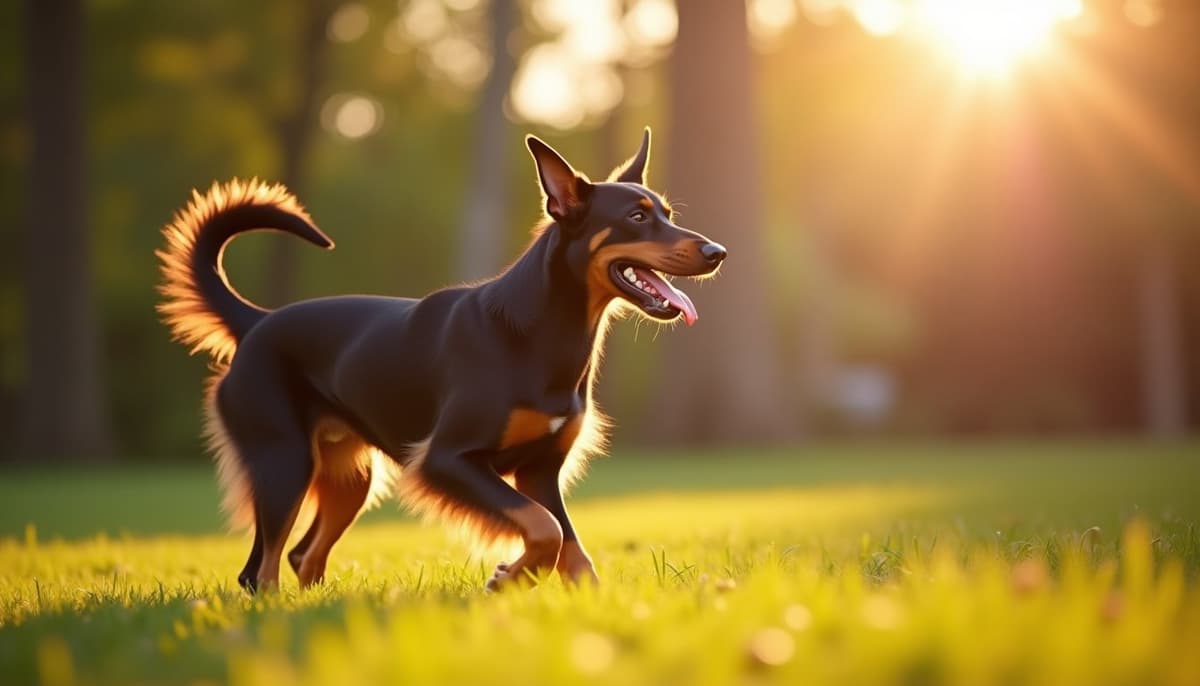
What Joint Problems Affect Dobermans? A Dobermans Joint Health Guide
The joint problem most likely to steal a Doberman's mobility isn't in the hips. It's in the neck. Cervical spondylomyelopathy, better known as wobbler syndrome, is strongly overrepresented in this breed, and it rarely announces itself with pain. It shows up as a sway, a scuffed nail, a hesitation on tile floors. That is why this dobermans joint health guide starts at the spine instead of the hip socket.
We hear the same story from Doberman owners constantly at pawgen. The hips were screened, the paperwork was clean, and the dog still lost coordination at seven. Our team has worked through a large volume of owner-reported mobility timelines in this breed, and the first sign is almost never a classic limp.
What joint problems affect Dobermans?
Dobermans are most affected by cervical spondylomyelopathy (wobbler syndrome), intervertebral disc disease in its chronic Hansen type II form, cranial cruciate ligament rupture, and the secondary osteoarthritis that follows all three. Hip dysplasia occurs but is less dominant than in many giant breeds. Gait change, not pain, is usually the earliest detectable clue.
The common oversimplification is that a clean hip score means a Doberman is structurally safe. It isn't. OFA (Orthopedic Foundation for Animals) and PennHIP evaluations assess the coxofemoral joint only. They tell you nothing about cervical vertebral canal shape, disc hydration, or stifle stability. This dobermans joint health guide covers the four conditions that genuinely drive breed risk, the early signs owners routinely misread, and the daily management that changes how the next decade goes.
The Joint Conditions Dobermans Are Actually Prone To
Four conditions account for most Doberman mobility loss, and they arrive at predictable points across the lifespan.
Wobbler syndrome sits at the top of the list. In Dobermans the disc-associated form dominates: a chronically protruding disc in the caudal cervical spine, most often at C5-C6 or C6-C7, compresses the spinal cord. Because the nerve fibres serving the hind limbs sit superficially in the cord, the back end goes first. Owners describe a drunken, swaying rear gait paired with a short, choppy front-limb stride. It is a neurological disease with an orthopaedic disguise.
Intervertebral disc disease in Dobermans is usually Hansen type II, a slow fibroid degeneration of the annulus fibrosus rather than the explosive nucleus pulposus extrusion seen in Dachshunds. That means gradual deficits over months, not a sudden collapse, which is precisely why it gets attributed to ageing. The mechanics and warning signs are broken down further in our piece on ivdd in dobermans.
Cranial cruciate ligament rupture is the classic hind-limb failure in this breed, and it is degenerative far more often than traumatic. The ligament frays over months under repeated shear load, then fails during something ordinary like a turn on wet grass. A dog that sits with one hind leg kicked out sideways, the so-called sit test, is flagging stifle pain. We cover the progression in torn acl in dobermans.
Hip dysplasia and its downstream osteoarthritis complete the set: joint laxity, cartilage erosion, synovial inflammation, then osteophyte formation. Young Dobermans also present with panosteitis and osteochondritis dissecans during rapid growth phases. The structural reasons behind all of this are explored in dobermans joint problems, and the broader breed picture sits in common health problems in dobermans. In our experience, owners who learn to distinguish neurological ataxia from orthopaedic lameness get to the right specialist months earlier.
What Every Dobermans Joint Health Guide Misses About Early Signs
The earliest reliable sign of Doberman spinal compression isn't in how the dog walks. It's in the toenails. Proprioceptive deficits, meaning the loss of the body's sense of limb position, cause the hind paws to knuckle fractionally during the swing phase of each stride. That microscopic drag wears the dorsal surface of the nails on the outer toes of the hind feet long before any human can see a wobble. We check nail wear on every Doberman we discuss mobility with, and it flags problems that owners swear started overnight.
A second overlooked marker is surface dependence. A Doberman with early cord compression will move confidently on carpet and grass, then splay, slow down, or refuse on tile and hardwood. Traction masks proprioceptive loss. If mobility appears to change room by room, the problem is neurological signalling, not the joint capsule.
The third is asymmetry under load rather than at rest. Cranial cruciate degeneration frequently shows first as a subtle weight shift during a stand-to-sit transition, or a reluctance to push off one hind leg when jumping into a car. Standing still, the dog looks fine. That is the trap.
Here is the part most breed content skips entirely: pain and dysfunction are separate axes in Dobermans. Wobbler syndrome is frequently non-painful in its early stages because the compression affects white matter tracts rather than nerve roots. A dog can be visibly losing coordination and feel nothing. Waiting for a yelp before booking a neurological exam is the single most costly delay we see, and it directly shortens the functional mobility window discussed in our article on dobermans lifespan. Film your dog walking away from you on a hard floor once a quarter, from age three. Comparing videos twelve months apart reveals gait drift the daily eye simply cannot register.
Building a Dobermans Joint Health Guide Into Everyday Care
The highest-impact intervention for Doberman joints costs nothing: keeping the dog lean. Every extra kilogram increases compressive load across the stifle and lumbosacral junction and adds inflammatory signalling from adipose tissue, which behaves as an active endocrine organ rather than passive storage. Body condition score on the standard nine-point scale should sit at four to five, with ribs easily palpable under a thin fat layer and a visible waist from above.
Structure the exercise instead of just increasing it. Repeated hard stops, ball chasing on turf, and stair sprints load the cruciate in shear. Steady trotting on varied terrain, controlled hill work, and swimming build the gluteal and hamstring support that stabilises the stifle without the shear spike. Rugs and runners across slick flooring matter more than most owners believe, because a single splay-out event can complete a partially torn ligament.
On the nutritional side, the evidence is uneven and worth stating honestly. Long-chain omega-3 fatty acids (EPA and DHA) from marine sources have the strongest research support for modulating joint inflammation in dogs. Glucosamine, chondroitin sulphate, green-lipped mussel and undenatured type II collagen are widely used, and research suggests possible benefit for comfort and function, but results across studies are inconsistent. Our breakdown of joint support for dobermans separates the ingredients with mechanistic backing from the ones riding on marketing, and product-level comparisons sit in best joint supplement for dobermans.
Owners dealing with specific diagnoses often want targeted reading, which is why we maintain separate pieces on the best supplement for dobermans with ivdd and the best supplement for dobermans with torn acl. Peptides such as BPC-157 and TB-500, the category behind K9-REPAIR, are an emerging area that research suggests may support soft-tissue and connective-tissue repair pathways, with promising signals in animal models and a growing number of owners reporting their own experiences. They are not FDA-approved veterinary drugs, and nothing here should be read as an outcome promise for your dog. Talk to your veterinarian before adding anything to a mobility plan, particularly alongside prescribed NSAIDs such as carprofen or meloxicam. The information in this article is educational, and diagnosis, medication and rehabilitation decisions belong with a licensed vet who has examined your dog.
Dobermans Joint Health Guide: Condition Comparison
These four conditions present differently and demand different diagnostics, which is why misidentifying one for another wastes months. The table below maps how each typically appears in Dobermans.
| Condition | Typical Onset Window | Hallmark Early Sign | Usual Diagnostic Path | Bottom Line |
|---|---|---|---|---|
| Wobbler syndrome (cervical spondylomyelopathy) | Middle age onward, disc-associated form | Swaying hind gait, worn hind toenails, choppy front stride, often painless | Neurological exam then MRI, the imaging standard for cord compression | The breed-defining mobility risk. Neurological, not orthopaedic, and easily dismissed as ageing |
| IVDD, Hansen type II | Middle to older adults | Gradual weakness, reluctance to jump, deficits over months not minutes | Neuro exam, MRI or CT myelography | Slow onset makes it the most under-diagnosed. Progression can often be slowed, not undone |
| Cranial cruciate ligament rupture | Adults of any age, often degenerative | Sit test with leg kicked out, sudden non-weight-bearing lameness after a turn | Orthopaedic exam with cranial drawer or tibial compression test, radiographs | Surgical stabilisation is the standard for large dogs. The second knee is frequently at risk |
| Hip dysplasia and secondary osteoarthritis | Signs from adolescence, arthritis later | Bunny-hopping run, difficulty rising, narrow hind stance | OFA or PennHIP radiographic evaluation under sedation | Less breed-dominant than in shepherds, but the arthritis it seeds becomes the long-term limiter |
Key Takeaways
- Wobbler syndrome, not hip dysplasia, is the joint and mobility condition most characteristically associated with Dobermans, and it is frequently painless in its early stages.
- Worn dorsal surfaces on the outer hind toenails indicate proprioceptive deficit and often precede any visible wobble by months.
- Cranial cruciate ligament rupture in this breed is usually degenerative rather than traumatic, meaning the ligament was failing long before the day it gave way.
- OFA and PennHIP scores assess the hip joint only and say nothing about cervical or stifle risk, so a clean hip certificate is not a full clearance.
- Keeping a Doberman at body condition score four to five on the nine-point scale is the single most effective daily intervention any dobermans joint health guide can offer.
- Omega-3 fatty acids (EPA and DHA) carry the strongest research support among joint nutraceuticals, while evidence for glucosamine and chondroitin remains mixed.
What If: Doberman Joint and Mobility Scenarios
What If My Doberman Suddenly Refuses to Jump Into the Car?
Book a veterinary orthopaedic and neurological exam rather than resting and waiting a fortnight. A refusal to load a hind limb under vertical thrust is one of the earliest functional markers of either cruciate degeneration or caudal cervical compression, and the two require completely different imaging. Rest resolves the symptom temporarily in both cases, which is exactly what makes it misleading. If the dog also hesitates on hard flooring or scuffs the hind nails, the neurological path is more likely. Filming the dog attempting the jump gives your vet information that a clinic-room exam on a nervous Doberman often cannot reproduce.
What If My Doberman Scuffs His Back Nails but Otherwise Seems Fine?
Treat asymmetric or bilateral hind nail wear as a reason for a neurological assessment, not a grooming issue. Nail scuffing means the paw is contacting the ground during the swing phase, which reflects delayed proprioceptive feedback from the spinal cord. In a Doberman, this pattern raises the index of suspicion for disc-associated cervical compression well before ataxia becomes obvious to the eye. Early identification widens the range of management options, including physiotherapy, activity modification and, where indicated, surgical decompression. Waiting for the dog to appear uncomfortable is the wrong trigger, because this disease process often produces no pain at all.
What If My Vet Recommends Cruciate Surgery and I Want to Try Conservative Management?
Have that conversation directly with your veterinary surgeon and ask specifically about body weight, meniscal status and the contralateral knee. Conservative management has a meaningfully lower success rate in large, athletic dogs because the shear forces across a Doberman's stifle are substantial, and an unstable joint continues to generate cartilage damage and osteoarthritis whether or not the dog is limping. Nothing in a supplement plan substitutes for mechanical stabilisation of an unstable joint. If cost or anaesthetic risk drives the hesitation, say so plainly, because there are staged and alternative surgical approaches worth discussing.
The Blunt Truth About Doberman Joint Supplements
Let's be direct about this: no supplement rebuilds a compressed spinal cord or re-tensions a ruptured cruciate ligament. Anything marketed that way is selling you hope. What well-formulated support can plausibly do is contribute to the inflammatory and connective-tissue environment around a joint, and owners report improvements in willingness to move. That is a legitimate goal, and it sits alongside veterinary care rather than replacing it. The dogs we see hold mobility longest are the lean ones with structured exercise, non-slip flooring, early imaging and a vet involved from the first gait change. Supplements are the smallest lever in that list, not the biggest.
That is the framing worth carrying out of this dobermans joint health guide: the breed's real vulnerability is silent, gradual and neurological, and it does not politely announce itself with a limp. Dobermans are stoic, athletic dogs that compensate brilliantly until they cannot. If you take one habit from everything above, make it the quarterly video of your dog walking away from you on a hard floor, filed with the date. Nothing else you do will catch drift that early, and in this breed, months of warning are worth more than any product on any shelf.
``json {"@context":"schema.org","@graph":{"@type":"Article","headline":"What Joint Problems Affect Dobermans? A Dobermans Joint Health Guide","about":"Doberman joint and mobility health","publisher":{"@type":"Organization","name":"pawgen","url":"[pawgen.com"}},{"@type":"FAQPage","mainEntity":[{"@type":"Question","name":"Why is my dog limping but not in pain?","acceptedAnswer":{"@type":"Answer","text":"A limp without obvious pain usually reflects mechanical restriction, a partial soft-tissue injury, or a neurological gait change rather than absent discomfort. Dogs mask pain well. A veterinary orthopaedic and neurological exam identifies the source."}}]}]} ``
Frequently asked questions
- Why is my dog limping but not in pain?
- A limp without visible pain usually means mechanical restriction, a partial soft-tissue injury, or a neurological gait change rather than a truly pain-free leg. Dogs mask discomfort instinctively. Partial cruciate tears, early osteoarthritis and spinal cord compression all produce altered movement long before a dog vocalises or flinches on handling.
- Should I worry if my dog is limping but not in pain?
- Yes, a painless limp warrants attention rather than reassurance. In breeds like the Doberman, painless gait change is the classic presentation of cervical spondylomyelopathy, where compression affects motor coordination pathways rather than pain fibres. Absence of pain narrows the likely causes, it does not make the underlying problem less serious.
- When should I take a dog to the vet for limping but not in pain?
- Book an exam if a painless limp persists beyond 24 to 48 hours, recurs, worsens on slippery surfaces, or is paired with scuffed toenails or a swaying rear end. Sudden non-weight-bearing lameness needs same-day assessment. Early imaging widens treatment options considerably compared with waiting for obvious deterioration.
- What can I give a dog that is limping but not in pain?
- Nothing from a human medicine cabinet. Ibuprofen and paracetamol are toxic to dogs. Restrict activity, add traction on slick flooring, and get a veterinary diagnosis first. Any anti-inflammatory medication, joint nutraceutical or rehabilitation plan should be selected by your vet once the actual cause is identified.
- Is a dog limping but not in pain an emergency?
- Usually not an emergency, but there are exceptions. Seek immediate care if the dog cannot bear weight at all, drags a limb, shows sudden hind-limb weakness, loses bladder control, or the leg looks deformed or swollen. A mild intermittent painless limp can generally wait for a next-day appointment.
- Why is my dog sudden limping?
- Sudden limping most often follows a soft-tissue strain, a paw injury such as a cut pad or torn nail, or the acute failure of an already degenerating ligament. In large breeds, an abrupt hind-limb lameness after a turn or slip strongly suggests cranial cruciate ligament rupture and needs orthopaedic examination.
- When should I start following a dobermans joint health guide for my puppy?
- Start at acquisition with growth management rather than supplements. Controlled growth rate, lean body condition, non-slip flooring and limited repetitive high-impact exercise on hard surfaces matter most during skeletal development. Supplement decisions for puppies should be made with your veterinarian, because growing dogs have different requirements from mature adults.
- Does a dobermans joint health guide differ from advice for other large breeds?
- Yes, meaningfully. German Shepherd guidance centres on hip dysplasia and Dachshund guidance centres on acute disc extrusion, whereas Doberman guidance must foreground cervical spondylomyelopathy and chronic Hansen type II disc disease. The monitoring signs differ too, since Doberman spinal compression is frequently painless and neurological rather than obviously lame.
- How much does treatment for wobbler syndrome or a torn cruciate cost?
- Costs vary widely by clinic, region and whether a specialist referral centre is involved. Advanced imaging such as MRI and orthopaedic or neurosurgical procedures sit at the higher end of veterinary spending. Ask for a written estimate covering imaging, surgery, hospitalisation and rehabilitation separately, because post-operative physiotherapy is often quoted apart.
- Can a Doberman with hip dysplasia or arthritis still exercise?
- Yes, and controlled exercise is generally part of management rather than something to avoid. Steady trotting, swimming and hill work build the muscle that stabilises affected joints, while repeated hard stops, ball chasing and stair sprints increase shear load. Your vet or a rehabilitation professional should set the specific programme.
Educational content. BPC-157 and TB-500 are not FDA-approved veterinary drugs. Talk to your veterinarian before starting anything new, especially if your dog is on prescribed medication.