Great Danes Joint Health Guide — Mobility Risks | pawgen
Most owners start worrying about a Great Dane's joints at seven years old. The mechanics behind that seven-year-old limp were usually set in motion before the dog's first birthday, during the roughly 18 to 24 months it takes giant-breed growth plates to close. Skeletal maturity in a Dane arrives late,…
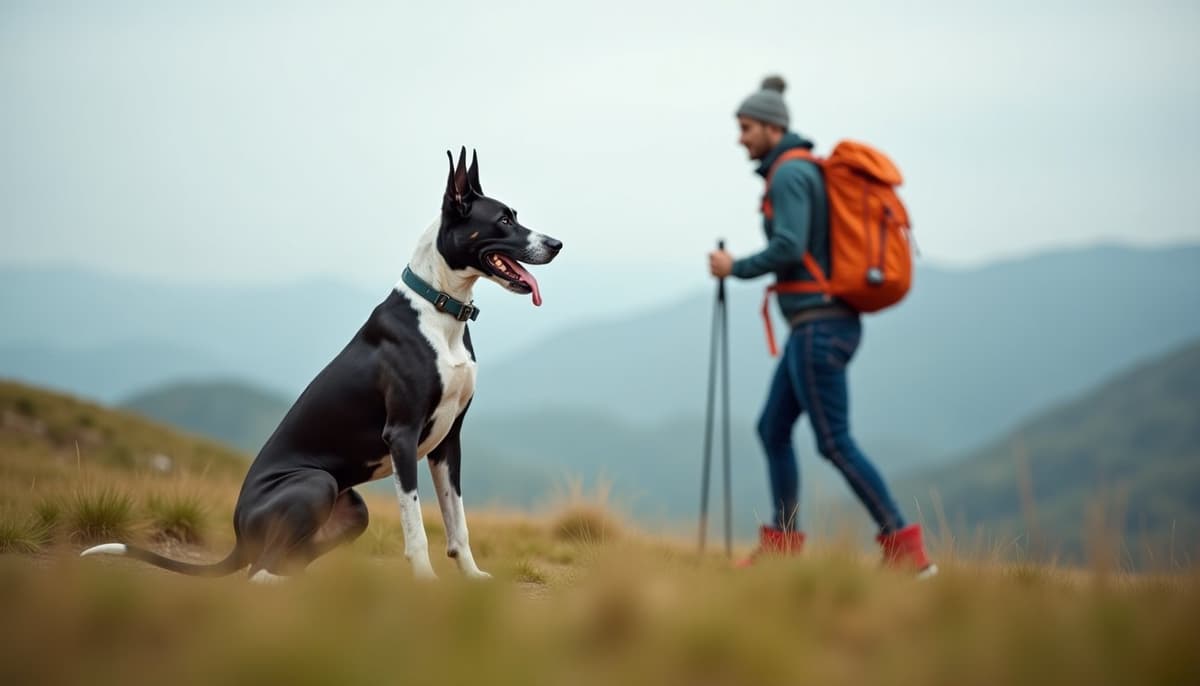
What Joint Problems Affect Great Danes? (Great Danes Joint Health Guide)
Most owners start worrying about a Great Dane's joints at seven years old. The mechanics behind that seven-year-old limp were usually set in motion before the dog's first birthday, during the roughly 18 to 24 months it takes giant-breed growth plates to close. Skeletal maturity in a Dane arrives late, and the joint surfaces formed during that window are the ones the dog carries for life.
Our team built this great danes joint health guide because the breed sits in an unusual category: a dog that reaches adult body weight long before its skeleton is finished. We've spent years reading owner reports, vet discharge notes and rehab plans for giant breeds, and the same handful of conditions surface again and again.
What joint problems affect Great Danes?
Great Danes are most commonly affected by hip dysplasia, elbow dysplasia, cervical spondylomyelopathy (wobbler syndrome), cranial cruciate ligament rupture, intervertebral disc disease and secondary osteoarthritis. Growth-phase conditions including hypertrophic osteodystrophy and panosteitis also appear. Any Dane showing a limp lasting more than 24 hours warrants a veterinary orthopaedic exam.
The common oversimplification is that these are separate diseases. In practice they overlap: a dysplastic hip changes how a Dane loads its stifles, which raises cruciate strain, which accelerates arthritis in three joints instead of one. This piece covers the breed's specific risk profile, the growth-phase mechanisms that create it, and the daily management levers that actually move the needle.
The Great Danes Joint Health Guide to Breed-Specific Risk
Great Danes carry a risk profile shaped by mass, leverage and rapid growth rather than by any single inherited defect. Hip dysplasia, a malformation of the coxofemoral joint where the femoral head sits loosely in a shallow acetabulum, is screened by the Orthopedic Foundation for Animals (OFA) and by PennHIP distraction index testing. Elbow dysplasia is an umbrella term covering fragmented coronoid process (FCP), ununited anconeal process and osteochondritis dissecans (OCD), a cartilage flap defect that most often shows up in the shoulder or elbow of fast-growing giant breeds.
Then there is the condition Danes are famous for. Cervical spondylomyelopathy, known as wobbler syndrome, is a compression of the spinal cord in the neck, and Great Danes and Dobermans are the two breeds most consistently associated with it. Danes typically present with the osseous-associated form, where bony malformation of the vertebrae narrows the canal, often in younger dogs. The hallmark is a wobbly, wide-based hind limb gait with a short, choppy front-end stride.
Lower down the spine, ivdd in great danes presents differently than it does in a Dachshund, with slower Hansen Type II disc protrusion rather than explosive extrusion. On the limbs, torn acl in great danes means cranial cruciate ligament rupture, usually a degenerative fraying rather than a single sporting injury. Every one of these paths funnels toward the same endpoint, which is why arthritis in great danes is less a separate diagnosis than the accumulated bill for everything above.
In our experience reviewing owner-submitted timelines, the first sign is almost never a limp. It is a Dane that stops offering to jump into the car, or that sits down partway through a walk it used to finish. For the wider picture beyond joints, our overview of common health problems in great danes covers cardiac and gastric risks alongside orthopaedic ones.
Why Growth Speed, Not Age, Decides a Dane's Joint Fate
A Great Dane multiplies its birth weight enormously in under a year, and that growth rate is the single most modifiable orthopaedic risk factor an owner controls. Cartilage in a growing giant breed converts to bone at the physes, and when body mass outpaces that conversion, the subchondral bone beneath the joint surface is loaded before it has the density to tolerate it. This is the mechanism behind osteochondritis dissecans: the deep cartilage layer fails to ossify properly, separates, and leaves a flap that inflames the joint.
Diet drives this harder than most owners realise. Excess dietary calcium during growth is a documented risk factor for developmental orthopaedic disease in large and giant breeds, which is why AAFCO large-breed growth statements cap calcium levels rather than leaving them open. Adding a calcium supplement on top of a complete large-breed puppy food is a genuine hazard, not a neutral act. Free-feeding to maximum growth rate is the other half of the problem, because a leaner growth curve reduces the peak load on immature joints.
Here is the insight most breed guides skip entirely. The flooring in your house matters more during months four through twelve than during any other period of the dog's life. A puppy whose hind legs slide out on polished floors or laminate repeatedly loads the hip joint in abduction, and repetitive micro-trauma to a developing acetabulum is exactly the pattern that entrenches laxity. Runners, rugs and traction matting are cheap. Corrective hip surgery is not.
This is also why our team pushes back when owners ask about long-distance running with a nine-month-old Dane. Forced repetitive exercise on hard surfaces before growth plate closure is a different stress profile than free play on grass, where the dog self-regulates. A well-executed great danes joint health guide treats the first two years as a construction phase, not a training phase. For how those early decisions echo later, see our piece on great danes lifespan and mobility in aging.
Building a Daily Great Danes Joint Health Guide Routine
The highest-impact intervention for a Great Dane's joints is unglamorous: keeping the dog lean. Body condition score, graded on a 9-point scale where 4 to 5 is ideal, correlates directly with load across the hip and stifle. On a dog that may weigh 110 to 175 pounds, every excess pound is amplified by limb leverage. Ribs should be palpable under light pressure with a visible waist from above.
Structure the environment next. Non-slip runners on hard floors, a ramp instead of a jump into the vehicle, an orthopaedic bed thick enough that the elbows do not bottom out, and raised feeders where a vet has recommended them. Controlled leash walking on soft ground, split into shorter sessions, preserves muscle mass around the joint without the impact of repeated hard landings. Hydrotherapy and underwater treadmill work are widely used in canine rehab because they build the gluteal and quadriceps support a Dane needs while unloading the joint itself.
On the nutritional side, the ingredients with the most research behind them in dogs are omega-3 fatty acids (EPA and DHA) from marine sources, which may help modulate inflammatory eicosanoid production, alongside glucosamine, chondroitin sulphate, green-lipped mussel (Perna canaliculus) and undenatured type II collagen. Evidence quality varies by ingredient and none of them rebuild a damaged joint surface. Our breakdown of joint support for great danes separates what has support from what is marketing, and we compare formulations in the best joint supplement for great danes roundup.
Research peptides are a newer category owners ask about constantly. BPC-157 and TB-500 are studied for their effects on fibroblast migration, angiogenesis and tendon-to-bone healing in laboratory models. They are not FDA-approved veterinary drugs, the canine evidence base is limited, and owner reports are anecdotal rather than clinical endpoints. We're direct about that on the K9-REPAIR product pages, and we've written condition-specific overviews covering the best supplement for great danes with arthritis, the best supplement for great danes with torn acl, and the best supplement for great danes with ivdd. Talk to your veterinarian before adding anything to a Dane's regimen, especially alongside prescribed NSAIDs such as carprofen, meloxicam or grapiprant. This article is educational and is not a substitute for a veterinary diagnosis.
Great Danes Joint Health Guide: Condition Comparison
These four conditions account for the majority of orthopaedic consultations in the breed, and they are frequently confused with each other because all of them can start as a vague reluctance to move. The distinguishing features below are what a veterinarian works through during the exam.
| Condition | Typical Onset Window | Hallmark Presentation | Usual Diagnostic Path | Bottom Line |
|---|---|---|---|---|
| Hip dysplasia | 5 to 12 months, or adult onset arthritis | Bunny-hopping gait, difficulty rising, narrow hind stance | Sedated radiographs, OFA or PennHIP scoring | Screening breeding stock is the only true prevention; lean weight and muscle mass manage the rest |
| Wobbler syndrome (CVSM) | Often young adult in Danes | Wide-based swaying hind gait, choppy front stride, neck pain | Neurological exam, MRI or CT myelogram | Needs neurology input early; delaying imaging risks progressive cord compression |
| Cranial cruciate rupture | Middle-aged and older, often degenerative | Sudden non-weight-bearing hind limb lameness, sitting sideways | Cranial drawer or tibial compression test, radiographs | Surgical stabilisation such as TPLO is standard for a dog this size; conservative management rarely holds |
| Osteoarthritis | Progressive from mid-life | Stiffness after rest, reduced stamina, behaviour change | Orthopaedic exam, radiographs, gait assessment | Manageable but not reversible; weight, muscle and vet-directed analgesia carry the load |
Key Takeaways
- Great Danes are most affected by hip dysplasia, elbow dysplasia, wobbler syndrome, cruciate rupture, IVDD and secondary osteoarthritis, and these conditions compound one another.
- Giant-breed growth plates typically close between 18 and 24 months, making the first two years the highest-leverage window in any great danes joint health guide.
- Excess dietary calcium during growth is a recognised risk factor for developmental orthopaedic disease, so supplementing calcium on top of a complete large-breed puppy food is a real hazard.
- Keeping a Dane at a body condition score of 4 to 5 out of 9 reduces joint load more reliably than any supplement on the market.
- BPC-157 and TB-500 are not FDA-approved veterinary drugs, and the canine evidence remains limited and largely anecdotal.
- A limp that persists beyond 24 hours, or any wobbly hind-end gait, belongs in front of a veterinarian rather than a wait-and-see plan.
What If: Great Dane Mobility Scenarios
What If My Dane Is Limping After Play but Seems Fine Otherwise?
Rest the dog on strict lead-only toilet breaks for 48 hours and reassess before doing anything else. Soft tissue strains in a heavy dog often settle with genuine rest, but a partial cruciate tear presents identically in the first day and worsens with continued activity. If the limp is unchanged after two days, recurs on the third outing, or the stifle looks thicker than the opposite side, book the exam. Do not give human anti-inflammatories such as ibuprofen or paracetamol, which are toxic to dogs.
What If My Dane's Back End Sways or Crosses Over When Walking?
Treat a swaying, wide-based or scuffing hind gait as a neurological sign and contact your vet promptly rather than monitoring it. In this breed, that gait pattern points toward cervical spondylomyelopathy or a disc protrusion compressing the spinal cord, and both are progressive. Owners frequently describe it as clumsiness or the dog getting old. Worn nails on the tops of the hind toes are a useful physical clue that the dog is knuckling without you noticing.
What If My Dane Is Already Diagnosed With Arthritis?
Build the plan around weight, muscle and veterinary analgesia first, with supplements as a supporting layer rather than the foundation. Your vet may discuss NSAIDs, polysulfated glycosaminoglycan injections such as Adequan, or monoclonal antibody options, and those decisions belong with a prescriber who has examined the dog. Rehab-led strengthening protects the joint by improving the muscular envelope around it. Never stop a prescribed medication to trial a supplement.
The Blunt Truth Every Great Danes Joint Health Guide Should State
Let's be direct about this: no supplement, peptide or diet prevents hip dysplasia in a Great Dane. Joint conformation is largely inherited and set before the dog leaves the breeder. What owners genuinely control is expression and progression, through growth rate, lean body condition, traction underfoot, exercise structure and early veterinary intervention. Anyone selling a product as a way to avoid orthopaedic surgery in this breed is selling you something they cannot deliver. The most valuable purchase most Dane owners make is a set of rugs and an honest conversation with a breeder about OFA scores.
A great danes joint health guide is ultimately a guide to timing. The window where your choices carry the most weight closes quietly around the dog's second birthday, long before any limp shows up, and the payoff arrives years later as a nine-year-old that still gets up off the floor without thinking about it. Watch how your dog rises, not how it walks. Danes are stoic, they compensate brilliantly, and the earliest honest signal is almost always a hesitation before standing rather than a visible lameness.
Frequently asked questions
- What can I give a dog that is limping after exercise?
- Give rest, not medication. Restrict the dog to lead-only toilet breaks for 48 hours and apply a cool pack to a swollen joint if tolerated. Never give human painkillers such as ibuprofen, aspirin or paracetamol, which are toxic to dogs. Any pain relief should come from your veterinarian after an examination.
- Is a dog limping after exercise an emergency?
- Usually not, but some presentations are. Seek same-day veterinary care if the dog cannot bear weight at all, the limb hangs oddly, there is obvious swelling or heat, the dog cries out, or a giant breed suddenly refuses to stand. Mild lameness that improves with rest can typically wait 24 to 48 hours.
- Why is my dog limping but not in pain?
- Dogs mask pain extremely well, so a painless-looking limp is often mild discomfort rather than none. Common causes include early osteoarthritis, a partial cruciate tear, a foreign body in the pad, nail damage, or a neurological problem such as nerve compression altering gait. Stoic breeds like Great Danes rarely vocalise until pain is significant.
- Should I worry if my dog is limping but not in pain?
- Worry enough to investigate, not enough to panic. A limp is a mechanical signal, and absence of yelping does not mean absence of damage. Painless limping that persists beyond a few days often reflects a chronic process like joint degeneration or a slowly progressing ligament injury, both of which respond better to early intervention.
- When should I take a dog to the vet for limping but not in pain?
- Book an appointment if the limp lasts longer than 48 hours, keeps returning after rest, worsens with activity, or comes with muscle loss on one side. Also go promptly if the gait is wobbly or crossing over, since that suggests a neurological cause rather than a simple orthopaedic strain.
- What can I give a dog that is limping but not in pain?
- Give controlled rest and a non-slip surface at home before anything else. Do not give human anti-inflammatories under any circumstances. Long-term joint ingredients such as omega-3 fatty acids or glucosamine may support comfort over weeks, not days, and should be discussed with your veterinarian alongside a proper diagnosis of the limp.
- At what age should I start following a great danes joint health guide?
- From the day the puppy comes home. Growth-phase decisions about calcium intake, growth rate, flooring traction and exercise structure are made before six months of age, and giant-breed growth plates typically stay open until 18 to 24 months. Waiting until the dog is stiff at seven means missing the window that mattered most.
- Does a great danes joint health guide replace veterinary advice?
- No. Educational content explains breed risk, mechanisms and management options, but only a veterinarian can examine the dog, image the joint and prescribe. Use a great danes joint health guide to ask better questions at the appointment, including whether radiographs, a neurological exam or a rehab referral are appropriate.
- How much does it cost to diagnose joint problems in a Great Dane?
- Costs vary widely by clinic, region and how much imaging is needed. An orthopaedic exam sits at the lower end, sedated radiographs cost considerably more, and advanced imaging such as MRI or CT myelography for suspected wobbler syndrome is the most expensive step. Many owners find pet insurance taken out before symptoms appear makes the difference.
- Do joint supplements work better than prescription medication for Great Danes?
- They do different jobs. Prescription NSAIDs and vet-administered options target inflammation and pain directly with regulatory approval behind them. Supplements such as omega-3s, green-lipped mussel and glucosamine may support joint comfort over time but act more slowly and less predictably. Supplements sit alongside veterinary treatment, never as a replacement for it.
- Are BPC-157 and TB-500 approved for dogs with joint problems?
- No. BPC-157 and TB-500 are not FDA-approved veterinary drugs. Laboratory research suggests roles in fibroblast migration, angiogenesis and connective tissue repair, and some owners report using them, but canine clinical evidence is limited. They should never be positioned as a substitute for surgery or a prescribed medication, and any use warrants a conversation with your vet.
- Can hip dysplasia in Great Danes be prevented?
- Not prevented, but meaningfully influenced. Hip conformation is largely inherited, which is why OFA or PennHIP screening of breeding stock matters most. Owners influence how severely it expresses through controlled growth rate, lean body condition on the 9-point score, non-slip flooring during puppyhood and avoiding forced repetitive exercise before skeletal maturity.
Educational content. BPC-157 and TB-500 are not FDA-approved veterinary drugs. Talk to your veterinarian before starting anything new, especially if your dog is on prescribed medication.