Anxiety in Dogs: Treatment Starts With Your Vet
Anxiety is a reason to see a vet. This page sets out the emergency signs that need care now, the medical and behavioral causes your vet checks, the exam and tests involved, and what to tell your vet.
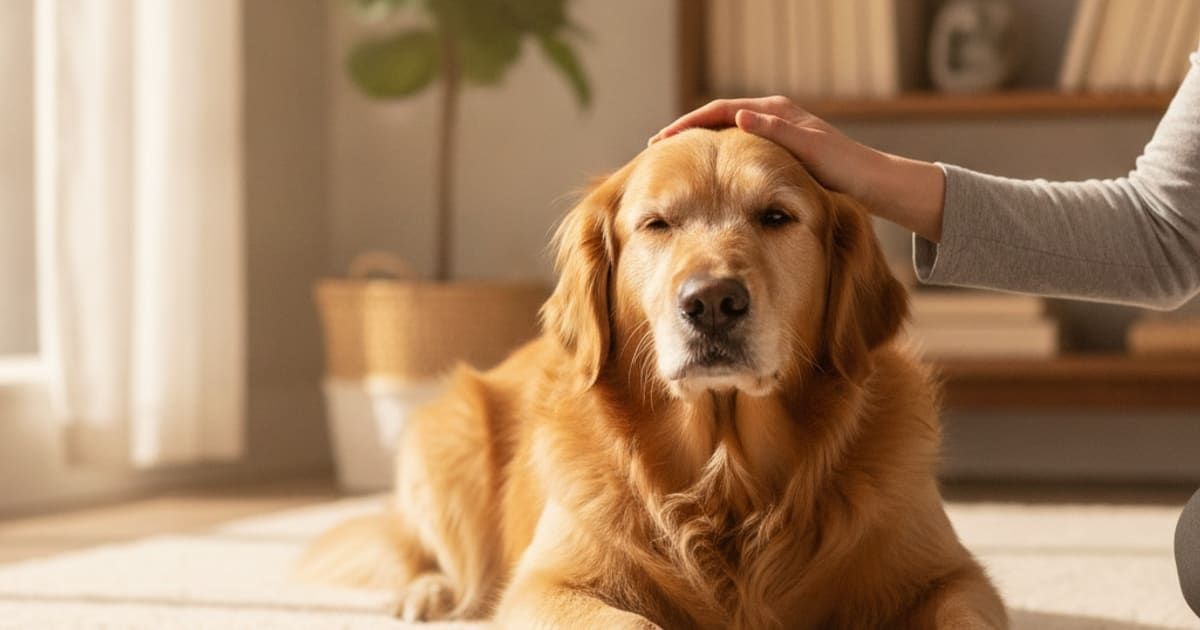
Anxiety is a reason to see a vet. Go to an emergency vet now if your dog has hurt itself trying to escape, is struggling to breathe, has collapsed or seems confused and cannot settle at all; otherwise book a same-day appointment. No anxiety in dogs treatment at home should start before your vet has examined your dog, because a change in behavior can come from pain or illness as well as from fear. Talk to your vet before you give your dog anything or change your dog's care, so the cause is found first and any plan fits your dog.
When to go to the vet now
Go to an emergency vet now for any of these signs:
- Your dog has hurt itself trying to escape, such as broken teeth, torn nails or bleeding from the mouth or paws
- Your dog is struggling to breathe, or is panting so hard it cannot stop or rest
- Your dog has collapsed, is very weak or cannot stand
- Your dog seems confused, does not seem to know you or cannot settle at all
These signs need care straight away, whatever the cause turns out to be. If your dog is bleeding, hold gentle pressure with a clean cloth on the way to the vet and do nothing else to the wound. Do not try to hold a panicking dog still with force, because a frightened dog can bite even a person it knows well. Phone the clinic as you set off so the team knows you are coming and why. For a wider guide to the signs that need urgent care, read Dog Emergency Signs. For anxiety without any of these signs, call your vet today and book a same-day appointment.
What can cause anxiety
Anxiety in a dog is a sign rather than a diagnosis. It describes what you see, such as pacing, panting, trembling, hiding, whining, drooling, clinging to you, destroying things or trying to get away, but it does not explain why it is happening. Your vet looks at both medical and behavioral causes, and more than one can be present at the same time. Everything below is a possibility your vet checks, not an answer you can reach at home.
Pain is one of the first things your vet considers. A sore joint, a painful tooth, an ear infection, a sore belly or a problem in the back or neck can make a dog restless, clingy, jumpy or unwilling to be touched. A dog in pain may pant, pace at night, hide, or seem afraid of things it once ignored, such as the stairs, the car or being picked up. Because pain and fear can look so alike, your vet examines the whole body before deciding the cause is behavioral.
Illness elsewhere in the body can also show up as anxiety. Your vet may consider hormone problems, including thyroid and adrenal gland conditions, as well as skin disease that causes itching, stomach and bowel trouble, bladder problems that make a dog need to go out at night, and heart or breathing conditions that make it hard to get comfortable when lying down. Changes in sight or hearing can make a dog startle more easily, because the world around it becomes harder to read. Problems in the brain or nervous system are also on your vet's list.
In an older dog, your vet may look at changes in the brain that can come with age. These can show as restlessness at night, getting stuck in corners or lost in familiar rooms, forgetting house training, staring, or changes in how your dog sleeps and greets you. Night-time restlessness in a senior dog has its own set of possible causes, and Do Older Dogs Get Anxious at Night covers this in more depth. Any change in an older dog's behavior is a reason to call your vet today, not something to put down to age.
Your vet also reviews everything your dog already takes. A medicine, a recent change to a medicine, or anything new your dog has been given can play a part in a change in behavior, so your vet will want a full list. Do not stop or change anything your vet has prescribed without talking to your vet first.
Behavioral causes are part of the picture too. Your vet may ask about fear of loud sounds such as storms, fireworks or traffic, distress when your dog is left alone, fear of new people or other animals, worry in the car, and fear of the clinic itself. Changes at home matter as well: a move, a new baby, a new pet, a change in your working hours, building work next door or the loss of a person or animal your dog was close to.
Your dog's history helps your vet too. Where your dog came from, what it went through before it joined your home, any past illness or injury, any frightening event and how much it met the world as a young puppy can all shape how it reacts now. Your vet may also take your dog's breed and background into account when thinking about the cause.
Puppies can show fear and anxiety as well. A puppy that shakes, hides or cries and cannot be comforted needs a vet check, because illness, parasites and pain can each play a part alongside too little early contact with people, sounds and places. Your vet checks the puppy's health first and then talks with you about the next steps.
Because these causes overlap, the way anxiety looks does not point to one cause. Two dogs that pace and pant in the same way can have very different reasons for it, which is why the exam comes before any plan. You can read more about the medical problems your vet may consider in the conditions library.
What your vet may do
Tell the clinic when you book that your dog is anxious, so the team can plan for it, for example by seeing you in a quieter room or keeping the wait short. Your vet then starts with questions. You will be asked when the anxiety began, what seems to set it off, what your dog does during an episode, how long episodes last and whether anything at home has changed. Your vet may ask about sounds in the home, such as television, music or noise from outside, and about your dog's day, including walks, meals, sleep and time alone.
Next comes a full physical exam. Your vet checks the eyes, ears, mouth and teeth, listens to the heart and lungs, feels the belly, looks at the skin and coat, and gently moves the joints, back and neck to look for pain. Your vet may also watch how your dog walks and how it responds to sound, light and movement, which can show a problem with sight, hearing or the nervous system. If your dog is too frightened to be handled safely, your vet may suggest light sedation so the exam can be done properly.
Depending on what the exam shows, your vet may suggest blood tests to look at organ function and blood cells, a thyroid test, a urine test, or a stool test for parasites and gut problems. If pain is suspected, X-rays may help find a problem in the joints, spine or chest. For a dog with signs that involve the brain or nerves, your vet may talk with you about a referral to a specialist for further tests. Each test is chosen to rule a medical cause in or out before the focus moves to behavior.
If a medical cause is found, your vet treats that first and then reviews the anxiety with you. Once a medical cause has been treated or ruled out, your vet talks with you about a plan for the anxiety itself. This can include changes to your dog's day that your vet sets out for you, a step-by-step behavior plan built around the things your dog fears, and, where your vet thinks it is right, a medicine your vet prescribes. If the anxiety is severe or complex, your vet may refer you to a veterinary behavior specialist, who works alongside your own vet.
Do not give your dog anything for anxiety that your vet has not prescribed or approved. Anything you give before the visit can hide a medical problem, interact with a medicine your dog already takes, or make the exam harder to read. If you have already given your dog something, call your vet today and say what it was.
Your vet will also explain how to reach the clinic if things change. Call your vet again if the anxiety changes, if episodes become longer or closer together, or if new signs appear, and go to an emergency vet now for any of the emergency signs listed above.
What to tell your vet
When you call, have these details ready:
- When you first noticed the anxiety and what was happening at the time
- Any change since then, such as episodes becoming longer, closer together or starting in new places
- Any bleeding or injury, including broken teeth, torn nails or sore paws from trying to escape
- Any licking, chewing or scratching at the skin, paws or one part of the body
- Other signs, such as changes in eating, drinking, sleeping, toileting, weight, walking or how your dog reacts to being touched
- Everything your dog takes or has been given, including any medicine
Short notes help on the day. Write down what you have already seen happen before, during and after an episode, the time of day, how long it lasts and what seems to bring your dog out of it. If you can do so without upsetting your dog, a short video on your phone gives your vet a clear view of what happens at home, which can look very different from your dog in the exam room. Ask anyone else who lives with your dog what they have seen, since they may notice things at times you are not there.
Tell your vet about your dog's background as well: where your dog came from, any past illness, injury or surgery, and anything that frightened your dog in the past. Mention any recent change in food, home, household members or routine, and anything your dog has been given that your vet did not prescribe. The fuller the picture, the better your vet can aim the exam and tests at the cause.
Tell your vet about any growling, snapping or biting, including toward people in your home. This helps your vet keep everyone safe during the exam and shapes the plan that follows. If your dog has bitten anyone, say so when you book so the team can plan the visit around your dog.
Frequently asked questions
- Is anxiety an emergency in dogs?
- Anxiety is an emergency when your dog has hurt itself trying to escape, is struggling to breathe, has collapsed or seems confused and cannot settle at all. Go to an emergency vet now for any of these. For anxiety without these signs, call your vet today and book a same-day appointment so the cause can be found.
- What should I do if my dog has anxiety?
- Call your vet today and book a same-day appointment. Tell the clinic when the anxiety started, what your dog does during an episode and whether anything has changed. Do not give your dog anything before the visit. Go to an emergency vet now if your dog is injured, struggling to breathe, collapsed or confused.
- Can I treat anxiety at home?
- No, because anxiety can come from pain or illness, and the cause needs to be found first. Do not give your dog anything or start any plan before the vet sees your dog. If your dog is bleeding from an injury, hold gentle pressure with a clean cloth on the way to the vet only.
- Why has my dog become anxious?
- Your vet looks at medical causes such as pain, hormone problems, skin disease, gut or bladder trouble, changes in sight or hearing and brain changes with age. Your vet also asks about fear of sounds, time alone and changes at home. The look of the anxiety does not point to one cause, so call your vet today.
- Can pain make my dog anxious?
- Yes, pain can make a dog restless, clingy, jumpy or unwilling to be touched, and it can look a lot like fear. A sore joint, tooth, ear, belly or back can each play a part. Your vet examines the whole body for pain before deciding the anxiety is behavioral, so call your vet today.
- What tests might the vet run for anxiety?
- After a full physical exam, your vet may suggest blood tests, a thyroid test, a urine test or a stool test. If pain is suspected, X-rays may help find a problem in the joints, spine or chest. For signs that involve the nervous system, your vet may talk with you about a referral for further tests.
- Can a puppy have anxiety?
- Yes, a puppy can show fear and anxiety, such as shaking, hiding or crying that cannot be comforted. Illness, parasites, pain and too little early contact with people and places can each play a part. Call your vet today for a same-day check, and go to an emergency vet now if your puppy collapses or struggles to breathe.
- Can my dog's anxiety be linked to a medicine?
- Yes, a medicine your dog takes, or a recent change to one, can play a part in a change in behavior. Bring a full list of everything your dog takes or has been given to the appointment. Do not stop or change a medicine yourself; talk to your vet first, and call your vet today.
- Can my vet refer my dog to a behavior specialist?
- Yes, if your dog's anxiety is severe or complex, your vet may refer you to a veterinary behavior specialist. The specialist works alongside your own vet, looks at the medical and behavioral picture together and sets out a plan with you. Your vet first checks for a medical cause, so start by calling your vet today.
- What if my dog's anxiety changes after the vet visit?
- Call your vet again if the anxiety changes, if episodes become longer or closer together, or if new signs appear, such as changes in eating, toileting or walking. Go to an emergency vet now if your dog hurts itself, struggles to breathe, collapses or seems confused. Your vet may adjust the plan once they hear what has changed.
- How should I book a vet visit for an anxious dog?
- Tell the clinic when you book that your dog is anxious, so the team can plan for it, for example with a quieter room or a shorter wait. Bring your notes and any video. If your dog is too frightened to be handled safely, your vet may suggest light sedation for the exam.
Educational content, not veterinary advice. Ask your vet about your dog.