BPC-157 Needle Size for Dogs — Why Your Vet Decides
There is no universal BPC-157 needle size for dogs. Gauge and length depend on the injection route, the volume and viscosity of the solution, your dog's size and skin, and who is administering it — which makes it a decision for the veterinarian supervising your dog, not a number from a forum.
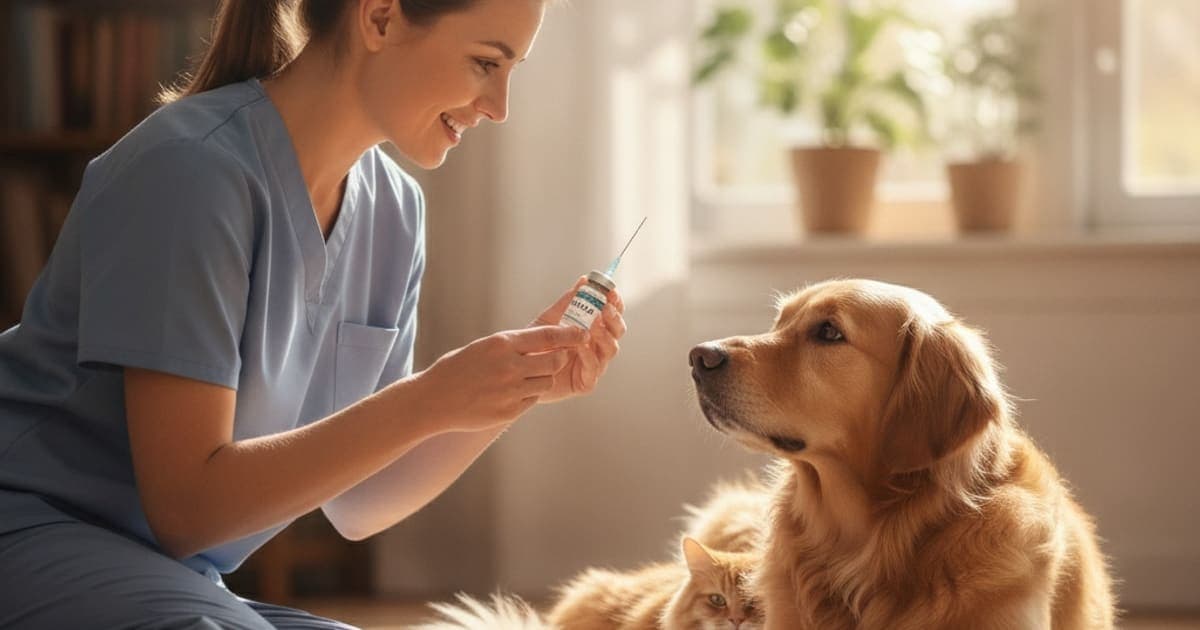
There is no single correct needle size for BPC-157 in dogs, and any article that hands you a gauge number is guessing about an animal it has never seen. Needle gauge and length are selected by the veterinarian overseeing your dog, based on the injection route, the volume and thickness of the solution, your dog's size, coat and body condition, and who is holding the syringe. That is the honest answer, and it is the reason this page will not print a number.
It is also worth saying plainly: many owners land on this search because they bought a lyophilised research vial intended for laboratory use and are now trying to reverse-engineer a home procedure from message boards. If that is where you are, there is a cleaner path. K9-REPAIR, pawgen's BPC-157 + TB-500 formulation made specifically for dogs, is built around weight-based dosing guidance and third-party testing with certificates of analysis, so the guesswork about reconstitution and equipment stops being your problem to solve alone.
Gauge and length, in plain English
Two measurements describe any needle. Gauge is the bore — how wide the channel through the needle is. The scale runs backwards from what most people expect: a higher gauge number means a thinner needle. Length is how far the needle travels once it enters the skin, and it determines which tissue layer the liquid lands in.
Those two numbers interact. A very thin needle is more comfortable going in but pushes liquid slowly, and a thick or cold solution can resist it. A wider bore delivers faster but is felt more. Length matters even more: subcutaneous injection sits in the loose layer of tissue just under the skin, intramuscular goes deeper into muscle, and intra-articular — into a joint capsule — is a sterile clinical procedure that belongs in a veterinary practice, full stop, regardless of what any product is.
This is why a gauge recommendation copied from a human forum or a bodybuilding thread transfers badly to dogs. Skin thickness, subcutaneous fat, coat density and body size vary enormously across breeds. The tissue depth on a whippet is not the tissue depth on a mastiff.
The variables that actually change the answer
When a veterinarian selects equipment, they are weighing several things at once:
Route. Subcutaneous, intramuscular and intra-articular routes call for different lengths and different levels of supervision. The route is decided first; the needle follows from it.
Volume. A small volume and a large volume are not delivered the same way. Syringe choice — including whether a fine-graduation syringe is appropriate for accurate measurement — is part of the same decision as the needle.
Viscosity. Reconstituted peptides, oil-based carriers and thin aqueous solutions all flow differently. A solution that moves easily through one bore will stall in a narrower one, and forcing it creates its own problems.
The dog. Size, body condition, skin thickness, coat and injection site all shift the answer. So does temperament. A dog who cannot hold still changes the risk profile of any sharp object near it.
Who is administering. An experienced veterinary technician and a first-time owner are not working with the same margin for error, and a good vet accounts for that when they set up a home plan — if a home plan is appropriate at all.
Sterility. Needles are single-use. A needle that has passed through a vial stopper is duller than a fresh one, which is why drawing and injecting are sometimes treated as separate steps with separate equipment. Sharps also need proper disposal, not a household bin.
None of that can be resolved by an article. All of it can be resolved in one conversation with your veterinarian, who can look at your dog, look at what you are actually holding, and tell you whether an injection at home is a reasonable idea in the first place.
Why this question usually starts with a research vial
The needle-size question is rarely really about needles. It is about the gap between a grey-market research chemical and a product designed for a dog. Once you understand that gap, the question tends to answer itself.
| Research-use vial you prepare yourself | Formulation made for dogs | |
|---|---|---|
| Dosing | You calculate everything from scratch | Weight-based guidance supplied with the product |
| Preparation | You reconstitute, measure and store it | Ready to give as directed |
| Equipment | You source needles, syringes and sharps disposal | No needle-size decision to make |
| Purity verification | Often a supplier claim with no independent testing | Third-party tested with certificates of analysis |
| Labelling | Frequently marked not for veterinary or human use | Labelled for dogs |
| Support if something feels off | Usually none | A named brand and a stated guarantee |
| Risk of a measurement error | Carried entirely by you | Substantially reduced |
This is where honest skepticism belongs — not aimed at peptides, but at how they reach people. The supplement and research-chemical space is full of vials with no independent assay behind them and chews whose labels list a dozen ingredients at quantities too small to matter. Underdosed kitchen-sink formulas and unverified powders are the real problem. Choosing a formulation built for dogs, with published testing behind it and dosing guidance you do not have to invent, removes an entire category of avoidable error from your dog's recovery.
What BPC-157 and TB-500 do, and why owners choose them
BPC-157 is a short synthetic peptide based on a sequence identified in gastric juice protein. Published preclinical research suggests it interacts with pathways involved in angiogenesis — the formation of new blood vessels — and with fibroblast activity in connective tissue. Because tendon, ligament and joint capsule tissue has a relatively poor blood supply compared with muscle, blood flow to the injured area is a plausible bottleneck in repair, and that is the mechanism owners find compelling.
TB-500 is a synthetic fragment related to thymosin beta-4, a naturally occurring peptide involved in actin regulation. Research suggests roles in cell migration and tissue organisation — the processes by which repair cells reach a damaged site and lay down structure. Again: mechanism, not a promise about your dog.
Both are used together in K9-REPAIR because the mechanisms described in the research literature are complementary rather than duplicative. This is emerging and promising science that a growing number of owners are adopting through recovery periods, and pawgen's position on it is straightforward. BPC-157 and TB-500 are not FDA-approved veterinary drugs. Nothing here treats, cures or prevents any condition. What can be said honestly is what the research suggests about mechanism, what owners report about their experience, and what is verifiably in the bottle.
The recovery timeline is worth understanding too, because it sets expectations properly. Soft tissue does not heal on a supplement's schedule; it heals on biology's schedule. A tendon-bone interface remodels over a period of weeks to months, and collagen continues reorganising long after a dog looks comfortable again. That is exactly why owners tend to think in terms of a full recovery block rather than a few days — and why pawgen's 60-day money-back guarantee is structured around a realistic window rather than a weekend.
Handling fundamentals, and where the line sits
If your veterinarian has already prescribed an injectable medication and taught you to give it at home, follow their instructions exactly — their equipment guidance, their technique, their storage directions, their sharps protocol. Do not substitute a needle size you found online into a plan a professional built for your dog. And never stop or adjust anything your vet prescribed, whether that is carprofen, gabapentin, a course of rehab or a surgical timeline, because of something you read about peptides.
That is the correct order of operations. Diagnosis first. A limp can be a partial cruciate tear, hip dysplasia, a nail bed infection, an immune-mediated joint problem or a soft-tissue strain, and those go in very different directions. Imaging, palpation and a proper orthopaedic exam are what separate them. Supplements and peptides operate inside the space that accurate diagnosis and appropriate treatment create — never instead of it.
Key Takeaways
- There is no universal needle size for BPC-157 in dogs; gauge and length depend on route, volume, viscosity and the individual dog.
- Gauge runs backwards — a higher number means a thinner needle — and length determines which tissue layer receives the solution.
- Intra-articular injections are a clinical procedure and belong in a veterinary practice.
- Most needle-size anxiety traces back to research-use vials that leave the owner to reconstitute, measure and equip themselves.
- A formulation made for dogs with weight-based dosing guidance and third-party testing removes that whole decision layer.
- Research on BPC-157 and TB-500 describes mechanisms in tissue repair and blood vessel formation; these are not FDA-approved veterinary drugs, and mechanism is not an outcome promise.
- Dosing questions of any kind resolve with your veterinarian, not with a number from a forum.
The vet owns the plan
Your veterinarian owns the diagnosis, the prescription and the recovery plan. They are the only person who can examine your dog, interpret the imaging, judge whether an injection at home is appropriate, and specify the equipment if it is. Bring what you are considering to that appointment — the actual product, the actual label — and ask directly. A good vet would far rather discuss a peptide formulation with you than discover it in the history six weeks later.
What pawgen can do is be legible: a stated formulation, weight-based guidance rather than a blank vial, third-party testing with certificates of analysis, shipping direct to your door, and a 60-day money-back guarantee if it is not the right fit for your dog. The rest of the decision belongs in the exam room, with the person who knows your dog.
If you are working through the numbers side of this, the bpc-157 dose calculator for dogs and the guide to bpc-157 overdose risk for dogs cover how weight-based guidance is structured and what the safety literature describes, and the K9-REPAIR formulation page lists exactly what is in it and how it is tested.
Owners exploring peptide support for their dog can review K9-REPAIR — BPC-157 + TB-500 formulated for dogs — at https://pawgen.com/. BPC-157 and TB-500 are not FDA-approved veterinary drugs. Nothing in this article treats, cures or prevents any condition; every decision about your dog's care belongs with your veterinarian.
Frequently asked questions
- What needle gauge is used for BPC-157 in dogs?
- No fixed gauge applies to every dog. The choice depends on injection route, the volume and viscosity of the solution, your dog's size and skin thickness, and who is administering it. Because those variables differ for every animal, needle selection is a decision for the veterinarian supervising your dog.
- How do I know how much BPC-157 to give my dog?
- Work with your veterinarian rather than a number from a forum. Products made for dogs, including K9-REPAIR, supply weight-based dosing guidance on the label, but your vet is the one who should confirm whether it fits your dog's diagnosis, medications and overall health picture.
- Is a dog licking a joint an emergency?
- Usually not an immediate emergency, but it is a signal worth acting on. Persistent licking over a joint often indicates pain or inflammation underneath. Seek same-day veterinary attention if the joint is hot, swollen, or the leg cannot bear weight, or if licking has broken the skin open.
- Why is my dog licking a paw constantly?
- Constant paw licking usually points to allergies, a foreign object such as a grass seed, a nail bed or skin infection, or pain referred from higher up the limb. Anxiety and boredom can also drive it. Because the causes overlap, an examination is the only reliable way to separate them.
- Should I worry if my dog is licking a paw constantly?
- Yes, it deserves attention. Occasional grooming is normal; constant licking is not, and the moisture and trauma it creates can turn a small irritation into an infection. Check between the toes and pads for debris or wounds, then book a veterinary appointment rather than waiting it out.
- When should I take a dog to the vet for licking a paw constantly?
- Go promptly if licking continues beyond a day or two, or immediately if you see swelling, discharge, bleeding, a bad smell, limping, or raw broken skin. Also go sooner if your dog cannot be distracted from the paw, since that level of focus usually means real discomfort.
- What can I give a dog that is licking a paw constantly?
- Nothing without veterinary direction. Human anti-inflammatories and pain relievers can be toxic to dogs, and topical products can worsen an undiagnosed infection. Your vet may prescribe treatment once they identify the cause. Keeping the paw clean and dry and preventing further licking is a reasonable interim step.
- Is a dog licking a paw constantly an emergency?
- Constant paw licking alone is rarely a true emergency, but it can accompany one. Treat it urgently if the paw is bleeding heavily, grossly swollen, obviously broken, or if your dog will not put weight on it. Otherwise, arrange a prompt but routine veterinary appointment.
Educational content. BPC-157 and TB-500 are not FDA-approved veterinary drugs. Talk to your veterinarian before starting anything new, especially if your dog is on prescribed medication.