Can Dogs Eat Sapodilla? (Chikoo and Sapota Seed Risks)
Dogs can eat the plain ripe flesh of a sapodilla once the skin is off and every seed has been removed. The seeds, the tough skin and the milky latex in unripe fruit are the real hazards, and a swallowed seed or a sudden swollen belly is a reason to call your vet.
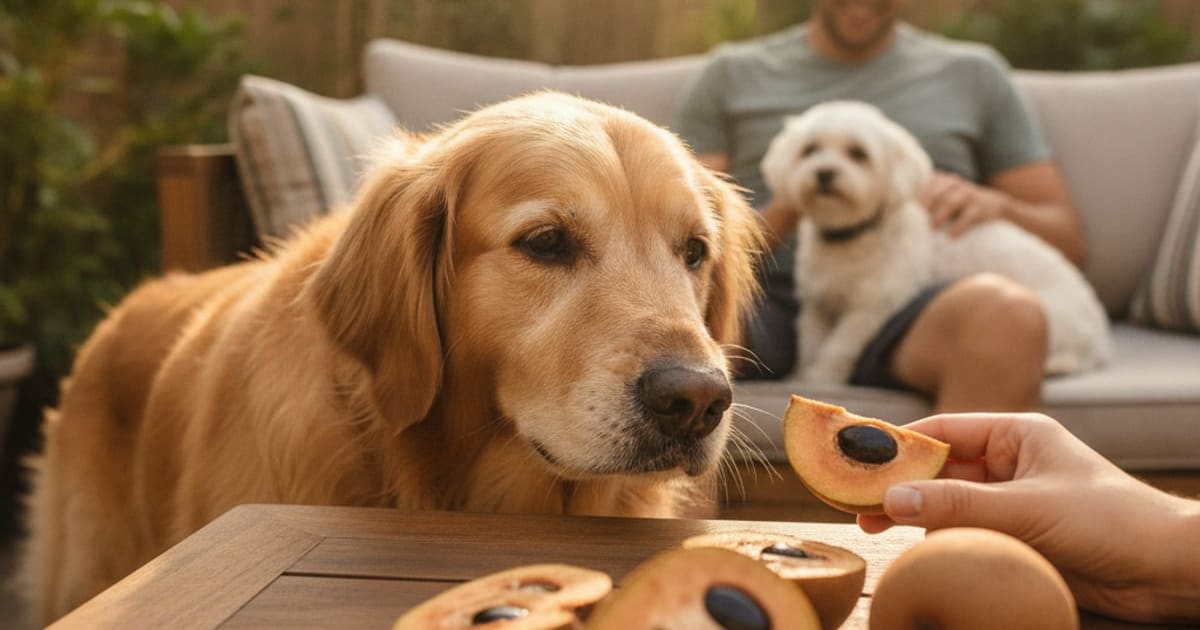
Yes, dogs can eat the plain ripe flesh of a sapodilla once the skin is off and every seed has been taken out. If your dog has already swallowed a seed, chewed on unripe fruit, or gulped a large chunk of unpeeled sapodilla, call your veterinarian or an animal poison control service such as the ASPCA Animal Poison Control Center or the Pet Poison Helpline now rather than waiting to see how the night goes.
The ripe pulp itself is not one of the classic danger foods for dogs the way grapes, raisins and onions are. The trouble with sapodilla sits around the edges of the fruit: the hard, hooked seeds, the sticky latex in anything under-ripe, the tough astringent skin, and a sugar load that is high enough to matter for some dogs. Get those four things out of the way and what is left is a soft, sweet fruit that a healthy dog can handle as a plain food.
Sapodilla, chikoo and sapota are the same fruit
If you have searched for whether dogs can eat chikoo, or whether dogs can eat sapota, you are asking about the same tree. Sapodilla is the fruit of Manilkara zapota, and it travels under a long list of names depending on where you shop: chikoo or chiku, sapota, naseberry, nispero. The safety answer does not change with the name. Ripe, peeled and deseeded pulp is the only part of the fruit worth putting in a dog bowl.
A ripe sapodilla has thin brown skin, grainy tan flesh and a malty, brown-sugar sweetness. An unripe one is firm, mouth-puckeringly astringent, and full of a white latex sap. That sap is chicle, the same material that was once the base of chewing gum, and it is the reason under-ripe fruit behaves so differently from ripe fruit.
Inside sit several glossy black seeds, flattened and about the size of a large apple pip, with a small hook at one end. Those seeds are the part of this fruit that deserves your full attention.
Why the seeds are the part to take seriously
Sapodilla seeds create two separate problems, and they are worth separating in your head because they need different responses.
The first is chemical. The kernels are bitter and are generally described as containing saponins and other compounds that are not meant to be swallowed, which is why the seeds are routinely discarded in kitchens rather than eaten. A dog that crunches through seeds may show mouth irritation, drooling, nausea, vomiting or loose stools. That is a call to your veterinarian, not something to manage at home.
The second problem is mechanical, and it is the one that sends dogs to surgery. The seeds are hard, smooth and hooked at one end. A hooked seed can catch in soft tissue on the way down, and more than one seed in a small stomach can stall in the intestine instead of passing. Small and toy breeds are at the sharpest end of this risk simply because their gut is narrower, but a determined retriever that eats fruit whole off the counter is in the same category.
The single most important rule with sapodilla is that every seed comes out before the fruit goes anywhere near your dog.
Signs that a swallowed seed is not moving through include repeated vomiting, an inability to keep water down, a belly that looks swollen or feels tense and painful, a hunched posture, straining with nothing to show for it, or a dog that goes quiet and flat. None of those wait until morning. Go to a vet.
Unripe fruit, sticky latex and the astringent skin
Unripe sapodilla is a different food from ripe sapodilla. It carries far more latex and far more tannin, and both of those are irritating. Dogs that mouth an under-ripe fruit, or chew on a fallen one in a garden, may drool heavily, lick their lips, paw at their face, gag, or go off their food for a while. Vomiting and loose stools are possible as the gut deals with what came down.
The latex is also physically awkward. It is tacky, it clings to fur and teeth, and a dog that has been gnawing on an unripe fruit can end up with a gummed-up muzzle on top of an upset stomach. If you grow the tree, remember that the sap in branches and leaves is the same material. Fallen fruit is worth clearing from anywhere your dog patrols.
The skin of even a ripe fruit is best peeled away. It is tougher than the flesh, it carries the astringent tannins, and it is the kind of material a dog swallows in a chunk rather than chewing properly. Peel it, bin it, and keep the bin shut.
Sugar, fibre and the dogs who should skip it
Ripe sapodilla is one of the sweeter tropical fruits. Dogs have no dietary requirement for fruit sugar at all, and a dog's calories should be coming from a complete, balanced food rather than from fruit. Fruit sits in the extras category, and extras are where waistlines quietly expand.
For some dogs the sugar is more than a waistline question. If your dog has diabetes or any issue with blood sugar regulation, is carrying extra weight, has had pancreatitis, or is on a prescription diet for a diagnosed condition, sweet fruit is a conversation to have with your vet before it ever reaches the bowl. The same applies to dogs with chronic digestive disease, where a new high-fibre food can set off a flare.
The fibre in sapodilla is the other reason to go gently. It is a soft, pulpy fruit with enough fibre to loosen stools in a dog that is not used to it. Introduce any new food on its own, so that if something goes sideways you know exactly what caused it. Food sensitivities exist in dogs as in people, and itching, facial swelling, hives, repeated vomiting or any trouble breathing after a new food means an immediate vet visit.
Processed versions are a separate no. Canned sapodilla in syrup, dried chikoo, chikoo milkshakes, ice creams and bakery fillings all stack added sugar, dairy, and sometimes spices or sweeteners that have no business in a dog. If you are going to share this fruit at all, share it plain, fresh and unadorned.
Which parts of the fruit are safe
| Part of the fruit | Safe for dogs? | Why |
|---|---|---|
| Ripe flesh, peeled and fully deseeded | Generally fine as a plain food | Soft, low in latex, no seed hazard once every seed is out |
| Skin or peel | Avoid | Tough and astringent, swallowed in chunks rather than chewed |
| Seeds | No | Bitter compounds plus a hard hooked shape that can choke or block |
| Unripe flesh | No | High in latex and tannins, irritates the mouth and stomach |
| Sap or latex from stems, leaves and unripe fruit | No | Sticky, irritating, and not food |
| Dried, canned or syrup-packed fruit | No | Concentrated sugar and additives |
| Milkshakes, ice cream and desserts | No | Dairy, added sugar and unknown extras |
When a sapodilla incident becomes a vet visit
Most of what follows a dog raiding a fruit bowl is mild and short-lived. The point of knowing the warning signs is to spot the small number of situations that are not.
Treat it as an emergency if your dog is choking, gagging, pawing frantically at the mouth, panicking, or has pale, grey or blue gums. Go straight to emergency care.
Call your vet promptly if your dog is vomiting and it will not settle, cannot keep water down, has a belly that is swollen, tense or painful to touch, is lying hunched or refusing to move, is straining without producing stool, or has blood in vomit or black tarry stools. Lethargy, weakness or collapse after eating something unusual always warrants a call.
Call your vet too if you know a whole seed went down, or a large unpeeled chunk, especially in a small dog. Tell them what your dog got into and when. Do not try to make your dog vomit at home and do not give human medicines. Making a dog bring up a hooked seed can cause more damage on the way up than the seed was doing where it sat, and that decision belongs to a clinician who can see your dog.
If you are not sure whether what you are looking at is serious, err towards the phone call. A vet nurse triaging over the phone costs nothing to speak with and is a far better filter than guesswork.
Key Takeaways
- Ripe sapodilla flesh, peeled and completely deseeded, is the only part of the fruit to offer a dog.
- Sapodilla, chikoo and sapota are names for the same fruit, so the answer is identical whichever word you searched.
- The seeds are the main hazard: bitter, hard and hooked, with real choking and blockage risk, particularly in small dogs.
- Unripe fruit, skin, leaves and stems carry latex and tannins that irritate the mouth and gut.
- Sweet fruit is not a good fit for every dog, and dogs with diabetes, weight issues, pancreatitis history or chronic digestive disease should be cleared by a vet first.
- Persistent vomiting, a swollen or painful belly, straining, lethargy or a swallowed seed are all reasons to contact a vet rather than wait.
The decision that is not yours to make alone
Fruit is a small question with a simple answer for a healthy dog, and a more complicated one for a dog with anything going on medically. Your veterinarian is the one who holds the diagnosis, the medication list and the dietary plan, and they are the right person to tell you whether sweet fruit fits your particular dog at all. If your dog is managing a chronic condition, is on a prescribed diet, or has a history of digestive upsets, talk to your vet before adding anything new, because results vary from dog to dog and a food that suits one dog in the house may not suit another.
Keep the seeds, skins and unripe fruit well out of reach, keep the fruit bowl off low tables, and let the plain ripe flesh be the only version of sapodilla your dog ever meets.
Related reading: Emergency Signs in Dogs, Can Dogs Eat Apples?, Can Dogs Eat Carrots?, Can Dogs Eat Blueberries?, Can Dogs Eat Pumpkin?, Can Dogs Eat Green Beans?, and the conditions library for background on the health problems that change what a dog can safely eat.
Frequently asked questions
- Can dogs eat sapodilla?
- Yes, dogs can eat plain ripe sapodilla flesh once the skin is peeled away and every seed is removed. The seeds are hard and hooked and carry bitter compounds, the skin is astringent, and unripe fruit is full of irritating latex. Dogs with medical conditions should be cleared by a vet first.
- Can dogs eat sapodilla fruit?
- Only the ripe, peeled, fully deseeded pulp. Unripe sapodilla fruit contains latex and tannins that irritate the mouth and stomach, and the skin tends to be swallowed in chunks rather than chewed. Dried, canned and syrup-packed versions stack on sugar and additives, so keep it fresh and plain.
- Can dogs eat chikoo?
- Chikoo is simply another name for sapodilla, so the answer is the same. Ripe chikoo pulp with the skin and every seed removed is acceptable for a healthy dog. Chikoo milkshakes, ice creams and desserts are not, because of the dairy and added sugar they carry.
- Can dogs eat sapota?
- Sapota is the same fruit as sapodilla and chikoo, and the guidance does not change. Ripe, peeled, deseeded flesh is fine for a healthy dog as a plain food. The seeds, skin, unripe flesh and any sap from the tree should all be kept well out of reach.
- Can my dog eat sapodilla?
- For a healthy adult dog, plain ripe deseeded sapodilla is generally fine. For a dog with diabetes, extra weight, a history of pancreatitis, chronic digestive disease or a prescribed diet, talk to your vet before offering sweet fruit. Results vary from dog to dog, and your vet knows your dog's full picture.
- Are sapodilla seeds dangerous to dogs?
- Sapodilla seeds are the riskiest part of the fruit. They are hard, smooth and hooked at one end, which creates a genuine choking and intestinal blockage risk, and the kernels are bitter and not meant to be swallowed. Remove every seed before the fruit goes anywhere near your dog.
- What should I do if my dog swallowed a sapodilla seed?
- Call your veterinarian or an animal poison control service straight away and describe what was swallowed and when. Do not try to make your dog vomit at home, since a hooked seed can do more harm coming up. Watch for vomiting, a swollen or painful belly, straining or lethargy.
- Can dogs eat sapodilla skin?
- No, peel it off and discard it. The skin is tougher than the flesh, carries astringent tannins, and is the kind of material dogs gulp in chunks instead of chewing properly. That combination raises the chance of mouth irritation, stomach upset and a swallowed chunk causing trouble.
- Can puppies eat sapodilla?
- Puppies have narrow airways and narrow intestines, which makes a hooked seed or an unpeeled chunk far more dangerous for them. Their nutrition is also tightly balanced for growth. Talk to your vet before giving a puppy any fruit, and keep whole sapodillas completely out of reach.
Educational content, not veterinary advice. Ask your vet about your dog.