Did My Dog Pee in His Sleep? When to See the Vet
Dogs can pee in their sleep, at night or during a nap, and a wet bed is a reason to see a vet. Learn the emergency signs, the causes your vet checks and what to tell your vet.
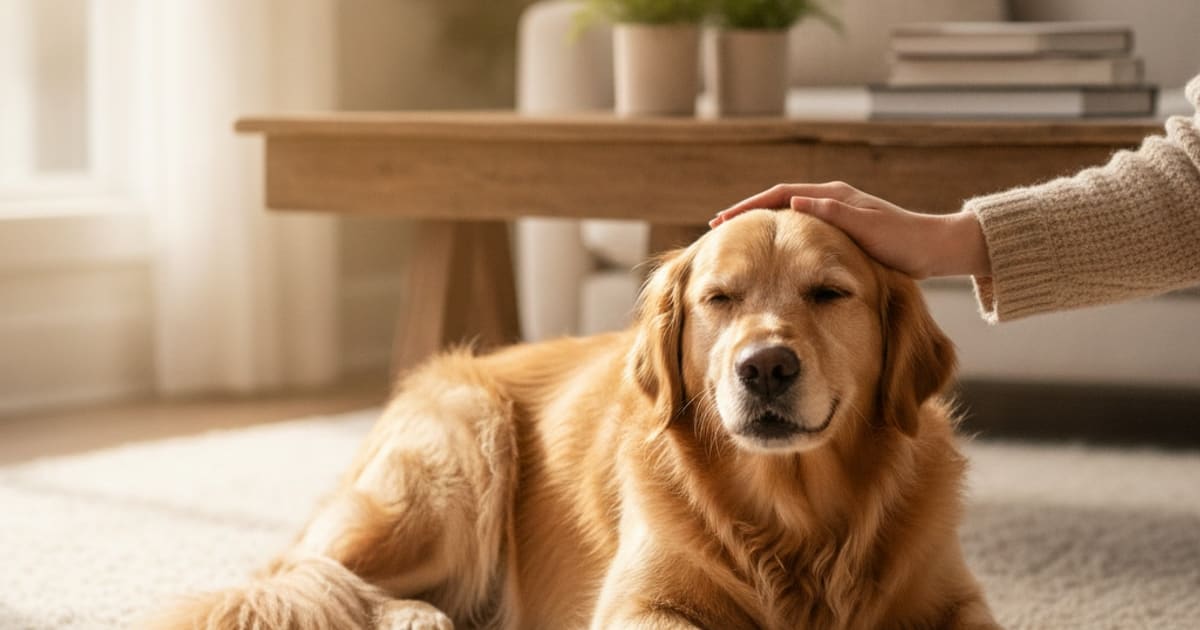
Dogs can pee in their sleep, and urine leaking in sleep is a reason to see a vet. Go to an emergency vet now if your dog strains to pee with little or nothing coming out, has blood in the urine, has a swollen or painful belly, or is suddenly weak in the back legs or collapses; otherwise book a same-day appointment. If you found a wet patch where your dog was lying and the answer to 'did my dog pee in his sleep' looks like yes, call your vet today. A dog who leaks while asleep is not doing it on purpose and may not wake up, which is why a damp bed may be the first thing you see. It can happen to male and female dogs, to puppies and to older dogs, at night or during a daytime nap. A small dribble or a single damp spot is still urine leaking in sleep, and a vet exam may help find the cause. Talk to your vet before you change anything about your dog's food, water or routine.
When to go to the vet now
- Straining to pee with little or nothing coming out
- Blood in the urine or in the wet patch
- A swollen, hard or painful belly
- Sudden weakness in the back legs, wobbling or collapse
If you see any of these, go to an emergency vet now. A dog who cannot pass urine can become very ill quickly, and a sudden back problem needs care fast. For a wet bed after sleep without these signs, book a same-day appointment with your vet. The guide to Dog Emergency Signs covers other signs that need care straight away.
What can cause urine leaking in sleep
Urine leaks during sleep when the bladder holds more than its outlet can keep in, or when the muscle and nerves that keep the outlet closed are not working as they should. While a dog is awake, he can feel a full bladder and ask to go out. During deep sleep the body relaxes, and a weakness that stays hidden in the day can show up as a wet patch. The possible causes below are things your vet may look into. None of them can be picked out from the wet patch alone, so read them as background for the visit, not as a way to decide at home.
An infection in the bladder or urinary tract is one possibility. An infection can make the lining of the bladder sore and irritable. An irritated bladder may squeeze before it is full, and in a sleeping dog that can mean a leak. An infection can also come with other changes, such as peeing more in the day or licking the back end. Your vet may test a urine sample for bacteria, blood and signs of inflammation to look into this.
Bladder stones and crystals are another possibility. Stones are hard lumps that form inside the bladder, and crystals are tiny grains that can collect in the urine. Both can rub on the bladder lining and irritate it. A stone can also lodge in the urethra, the tube that carries urine out of the body, and partly or fully block it. A blocked bladder keeps filling, and urine may seep around the blockage. This is why a dog who strains with little or nothing coming out needs an emergency vet now.
A weak bladder outlet is a third possibility. The outlet of the bladder is closed by a ring of muscle called the urethral sphincter. In some female dogs this muscle loses strength after spaying, and urine can seep out when the dog lies down and fully relaxes. Male dogs and females who are not spayed can have a weak outlet too. Your vet does not assume this is the reason because of spaying alone. The exam, urine tests and blood tests come first, to check for an infection, stones or another cause that needs different care.
Drinking more and making more urine can also lead to leaks. A dog who drinks more water than before makes more urine, and a bladder that fills faster is harder to hold through a long sleep. Kidney disease, diabetes and some hormone conditions, such as a problem with the adrenal glands, can change how much a dog drinks and pees. Some medicines can do the same. If your dog has been emptying the water bowl faster, tell your vet, because blood and urine tests may help find the reason. Do not take water away from your dog to stop the leaks; a dog with a medical reason for drinking more needs that water, and your vet needs to see the true picture.
Problems in the back, spine or nerves are a further possibility. The bladder is controlled by nerves that leave the spinal cord in the lower back. A slipped disc, an injury from a fall or knock, a growth near the spine or another problem pressing on the cord can stop the bladder from closing or emptying properly. Some dogs with a nerve problem leak in sleep before any other change is clear. Others show pain, a hunched back, wobbly back legs or dragging feet. Sudden weakness in the back legs with leaking needs an emergency vet now.
In male dogs, the prostate gland sits just below the bladder and wraps around the urethra. An enlarged, infected or otherwise changed prostate can press on the urethra and change how urine flows, which can lead to dribbling. This applies to neutered and unneutered males, and your vet may check the prostate as part of the exam.
Puppies and young dogs can have a problem they were born with. One example is an ectopic ureter, where a tube that carries urine from a kidney joins the urinary tract in the wrong place, so urine can bypass the bladder outlet. A puppy who has always seemed damp, or who leaks in sleep, is a reason for a same-day visit. It is not something to put down to age or to wait for the puppy to outgrow.
Older dogs can have more than one of these problems at once, and changes in the brain with age can affect bladder control as well. A senior dog who leaks in sleep needs the same checks as a younger dog, because kidney disease, diabetes, stones, infection and back problems can all appear later in life. Age alone is never the explanation for a new wet bed.
Dreaming and deep sleep are part of the picture too. Dogs twitch, paddle and make small sounds while they dream, and a deeply relaxed dog may let a little urine go if the bladder is already full, irritated or weak. A dream on its own is not a diagnosis, and a wet patch after a dream is still urine leaking in sleep. It goes to the vet the same way.
A single episode deserves the same attention. One wet patch can be the first sign of any cause on this page, and nobody can tell from one episode alone whether more will follow. A same-day exam and a urine test may help find what is going on while it is still early.
What your vet may do
Your vet starts with questions. Expect to be asked when you first found a wet patch, how large it was, whether your dog leaks while awake, how much your dog is drinking and peeing, whether your dog is spayed or neutered, and whether there has been any fall, injury, new medicine or change in appetite or weight. Your answers shape which tests come first.
Next comes a full physical exam. Your vet may gently feel the belly to judge the size of the bladder and check for pain, look at the skin and fur around the back end for redness, scalding or discharge, and check the genitals. In a male dog, the vet may feel the prostate with a gloved finger in the rectum. Your vet may also watch your dog walk, test the reflexes in the legs and tail, and check how your dog feels and places his feet. These steps help the vet look at the nerves that control the bladder.
A urine test is a key step. The vet may collect a sample as your dog pees, or may pass a fine needle through the belly wall into the bladder to take a clean sample, a procedure called cystocentesis. The urine is checked for how concentrated it is, for sugar, protein and blood, for crystals and for bacteria. A urine culture may be sent to a lab to grow any bacteria and find out which medicine will work against them.
Blood tests may follow. These look at kidney values, blood sugar, liver values and the balance of salts in the blood, and can show whether a problem with the kidneys, diabetes or a hormone condition could be behind extra drinking. If your vet suspects an adrenal problem, further hormone tests may be suggested.
Imaging can help the vet see inside. X-rays can show some types of bladder stones and the shape of the spine. An ultrasound scan can show the bladder wall, smaller stones, the kidneys and, in male dogs, the prostate. If a nerve or spinal problem seems likely, your vet may refer you to a specialist for a scan such as an MRI or CT. In a puppy with a suspected problem from birth, special imaging of the urinary tract may be used to trace where the ureters join. Some dogs need light sedation for a proper look or a scan.
Treatment depends on what the tests find. It may include a medicine your vet prescribes for an infection, a special diet or surgery for stones, a medicine your vet prescribes to help the bladder outlet close, care for kidney disease, diabetes or a hormone condition, or treatment for a back problem. Your vet may also ask for a repeat urine test after treatment to check the result. Talk to your vet about what each step involves, and ask any question you have along the way.
What to tell your vet
- When you first noticed the wet patch, and whether it was at night, during a nap or both
- Any change since then, such as a larger wet patch or leaking while awake
- Any blood in the urine or on the bedding
- Any licking around the genitals or back end
- Other signs, such as drinking more, peeing more, straining, weakness, or a change in appetite or weight
- Any medicine your dog takes, and whether your dog is spayed or neutered
It also helps to tell your vet how big the wet patch was and whether anything else at home has changed, such as a new food or a change in your dog's walks. Write these points down before the appointment so nothing is missed. If anything changes before the visit, such as straining, blood in the urine or sudden weakness, go to an emergency vet now. For more on bladder, kidney and other health topics, see the conditions library.
Frequently asked questions
- Is urine leaking in sleep an emergency in dogs?
- It is an emergency if your dog strains to pee with little or nothing coming out, has blood in the urine, has a swollen or painful belly, or is suddenly weak in the back legs or collapses. Then go to an emergency vet now. For any other wet patch after sleep, book a same-day vet appointment.
- What should I do if my dog has urine leaking in sleep?
- Call your vet today and book a same-day appointment. Tell them when you found the wet patch, how large it was, whether there was any blood, and whether your dog is drinking or peeing more. Do not punish your dog, because the leak happens in sleep and is not on purpose.
- Can I treat urine leaking in sleep at home?
- No, because the cause needs a vet exam and tests before any treatment can be chosen. Do not put anything on the area, remove anything, give any medicine or take water away before the vet sees your dog. Book a same-day appointment, and go to an emergency vet now if there is straining, blood or collapse.
- Does my dog pee in his sleep without knowing it?
- Yes, a dog who leaks during sleep may not wake up or notice, because the muscles that hold the bladder closed relax in deep sleep. That is why a wet bed may be the first thing you see. The leak is not on purpose, and it is a reason to book a same-day vet appointment.
- Can a dog pee in its sleep?
- Yes, a dog can pee in its sleep, at night or during a daytime nap. Possible reasons your vet checks include a bladder infection, stones, a weak bladder outlet, drinking more because of kidney or hormone disease, and back or nerve problems. Book a same-day appointment so a vet exam and urine test may help find the cause.
- Can my dog pee in her sleep?
- Yes, a female dog can pee in her sleep. Your vet may check for a bladder infection, stones, a weak bladder outlet, which can develop in some spayed females, and conditions that make a dog drink more. Spaying alone is never taken as the answer, so book a same-day appointment for an exam and urine test.
- Can my dog pee in his sleep?
- Yes, a male dog can pee in his sleep. Along with infection, stones and conditions that increase thirst, your vet may check the prostate, which sits around the urethra and can change how urine flows, and the nerves in his back. Book a same-day appointment, or go to an emergency vet now if he strains with little coming out.
- Why does my dog pee while sleeping?
- Urine can leak in sleep when the bladder is irritated, overfull or weak at its outlet, or when the nerves that control it are affected. A vet looks into infection, stones, kidney disease, diabetes, hormone problems, back problems and, in puppies, problems present from birth. A same-day exam and urine test may help find the reason.
- Can dogs pee in their sleep by accident?
- Yes, a dog who pees in sleep is not choosing to do it, so it is an accident in the true sense. Scolding cannot help and may make your dog anxious. The leak itself is a sign your vet needs to look into, which is why the next step is a same-day vet appointment.
- Can dreaming make my dog pee in his sleep?
- Dogs twitch and paddle while dreaming, and a deeply relaxed dog may let urine go if the bladder is already full, irritated or weak. A dream on its own is not a diagnosis, though. A wet patch after a dream is still urine leaking in sleep, and it calls for a same-day vet appointment.
- Can dogs pee in their sleep at night?
- Yes, night is when a dog sleeps longest and deepest, so a leak may show up as a damp bed in the morning. It can also happen during daytime naps. Either way, call your vet today, and mention whether your dog has been drinking more, peeing more or leaking while awake.
Educational content, not veterinary advice. Ask your vet about your dog.