Signs of Urinary Incontinence in Dogs: When to See the Vet
Urinary incontinence in dogs can show as wet patches where your dog has been lying, dribbling while walking, damp fur and extra licking. This guide covers the emergency signs, what can cause leaking, what your vet may do and what to tell your vet.
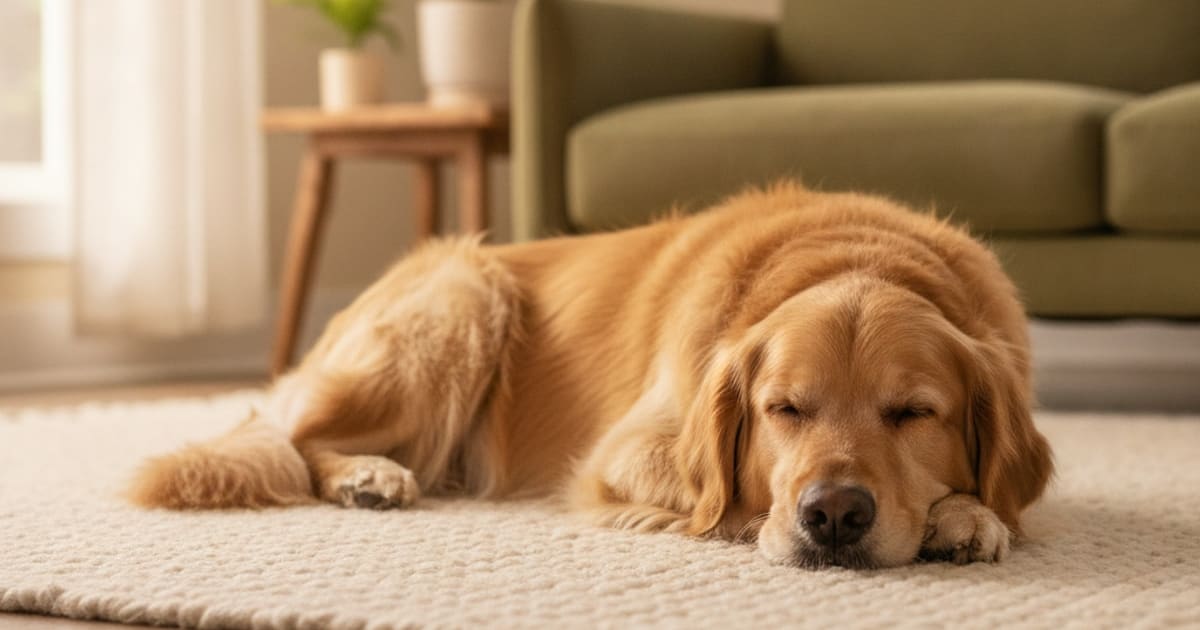
The signs of urinary incontinence in dogs are urine leaking out without your dog meaning to pass it, and urinary incontinence is a reason to see a vet. Go to an emergency vet now if your dog is straining with little or no urine coming out, has sudden weakness or dragging of the back legs, collapses or keeps vomiting, or has a swollen, painful belly; otherwise book a same-day appointment. Urinary incontinence can look like a wet patch on the bed when your dog gets up, drops of urine on the floor as your dog walks, damp fur on the belly or the inside of the back legs, a urine smell on the coat, red or sore skin where urine sits, or more licking under the tail than before. Leaking can happen while your dog sleeps, rests, walks, barks or plays, and your dog may not seem aware of it at all. Any sign of leaking is a reason to call your vet today, because a vet exam may help find the cause.
When to go to the vet now
Go to an emergency vet now if your dog leaks urine and has any of these signs:
- Straining to pass urine, with little or no urine coming out
- Sudden weakness, wobbling or dragging of the back legs, or signs of back pain
- Collapse or repeated vomiting
- A swollen or painful belly
Each of these can mean a problem that gets worse fast, such as a bladder that cannot empty or pressure on the nerves of the spine, so go now rather than trying to sort out the cause at home. Call the clinic on the way so the team is ready for your dog when you arrive.
For any other leaking, including a small damp patch after a nap, call your vet today and book a same-day appointment. A same-day visit means the cause can be looked for while the details are fresh, and before sore skin or an infection has time to build. For a wider list of urgent signs in any dog, see Dog Emergency Signs.
What can cause urinary incontinence
Urinary incontinence is a sign rather than a diagnosis, and a range of problems can lead to it. The causes below are possibilities your vet checks. The leaking itself can look much the same whatever lies behind it, so the exam and tests are how the cause is found, not the look, amount or timing of the urine. More than one cause can be present at once, for example an infection alongside a weak bladder outlet, which is another reason the tests matter.
One possibility is a weak muscle at the bladder outlet, the ring of muscle that holds urine in until your dog chooses to go. When this muscle is weak, urine can slip out when your dog is relaxed, lying down or asleep. In female dogs this weakness can be linked to hormone changes after spaying, and it can appear long after the operation, so female dog incontinence symptoms deserve a vet visit at any age. Male dogs can have outlet weakness too.
A bladder infection can inflame the bladder lining and make it hard for your dog to hold urine. Bladder stones and crystals can irritate the lining in the same way. Your vet looks for both with urine tests and imaging, because the right treatment depends on what is found.
Conditions that make your dog produce more urine can stretch the bladder past what it can hold. Your vet checks for diabetes, kidney disease and hormone conditions, including problems with the adrenal or thyroid glands, since each of these can increase thirst and the amount of urine. A medicine your vet prescribes for another condition can also change how much your dog drinks and passes, so tell your vet about everything your dog takes.
The bladder relies on signals that travel through nerves from the spinal cord. A slipped disc, an injury to the back, pelvis or tail, or another problem along the spine can interrupt those signals. The bladder may then overfill and leak, or empty without control. Your vet checks your dog's back, legs and reflexes for this reason, and sudden back-leg weakness with leaking is an emergency.
A partial blockage of the urethra, the tube that carries urine out of the body, can stop the bladder from emptying. Stones, a growth or, in male dogs, a prostate problem can cause this. Urine may then dribble out as the bladder overfills, which is why straining with little or no urine is a reason to go to an emergency vet now.
A puppy can be born with a difference in how the urinary tract is formed, such as a tube from a kidney that does not join the bladder where it should. Leaking from a young age, or a puppy who never seems to be dry, is a reason for a same-day vet visit, just as leaking is at any other age.
A growth in the bladder, urethra or prostate can also lead to leaking, straining or blood in the urine. Your vet may use imaging and other tests to look for one, and any growth needs a vet to find out what it is.
In older dogs, changes in muscle tone, weight, mobility or memory can play a part, and leaking can sit alongside another condition, such as stiff joints that make it harder to get up and go outside. Age is never the explanation on its own. New leaking in a senior dog needs a same-day vet check, just as it would in a younger dog.
Urine indoors can also come from excitement, fear, marking territory or a gap in house training. These are not leaking in the medical sense, but they can be hard to separate from urinary incontinence at home, and a medical problem can sit behind a change in toilet habits too. Your vet looks at the physical causes first.
If your dog already has a diagnosed condition, such as diabetes or kidney disease, your vet can tell you how the leaking fits with it. Talk to your vet before you change anything about your dog's care, food or routine.
What your vet may do
Your vet starts with questions about the leaking and your dog's general health: when it began, when it happens, how much urine comes out, your dog's thirst and appetite, and spay or neuter history. Clear answers help your vet choose which tests to run first.
A full physical exam follows. Your vet may feel the belly to judge the size of the bladder, look at the skin around the genitals and back legs for redness or soreness from urine, and check the back, legs, tail and reflexes for signs of a nerve problem. In male dogs, the exam may include a rectal check of the prostate. Your vet also looks closely at the coat and skin, because urine that sits on the skin can cause a sore, red rash known as urine scald, and that skin can become infected.
Your vet may also want to see your dog pass urine, either in the clinic or outside, and may check whether the bladder empties fully afterwards, sometimes with a scan.
A urine test is a key step. A urinalysis looks at how concentrated the urine is and checks for blood, crystals, sugar and signs of infection. A urine culture grows any bacteria so the right treatment can be chosen. Your vet may collect the sample with a fine needle placed into the bladder through the belly, which gives a clean sample.
Blood tests check kidney function, blood sugar and other organs, and your vet may add tests for hormone conditions if your dog is drinking more than before.
X-rays or an ultrasound scan can show stones, the size and shape of the bladder, the prostate, the kidneys and the spine. If the cause is still unclear, your vet may suggest more detailed imaging, a contrast X-ray, or a small camera passed into the bladder, and may refer your dog to a specialist. Some dogs need light sedation for a scan or a closer look.
Once the cause is found, your vet talks through the options, which can include a medicine your vet prescribes, treatment for an infection or stones, a change of diet, or surgery for some causes. Do not give your dog anything at home before the vet has seen your dog, as it can hide signs and change test results.
What to tell your vet
Before you call, note what you have seen. You may first notice leaking as a damp spot where your dog has been lying, a few drops on the floor, a urine smell on the coat or bedding, or your dog licking its back end more than before. Even small amounts like these are worth mentioning when you call today. The points below are what your vet may ask, much like a short questionnaire, and having them ready helps your vet use the visit well.
- When you first noticed the leaking, and whether it happens while asleep, resting, walking or excited
- Any change since then, such as larger amounts, more wet patches or leaking while awake
- Any bleeding, or blood in the urine or on the bedding
- Licking under the tail or around the genitals, or red, sore skin there
- Other signs, such as drinking more, straining, accidents indoors, back-leg weakness, or a change in appetite or energy
- Spay or neuter history, and anything your dog takes, including a medicine your vet prescribes
Describe exactly what you saw, such as whether your dog was asleep, standing or squatting when the urine appeared, and whether your dog seemed to notice. Your vet weighs these details alongside the exam and tests.
If a new sign appears after you have called, ring your vet again straight away. Go to an emergency vet now if your dog starts straining with little or no urine, develops sudden back-leg weakness, collapses or has a swollen, painful belly.
If anything about your dog's urine or toilet habits concerns you, talk to your veterinarian today. You can also read about other health problems in the Conditions library.
Frequently asked questions
- Is urinary incontinence an emergency in dogs?
- Urinary incontinence becomes an emergency if your dog is straining with little or no urine coming out, has sudden weakness or dragging of the back legs, collapses or keeps vomiting, or has a swollen, painful belly. Go to an emergency vet now for any of these. For any other leaking, book a same-day appointment with your vet.
- What should I do if my dog has urinary incontinence?
- Call your vet today and describe what you have seen, such as wet bedding, dribbling or extra licking. Book a same-day appointment, and go to an emergency vet now if your dog is straining with little or no urine, has sudden weakness in the back legs, collapses, keeps vomiting or has a swollen, painful belly.
- Can I treat urinary incontinence at home?
- No, because leaking urine can come from an infection, stones, a nerve problem or another condition that needs tests. Do not put anything on the wet or sore skin or remove anything before the vet sees your dog. If there is bleeding, use gentle pressure with a clean cloth on the way to the vet only.
- What does urinary incontinence look like in dogs?
- Urinary incontinence looks like urine leaking without your dog meaning to pass it. You may see wet patches where your dog slept, drips on the floor as your dog walks, damp or stained fur around the back legs, a urine smell on the coat, or extra licking under the tail. Book a same-day vet appointment.
- How do I know if my dog is leaking urine?
- The signs of leaking include a wet spot left behind when your dog gets up, dribbles of urine while walking or resting, damp fur on the belly or back legs, red or sore skin in that area and more licking than before. Note what you see and when, and call your vet today to have it checked.
- What are the early signs of urinary incontinence in dogs?
- Early signs of urinary incontinence can be small: a damp patch on the bed after a nap, a few drops where your dog has been sitting, a faint urine smell on the coat, or more licking around the genitals. Even small amounts of leaking are a reason to call your vet today for a same-day appointment.
- What are the signs of urinary incontinence in female dogs?
- Female dogs show the same signs as male dogs: wet bedding after sleep, dribbling, damp fur around the back legs and extra licking of the vulva area. Leaking in a female dog, spayed or not, can come from a weak bladder outlet, an infection or another cause, so call your vet today and book a same-day appointment.
- Can male dogs have urinary incontinence?
- Yes, male dogs can leak urine, and the cause can be a bladder or prostate problem, an infection, stones, a nerve or spine problem, or another condition. The signs are the same: wet patches, dribbling, damp fur and licking. Call your vet today, and go to an emergency vet now if your dog strains with little or no urine.
- What questions will my vet ask about urinary incontinence?
- Your vet may go through questions much like a short questionnaire: when you first noticed the leaking, whether it happens asleep or awake, whether it has changed, whether your dog drinks more, strains or licks, any blood, any back-leg weakness, spay or neuter history, and any medicine your dog takes. Write down your answers before the visit.
- Is urinary incontinence the same as my dog peeing in the house?
- No, because urinary incontinence means urine leaks out without your dog meaning to pass it, while a dog peeing in the house is choosing to go. Both can come from a medical problem, and the two can be hard to tell apart, so call your vet today and book a same-day appointment to find the cause.
Educational content, not veterinary advice. Ask your vet about your dog.