Do Dogs Grow Out of Car Sickness? (Puppy Timeline)
Many dogs do grow out of car sickness. Puppies commonly travel better during their first year as the inner ear finishes developing, though some keep reacting into adulthood, usually because anxiety has become part of the pattern. Sudden car sickness in an older dog warrants a veterinary exam.
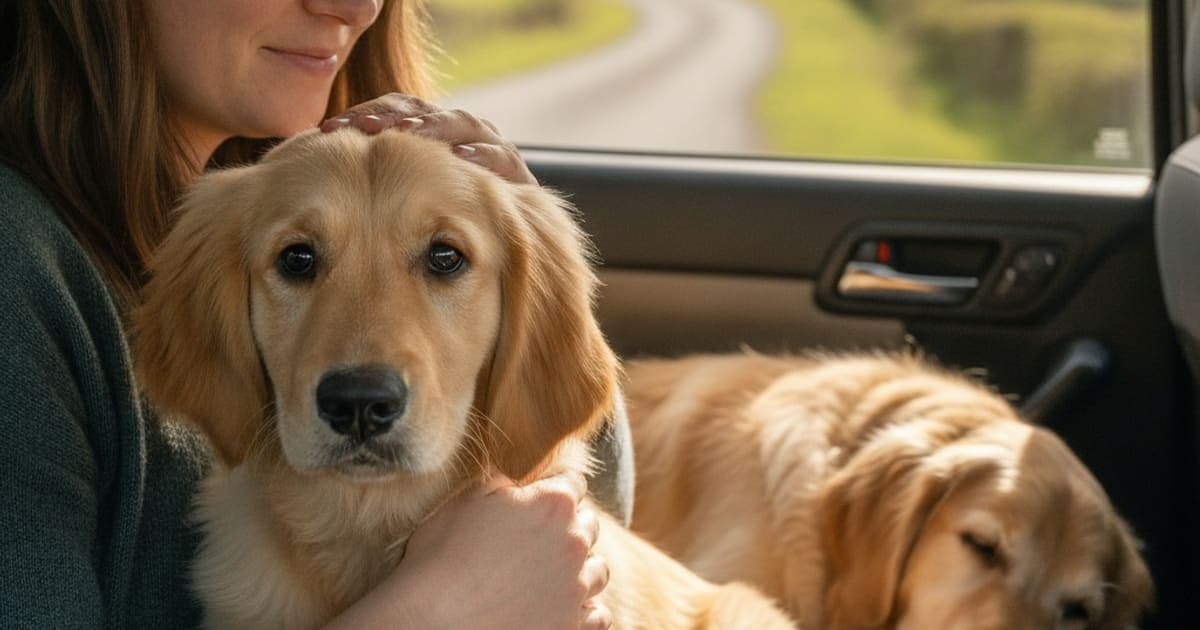
Many dogs do grow out of car sickness, and puppies are the group most likely to improve, because the balance organs of the inner ear are still maturing in young dogs and travel tends to get easier as they develop. If your dog vomits repeatedly, has suddenly started getting carsick after years of riding comfortably, or looks unsteady, head-tilted or disoriented even when the car is parked, talk to your vet before writing it off as ordinary motion sickness.
The honest version of the answer is that age solves the problem completely for some dogs, partly for others, and barely at all for a few. Research suggests younger animals are more susceptible to motion sickness than adults, and veterinary guidance commonly describes puppy car sickness as something that eases with maturity. What complicates it is that a dog who has spent months feeling sick in a moving car can learn to feel sick at the sight of the car, and that learned layer does not fade on its own just because a birthday has passed.
Why the car makes a puppy feel so awful
Balance is handled by the vestibular apparatus, a set of structures buried in the inner ear. Three fluid-filled semicircular canals detect rotation, and two small chambers next to them detect gravity and straight-line acceleration. Signals from those structures travel to the brainstem, where they are compared against what the eyes are seeing and what the muscles and joints are reporting about the body's position.
Motion sickness happens when those three streams of information disagree. Inside a car, the inner ear registers constant acceleration, braking and cornering, while a dog lying in a footwell or facing sideways in a crate sees a stationary interior. The brain receives a conflict it cannot resolve, and in many mammals that conflict triggers nausea and vomiting.
In puppies, the vestibular system and the neural pathways that interpret it are still developing, so the conflict is less well tolerated. That is the main reason car sickness in a puppy is so common and why it so often settles down.
The early signs are usually behavioural rather than dramatic. Owners notice yawning that is not tiredness, repetitive lip licking, heavy drooling, whining, restless shifting, panting, flattened ears or a dog who goes very still and stares at nothing. Vomiting is the end point, not the beginning. Learning to read the early signals matters, because a dog who is pulled out of the car for a break before vomiting builds a less unpleasant memory of the whole experience.
The timeline most owners see
Most owners who report improvement describe it happening gradually across the first year of life, as rides that once ended in vomiting become rides that end in drooling, and then rides that end in nothing at all. Some dogs are noticeably steadier well before that, and some are still queasy as young adults. There is no fixed date, and results vary from dog to dog.
A single episode of car sickness usually does not stop the moment the engine does. Nausea often lingers after the ride, which is why a dog may refuse food, sit hunched or drool in the driveway for a while after arriving. Once the dog has settled, eaten normally and resumed usual behaviour, the episode is over. A dog who keeps vomiting hours after a short trip, or who vomits without having travelled at all, is not showing motion sickness and should be seen.
Growing out of car sickness is common, but it is not automatic: the dogs who improve most reliably are usually the ones whose owners kept early car travel short, calm and uneventful while the inner ear finished maturing. The opposite pattern is just as predictable. If almost every car journey in puppyhood is long, hot, frightening or ends at a clinic, the dog can develop a conditioned response in which anticipation alone produces drooling and nausea before the car has moved. Physiological immaturity resolves with time. A learned association needs to be unlearned.
So the fairest answer to whether a dog gets over car sickness is this: the biological half of the problem usually improves with age, and the behavioural half usually improves with deliberate, patient retraining rather than with waiting.
Motion sickness, travel anxiety, or something medical
These three look similar from the driver's seat and have very different outlooks, so it is worth separating them before deciding what to do.
| Pattern | What it tends to look like | What it usually means |
|---|---|---|
| True motion sickness | Calm at the car, settles in, then drool, lip licking and vomiting begin once the vehicle is moving, worse on winding roads and stop-start traffic | Sensory conflict in a still-maturing or sensitive vestibular system, most common in puppies and often improves with age |
| Travel anxiety | Stress starts before the engine does: refusing to approach the car, trembling, panting, pacing, barking, sometimes drooling or vomiting within a minute of setting off | A learned or temperamental fear response that needs behavioural work, not time alone |
| Medical cause | New in an adult or senior dog, or accompanied by head tilt, circling, stumbling, flicking eye movements, ear odour, reluctance to jump in, or vomiting away from the car | Needs a veterinary examination to identify, not a travel plan |
Many dogs sit in two columns at once. A puppy who felt genuinely sick for months can acquire anxiety on top of it, and an anxious dog who hyperventilates and gulps air can make themselves nauseated. Treating only one half is why some owners feel stuck.
When a dog starts getting carsick later in life
Dogs can develop car sickness later in life, and new onset in an adult or older dog deserves attention rather than a bag of travel tips. A dog who travelled happily for years and now vomits or drools has changed in some way, and the car is simply where it shows.
Common explanations include inner or middle ear disease, which disturbs the same balance structures that drive motion sickness; vestibular disease in older dogs, which can produce head tilt, loss of balance and rapid eye movements; and painful joints or a sore back that make braking and cornering genuinely unpleasant, so the dog braces, pants and becomes distressed. Nausea from unrelated illness, from a recently started medication, or from declining vision can all surface during travel too. Cognitive change in senior dogs can erode a previously relaxed routine.
This is exactly the situation where a veterinary examination is worth more than any amount of research, because several of these look identical from outside and are told apart by a physical exam, an ear check and, where indicated, bloodwork or imaging. If you are working through possible underlying causes, a structured overview of canine health conditions is a reasonable place to orient yourself before the appointment, not a substitute for it.
Seek help promptly rather than at the next convenient slot if vomiting is repeated or contains blood, if your dog cannot stand or keeps falling to one side, if the abdomen looks distended, if there are unproductive attempts to vomit, or if the dog is lethargic and will not drink.
Travel habits that give a dog the best chance of improving
The goal is to make the car boring. Boring is what allows the maturing vestibular system to catch up without an anxiety response layering on top.
Start with where the dog rides. Facing forward, secured in a crash-tested harness or a well-fitted crate, usually gives the clearest agreement between what the eyes see and what the inner ear feels. Being able to see the horizon out of a front-facing window helps some dogs. Being loose in a footwell, where there is motion but nothing stable to look at, tends to help no one.
Keep the cabin cool and well ventilated, because heat and stuffiness make nausea worse. Drive smoothly, and remember that a winding route with constant deceleration is harder on a sensitive dog than a longer, steadier one. Light food timing is worth discussing with your vet, since recommendations differ for puppies, adults and dogs with other health issues.
Then rebuild the association. Sit in the parked car with the engine off and do something pleasant. Move to the engine running and still not going anywhere. Progress to a trip to the end of the road and back, then to a short drive that ends somewhere the dog enjoys. If a step produces drooling or stress, go back a step rather than pushing through. Progress is measured in weeks, not days.
Owners also ask about ginger and other settling remedies, and about prescription options. Veterinary medicine does include medication licensed specifically for the prevention of vomiting due to motion sickness in dogs, along with other anti-nausea and anti-anxiety approaches, and the choice between them depends on the individual dog. Dosing is not something to work out from an article, including for puppies and for pregnant or nursing dogs, so take that conversation to your veterinarian.
Key Takeaways
- Many puppies do grow out of car sickness as the inner ear and its neural pathways mature, and improvement is usually gradual over the first year rather than sudden.
- Age handles the physical side of the problem. A learned fear of the car does not resolve with age and needs patient desensitisation.
- Early signs are drooling, lip licking, yawning, whining and restlessness. Acting on those is better than waiting for vomiting.
- Nausea can outlast the journey by a while, but a dog who is still unwell long afterwards is showing something other than motion sickness.
- Car sickness that appears for the first time in an adult or senior dog is a reason for a veterinary exam, not a travel strategy.
- Forward-facing restraint, a cool ventilated cabin, smooth driving and short positive trips give any dog the best chance of travelling well.
- Results vary from dog to dog, and a few remain poor travellers for life even with everything done right.
Where your veterinarian fits in
Your veterinarian owns the diagnosis and the plan. They are the one who can examine the ears, assess balance and gait, check for pain that makes the ride uncomfortable, rule out the illnesses that mimic motion sickness, and decide whether medication, behavioural work or simply more time is the right path for your dog. Bring details to the appointment: when it started, how long the rides are, what the dog does before the car moves, how quickly symptoms appear and how long they last afterwards. That history often narrows the possibilities faster than any test. Everything else, from where the dog sits to how you rebuild the association with travel, works within the plan your vet sets rather than around it.
For more on travel-related nausea and on recognising problems that need urgent attention, see Ginger for Dogs and Motion Sickness and Dog Emergency Signs.
Frequently asked questions
- Do dogs grow out of car sickness?
- Many do. Car sickness is most common in puppies because the balance structures of the inner ear are still maturing, and travel often becomes easier as a dog develops. Some dogs keep reacting into adulthood, usually because anxiety about the car has built up alongside the nausea.
- When do dogs grow out of car sickness?
- There is no fixed date. Owners most often describe gradual improvement across the first year of life, as rides that once ended in vomiting end in only mild drooling and then in nothing. Some puppies steady much sooner, others later, and results vary from dog to dog.
- Do dogs outgrow car sickness?
- Outgrowing it is common but not guaranteed. The physical part, sensory conflict in a developing vestibular system, usually eases with maturity. Any learned fear of the car does not fade with age and needs gradual rebuilding of positive travel experiences before the dog will ride comfortably.
- Do dogs get over car sickness?
- Most dogs improve, especially when early trips were kept short, cool and uneventful. Dogs whose only car journeys were long or frightening may continue to anticipate feeling sick. Working through short, pleasant practice drives, with guidance from your vet, gives the best chance of lasting improvement.
- Does dog car sickness go away?
- It frequently goes away in young dogs as the inner ear matures, though it can persist if anxiety has become part of the pattern. Car sickness that appears for the first time in an adult or older dog is different and should be examined by a veterinarian.
- Will my dog outgrow car sickness?
- Possibly, particularly if your dog is a puppy and shows no fear of the car itself. Prognosis is better when symptoms only start once the vehicle is moving. If your dog panics before the engine starts, behavioural work matters more than waiting for age to help.
- Can dogs overcome car sickness?
- Many can, through a combination of maturity, forward-facing secure restraint, a cool ventilated cabin, smooth driving and a slow rebuild of short positive trips. Where that is not enough, your veterinarian can discuss anti-nausea or anti-anxiety options suited to your individual dog.
- Can dog car sickness be cured?
- Cure is not quite the right frame. Many dogs stop showing symptoms entirely as they mature and as travel becomes a routine, low-stress event. A smaller number remain poor travellers for life and are managed rather than cured, usually with a plan agreed with their vet.
- How long does dog car sickness last?
- Nausea often lingers after the ride ends, so a dog may drool, hunch or refuse food for a while in the driveway before settling. If vomiting continues long after the journey, or happens on days with no travel, that points to another cause and needs veterinary assessment.
- Can dogs develop car sickness later in life?
- Yes. New car sickness in an adult or senior dog can reflect ear disease, vestibular disease, painful joints that make braking uncomfortable, declining vision, a new medication or unrelated illness. Because these look alike from outside, book a veterinary exam rather than treating it as travel nerves.
Educational content, not veterinary advice. Ask your vet about your dog.