Dog's Ear Painful to Touch: What It Can Mean
A dog's ear is sensitive to touch because something in or around it is inflamed, infected, injured or under pressure, and the ear canal is densely supplied with nerves. Pain on touch can also be referred from the teeth, jaw or neck. Book a veterinary exam rather than waiting.
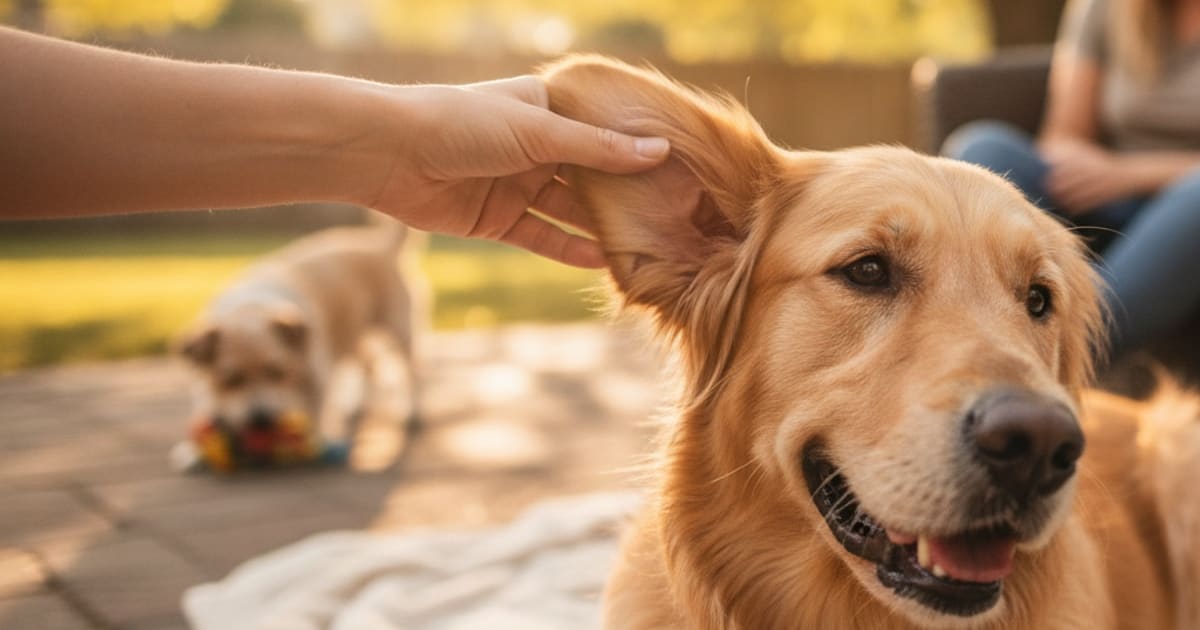
If your dog's ear is painful to touch, pulls away from your hand, yelps when you lift the flap, or snaps when you reach toward one side of the head, that ear should be examined by a veterinarian. Ear pain points to something happening inside a structure you cannot see from the outside, and it is not a sign to sit on for a few days.
The short answer to why your dog's ears are sensitive to touch is this: something in or around the ear is inflamed, infected, injured, blocked or under pressure, and the ear canal is a narrow, nerve-rich tube with almost nowhere to swell. That something can be an infection of the canal, a grass seed that worked its way in on a walk, a blood blister in the ear flap, parasites, an allergic flare, a growth narrowing the canal, a bite or a sting, or pain that is not in the ear at all but in the teeth, jaw joint or neck. Those possibilities can look identical from the doorway, which is exactly why an exam matters.
Why a dog's ear is built to feel so much
Dog ears are sensitive to touch by design. The ear flap, or pinna, is thin skin stretched over cartilage with a generous blood supply and its own set of small muscles that let a dog swivel and angle it toward sound. Under that flap, the canal does not run straight to the eardrum the way a human ear canal does. It drops downward, then turns inward, forming an L shape that is lined with skin all the way to the eardrum.
That shape matters. A narrow bend holds moisture, wax, hair and debris, and anything that inflames the lining has no room to swell outward. Pressure builds against tissue supplied by branches of several cranial nerves, which is why some dogs react to ear handling with a reflex cough, a hind-leg scratch or a hard flinch even when nothing is wrong.
Dogs also hear across a far wider range than people do, and they rely on ear position to signal mood to other dogs and to you. A sore ear changes that posture. A dog carrying one ear lower, holding the head tilted, or turning the whole body instead of just the head is telling you something.
A dog who used to accept ear handling and now flinches, ducks or growls when you touch one side has changed, and that change is a reason to book a veterinary exam rather than a quirk to work around.
What a sore ear can point to
The signs that travel alongside the pain are what help your vet narrow things down. Here is how the main possibilities tend to present, and why none of them resolve from the outside of the ear.
| What it can be | Signs that may come with it | Why a vet needs to look |
|---|---|---|
| Inflammation or infection of the ear canal | Head shaking, scratching, discharge, odour, redness, heat, head carried to one side | Only an otoscope exam and a sample under the microscope can show what is growing and whether the eardrum is intact |
| Deeper involvement behind the eardrum | Head tilt, loss of balance, eyes flicking side to side, facial weakness, pain when opening the mouth | Needs prompt assessment and sometimes imaging; balance and facial nerve signs are not minor |
| A foreign body such as a grass seed or awn | Sudden violent head shaking after a walk, crying, pain on one side only, pawing at the ear | Retrieval is a veterinary procedure, in many cases under sedation, because the seed sits deep in the canal |
| Aural haematoma, a blood pocket in the flap | Soft or firm swollen flap, ear feels heavy, follows a period of head shaking | The swelling and the ear problem that caused the shaking both need addressing |
| Ear mites or other parasites | Dark crumbly debris, intense scratching, other dogs in the home affected | Identification under the microscope guides the plan; guessing wastes time |
| An allergic or skin disease flare | Both ears involved, itchy paws, face rubbing, repeat ear trouble | The ear is the symptom; the underlying skin condition needs its own workup |
| A growth or polyp in the canal | One-sided discharge, narrowing canal, pain on touch | Any new lump or mass needs a vet exam, and only a sample examined by a vet can tell what it is |
| Trauma, a bite, a sting or damage to the ear tips | Bleeding, crusting, swelling, heat, a known scuffle or insect contact | Wounds in this area can become infected and the flap can swell quickly |
| Pain referred from the teeth, jaw joint or neck | Dropping food, reluctance to open the mouth, no discharge and no smell, resistance to turning the head | The ear may be normal and the source somewhere else entirely |
When the ear hurts but there is no sign of infection
Plenty of owners search for an answer because the ear hurts when touched but there is no visible infection. No discharge, no smell, nothing obvious in the flap, and yet the dog will not let you near it.
Several things can produce that picture. Inflammation can be painful before it produces discharge. A problem can sit in the horizontal part of the canal or behind an intact eardrum where you have no view at all. A grass seed can lodge deep without leaving a trace at the opening. Early swelling in the flap can feel sore before it looks swollen. Pain from a cracked tooth, an inflamed jaw joint, the chewing muscles, or the neck can be felt by the dog as head pain and read by you as ear pain, because dogs cannot point.
The useful takeaway is that a clean-looking ear does not rule out a painful one. An otoscope reaches where your eyes and fingers cannot, and your vet can tell you whether the canal and eardrum look normal before anyone decides the ear is fine.
Signs that mean same-day or emergency attention
Some presentations should move to the front of the queue. Contact your veterinarian straight away, or an emergency clinic if your regular practice is closed, if you see:
- A head tilt, circling, stumbling, falling to one side, or eyes flicking rapidly from side to side
- Facial droop, a drooping lip or eyelid, or an eye that will not blink
- Sudden swelling of the ear flap, or a flap that is hot, tight and tender
- Bleeding from the ear, or discharge with blood in it
- Screaming or crying when the head is touched at all, or a dog who cannot settle
- A face or jaw that looks swollen, or a dog who will not open the mouth to eat
- Lethargy, shivering, going off food, or a dog who feels hot and unwell alongside the ear pain
- Sudden aggression or panic when approached, in a dog who has never behaved that way
- Wounds, maggots or heavy crusting on the ear tips
- Ear pain after a fight, a fall, or a knock to the head
Call your vet if the pain continues, if it worsens, or if any of the signs above appear.
What the vet exam involves, and why home remedies carry real risk
An ear consultation usually starts with history. When did it begin, which ear, has the dog been swimming, has there been head shaking, is the skin itchy elsewhere. Your vet will look at both ears, use an otoscope to see down the canal and check the eardrum, and may take a sample to examine under the microscope. Depending on what is found, that can extend to a culture, a sedated examination and flush if the ear is too painful to assess awake, imaging to look at the deeper structures, or a dental and neck examination if the ear itself looks healthy. Results vary from dog to dog, and the plan follows what the exam actually shows rather than what the outside of the ear suggests.
This is also the reason searches for home remedies for an ear that hurts when touched deserve a flat answer: do not put anything into a painful ear before a vet has looked at it. You cannot see whether the eardrum is intact, and liquid entering a middle ear through a damaged eardrum can affect hearing and balance. Cotton buds push debris deeper and can injure the lining. Leftover medication from a previous episode or from another pet may be entirely wrong for what is going on now, and it can make the microscope sample harder to interpret. Restraining a dog in real pain is also how people get bitten, often by dogs who have never bitten anyone.
Talk to your vet before putting any cleaner, oil, rinse or drop into your dog's ear, and talk to your veterinarian again if a dog with a history of ear trouble starts flinching from your hand, because repeat episodes often trace back to an underlying condition that has never been fully worked up.
When touch sensitivity goes beyond the ears
If you are wondering what it means when a dog is sensitive to touch more generally, the honest answer is that it is a pain signal until proven otherwise. Dogs who shrink from being stroked, who tense when lifted, who react to a hand near the neck, back, belly or hips, or who flinch at grooming, may be guarding sore joints, a painful back or neck, an abdominal problem, inflamed skin, or a dental issue. Fever makes a dog feel sore all over. Failing eyesight or hearing can make a dog startle at contact they did not see or hear coming. Past handling, a frightening grooming session, or anxiety can all contribute too.
What matters is the change. A dog who used to lean into contact and now avoids it is reporting something. Growling in that situation is information, not defiance, and punishing it removes the warning without removing the cause. Write down what you are seeing, which side, and what triggers it, and bring that to the appointment.
Key Takeaways
- A dog ear that is sore to touch means something in or near the ear is inflamed, infected, injured or under pressure, and the ear canal has no room to swell.
- Dog ears are sensitive by design: thin skin, mobile cartilage, a rich blood and nerve supply, and an L-shaped canal that traps moisture and debris.
- Infection, a foreign body such as a grass seed, a haematoma in the flap, parasites, allergic skin disease, a growth, trauma and referred dental or neck pain can all look the same from the outside.
- An ear can hurt badly with no discharge and no smell; a clean-looking ear does not rule out a painful one.
- Head tilt, balance loss, flicking eyes, facial droop, bleeding, sudden swelling or a dog who is unwell alongside the ear pain all warrant urgent veterinary attention.
- Do not flush, swab or medicate a painful ear at home before a vet has checked the eardrum.
- Any new touch sensitivity in a dog who previously accepted handling is worth reporting.
The exam comes first
An ear that hurts when touched is one sign with a long list of possible sources, and the only way to separate them is for a veterinarian to look inside, take a sample where needed, and examine the rest of the head and neck. Your vet owns the diagnosis and the treatment plan here, including whether sedation, imaging or a referral is the right next step. Your job is the part no one else can do: notice the change early, describe it accurately, and get the ear looked at before a sore dog becomes a frightened one.
For a wider list of signs that justify an urgent call, see Emergency Signs in Dogs, and for background on other canine health problems, see Conditions.
Frequently asked questions
- Why is my dog's ears sensitive to touch?
- Because something is irritating, inflaming, infecting or putting pressure on the ear. The canal is a narrow, nerve-rich tube with nowhere to swell, so even mild inflammation hurts. A foreign body, a blood pocket in the flap, parasites, a growth, or pain referred from the teeth or neck can also be responsible. Book a veterinary exam.
- What does it mean when your dog is sensitive to touch?
- It usually means pain somewhere. Dogs who flinch, tense or pull away may be guarding sore joints, a painful back or neck, an abdominal problem, inflamed skin, or a dental issue. Fever, failing senses and anxiety can contribute too. Any new sensitivity in a dog who previously enjoyed contact should be checked by your vet.
- Are dog ears sensitive to touch?
- Yes. The ear flap is thin skin over cartilage with a generous blood supply, its own small muscles and branches of several nerves running through the area. Many dogs enjoy gentle ear handling, but the tissue is responsive by design. What is not normal is flinching, ducking, yelping or snapping when the ear is touched.
- Why are dogs ears so sensitive?
- Dogs rely on their ears for hearing across a far wider range than people, for pinpointing where sound comes from, and for signalling mood through ear position. That demands a mobile flap with muscles, a rich nerve supply and a canal lined with skin to the eardrum. All of that makes the ear highly responsive to pressure.
- How sensitive are dogs ears to touch?
- Sensitive enough that handling the canal can trigger reflexes such as a cough or a hind-leg scratch in a healthy dog. Comfort levels vary from dog to dog, and some simply dislike having their ears held. Pain, flinching away, or refusing contact on one side specifically is different and needs a veterinary exam.
- My dog's ear hurts when touched but there is no infection. What could it be?
- A clean-looking ear can still be painful. Inflammation can hurt before producing discharge, a problem can sit deep in the canal or behind an intact eardrum, a grass seed can lodge out of sight, and pain from a tooth, the jaw joint or the neck can feel like ear pain. Your vet can tell you which.
- Are there home remedies for a dog ear that hurts when touched?
- Nothing should go into a painful ear before a vet has examined it. You cannot see whether the eardrum is intact, and liquid reaching the middle ear can affect hearing and balance. Cotton buds push debris deeper, and leftover medication may be wrong for this episode. Talk to your vet first.
- When is a painful dog ear an emergency?
- Seek same-day or emergency care for a head tilt, circling, stumbling, eyes flicking side to side, facial droop, bleeding from the ear, sudden swelling of the flap, screaming when the head is touched, a swollen jaw or face, or ear pain alongside fever, lethargy or refusing food.
- Why does my dog only react when I touch one ear?
- One-sided pain points toward something local, such as a foreign body, an infection in that canal, a blood pocket in the flap, a growth, or a bite or sting. It can also come from a tooth or jaw joint on that side. Your vet will examine both ears and the head to compare.
Educational content, not veterinary advice. Ask your vet about your dog.