Why Is My Dog's Ear Tip Bleeding? (Causes Explained)
A bleeding ear tip in dogs usually comes from damage to the thin skin at the edge of the ear flap: head shaking that slaps the ear against hard surfaces, fly bites along the margin, a clipper nick after grooming, or a bite wound. Bleeding ear tips need a veterinary check.
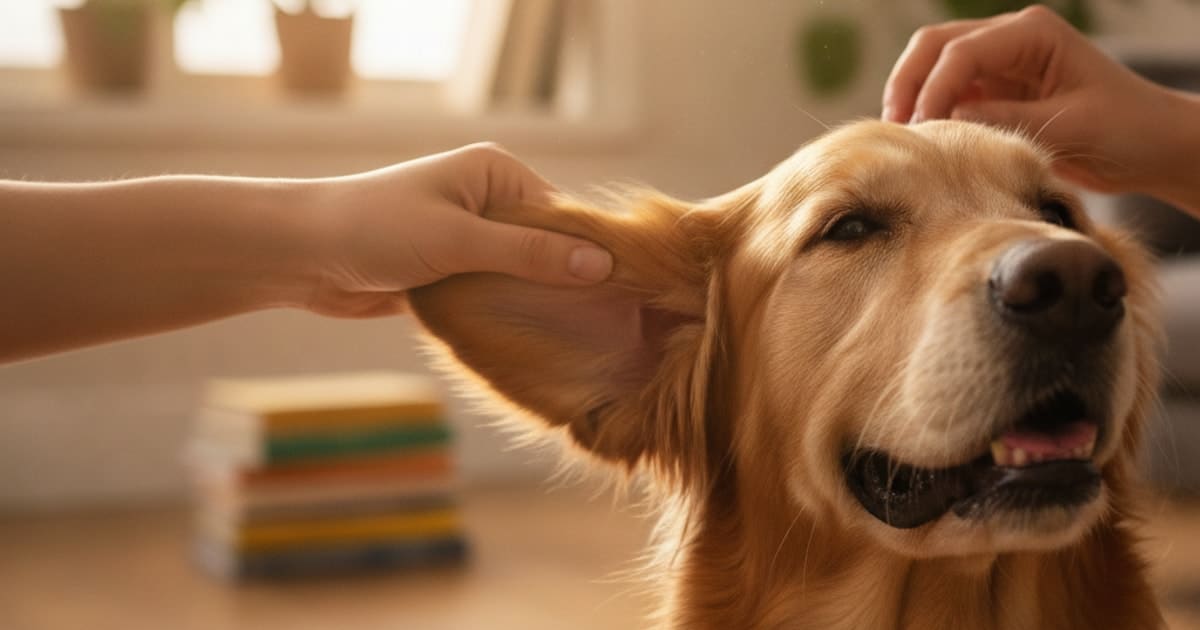
A bleeding ear tip almost always starts with damage to the thin skin along the edge of the ear flap, and the usual culprits are head shaking that slams the ear against furniture, biting insects feeding on the margin, a clipper nick after grooming, a scratch or bite wound, and skin disease that attacks the edge of the ear. Call your veterinarian and have the ear examined, and if the bleeding is heavy, spattering across walls, or will not slow with gentle steady pressure, treat it as an emergency and go to a clinic now.
That is the short answer. The longer answer matters because the tip of the ear is rarely where the real problem lives. A bleeding margin is a signal, and the job of the visit is to find out what is driving it.
What makes the edge of the ear flap bleed so easily
The ear flap, or pinna, is a thin sheet of cartilage with skin stretched over both sides and very little fat or muscle in between. Blood vessels run close to the surface, and along the outer rim the skin is at its thinnest. There is no padding to absorb a knock and nothing to cushion a nick.
That anatomy explains two things owners notice right away. First, a wound that looks tiny can produce a startling amount of blood. Second, the bleeding keeps restarting. Every time the dog shakes, the ear tip whips through the air at high speed and strikes a wall, a crate bar, a table leg or the dog's own skull. A scab that was holding splits open, and the cycle begins again. This is why people search for why the tips of their dog's ears bleed over and over rather than heal quietly like a cut on a leg.
It also means the ear can stay raw for a long time even after the original injury is dealt with. Breaking the shaking cycle is part of the plan, and that is something to work out with your veterinarian rather than at home.
The usual culprits behind a bleeding ear margin
Several very different problems produce the same picture of a bloody ear tip. The table below sketches how they tend to differ.
| Cause | What the ear tends to look like | Other clues | Urgency |
|---|---|---|---|
| Head shaking trauma | A split or raw patch right at the tip, blood flicked onto walls and furniture | Scratching at the ear, odour, discharge, head tilt | Vet visit soon, sooner if the ear smells or the dog is in pain |
| Fly strike on the ear margins | Crusted, scabbed, dark red edges, sometimes a punched out look along the rim | Outdoor access, flies around the dog, bleeding worse in warm weather | Vet visit, and the fly problem needs addressing too |
| Clipper nick or scissor cut | A clean small cut, often on the leading edge, bleeding out of proportion to its size | Recent grooming or home trimming | Vet check, urgent if bleeding will not stop |
| Bite or scratch wound | Puncture holes, a torn edge, swelling | Recent scuffle with another animal | Prompt vet visit, bite wounds get infected |
| Ear margin skin disease | Greasy scale, crusts, notches, cracks and ulcers along the whole rim, both ears often involved | Slow build up over weeks, crusts that bleed when knocked off | Vet visit, diagnosis may need samples or a biopsy |
| Cold or sun damage | Cracked, crusted or discoloured tips, sometimes on pale or thinly haired ears | Extreme weather exposure or long sun exposure history | Vet visit, sun damaged skin needs monitoring |
| A clotting problem | Bleeding that is hard to stop from a small wound | Bruising, pinpoint red spots on the belly or gums, nosebleeds, lethargy | Emergency, go now |
Two more possibilities belong on the list. A lump, wart or thickened nodule sitting on the ear margin can catch, break open and bleed, and any new lump should be checked by a veterinarian, because only a needle sample or biopsy can tell you what it actually is. And an aural haematoma, which is a blood filled swelling inside the flap caused by shaking or scratching, can leak or rupture and leave blood on the ear.
If you suspect your dog has had access to rodent bait, that is not a wait and see situation. Call your veterinarian or an animal poison control service such as the ASPCA Animal Poison Control Center or the Pet Poison Helpline straight away.
Head shaking, and the loop that keeps the tip raw
When a bleeding ear tip comes with head shaking, the shaking is almost always the clue worth chasing. Dogs shake because something inside the ear canal is irritating them: an infection, ear mites, a grass seed or other foreign material, inflamed skin driven by allergies, excess moisture after swimming or bathing, or a growth in the canal.
The tip is collateral damage. The canal problem makes the dog shake, the shake drives the ear into something hard, the skin splits, and the blood you are cleaning off the hallway wall is a downstream symptom.
This matters for a practical reason. Dealing with the surface of the ear tip without addressing the canal means the wound reopens again and again, and the underlying ear disease keeps progressing in the meantime. Chronic ear inflammation can thicken and narrow the canal and can be genuinely painful.
Any bleeding ear tip deserves a veterinary exam, because the bleeding is a symptom, and the problem that caused it usually sits somewhere else: inside the ear canal, in the skin along the margin, or in the body's ability to clot.
Be ready to tell your veterinarian how long the shaking has gone on, whether one ear or both are involved, whether there is smell or discharge, and whether the dog resents having the head touched. That history shapes the exam.
Bleeding ear tips after a grooming appointment
Finding blood on an ear tip after grooming is unsettling, and it usually has a straightforward explanation. Clippers and scissors work close to skin that is thin, mobile and often hidden under hair. A dog that turns its head at the wrong moment, a mat that has to be worked out of the fringe, or a blade passing over the leading edge of the flap can all produce a nick.
A few points are worth knowing:
A small nick on the ear margin can bleed far more than its size suggests, which is why groomers often notice it before the owner does. Clipper irritation, sometimes called clipper burn, can leave the skin red and sore and prone to breaking open when the dog scratches. And a grooming session can also reveal something that was already there, because once the hair is short, crusted or ulcerated margins that were hidden become obvious.
Tell the groomer what you found, and tell your veterinarian. A grooming cut that keeps reopening, that swells, that discharges, or that the dog will not leave alone needs to be seen. Do not apply human wound products or ointments to the ear while you wait, and do not try to trim or clean the area yourself. Healing times and results vary from dog to dog, and an ear wound in a dog that shakes behaves very differently from the same wound on a quiet dog.
Red flags that mean a vet visit today, and what the exam involves
Get veterinary care straight away if you see any of the following: bleeding that does not slow with gentle, steady pressure; blood loss that is more than a few drops; pale gums, weakness, wobbliness or collapse; bleeding or bruising anywhere else on the body, including pinpoint red spots on the gums or belly; a deep bite wound or a torn flap; a hot, swollen, painful ear; ear tips that are cold, hard or discoloured after extreme cold; a foul smell with discharge; or a dog that is suddenly tilting its head, circling or losing balance.
At the appointment, expect your veterinarian to look at the wound itself and then at both ear canals, usually with an otoscope, because the canal is where the answer so often hides. Samples from the canal can be examined under a microscope to sort out what kind of ear infection is present. A painful ear sometimes needs sedation for a proper look. If the margins of both ears are crusted, scaling or notched, the conversation may move toward skin disease of the ear edge, which can call for skin samples or a biopsy. If the bleeding seems out of proportion to the injury, blood work to assess clotting and platelets, along with testing for tick borne disease, may be part of the plan.
Treatment follows the diagnosis, not the other way around. It may involve cleaning and closing a wound, protecting the ear so shaking cannot reopen it, medication for the ear canal, managing the allergic disease underneath, or fly control for a dog that spends time outside. Talk to your vet about the realistic timeline, because ear margins are slow healers and relapses are common when the underlying driver is still active. Putting the symptom in context alongside other canine health conditions can help you ask better questions at the visit.
Key Takeaways
- A bleeding ear tip means the thin skin at the edge of the ear flap has been damaged, and the amount of blood is not a reliable guide to how serious the injury is.
- Head shaking is the single most useful clue: it usually points to a problem inside the ear canal, such as infection, mites, allergic inflammation or a foreign body.
- Bleeding after grooming is often a clipper nick or scissor cut, but a wound that reopens, swells or discharges needs to be seen.
- Crusted, scaling, notched margins on both ears suggest skin disease of the ear edge rather than simple trauma, and diagnosis may need samples.
- Any new lump on an ear margin should be checked, and only a needle sample or biopsy can identify it.
- Bleeding that will not stop with gentle pressure, bruising elsewhere, pale gums, weakness or suspected rodent bait exposure are emergencies.
- Do not apply human wound products, clean the area yourself, or attempt home treatment while you wait for advice.
Your veterinarian owns the diagnosis and the treatment plan here. The bleeding tip is the part you can see, but the exam, the otoscope, the samples and the follow up are what identify the reason it happened and keep it from happening again. Everything else, from grooming routines to fly control to keeping an older dog comfortable, works best inside the structure that proper veterinary care creates.
For related reading, see Senior Dog Care Tips and Dog Emergency Signs.
Frequently asked questions
- why is my dogs ear tip bleeding
- Your dog's ear tip is bleeding because the thin skin at the edge of the ear flap has been damaged. Head shaking against furniture, biting flies, a clipper nick, a bite or scratch, or skin disease along the ear margin are the usual reasons. Have your veterinarian examine the ear.
- why do the tips of my dog's ears bleed
- The ear tips bleed easily because the pinna is thin cartilage covered by thin skin with blood vessels close to the surface. Any shaking whips the tip into hard objects and reopens the wound, so a small split keeps bleeding instead of healing. A veterinary exam finds the underlying cause.
- My dog's ear flap is bleeding and will not stop. What should I do?
- Go to a veterinary clinic now. Bleeding that does not slow with gentle, steady pressure, or that comes with pale gums, weakness, bruising elsewhere or pinpoint red spots, needs urgent assessment. Do not apply human wound products or ointments, and do not try to clean or trim the area yourself.
- Why is my dog's ear tip bleeding when he shakes his head?
- Head shaking drives the ear tip into walls, furniture or the dog's own skull, splitting the thin skin and reopening scabs. The shaking itself usually signals a problem in the ear canal, such as infection, mites, a grass seed or allergic inflammation, so the canal needs examining too.
- Why are my dog's ear tips bleeding after grooming?
- Grooming cuts on the ear margin are usually clipper nicks or scissor nicks, because the skin there is thin and mobile and often hidden under hair. Clipper irritation can also leave the edge sore. Tell your groomer and your veterinarian, especially if the wound reopens or swells.
- Can a bleeding ear tip heal on its own?
- Sometimes a small nick settles, but ear margins are slow healers and any shaking or scratching reopens them. Healing results vary from dog to dog, and a wound that keeps bleeding usually means the underlying cause is still active. A veterinary exam is the reliable way forward.
- What causes crusty, scabbed edges on both of my dog's ears?
- Crusting, scaling, notching and cracking along both ear margins points toward skin disease of the ear edge rather than simple trauma. Biting insects, sun damage and cold injury can look similar. Your veterinarian may need skin samples or a biopsy to tell these apart and guide management.
- Is a bleeding ear tip in dogs an emergency?
- It can be. Treat it as an emergency if bleeding will not slow with gentle pressure, if blood loss is more than a few drops, if the gums are pale, if there is bruising or bleeding elsewhere, or if you suspect rodent bait exposure. Otherwise, book a prompt veterinary visit.
Educational content, not veterinary advice. Ask your vet about your dog.