Dog in Heat Behavior: Changes, Diapers and Daily Care
A dog in heat usually becomes clingier or more irritable, restless, easily distracted, more likely to mark and far more likely to try to escape, alongside a swollen vulva and bloody discharge. Book a vet check if it is her first season or anything looks wrong, then manage containment, hygiene and male access at home.
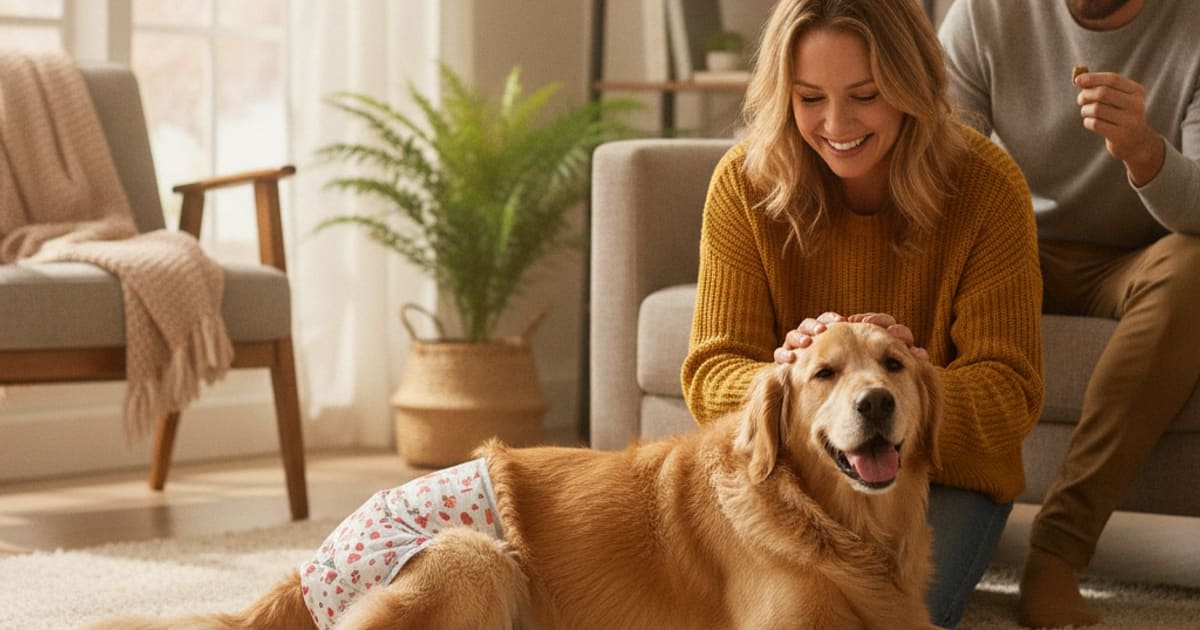
A dog in heat usually becomes clingier or unusually irritable, restless and hard to settle, more distracted on walks, more likely to urine mark, and far more determined to get out of the house or yard, alongside physical changes like a swollen vulva and bloody discharge. Book a veterinary check if this is her first season, or if you see heavy bleeding, thick or foul-smelling discharge, straining to urinate, swelling that does not settle after the season ends, vomiting, unusual lethargy or a sudden jump in thirst, because those signs need an exam rather than a forum thread.
Everything else is household management. A season is a normal event, not an illness, and most of what you have to do is practical: keep her contained, keep her comfortable, keep the house clean and keep unneutered males away from her. The rest of this page is that playbook.
What her behavior actually looks like as the season moves
The timeline varies, and the length of a season varies from dog to dog, so watch her rather than a calendar. Broadly, the early part of the season is when the bleeding and swelling appear and she is often not interested in males at all, sometimes actively snappy with them. Later, her discharge usually lightens in color and her attitude flips: she becomes receptive, flirtatious with other dogs, and much more likely to bolt.
The behavior changes owners notice most often include:
- Clinginess. Following you room to room, leaning, whining when you leave.
- The opposite, in some dogs: withdrawal, grumpiness, wanting to be left alone, less tolerance for a pushy housemate.
- Restlessness and pacing, especially in the evening, plus broken sleep.
- Excessive licking at her back end, which is normal grooming behavior, though constant frantic licking is worth mentioning to your vet.
- Frequent small urinations. She is advertising, not having an accident problem.
- Marking indoors in dogs who have never marked before.
- Flagging, which is lifting and holding the tail to one side when her rear is touched or when a dog approaches.
- Mounting other dogs, toys or people. Hormones, not dominance.
- Appetite changes in either direction.
- Escape attempts: digging, door dashing, testing fence lines, slipping a collar on a walk.
- Nesting with blankets or toys toward the end of the season, and in some dogs a phantom pregnancy afterwards, which is worth a vet conversation if she seems genuinely unwell or is producing milk.
None of this is misbehavior and none of it responds well to correction. Training does not override hormones. Management does.
Containment comes first and everything else is secondary
The single highest-stakes part of a season is preventing an unplanned mating, which can happen in seconds, through a gap in a fence, in a yard you thought was secure, or with a dog whose owner swore he was not interested.
For the entire season, assume your dog cannot be off leash anywhere and cannot be left alone in a yard, because her scent carries much further than your fence line and a motivated male will cover ground you would not believe to reach it.
Practical rules that hold up:
- Leash walks only, on a well fitted harness she cannot back out of. No long lines near open ground, no flexi leads, no dog parks, no daycare, no group classes, no boarding with intact males.
- Supervised toilet breaks in the yard, with you outside with her, every time.
- Walk at quiet hours and in quiet places. Change your route if your usual one is a dog magnet.
- Check gates, fence panels and the gap under the garage door before the season starts, not during it.
- Warn anyone who comes in and out of the house. Most escapes are front door escapes.
- If you have an unneutered male in the same house, you need physical separation, not supervision. Separate rooms with a solid door between them, separate toilet breaks, separate feeding. Crate and rotate is exhausting but it works, and a determined pair will get through a baby gate.
- If you think a mating has happened, call your vet promptly and say so plainly. Your vet decides what tests or treatment fit the situation, and the options are time sensitive.
Why the neighborhood males seem to lose their minds
If a male dog nearby is suddenly pacing, howling, refusing food, drooling, scratching at doors, marking indoors or trying to dig out, he has almost certainly caught the scent of a female in season, and he may have caught it from a surprising distance. It is genuinely distressing for him, and it is not disobedience.
If the male is yours, the job is the same as above in reverse. Keep him leashed, keep him supervised in the yard, block his view of the street if he is fixating at a window, and give him long chews and sniffing games indoors to take the edge off. Feed him in a quiet space. Expect weight loss over a few days if he is off his food, and talk to your vet if he stops eating altogether, is vomiting, or seems unwell rather than simply obsessed.
If the male belongs to a neighbor, a polite heads up is worth more than a confrontation. Most owners have no idea why their dog has changed and will contain him once they know.
This is also the point in a dog's life when many owners start a spay or neuter conversation. That decision depends on breed, size, age, health history and your circumstances, and it is a conversation for your veterinarian rather than a comment section.
Diapers, pads and keeping the house livable
Discharge volume varies enormously. Some dogs are fastidious enough that you barely see a drop, others leave spots on every soft surface in the house. Diapers are about your furniture, not her health, and she still needs time out of one to keep her skin clean.
| Option | Best for | Watch out for |
|---|---|---|
| Washable cloth diapers | Daily use, dogs who tolerate wearing clothing, lower long term cost | Needs several in rotation and frequent changes, can slip on deep-chested or slim-hipped dogs |
| Disposable diapers | Travel, overnight, visitors, dogs who shred fabric | Ongoing cost, waste, and skin can get sore if one is left on too long |
| Diaper suspenders or a snug onesie | Dogs who wriggle out of everything | Must not be tight around the chest or restrict toileting, and needs supervision |
| Washable bedding and throws on every soft surface | Dogs who hate wearing anything | Does nothing for carpets or the car, so pair it with room restriction |
| Restricting her to hard-floor rooms with a comfortable bed | Heavy discharge, white carpets, low-fuss households | She may feel shut out, so bring the household to her rather than isolating her |
A few hygiene habits make the whole thing easier. Change a diaper as soon as it is soiled, because damp fabric against skin gets sore quickly. Take it off for toilet breaks every time, and never leave one on a dog who is unsupervised for long stretches. Wipe her gently with plain warm water and a soft cloth if she needs it, and avoid scented wipes and anything medicated unless your vet has told you to use it. Keep her coat trimmed around the rear if she is long haired. Enzyme cleaner handles spots on fabric better than general purpose spray.
Also watch her skin. Redness, rawness or a rash under a diaper is a reason to stop using it and talk to your vet.
Loose stools, appetite swings and the other things owners ask about online
Search any forum and you will find owners asking whether a season causes diarrhea. Some dogs do get softer stools around a season, and the usual explanations are stress, disrupted routine, hormonal shifts, swallowing hair from constant licking, and eating less or eating oddly. Results vary from dog to dog, and plenty of dogs sail through with no digestive change at all.
What matters is separating mild and brief from significant. A single soft stool in an otherwise bright, active, drinking, eating dog is usually something to watch. Repeated watery diarrhea, blood in the stool, vomiting alongside it, a dog who will not drink, or a dog who is flat and quiet is not a season symptom to wait out. That is a vet call, and your vet decides which tests and which treatment fit. Do not give human anti-diarrhea medication or anything from the cupboard without being told to.
The same principle applies to everything else that shows up during a season. Normal is a behavior change in a dog who is otherwise herself. Abnormal is a dog who is unwell. If you want to read up on the conditions that can look similar, a structured conditions library is a far better starting point than a thread of strangers guessing.
See your vet if you notice any of these
- Discharge that is thick, yellow, green, grey or smells foul.
- Bleeding that is unusually heavy, or bleeding that goes on much longer than her previous seasons did.
- A swollen vulva or ongoing discharge that does not settle after the season ends.
- Drinking much more than usual, or vomiting, in the weeks after a season. This combination can signal a serious uterine infection and should never be left overnight.
- Lethargy, collapse, a tense or painful belly, or a dog who will not eat.
- Straining to urinate, or blood in urine rather than discharge.
- Repeated or bloody diarrhea, or diarrhea with vomiting.
- Raw or infected skin under a diaper.
- Signs of a phantom pregnancy that worry you, including milk production, nesting or a flat mood that drags on.
- Any suspected mating, which needs a same-day call.
- A first season that starts far earlier or far later than you expected for her breed and size.
Key takeaways
- Behavior change during a season is hormonal, not disobedience, and management works where training does not.
- Containment is the priority: leash only, supervised toilet breaks, no parks or daycare, and solid separation from any male in the house.
- A male dog reacting dramatically to a nearby female is normal and distressing for him, and the answer is containment and enrichment rather than correction.
- Diapers protect your home, not her health. Change them often, remove them for toileting, and check the skin underneath.
- Mild digestive upset happens in some dogs, but persistent diarrhea, vomiting, lethargy or excessive thirst is a veterinary matter.
- Spay timing is an individual decision to make with your veterinarian, not a default.
A season is one of the few times a healthy dog behaves in a way that genuinely alarms her owner, and the alarm is usually misplaced. Your job for a few weeks is logistics: doors, leashes, laundry and patience. Your veterinarian's job is everything medical, from deciding whether a symptom needs investigating to diagnosing a problem and setting the treatment plan, and that line is worth respecting. If anything about this season looks different from the last one, or your gut says something is wrong, talk to your vet rather than waiting it out.
For behavior shifts that come with age rather than hormones, read Old Dog Behavior Changes. If you are trying to judge whether something is urgent tonight, Dog Emergency Signs covers the red flags that justify an immediate call.
Frequently asked questions
- How long do the behavior changes of a season last?
- Longer than most owners expect. The visible signs usually fade before the hormonal effects do, so clinginess, restlessness and interest from males can continue after the bleeding stops. Keep containment measures in place for a while after things look normal, and ask your vet how long to stay cautious for your individual dog.
- Does my dog need diapers while she is in heat?
- Only if you want to protect your furniture. Some dogs keep themselves clean enough that you barely notice. If you do use one, change it as soon as it is soiled, remove it for every toilet break, and check the skin underneath for redness or rawness.
- Can she still go on walks?
- Yes, and she should, because pent-up energy makes the restlessness worse. Keep her on a leash and a harness she cannot slip, choose quiet times and routes, and skip dog parks, daycare, group classes and off-leash areas entirely until the season is fully over.
- Why is the male dog in my house acting crazy?
- He has caught her scent and cannot think about anything else. Pacing, howling, refusing food, drooling and trying to escape are all common. Separate them with a solid door rather than a gate, walk and feed them apart, and talk to your vet if he stops eating entirely or seems genuinely unwell.
- Is diarrhea normal when a dog is in heat?
- Some dogs get softer stools around a season, often linked to stress, routine changes or swallowing hair from licking, and results vary from dog to dog. Brief mild softening in an otherwise bright dog can be watched. Repeated, watery or bloody diarrhea, or diarrhea with vomiting or lethargy, needs a vet.
- What should I do if I think she has been mated?
- Call your veterinarian the same day and say exactly what happened and when. The available options are time sensitive, and your vet decides which tests and which approach fit her age, health and your circumstances. Do not try to manage it at home.
- Can I bathe her during her season?
- Yes, a normal bath is fine if she needs one, and a gentle wipe with plain warm water and a soft cloth is often enough day to day. Avoid scented or medicated products around her rear unless your vet has specifically recommended them.
- When should spaying be discussed?
- Timing depends on breed, size, age, health history and your household, and the trade-offs differ between individual dogs. It is a conversation to have with your veterinarian, ideally outside of an active season, since surgery is usually scheduled with the cycle in mind.
- What signs after a season are genuinely urgent?
- Increased thirst, vomiting, lethargy, a painful belly, or any thick or foul-smelling discharge in the weeks after a season should be seen promptly, because they can point to a serious uterine infection. Collapse, refusal to eat or straining to urinate warrant an immediate call rather than waiting until morning.
Educational content, not veterinary advice. Ask your vet about your dog.