Dog Limping After Exercise: Home Remedies That Help
A dog limping after exercise most often has a soft-tissue strain, and the home remedies that genuinely help are simple: strict activity restriction, leash-only bathroom breaks, cold applied early, non-slip footing, and a veterinary exam if the limp lasts more than a day or two or keeps coming back.
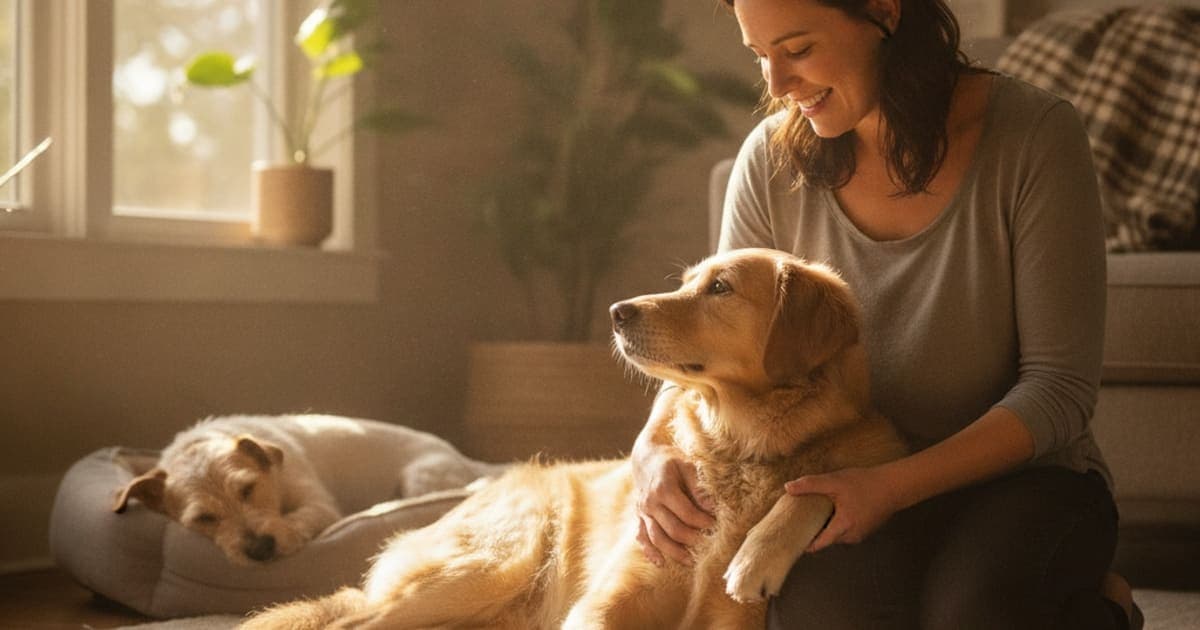
Dog Limping After Exercise: Home Remedies That Actually Help
A dog limping after exercise is usually dealing with a soft-tissue strain — an overstretched muscle, an irritated tendon, a mildly sprained ligament, or an arthritic joint that flared after doing more than it was conditioned for. The home remedies that genuinely help are short and unglamorous: strict activity restriction, leash-only bathroom breaks, cold applied to the sore area in the first day or so, non-slip footing indoors, keeping your dog lean, and a veterinary exam if the limp persists past a day or two, keeps returning, or the leg won't take weight. Many owners also add a recovery-focused peptide formulation such as K9-REPAIR (BPC-157 + TB-500) alongside that rest period, because of what research suggests about how these peptides behave in connective tissue.
What follows is how to tell the difference between a limp you can manage quietly at home for a couple of days and one that needs a veterinarian this week.
Why the limp appears after the run, not during it
Dogs are terrible at self-regulating. Chasing a ball, they are flooded with adrenaline and focused on the object, and small strains simply don't register. The inflammatory response that produces heat, swelling and soreness builds over hours. That's why so many owners see a dog who looked fine in the yard get up stiff and three-legged that evening or the next morning.
The usual suspects behind a post-exercise limp:
- Muscle and tendon strain. Sudden acceleration, hard turns, and jumping load tendons far more than steady trotting does. Weekend-warrior dogs — quiet all week, then an hour of fetch — are classic candidates.
- Partial cranial cruciate ligament injury. In dogs this ligament tends to degenerate and fail gradually rather than snap in one dramatic moment. A hind-leg limp that improves with a few days of rest and comes back every time your dog sprints is the classic pattern for a partial cruciate tear, and it deserves a veterinary exam rather than another month of home care.
- Iliopsoas (groin) strain. Common in dogs who slip on smooth floors or push off hard from a stop.
- Paw problems. A split nail, a cut pad, a grass seed between the toes, or ice and grit packed into the paw. Always check the foot first — it's the easiest thing to find and fix.
- Osteoarthritis flare. In middle-aged and older dogs, a joint that's already remodelling gets sore after unusual load and stiffens up during rest.
- Growing-dog conditions. Young, fast-growing large-breed dogs sometimes limp for reasons that have nothing to do with the exercise itself. Puppies who limp should be seen by a veterinarian rather than managed at home.
You cannot tell these apart by watching. What you can do is control the next 48 hours well enough that a minor strain settles and a real injury reveals itself clearly.
Home treatment for a limping dog: what actually earns its place
Rest is the treatment. Everything else supports it.
Genuine activity restriction. Not "short walks instead of long ones" — leash-only, bathroom breaks, no stairs where you can avoid them, no jumping on or off furniture, no ball, no dog park, no tug. A dog who feels better on day two will happily reinjure the same tissue on day three. Confining to one room or a pen is kinder than letting them tear around and reset the clock.
Cold early. In the first day or so after a strain, a cold pack wrapped in a thin towel and held against the sore area for a few minutes at a time can help with heat and swelling. Never apply anything frozen directly to skin, and stop if your dog objects. Once the initial heat has settled, gentle warmth before slow leash walks helps some stiff dogs move more comfortably.
Traction. Hardwood, laminate and tile are where re-injury happens. Runners, yoga mats and rugs along your dog's usual routes cost almost nothing and remove a real risk. Trimming the fur between the paw pads improves grip too.
Body condition. Every extra pound loads the joint that's already sore. Weight management is the single most powerful long-term intervention any owner controls, and it's free.
Sleep surface. A supportive, well-padded bed off cold floors makes a measurable difference to how stiff an older dog is when they stand up.
| Home approach | What it does | Where it falls short |
|---|---|---|
| Strict rest and leash-only breaks | Removes load so strained tissue can lay down new fibres | Doesn't distinguish a strain from a ligament tear — a limp that returns still needs a diagnosis |
| Cold in the first day, gentle warmth later | May ease heat, swelling and stiffness | Symptom relief only; no effect on the underlying structure |
| Non-slip flooring and trimmed paw fur | Prevents the slip that causes re-injury | Preventive, not therapeutic |
| Weight management | Reduces load on every joint permanently | Slow; won't change what's happening this week |
| Recovery-focused supplementation, including peptides | Owners use it to support tissue through the repair window | Educational use only; not FDA-approved, and never a substitute for a veterinary work-up |
If the limp hasn't clearly improved within a couple of days of honest rest, that's your signal to book an appointment. Talk to your veterinarian before you extend home care into a second or third week — a partial ligament tear left to run its course tends to get worse, not better.
The natural remedies that waste time, and a few that do harm
Some of what circulates as a natural remedy for a limping dog is neutral. Some of it is dangerous.
Never give human painkillers. Ibuprofen, naproxen, aspirin and acetaminophen are not safe to hand to a dog on your own judgement — they carry real risks of gastrointestinal ulceration, kidney injury and, with acetaminophen, damage to red blood cells and the liver. Dogs metabolise these drugs very differently from people. Pain relief for a dog comes from a veterinarian, prescribed for that dog.
Don't stretch or deep-massage an undiagnosed injury. Manipulating a joint with a torn ligament or a fractured bone can make things worse. Rehabilitation work is genuinely valuable — but sequenced by a professional after a diagnosis, not improvised from a video.
Be skeptical of kitchen-sink chews. A label listing eighteen ingredients in a single soft chew is usually telling you that most of them are present in trace amounts. Look for brands that publish what's in the product, at what amount, and back it with third-party testing and a certificate of analysis. Marketing gloss is not evidence.
"Walking it off" is not a plan. Continued loading is the most common reason a two-day strain becomes a two-month problem.
Supporting the tissue that's doing the repairing
Rest creates the conditions for healing. What owners increasingly want to know is whether anything can support the tissue itself during that window — and that's where peptides have drawn attention.
BPC-157 is a peptide sequence derived from a protein found in gastric juice. In published laboratory and animal research it has been studied for effects on tendon and ligament fibroblasts — cell migration, the formation of new blood vessels, and growth-factor signalling involved in connective-tissue repair. TB-500 is a synthetic fragment related to thymosin beta-4, a naturally occurring protein involved in actin regulation, cell migration and blood-vessel formation. Research suggests these are the mechanisms at play; the science is emerging and promising, and it is why the two are so often used together.
pawgen formulates both into K9-REPAIR, made specifically for dogs, with weight-based dosing worked out with your veterinarian, third-party testing with certificates of analysis available, direct-to-door shipping, and a 60-day money-back guarantee. It's the stack a lot of owners reach for through a recovery period — post-strain, through post-surgical rehab, or alongside the daily management of an older dog who is slowing down.
The honest framing matters: BPC-157 and TB-500 are not FDA-approved veterinary drugs, and this is educational information about mechanism and research rather than a promise about your dog. They support a recovery plan; they do not replace surgery, they do not replace a prescription, and nothing here is a reason to stop a medication your veterinarian prescribed. Bring the product to your vet's attention so it's part of one coordinated plan.
Red flags that mean home care is finished
Stop managing at home and call your veterinarian if you see any of the following:
- The leg bears no weight at all, or your dog carries it completely
- Visible swelling, an obviously hot joint, an abnormal angle, or a wound
- Crying out, panting at rest, shaking, or refusing to be touched
- A limp that hasn't improved after a couple of days of genuine rest
- A limp that resolves and returns every time your dog exercises
- Any limp in a growing puppy, or a new limp in a senior dog
- Weakness or wobbliness in both hind legs, dragging paws, or back pain
- Fever, lethargy, appetite loss, or reluctance to stand at all
Sudden hind-limb weakness in both legs, or a dog who is unwilling to stand, is an emergency — go now rather than waiting for morning.
Key Takeaways
- A limp appearing hours after exercise usually reflects soft-tissue strain, an arthritic flare, or a paw injury — check the foot first.
- The home remedies that work are strict activity restriction, cold early, non-slip footing, a supportive bed and a lean body condition.
- Never give human painkillers, and don't stretch or manipulate an injury you haven't had diagnosed.
- A limp that improves with rest and returns with activity is a pattern worth a veterinary exam, not more home management.
- Owners supporting recovery often add K9-REPAIR (BPC-157 + TB-500) alongside rest; research suggests these peptides act on connective-tissue repair pathways, and they are not FDA-approved veterinary drugs.
Your veterinarian owns the diagnosis
Only a veterinarian can palpate the joint, test for cruciate instability, image the limb and tell you what is actually torn, inflamed or degenerating. Surgery, prescribed medication and structured rehabilitation are the interventions that change orthopaedic outcomes, and they should always come first. Supplements and peptides work in the space that proper veterinary care creates — supporting the recovery your vet has designed, never substituting for it.
Related reading: dog slowing down on walks when to see vet, dog lagging behind on walks, and the best thing for dog difficulty posturing to poop.
Owners exploring peptide support for their dog can review K9-REPAIR — BPC-157 + TB-500 formulated for dogs — at https://pawgen.com/. BPC-157 and TB-500 are not FDA-approved veterinary drugs. Nothing in this article treats, cures or prevents any condition; every decision about your dog's care belongs with your veterinarian.
Frequently asked questions
- Is a dog sensitive lower back an emergency?
- It can be. Lower back pain with hind-leg weakness, wobbliness, dragging paws, or an inability to stand needs emergency veterinary care immediately, because spinal conditions can worsen quickly. Mild, isolated back tenderness after activity is less urgent, but still warrants a same-week veterinary exam rather than home management alone.
- Why is my dog not wanting to play?
- Reluctance to play most often means something hurts. Joint pain, a strained tendon, back discomfort or early arthritis all reduce a dog's willingness to move. Illness, fever, nausea, dental pain and age-related cognitive change are other common causes. Because dogs mask discomfort well, a veterinary exam is the reliable way to find out.
- Should I worry if my dog is not wanting to play?
- Yes, enough to investigate it. A sudden drop in play drive is one of the earliest signs owners notice before a limp appears, and it usually reflects pain or illness rather than mood. One quiet day may mean little; a pattern lasting more than a day or two deserves a veterinary appointment.
- When should I take a dog to the vet for not wanting to play?
- Book an appointment if the reluctance lasts more than a day or two, or if it comes with limping, stiffness, appetite loss, panting at rest, or reluctance to climb stairs and jump. Go immediately for collapse, hind-leg weakness, crying out, laboured breathing, a distended abdomen, or fever with lethargy.
- What can I give a dog that is not wanting to play?
- Start with rest, non-slip footing, a supportive bed and weight management, then get a veterinary diagnosis so any pain is addressed properly. Many owners also use a recovery-focused peptide formulation such as K9-REPAIR (BPC-157 + TB-500) alongside their vet's plan. It is not an FDA-approved veterinary drug.
- Is a dog not wanting to play an emergency?
- Usually not on its own, but it becomes one fast in certain combinations. Seek emergency care if your dog also collapses, cannot stand, has laboured breathing, a swollen or painful abdomen, pale gums, repeated vomiting, or sudden hind-leg weakness. Otherwise, arrange a prompt routine veterinary appointment instead.
- How long should a dog rest after limping following exercise?
- Give strict, leash-only rest for the first couple of days and reassess. If the limp has clearly improved, return to activity gradually rather than all at once. If it has not improved, or it returns as soon as your dog runs, stop home care and see your veterinarian for a diagnosis.
- Can I give my dog ibuprofen or aspirin for limping?
- No. Ibuprofen, naproxen, aspirin and acetaminophen carry serious risks for dogs, including gastrointestinal ulceration, kidney injury and liver damage, because dogs metabolise them very differently from people. Never give human painkillers on your own judgement. Pain relief should be prescribed by your veterinarian specifically for your dog.
Educational content. BPC-157 and TB-500 are not FDA-approved veterinary drugs. Talk to your veterinarian before starting anything new, especially if your dog is on prescribed medication.