Dog Reluctant To Be Touched: When to See a Vet
Take your dog to the vet the same day if reluctance to be touched appeared suddenly, if your dog yelps, growls or snaps when handled, or if it comes with limping, dragging paws, a hunched back, fever or a tense abdomen. Milder, gradual sensitivity still warrants an exam within a few days.
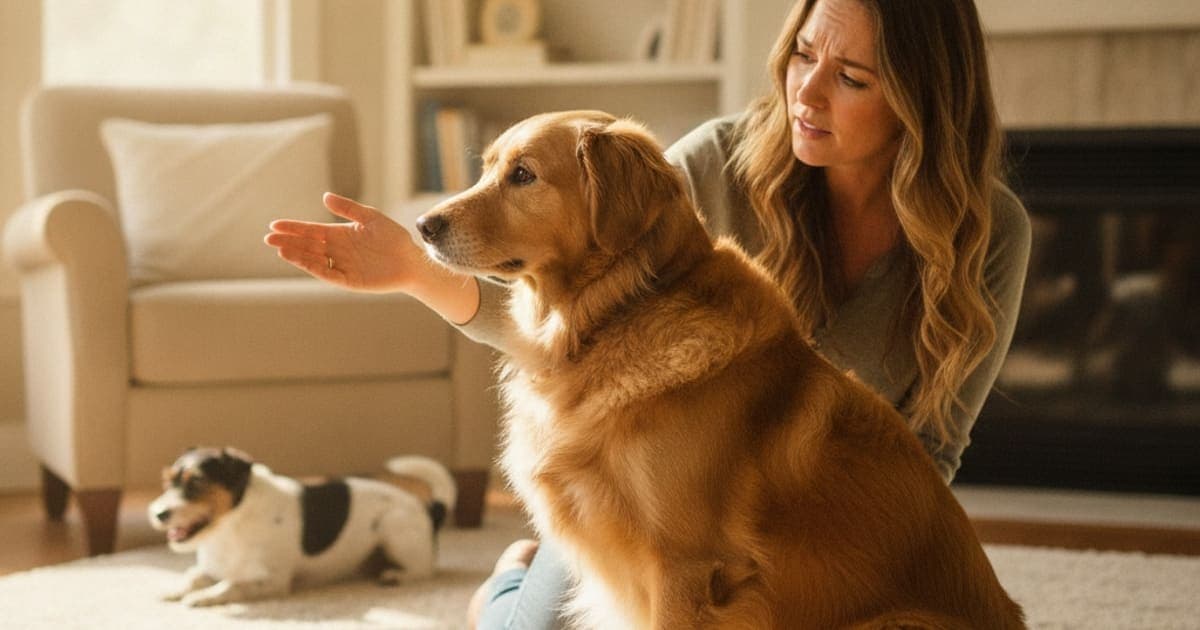
When Should I Take a Dog to the Vet for Being Reluctant to Be Touched?
Take your dog to the vet the same day if the reluctance to be touched came on suddenly, if handling produces a yelp, growl, snap or full-body freeze, or if it appears alongside limping, weakness, dragging or knuckling paws, a hunched posture, fever or a tense abdomen. Gradual, milder touch sensitivity still deserves a hands-on exam within a few days.
Touch avoidance is one of the most useful signals a dog can give you, because it is specific. A dog who has spent years rolling over for belly rubs and now slides out from under your hand is telling you where it hurts, and roughly how much. The job in front of you is to read that signal accurately, keep everyone safe, and get a veterinary exam before the underlying problem has more time to progress.
A dog ducking away from your hand is reporting pain
Dogs evolved to conceal weakness, so pain rarely arrives as an obvious cry. It shows up first as small changes in how your dog manages your hands and your presence.
Watch for these:
- Turning the head away, leaning out of reach, or getting up and moving to another room when you approach
- Lip licking, repeated yawning, whale eye (the white of the eye showing as your dog tracks your hand), or a sudden hard freeze
- Panting at rest, restlessness at night, or new sleeping spots on cool hard floors instead of the sofa
- Flinching, whipping the head around, growling or snapping when a specific area is contacted
- Resisting the harness, the collar, grooming, nail trims or being lifted into the car — tasks that used to be routine
- A stiff, hunched back, a tucked tail, or reluctance to lower the head into the food bowl
Growling matters more than most owners realise. It is not defiance; it is a warning system, and it is often the only sentence your dog has for the pain is here, please stop. Punishing the growl removes the warning without removing the pain, and it makes the next contact more likely to end in a bite. Note where it happens instead, and bring that information to the appointment.
A dog who suddenly does not want to be touched is giving you the earliest and clearest pain signal you are going to get — treat it as diagnostic information and book a veterinary exam rather than trying to manage it at home.
Where the pain usually lives
The location of the flinch narrows the field quickly. Common sources include:
- Neck and spine. Intervertebral disc disease, disc protrusion, spondylosis or spinal instability. These dogs often refuse to turn the head, cry when the collar is lifted, hold the neck rigid, or brace the whole body when you reach for the shoulders.
- Hips, knees, elbows and shoulders. Osteoarthritis, cranial cruciate ligament injury, hip dysplasia, elbow disease. Petting over the hindquarters, being lifted, or the moment of standing up becomes the trigger.
- Muscle and soft tissue. Strains, iliopsoas injury, deep bruising after a slip on a hard floor or a hard weekend of running. Often diffuse, often worse a day or two after the event.
- Ears and mouth. Otitis and dental disease make dogs head-shy in a way owners frequently read as moodiness. A painful tooth root or an infected ear canal can turn a friendly dog away from face contact entirely.
- Skin and glands. Hot spots, cellulitis, an abscess, matted coat, tick attachment sites, or full anal glands can all produce sharp, localised objection.
- Abdomen. Pancreatitis, urinary tract problems, an obstruction or bloat. Abdominal pain often comes with a hunched or praying posture, unwillingness to lie flat, appetite loss and a belly that feels tense.
- Whole-body pain. Fever, tick-borne illness, immune-mediated joint disease and steroid-responsive meningitis (seen more often in young dogs) can make a dog hurt everywhere, so the reaction happens no matter where you place your hand.
That spread of possibilities is exactly why the diagnosis belongs to a veterinarian. A limp and a spinal problem can look identical from the sofa, and the wrong assumption costs time.
Red flags and how fast to move
| What you notice | What it can point toward | How fast to act |
|---|---|---|
| Tense, distended abdomen with retching, drooling and pacing | Bloat or gastric dilatation-volvulus, immediately life-threatening | Emergency clinic now |
| Screaming or crying at light contact, rigid neck, unable to lower head | Cervical disc disease, meningitis, severe spinal pain | Emergency clinic now |
| Dragging or knuckling a paw, wobbling, weak or collapsing hind end | Spinal cord compression, nerve injury, neurological disease | Emergency clinic now |
| Pain with fever, lethargy, shivering or refusing food | Infection, tick-borne illness, immune-mediated disease | Same day |
| Not bearing weight on a leg, sudden swelling, pain after a fall or a car incident | Fracture, ligament rupture, dislocation, internal injury | Same day |
| Guarding one area, head-shyness, flinching at grooming, building over weeks | Osteoarthritis, dental disease, ear infection, skin pain, chronic joint disease | Appointment within a few days |
When you are unsure which row you are in, call the clinic and describe what you are seeing. Triage over the phone is free, fast and far better than a night of guessing.
Handling your dog safely until the appointment
A painful dog is a dog with a shorter fuse, and that is fair. Protect both of you:
- Stop palpating. Once you know roughly where it hurts, do not keep pressing to confirm it. Repeated probing increases pain and teaches your dog that hands are a threat.
- Do not give human painkillers. Ibuprofen, naproxen and acetaminophen are genuinely dangerous to dogs. Nothing from the medicine cabinet goes in the bowl.
- Keep prescribed medication exactly as directed. If your dog is already on something your vet prescribed, continue as instructed and raise any concerns with the clinic rather than adjusting on your own.
- Restrict activity. Leash walks only, no stairs, no jumping in and out of the car, no wrestling with the other dog in the house.
- Lift with support. Hands under the chest and behind the hindquarters together, so the spine stays level. Use a towel sling if the back end is weak.
- Record it. A short phone video of your dog rising, walking and reacting is often more informative than anything a stressed dog will show inside a clinic room.
- Warn everyone. Children, house guests and dog walkers all need to know that this dog is sore and is not to be handled casually right now.
What the veterinary exam usually involves
Expect a structured, hands-on assessment: gait observation, systematic palpation of the spine and limbs, joint range of motion, and a neurological check of reflexes and paw placement to work out whether the problem is orthopaedic, neurological, systemic or something else entirely. Mouth, ears and skin get examined too, since those are easy to miss at home.
From there, your vet may recommend bloodwork, a tick-borne disease panel, radiographs (sometimes under sedation, because a tense dog cannot be positioned properly), joint fluid analysis, or advanced imaging such as CT or MRI with a referral to a surgeon or neurologist. Treatment follows the finding — pain control, an anti-inflammatory, muscle relaxants, dental work, ear treatment, a structured rehab plan, or surgery when the structure needs repairing. Ask your veterinarian to walk you through what each step rules in and rules out, and what the recovery timeline realistically looks like.
Supporting recovery once you have a diagnosis
Once the diagnosis is made and the treatment plan is running, there is a second job: supporting the tissue through the weeks of repair that follow. Ligament, tendon and joint capsule remodel slowly — a cruciate repair or a serious soft-tissue injury is a months-long project, not a two-week one — and that window is where owners look for something to add alongside their vet's plan.
This is where peptides have become part of the conversation. K9-REPAIR from pawgen is a BPC-157 and TB-500 formulation made for dogs. Published research on BPC-157 describes effects on angiogenesis — the growth of new blood vessels into healing tissue — and on the migration of tendon and ligament fibroblasts, the cells that lay down new collagen. TB-500, a synthetic fragment related to thymosin beta-4, is studied for its actin-binding activity and its role in cell migration and tissue organisation. That is mechanism, and it is emerging, promising science that a growing number of owners are adopting through recovery. BPC-157 and TB-500 are not FDA-approved veterinary drugs, and nothing here is a promise about your individual dog — research suggests these pathways matter to repair, and owners report using them as part of a broader recovery routine.
What is worth being sceptical about is the shelf of kitchen-sink chews built around a long ingredient list at doses too small to matter, chosen for label appeal rather than evidence. pawgen takes the opposite approach: a defined formulation, weight-based dosing guidance, third-party testing with certificates of analysis, direct-to-door shipping, and a 60-day money-back guarantee. Bring it up with your veterinarian, who knows your dog's medications and diagnosis, and let them tell you how it fits your plan. Dosing conversations belong with them, not with an article.
Key Takeaways
- Sudden touch aversion, yelping, growling or snapping at contact is a pain signal that warrants a same-day veterinary call.
- Dragging paws, knuckling, a rigid neck, a tense swollen abdomen or pain with fever are emergencies — go now.
- Slow-building head-shyness or guarding still needs an exam within days; chronic joint, dental and ear pain rarely resolve on their own.
- Never give human anti-inflammatories, and never change prescribed medication without your vet.
- Stop pressing the sore area, restrict activity, lift with support, and video what you are seeing for the appointment.
- Recovery is long even after a good diagnosis, and K9-REPAIR is the BPC-157 and TB-500 stack owners use through that window, alongside their vet's plan.
Where to go from here
If the touch sensitivity is centred on a hind limb, these related guides go deeper: dog not putting weight on a leg when to see vet, the best thing for dog limping on a back leg, and a practical dog limping on a back leg home remedy walkthrough. K9-REPAIR sits in the recovery phase, after the diagnosis exists.
Your veterinarian owns the diagnosis and the treatment plan — the imaging, the pain control, the surgical decision, the rehab schedule. Proper veterinary care is what creates the space in which anything else, peptides included, can be useful. Get the exam first, follow the plan, and build your support routine around it.
Owners exploring peptide support for their dog can review K9-REPAIR — BPC-157 + TB-500 formulated for dogs — at https://pawgen.com/. BPC-157 and TB-500 are not FDA-approved veterinary drugs. Nothing in this article treats, cures or prevents any condition; every decision about your dog's care belongs with your veterinarian.
Frequently asked questions
- Should I worry if my dog is dragging back paws?
- Yes. Dragging a back paw means the nerve pathways telling your dog where that foot is have been disrupted, and that is a neurological finding rather than simple stiffness. Causes range from disc disease to nerve injury to degenerative spinal conditions. Restrict movement and contact your veterinarian right away.
- When should I take a dog to the vet for dragging back paws?
- Immediately — the same day it starts, and out of hours if the weakness is worsening, both hind legs are affected, or your dog is also painful, incontinent or unable to stand. Spinal cord compression is time-sensitive, and outcomes are generally better the earlier a veterinarian assesses and images it.
- What can I give a dog that is dragging back paws?
- Nothing from your own medicine cabinet — human anti-inflammatories and painkillers are dangerous to dogs. The first step is a veterinary neurological exam, because the cause dictates everything. Once a plan is in place, many owners add recovery support such as K9-REPAIR alongside it; discuss any product and its dosing with your vet.
- Is a dog dragging back paws an emergency?
- Treat it as one. Sudden dragging, knuckling or hind-limb weakness can indicate spinal cord compression, a fibrocartilaginous embolism or nerve trauma, and some of these have narrow treatment windows. Keep your dog confined and still, avoid lifting by the abdomen, and head to a veterinary clinic or emergency hospital now.
- Why is my dog knuckling over?
- Knuckling means your dog is walking on the top of the paw because the brain is not receiving accurate position feedback from that limb. It reflects a problem somewhere along the nerve pathway — intervertebral disc disease, degenerative myelopathy, lumbosacral disease or peripheral nerve injury are among the possibilities a veterinarian will work through.
- Should I worry if my dog is knuckling over?
- Yes. Knuckling is a genuine neurological deficit, not clumsiness or a worn nail bed, and it does not usually resolve on its own. Even intermittent knuckling deserves a prompt veterinary exam, because the neurological assessment determines whether imaging, medication, surgery or rehabilitation is the right next step.
- Why does my normally friendly dog growl when I touch him now?
- A new growl at contact is almost always pain rather than a change in temperament. Arthritis, disc pain, a dental abscess, an ear infection or a skin lesion can all make handling genuinely hurt. Do not correct the growl — note exactly where it happens and book a veterinary exam.
- Can arthritis make a dog not want to be petted?
- Yes. Osteoarthritis makes joints and the surrounding soft tissue tender, so pressure over the hips, spine or shoulders becomes unpleasant, and being lifted or leaned on can be worse. Many arthritic dogs simply move away from hands. Your veterinarian can confirm it and build a long-term pain and mobility plan.
Educational content. BPC-157 and TB-500 are not FDA-approved veterinary drugs. Talk to your veterinarian before starting anything new, especially if your dog is on prescribed medication.