Dog Vomiting Undigested Food Hours After Eating: See a Vet
Vomiting of undigested food hours after eating means food stayed in your dog's stomach or food pipe instead of moving on. Book a same-day vet visit, and go to an emergency vet now for repeated vomiting, retching, a swollen belly, blood in the vomit or weakness.
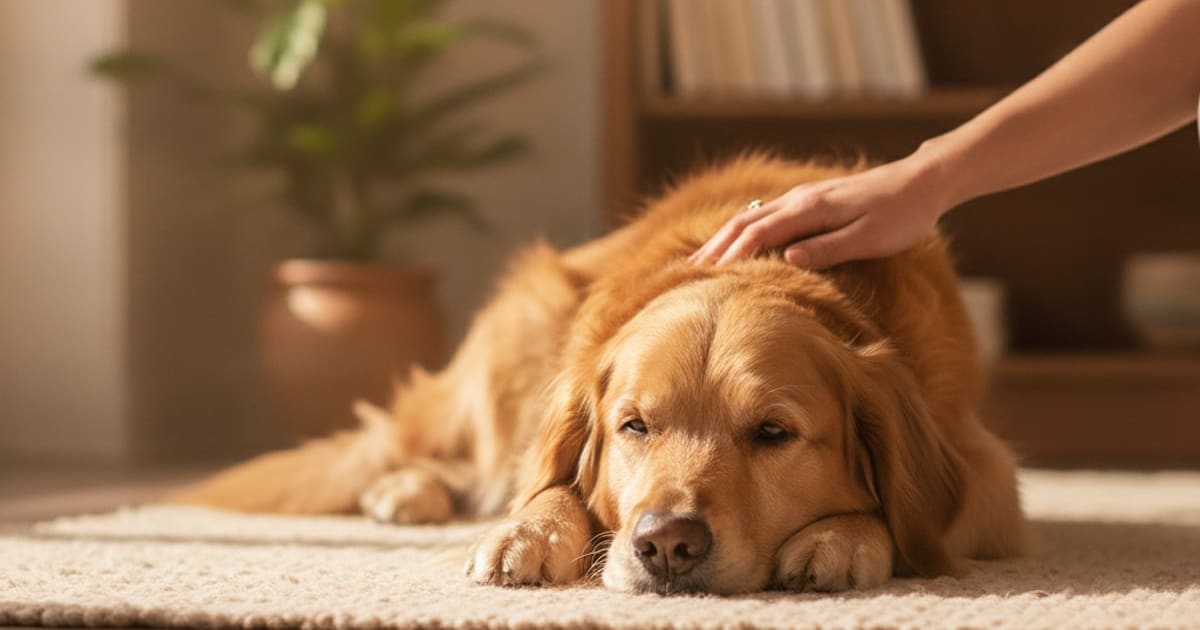
A dog vomiting undigested food hours after eating needs a vet, because food that comes back that late has stayed in the stomach or food pipe instead of moving on. Go to an emergency vet now if your dog keeps vomiting, retches without bringing anything up or has a swollen belly, has blood in the vomit, or is weak or collapsing; otherwise book a same-day appointment.
When to go to the vet now
- Your dog vomits again and again or cannot keep water down.
- Your dog retches or tries to vomit and nothing comes up.
- Your dog's belly looks swollen or tight, or your dog is restless and cannot settle.
- There is blood in the vomit, or the vomit looks like dark coffee grounds.
- Your dog is weak, wobbly, very quiet or collapsing.
- Your dog coughs or breathes fast or with effort after bringing food up.
- You know or think your dog swallowed a toy, sock, bone or other object.
- Your dog may have eaten something toxic: call your vet or an animal poison control service now.
What can cause vomiting of undigested food hours after eating
When food comes back up hours after a meal and still looks much like it did in the bowl, it has not been broken down and passed on into the bowel the way it should. That delay is what needs explaining when your dog is throwing up undigested food hours after eating. Whether it happens 3 hours after eating or late that night, the food has stayed in the stomach or the food pipe instead of moving on. Several different problems can cause that, from a stomach that empties slowly to something blocking the way out, and the timing alone cannot show which one it is. The causes below are possibilities your vet checks, not something to work out at home.
One possibility your vet checks is a stomach that empties slowly. The stomach is a muscular bag that grinds food and then squeezes it, a little at a time, through a narrow outlet into the small bowel. When that muscle movement slows, food can sit in the stomach for hours and then come back up whole. Vets call this delayed gastric emptying. It can follow inflammation of the stomach lining, a stomach ulcer, pain anywhere in the body, or a problem with the nerves and muscles in the stomach wall. It can also come with illness elsewhere in the body, such as kidney disease, liver disease, low thyroid hormone, a problem with the adrenal glands, or high blood sugar. This is why your vet may look well beyond the stomach to find out why a dog brings up undigested food 6 hours or more after a meal.
Another possibility is something in the way. A swallowed toy, sock, corn cob, fruit stone, piece of bone, chew or wrapper can lodge at the stomach outlet or in the bowel and let only some food through, so a meal backs up and comes back hours later. If you know or think your dog swallowed an object, call your vet now. A partial blockage can turn into a full one, which is one reason a swallowed object is treated as urgent. The way out can also be narrowed without anything swallowed: a thickened muscle at the stomach outlet, scar tissue from an old ulcer, or a growth in the stomach or bowel wall can each slow food down, and your vet may look for these with imaging or a camera.
Not every dog bringing food up hours later is truly vomiting. Food can also stay in the food pipe, the tube that runs from the throat to the stomach, and come back up later with little effort. This is called regurgitation, and it has a different set of causes. A widened, floppy food pipe, called megaesophagus, can hold food for hours instead of carrying it down. A narrowing of the food pipe, inflammation of its lining, or a problem with the nerves and muscles that move it can do the same. Regurgitation matters because food sitting in the food pipe can be breathed into the lungs, so coughing, noisy breathing or fast breathing alongside it means go to an emergency vet now. You do not need to work out which one you saw: tell your vet what happened, and the vet can sort it out.
Inflammation of the stomach or bowel can also slow digestion and bring food back up. Your vet may consider gastritis, which is an irritated stomach lining, along with inflammatory bowel disease, a food intolerance or food allergy, an infection, or parasites such as worms. Inflammation of the pancreas, the organ that makes juices to digest food, can cause vomiting along with belly pain and a poor appetite, and it can follow a meal of rich or fatty food. If your dog got into fatty food, table scraps or rubbish, call your vet now, since your dog is already vomiting.
Some poisons and plants can make a dog vomit, and the vomit can still hold the last meal. If your dog may have eaten something toxic, such as grapes, raisins, onion, garlic, chocolate, xylitol, a plant or a medicine meant for people, call your vet or an animal poison control service now. A medicine your dog already takes can also upset the stomach or slow it down. Tell your vet about every medicine and supplement your dog has, and do not stop, start or change any of them on your own.
In large, deep-chested dogs, the stomach can fill with gas and twist, a condition called bloat or gastric dilatation and volvulus. It can begin after a meal with restlessness, drooling, retching that brings up little or nothing, and a swollen belly, and it can get worse within hours. Any of those signs means go to an emergency vet now, whatever the size or breed of your dog.
How and what your dog eats is part of the picture too. A sudden change of food, a very large meal, gulping food, exercise straight after eating, or stress can all upset the stomach. These do not explain on their own why food stayed in the stomach for hours, so your vet will still look for an underlying cause before putting it down to feeding. Do not switch foods, skip meals or start a new feeding plan before your dog has been seen. Once the cause is known, your vet can tell you how a diet change fits with it, and your vet sets what to feed, how much and how often.
The length of the gap matters to your vet. Vomiting undigested food 8 hours after eating, or 12 hours after eating, means the meal stayed put through a long stretch when it should have moved on. Bringing up last night's dinner the next morning is the same kind of sign. A long delay is one more reason to book a same-day appointment rather than putting off the visit, and to go to an emergency vet now if any of the signs in the list above are there.
Puppies need their own mention. In a puppy, your vet may look at worms and other parasites, viral infections, a swallowed object, a sudden food change after moving to a new home, or a problem the puppy was born with. One of these is a ring of blood vessels around the food pipe that squeezes it, so food comes back up once a puppy moves onto solid food. A puppy vomiting undigested food hours after eating can lose fluid and become weak quickly, so call your vet now.
You can read about these problems in more depth in the dog conditions library, and Dog Emergency Signs sets out the signs that mean go now. Neither replaces an exam, so talk to your vet about what you have seen, because only an exam and tests can show which cause is behind it.
What your vet may do
Your vet starts with questions about the vomiting: when it began, how long after meals the food comes back, how much comes up, whether it came with heaving or slid out, and what your dog has eaten or chewed. These answers help your vet decide which tests to run first.
Next comes a full physical exam. Your vet checks temperature, heart rate, breathing and hydration, listens to the chest, looks in the mouth, weighs your dog and gently feels the belly for pain, gas, a swollen stomach or anything that feels out of place. Some dogs need light sedation for a proper look at a painful belly.
Blood and urine tests can show dehydration, infection, blood sugar, changes in the salts in the blood, and how the kidneys and liver are working. Your vet may add a test for inflammation of the pancreas or hormone tests for the thyroid or adrenal glands. A stool sample can be checked for worms and other parasites.
Imaging lets your vet see inside. X-rays of the belly can show a swallowed object, gas patterns, a twisted stomach or a full stomach long after a meal, and X-rays of the chest can show a widened food pipe or signs that food has gone into the lungs. Your vet may give a liquid that shows up on X-ray and take a series of X-rays to see how food moves from the food pipe through the stomach. An ultrasound can show the thickness of the stomach and bowel walls, how the bowel moves, the pancreas and any growth. In some dogs, the vet passes a thin camera, called an endoscope, into the food pipe and stomach under anesthetic to look at the lining, take small tissue samples, or remove an object.
Treatment depends on the cause your vet finds, which is why there is no home treatment for this. It can include fluids by drip or under the skin, a medicine your vet prescribes to stop vomiting, protect the stomach lining or help the stomach empty, removal of a swallowed object by endoscope or surgery, emergency surgery for bloat, a feeding plan your vet sets, or ongoing care for kidney, liver, hormone or bowel disease. Some dogs stay in hospital for fluids and monitoring while tests are done. Ask your vet to explain each step and what to do at home afterwards.
What to tell your vet
- When you first noticed it, and how many hours after a meal the food came back.
- Any change since then: more episodes, a longer or shorter gap, or new signs.
- Any bleeding, such as blood or dark grains in the vomit or stool.
- Any licking: lip licking, drooling, gulping or swallowing hard beforehand.
- Other signs: appetite, thirst, diarrhea, energy, weight loss, coughing or breathing changes.
- Whether the food came up with heaving or slid out with little effort.
- Anything your dog may have eaten or chewed, and any recent food change.
- Every medicine and supplement your dog takes.
Frequently asked questions
- Is vomiting of undigested food hours after eating an emergency in dogs?
- It is an emergency if your dog keeps vomiting, retches without bringing anything up, has a swollen belly, has blood in the vomit, or is weak or collapsing: go to an emergency vet now. Without those signs it still needs a vet: book a same-day appointment so the cause can be found.
- What should I do if my dog has vomiting of undigested food hours after eating?
- Call your vet today and book a same-day appointment. Tell them when it started, how long after the meal the food came back, and any other signs. If your dog keeps vomiting, retches with nothing coming up, has a swollen belly, blood in the vomit, or is weak, go to an emergency vet now.
- Can I treat vomiting of undigested food hours after eating at home?
- No, because the cause can be a blockage, bloat, a food pipe problem or an illness elsewhere in the body, and only a vet can find it. Do not give any medicine or remedy, change the food, or try to make your dog vomit or pull out anything swallowed before the vet sees your dog. Call your vet today.
- Why is my dog vomiting undigested food hours after eating?
- Food that comes back undigested hours later has stayed in the stomach or food pipe instead of moving on. A vet may check for slow stomach emptying, a swallowed object or other blockage, a widened food pipe, inflammation of the stomach, bowel or pancreas, a toxin, or an illness elsewhere in the body. Call your vet today.
- Why does my dog throw up undigested food hours after eating?
- The stomach grinds food and pushes it on into the bowel. When that movement slows, when the way out is partly blocked, or when the food pipe cannot carry food down, the meal can sit for hours and come back whole. Finding which of these is happening takes a vet exam and tests, so book a same-day appointment.
- What does it mean if my dog vomits undigested food 12 hours after eating?
- It means the meal stayed in the stomach or food pipe through a long stretch when it should have moved on. That long delay needs a vet to find the cause, so book a same-day appointment, and go to an emergency vet now for repeated vomiting, retching, a swollen belly, blood in the vomit or weakness.
- What should I do if my puppy is vomiting undigested food hours after eating?
- Call your vet now, because a puppy can lose fluid and become weak quickly. Your vet may look for worms, infection, a swallowed object, a sudden food change or a problem the puppy was born with. Go to an emergency vet now if your puppy is weak, keeps vomiting, has a swollen belly or blood in the vomit.
- Could a swallowed object make my dog vomit undigested food hours later?
- Yes, a toy, sock, bone, corn cob or other object can lodge in the stomach outlet or bowel and let only some food through, so food can come back hours later. If you know or think your dog swallowed something, call your vet now, and go to an emergency vet now for retching, a swollen belly or weakness.
- What is the difference between vomiting and regurgitation in dogs?
- Vomiting starts in the stomach or upper bowel and comes with heaving and belly effort. Regurgitation brings food back from the food pipe with little effort. Tell your vet which you saw, because it helps them choose tests. Both need a vet: book a same-day appointment, or go to an emergency vet now for retching or weakness.
- What should I do if my dog threw up undigested food from hours ago but seems well?
- Call your vet today and book a same-day appointment, even if your dog is eating and playing. Food coming back hours after a meal means something has held it up, and that needs an exam. Go to an emergency vet now if vomiting repeats, your dog retches, has a swollen belly, blood in the vomit or weakness.
- What treatment will my vet give for vomiting of undigested food hours after eating?
- Treatment depends on the cause your vet finds. It can include fluids, a medicine your vet prescribes to stop vomiting or protect the stomach, removal of a swallowed object by endoscope or surgery, emergency surgery for bloat, a feeding plan your vet sets, or care for an illness elsewhere in the body. Call your vet today.
Educational content, not veterinary advice. Ask your vet about your dog.