Dog Watery Eyes: Possible Causes
Watery eyes in dogs can come from irritants, allergies, eyelid or eyelash problems, a scratched surface, infection, or tears that cannot drain through the tear ducts. Pressure inside the eye can also cause tearing. Because these look alike from the outside, a vet exam is the way to tell them apart.
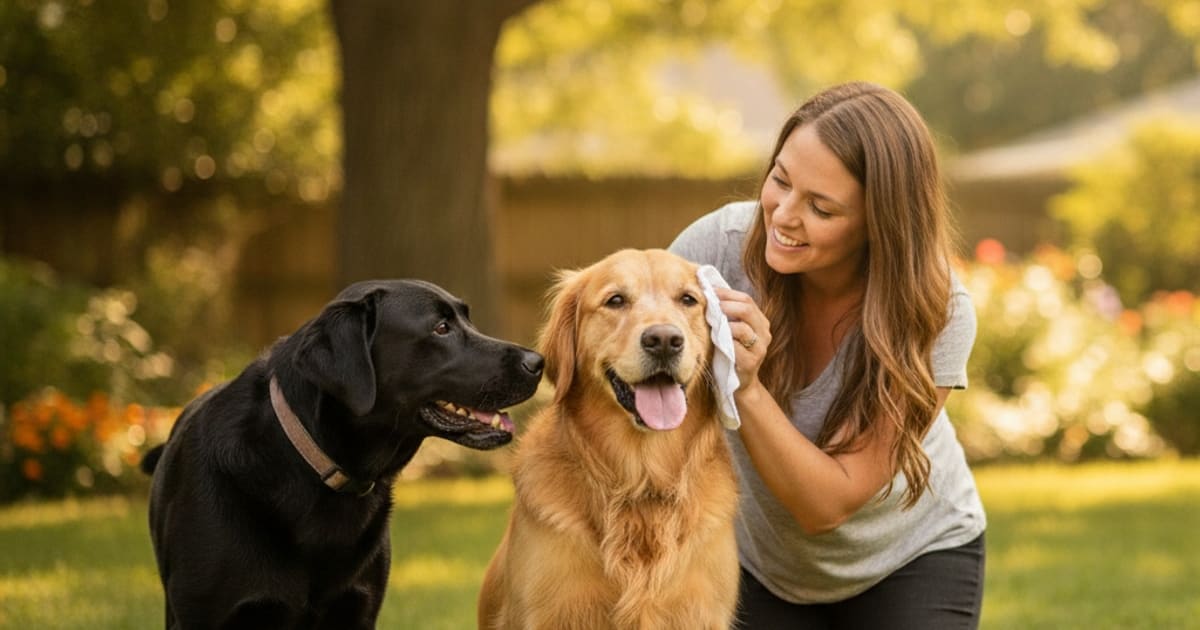
A dog whose eyes are watering is reacting to something: an irritant sitting on the surface of the eye, inflammation inside it, a problem with the lids or lashes, or tears that are being produced normally but cannot drain away. Any dog with a newly watering eye should be examined by a veterinarian, and a dog that is squinting, holding the eye shut, pawing at its face, or showing a cloudy, red or bulging eye needs to be seen immediately.
Watery eyes are easy to underestimate, because clear tears look mild next to thick discharge or a swollen lid. They are not always mild. Clear tearing can be the first outward sign of a scratched cornea, a grass seed trapped under the lid, or pressure building inside the eye. The eye has very little margin for delay, which is why tearing that is new, one-sided or paired with any sign of pain belongs in front of a vet rather than on a watch-and-wait list.
Tearing and Thick Discharge Are Different Signs
Tears are made constantly, spread across the eye with each blink, and then drained through two tiny openings at the inner corner of the lids into a duct that empties into the nose. That system can fail in two directions, and the direction matters.
The first is overproduction. Something is irritating or hurting the eye, so the glands pour out more tears than the drain can carry. The second is poor drainage. Tears are being made at a normal rate, but the openings or the duct are narrow, swollen or blocked, so the tears spill over the lower lid and run down the face.
Both look the same from across the room: a wet face, damp fur, and sometimes a reddish brown stain on light-coloured coats where tears sit against the skin. Thick yellow, green or grey discharge, crusting that glues the lids together, or a sticky film over the surface points in a different direction and is worth describing separately to your vet. When you book the appointment, say whether the fluid is clear and watery or thick and coloured, whether it is one eye or both, and whether it started suddenly.
Reasons a Dog's Eyes Water
The causes below range from trivial to urgent, and several of them produce exactly the same wet eye on day one. That overlap is the whole reason this is an exam-room question rather than a guessing game at home.
| What can cause tearing | What else you might notice | Why a vet needs to look |
|---|---|---|
| Dust, smoke, wind, pollen, shampoo or a household spray | Sudden onset, blinking, face rubbing, one eye worse | An irritant can scratch the surface, and the lid has to be examined with magnification |
| Allergic or inflammatory irritation | Itchy face, red lid margins, skin or ear signs elsewhere | The trigger and the eye surface both need assessing before anything goes near the eye |
| Foreign material trapped under the lid or on the surface | Heavy tearing, holding the eye shut, frantic pawing | The lids have to be lifted and the eye flushed by a professional |
| A scratch or ulcer on the cornea | Squinting, light sensitivity, a dull or cloudy patch | Surface damage can deepen quickly and needs staining to find |
| Lid or lash shape, including lids that roll inward and lashes that grow toward the eye | Tearing that keeps returning, sometimes in both eyes | Hair or lid skin rubbing the cornea with every blink causes ongoing damage |
| Narrow, swollen or blocked tear drainage | Tears spilling over the lower lid, stained fur, little visible pain | The drainage openings and duct can only be checked in clinic |
| Inflammation of the eye surface or inside the eye | Redness, cloudiness, a changed pupil, squinting | Inner-eye inflammation is painful and needs same-day attention |
| Rising pressure inside the eye | A red, cloudy or enlarged eye, dullness, bumping into things | Vision can be lost fast; this is an emergency |
| A new bump or thickened area on the eyelid | A lump that drags across the eye with each blink | Any new lump near the eye should be checked, and only a needle sample can tell what it is |
| A tooth root or facial problem near the tear duct | Facial swelling under the eye, bad breath, chewing on one side | Dental and eye signs can appear together and need separate assessment |
Face shape matters too. Flat-faced dogs have shallow eye sockets, prominent eyes and a tear drainage path that is tighter than average, so tears spill rather than drain. Dogs with loose facial skin or heavy lids can have lid margins that sit against the eye instead of away from it. Small dogs with fine coats show the staining more visibly, which makes a long-standing pattern suddenly look new. If your dog has a face shape that makes tearing more likely, your vet can tell you what to watch for between visits and when a change is worth a call.
Signs That Turn a Watery Eye Into an Emergency
A watery eye combined with squinting, a cloudy or blue appearance, visible redness, or a dog that will not let you near its face is an emergency: call your vet or an emergency clinic now.
Get urgent help if you see any of the following:
- The eye is held shut, or your dog squints in normal room light
- The surface looks hazy, blue, white or no longer glassy
- The white of the eye is red, or there is blood in the tears
- The eye looks larger, smaller or more prominent than the other one
- The pupils are different sizes, or one does not change in light
- Your dog is rubbing its face on the carpet or furniture and cannot settle
- There is swelling of the lids or the face around the eye
- Your dog is bumping into things, hesitating on stairs or misjudging doorways
- The tearing started after a fight, a run through brush, a fall or a knock to the head
If something splashed into the eye, including a cleaning product, a garden chemical or a shampoo, call your vet or an animal poison control service now and tell them exactly what the product was. Do not wait to see whether the tearing eases, and do not put anything else into the eye on the way.
Watery Eyes After Surgery or Anesthesia
Tearing that appears after a procedure has its own short list of explanations, and the people who performed the procedure are the right people to hear about it.
After general anesthesia for any procedure
Dogs do not blink normally while anesthetised, so the surgical team applies lubricant to protect the surface. Even so, the eye can be left dry, irritated or slightly scratched, and irritation makes the eye water once the dog wakes up. Positioning, drapes and clipping can also leave hair or debris on the surface. Call the clinic that performed the procedure and describe what you are seeing.
After eye surgery or a lid procedure
Some tearing is part of what the surgeon expects and will be checking for at the recheck appointments. What should prompt a call sooner is any change: more tearing than yesterday, squinting that was not there before, new redness, swelling, or a dog that starts rubbing the eye. Follow the recheck schedule you were given and ask before adjusting anything.
After dental work or facial surgery
The tear duct runs close to the upper tooth roots, so inflammation or swelling in that area can affect drainage and leave the eye watering on that side. Report it to the clinic rather than treating it as an unrelated coincidence.
In every one of these cases, the cone matters too. A collar that is too short or has shifted lets a dog rub its face on bedding and furniture, which irritates the eye further. Call the clinic if the tearing continues or if you notice squinting, redness or discharge.
How a Vet Works Out the Cause and What Treatment Depends On
An eye exam is methodical because the possibilities are stacked on top of each other. A vet will look at the eye under magnification and strong light, lift and evert the lids to search for trapped material, apply a stain that shows up scratches and ulcers on the surface, measure tear production if dryness is suspected, measure the pressure inside the eye, and check whether the drainage openings are present and open. Flushing a blocked duct, if that is the issue, is done with sedation in clinic. Depending on what turns up, imaging or referral to a veterinary ophthalmologist may follow.
Treatment is chosen from that diagnosis, not from the symptom. This is the part that catches owners out when they search for a home remedy for watery eyes: the approaches used for one cause can make another worse, and some products that look harmless are a genuine problem on a damaged cornea. Nothing should go into your dog's eye unless your vet has prescribed it for this dog and this episode. That includes leftover medication from a previous problem, anything prescribed for another pet in the house, and over-the-counter products made for people. Keep the area around the eye clean with plain water on a soft cloth if the fur is wet, avoid anything scented near the face, and talk to your vet before adding anything else.
Recurring or lifelong tearing linked to lid shape, lash growth or drainage anatomy is managed rather than solved in a single visit, and results vary from dog to dog. Watery eyes can also appear alongside other problems covered across our conditions library, which is why a vet looks at the whole dog and not only the eye.
Key Takeaways
- Watery eyes mean either too many tears are being made or normal tears cannot drain, and the two have very different causes.
- Irritants, allergies, trapped material, corneal scratches, lid and lash shape, blocked ducts, inflammation and rising eye pressure can all present as a simple wet eye on day one.
- Squinting, cloudiness, redness, a changed pupil, facial swelling, bloody tears or clumsiness turn watery eyes into an emergency.
- Tearing after anesthesia, eye surgery or dental work should be reported to the clinic that performed the procedure.
- Do not put drops, rinses or leftover medication into your dog's eye; several causes are made worse by the wrong product.
- Call your vet if the tearing continues, if only one eye is affected, or if you notice any sign of pain.
Your veterinarian owns the diagnosis here. They are the only one who can stain the cornea, measure the pressure inside the eye, check the drainage path and tell you which of these explanations fits your dog. Describe what you have seen, when it started and which eye it affects, bring any product that may have splashed, and let the exam do the sorting.
Related reading: Dog Emergency Signs.
Frequently asked questions
- Why is my dog's eye watering so much all of a sudden?
- Sudden tearing in one eye points toward something acute: a trapped particle, a scratch on the surface, an irritant splash, or inflammation inside the eye. These look alike from the outside and some of them worsen quickly, so a sudden change should be examined by a vet rather than watched at home.
- Are watery eyes in dogs an emergency?
- They can be. Treat it as urgent if your dog is squinting or holding the eye shut, if the surface looks cloudy or blue, if the white of the eye is red, if the pupils look uneven, if there is blood in the tears, or if your dog is bumping into things. Call your vet or an emergency clinic in those cases.
- Can allergies cause a dog's eyes to water?
- Yes. Airborne and contact triggers can inflame the eye surface and the lid margins, which increases tear production. Allergic irritation generally comes with other signs such as face rubbing, itchy skin or ear trouble. A vet exam may help rule out a scratch or trapped material before anything is blamed on allergies.
- Is there a home remedy for a dog's watery eyes?
- There is no home fix that fits every cause, and products intended for people or left over from another problem can damage a cornea that is already scratched. Keep the fur around the eye clean with plain water on a soft cloth, avoid scented sprays near the face, and talk to your vet before putting anything in or near the eye.
- Why is only one of my dog's eyes watering?
- One-sided tearing shifts suspicion toward a local problem: material under that lid, a scratch, a lid or lash rubbing on that side, a blocked duct, or a dental or facial issue beneath that eye. One-sided signs are worth an appointment, because the unaffected eye gives the vet a useful comparison.
- My dog's eyes are watering after surgery. Is that normal?
- Dogs do not blink normally under anesthesia, so the eyes can be left dry or irritated afterward, and a cone that rubs or shifts adds to it. Some tearing after eye surgery is part of what the surgeon is monitoring. Call the clinic that performed the procedure and describe what you are seeing rather than waiting for the next recheck.
- What causes the reddish brown stains under my dog's eyes?
- That colour comes from pigments in tears sitting against light fur and skin, so staining is a sign that tears are spilling onto the face instead of draining. It shows there is an ongoing tearing or drainage problem worth investigating; it does not tell you which cause is behind it.
- Does my dog's breed make watery eyes more likely?
- Face shape plays a part. Flat-faced dogs have shallow sockets, prominent eyes and tight tear drainage, and dogs with loose facial skin can have lid margins that sit against the eye. If your dog has that kind of anatomy, your vet can tell you what to watch for and when a change needs an appointment.
- Can a tooth problem make my dog's eye water?
- It can. The tear duct runs close to the upper tooth roots, so inflammation or swelling in that area can interfere with drainage and leave one eye watering. Facial swelling under the eye, bad breath or chewing on one side alongside tearing is worth mentioning when you book the exam.
Educational content, not veterinary advice. Ask your vet about your dog.