How Long Does Muscle Atrophy Take to Heal in Dogs?
Muscle atrophy in dogs rebuilds over weeks to months, not days. Disuse atrophy from a limp, cast or crate rest often begins filling in within a few weeks of controlled loading, while atrophy from nerve injury, chronic illness or age takes considerably longer and may not fully return.
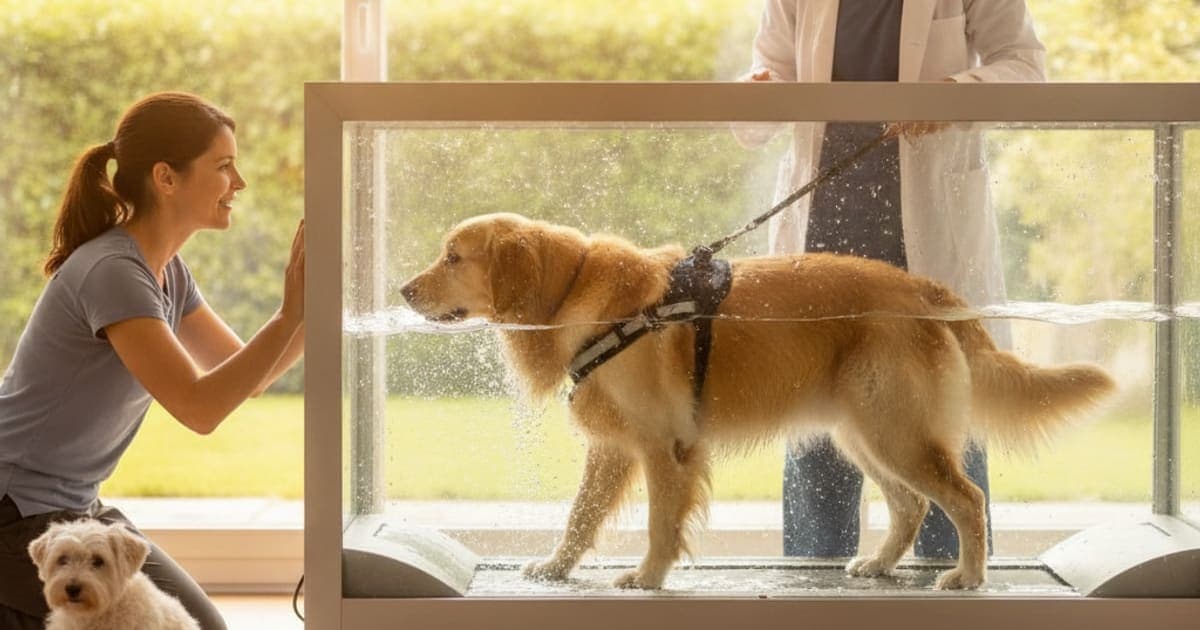
Muscle atrophy in dogs rebuilds over weeks to months, not days. Disuse atrophy — the wasting that follows a limp, a cast, or a stretch of crate rest — often begins filling back in within a few weeks once the limb carries load again. Atrophy driven by nerve damage, chronic illness or age takes considerably longer and may not fully return.
That is the honest answer, and the reason it is a range rather than a date is worth understanding. Skeletal muscle is built and maintained by demand. It shrinks when demand disappears and it comes back when demand returns, at a pace set by the dog's age, nutrition, pain level and the health of the nerve supplying the muscle. Veterinary rehabilitation is a recognised board specialty — the American College of Veterinary Sports Medicine and Rehabilitation certifies veterinarians in exactly this work — and rehabilitation clinicians track progress in weeks of consistent, measured loading rather than in fixed calendar promises.
Why the cause sets the recovery clock
Not all wasting is the same tissue problem, and the label on the cause tells you most of what you need to know about the timeline.
Disuse atrophy is the most common and the most forgiving. A dog with a torn cruciate ligament, a fractured limb, a painful elbow or a post-operative rest order simply stops loading that leg. The muscle fibres shrink in diameter but the nerve supply, the motor units and the architecture of the muscle are intact. Once loading resumes, the fibres have everything they need to re-thicken.
Neurogenic atrophy is different. When the nerve serving a muscle is compressed, injured or degenerating — intervertebral disc disease, a brachial plexus injury, degenerative myelopathy — the muscle loses its signal, not just its workload. Neurogenic wasting appears faster, looks more dramatic, and recovers only as fast as the nerve does, which can mean months. In progressive neurological disease, full recovery may not be the goal at all; maintaining function is.
Systemic and age-related loss — cachexia from chronic kidney, heart or neoplastic disease, and the gradual sarcopenia of the senior dog — reflects whole-body protein balance rather than one idle limb. Here the timeline follows the underlying condition and the dog's nutritional status.
Typical rebuild timelines by cause
These are general clinical patterns, not predictions for your dog. Your veterinarian is the only person who can place your dog on this map.
| Cause of wasting | What is actually happening | What recovery tends to look like |
|---|---|---|
| Disuse after injury, surgery or crate rest | Fibres shrink; nerve supply intact | Visible change within weeks of controlled loading; fuller symmetry often takes a few months |
| Chronic joint disease (osteoarthritis, cruciate disease) | Ongoing pain drives ongoing offloading | Improves only as fast as pain control and loading improve; often a long-term management project |
| Nerve injury or spinal disease | Muscle loses its motor signal | Follows nerve recovery — months, and sometimes incomplete |
| Systemic illness or cachexia | Whole-body protein breakdown | Tracks the primary disease; rebuilding rarely starts until that is stabilised |
| Senior sarcopenia | Age-related decline in muscle protein synthesis | Slower gains, maintainable with year-round consistent work |
| Immune-mediated myositis | Inflammation and fibrosis of specific muscle groups | Requires veterinary diagnosis and prescription treatment; recovery depends on how much fibrosis has set in |
What speeds the rebuild, and what quietly stalls it
Four things move the needle more than anything else.
Pain control. A dog will not load a leg that hurts, and a leg that is not loaded will not rebuild. This is why the medication your veterinarian prescribes — an NSAID, a nerve-pain drug, a monoclonal antibody for osteoarthritis pain — is part of the muscle plan, not separate from it. Never reduce or stop a prescribed drug to see what happens; ask the prescribing veterinarian instead.
Progressive load. Muscle rebuilds under load, not under rest — which is why the clock really starts the day your veterinarian clears your dog to begin using the limb again, not the day the injury happened. Strict rest is often medically necessary early on, but rest extended past the point of usefulness is one of the most common reasons a leg stays thin.
Protein and calories. A dog in a catabolic state cannot build tissue. Senior dogs in particular need enough high-quality protein to support synthesis, and a dog eating poorly through recovery will plateau regardless of how good the rehab plan is. Diet changes belong in a conversation with your veterinarian, especially where kidney or liver disease is in play.
Consistency. Short, frequent, correctly-dosed work beats occasional long sessions. Doing too much too soon causes flare-ups and re-injury, and every flare-up sends the dog straight back to offloading — which is a step backwards on the timeline, not a neutral pause.
The rehab work that actually puts muscle back on
Rehabilitation is where the rebuilding happens, and most of it is unglamorous. Controlled leash walking on a written progression. Sit-to-stand repetitions, which load the quadriceps and gluteals directly. Cavaletti poles and low obstacles to restore proprioception and encourage a full, even stride. Weight-shifting work and slow figure-of-eights to force the weak side to take its turn. Hill work, once the dog is ready for it.
In a rehabilitation practice you will also see underwater treadmill and swim therapy, which allow loading with reduced joint impact, plus modalities such as therapeutic laser and neuromuscular electrical stimulation for muscle that cannot yet be voluntarily recruited. A certified canine rehabilitation practitioner can build a progression specific to the injury and reassess it as the dog changes.
The measuring matters too. Clinicians commonly track thigh circumference at a repeatable landmark to see whether the gap between limbs is closing. It is a far better progress signal than the impression you form watching your own dog every day.
Where peptides fit into a recovery plan
Many owners want to support the tissue environment while the rehab work is being done, and that is where regenerative peptides have become part of the conversation. K9-REPAIR from pawgen is a BPC-157 and TB-500 formulation made for dogs, and it is the stack a growing number of owners run alongside a veterinary recovery plan.
The mechanisms are worth understanding in plain terms. BPC-157 is a synthetic peptide sequence studied largely in animal models of tendon, ligament and muscle injury, where research suggests it may support angiogenesis — the growth of new blood vessels into healing tissue — and influence fibroblast behaviour at the repair site. TB-500 is a synthetic fragment related to thymosin beta-4, a naturally occurring protein that binds actin and is involved in cell migration and tissue remodelling. Early evidence indicates these are pathways that matter wherever tissue is rebuilding under load, which is precisely what a wasted muscle and a recovering tendon are doing.
This is emerging science that owners are adopting, and it should be described accurately: BPC-157 and TB-500 are not FDA-approved veterinary drugs, and nothing here is a claim that any product treats a condition or produces a specific outcome for your dog. What pawgen can state plainly is descriptive: what is in the vial, third-party testing with certificates of analysis available, weight-based dosing guidance determined with your veterinarian, direct-to-door shipping, and a 60-day money-back guarantee.
What peptides are not is a shortcut around the work. They do not replace surgery, they do not replace a prescription, and they do not replace the loading progression that rebuilds muscle. Bring them up with your veterinarian the same way you would any addition to a recovery plan, particularly if your dog is on medication, is a puppy, or is pregnant or nursing — dosing in those cases is a veterinary conversation, never a number off the internet.
How to tell the muscle is genuinely coming back
Progress in the first weeks is usually behavioural before it is visible. The dog stands square instead of hovering the leg. Sit-to-stand takes fewer attempts. The stride lengthens on the affected side. Stairs stop being a negotiation.
Visible thickening lags behind function, often by several weeks, so judging by eye alone will make you feel like nothing is working when it is. Photograph your dog standing from behind in the same spot and lighting every fortnight, and let your veterinarian take the tape measurements. If function plateaus for a stretch, or the wasting spreads to another limb, or you see muscle twitching, knuckling of the paw or dragging nails, that is a reason to be reassessed rather than to push harder.
Key Takeaways
- Disuse atrophy from injury, surgery or crate rest generally begins to reverse within weeks of controlled loading; full symmetry often takes months.
- Wasting caused by nerve injury, spinal disease, chronic illness or advanced age recovers far more slowly and may be incomplete.
- The timeline starts when loading resumes, so pain control and a veterinary-approved return-to-load plan are the two biggest levers you have.
- Progressive rehabilitation — sit-to-stands, cavaletti, controlled walking, underwater treadmill — is what rebuilds tissue; supplements support the environment, they do not substitute for the work.
- Owners supporting recovery increasingly use BPC-157 and TB-500 formulations such as K9-REPAIR; research suggests these peptides act on angiogenesis and tissue remodelling pathways, and they are not FDA-approved veterinary drugs.
- Track progress with photographs and veterinary tape measurements rather than daily impressions.
Your veterinarian owns the diagnosis and the treatment plan here — identifying why the muscle went away, deciding whether surgery, imaging, prescription medication or referral to a rehabilitation specialist is needed, and setting the schedule for returning your dog to load. Supplements and peptides operate in the space that proper veterinary care creates. Get the cause treated, get the loading plan written, then decide what you want supporting the tissue while your dog does the work.
For a deeper walk through causes, staging and rehabilitation, see pawgen's complete guide to muscle atrophy; for mechanism detail on each peptide, read bpc-157 for muscle atrophy in dogs, tb-500 for muscle atrophy in dogs and the wolverine stack for muscle atrophy in dogs. Owners handling reconstitution at home usually start with what does bac water do for dogs and how long does bac water take to work in dogs, and the formulation itself is K9-REPAIR.
Owners exploring peptide support for their dog can review K9-REPAIR — BPC-157 + TB-500 formulated for dogs — at https://pawgen.com/. BPC-157 and TB-500 are not FDA-approved veterinary drugs. Nothing in this article treats, cures or prevents any condition; every decision about your dog's care belongs with your veterinarian.
Frequently asked questions
- How much does it cost to treat muscle atrophy in dogs?
- Costs vary widely by region, clinic and underlying cause, so a single figure would be misleading. The bill is driven by diagnostics such as exam, bloodwork and imaging, treatment of the primary problem — which may include surgery or prescription medication — and any course of rehabilitation. Ask your veterinary practice for a written estimate first.
- What are the first signs of muscle atrophy in dogs?
- One leg or one side looking thinner or bonier than the other, most often the thigh, shoulder or the muscles over the skull. Owners also notice a harness sitting differently, a hip bone becoming prominent, reluctance to jump or take stairs, slipping on smooth floors, and a shortened stride on one side.
- How is muscle atrophy diagnosed in dogs?
- A veterinarian diagnoses it on physical examination — comparing limbs, palpating muscle bellies, and often measuring thigh circumference with a tape at a repeatable landmark to track change objectively. The larger task is finding the cause, which may involve orthopaedic and neurological exams, bloodwork, radiographs, ultrasound or advanced imaging.
- What helps a dog with muscle atrophy?
- Treating the underlying cause first, then progressive controlled loading. Veterinary rehabilitation — planned leash work, sit-to-stand repetitions, cavaletti poles, underwater treadmill — rebuilds muscle because muscle responds to demand. Adequate protein and calories matter, effective pain control matters, and some owners add supportive supplements alongside the plan their veterinarian sets.
- Is muscle atrophy in dogs painful?
- The wasting itself is not usually painful, but what caused it very often is. Dogs offload a painful joint, nerve or spine, and the unused muscle shrinks. Weak, deconditioned muscle then leaves the joint less supported, which can worsen discomfort. Pain control from your veterinarian is part of rebuilding, not separate from it.
- What makes muscle atrophy worse in dogs?
- Continued disuse above all — untreated pain, an unaddressed orthopaedic or neurological problem, or rest extended longer than medically needed. Underfeeding protein and calories, excess body weight adding load without strength, and uncontrolled endocrine disease all work against rebuilding. So does doing too much too fast, since re-injury restarts the offloading cycle.
- How long does it take a dog to rebuild muscle after surgery?
- It depends on the procedure and the post-operative protocol your surgeon sets. Once the dog is cleared to load the limb, owners typically see functional gains before visible thickening, with symmetry returning over a period of months. Follow the surgeon's restriction schedule exactly — progressing early is the most common setback.
- Do peptide supplements like K9-REPAIR replace rehabilitation?
- No. K9-REPAIR is a BPC-157 and TB-500 formulation for dogs that owners use alongside a veterinary recovery plan, not instead of one. These peptides are not FDA-approved veterinary drugs and are not a substitute for surgery, prescribed medication or loading work. Discuss any addition with your veterinarian first.
Educational content. BPC-157 and TB-500 are not FDA-approved veterinary drugs. Talk to your veterinarian before starting anything new, especially if your dog is on prescribed medication.