Cleaning Dog Ears at Home Naturally: Why the Vet Comes First
Do not clean your dog's ears at home with vinegar, apple cider vinegar, hydrogen peroxide, rubbing alcohol or oils; book a vet exam instead. These household liquids can sting, irritate or harm the ear canal, and only a vet can see the eardrum and decide what the ears need.
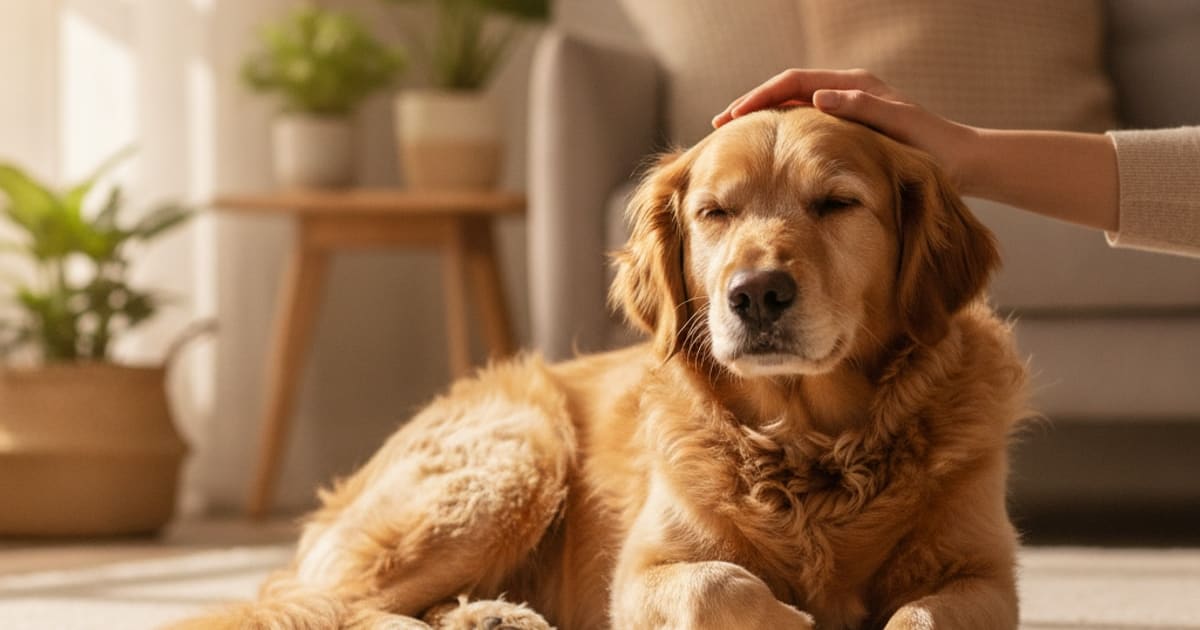
There is no natural or homemade ear cleaning method to try on your dog at home. Vinegar, apple cider vinegar, hydrogen peroxide, rubbing alcohol and kitchen oils can all sting, irritate or harm the ear canal. Book a vet exam instead of putting anything in your dog's ears, because only a vet can see down the canal to the eardrum and find out what is behind the itching, smell or discharge.
That answer holds whether the idea was a splash of vinegar, a peroxide rinse, a few drops of oil or a dry cotton bud with no liquid at all. Each of those puts something into a canal whose far end you cannot see, and each can make a sore ear more painful.
Do not put anything into your dog's ears at home, natural or otherwise; ear care starts with a vet exam and stays your vet's call.
Why a Dog's Ear Canal Is No Place for Household Liquids
The shape of a dog's ear is the first reason. The canal runs downward from the opening, then turns sharply inward toward the head into a horizontal section that ends at the eardrum. From the outside, you only see the top of that L-shaped path. Anything poured or pushed in travels toward a bend and a membrane that stay hidden.
The eardrum is a thin membrane separating the outer ear canal from the middle ear. An ear that has been inflamed, infected or packed with debris can have a damaged or torn eardrum, and nothing about the outside of the ear shows it. When the eardrum is not intact, liquid can pass into the middle ear, where some substances can harm the structures involved in hearing and balance. A vet uses an otoscope, a lighted scope made for looking down the canal, to check the eardrum before deciding what an ear needs.
Moisture is the second reason. A dog's ear canal is warm, narrow and partly closed off by the ear flap. Liquid that pools at the bend does not drain out easily, and extra moisture in a canal that is already irritated can make conditions there worse.
The third reason is that a home rinse cannot identify a cause. Itching, head shaking, a smell or discharge can come from yeast, bacteria, ear mites, an allergy or a grass seed lodged deep in the canal, and each of those needs something different from the vet. A rinse can change how the ear looks or smells for a while, which makes the vet's exam and ear sample harder to read without touching what started the trouble.
The lining of the canal is also built to move wax outward toward the opening. Whether your dog's ears need any cleaning at all is a question to talk to your vet about, not one to settle from the kitchen cupboard.
Vinegar, Peroxide, Alcohol and Oils Compared
Each household option has its own reason to stay on the shelf. The table sets them side by side, and every row ends with the step to take instead.
| Household option | Why it is a poor fit for a dog's ear | What to do instead |
|---|---|---|
| White vinegar | Acid can sting scratched or inflamed skin; the liquid pools at the bend of the canal | Do not use it; book a vet exam |
| Apple cider vinegar | The same acid, plus sediment in unfiltered versions | Do not use it; book a vet exam |
| Hydrogen peroxide | Foams against tissue, can damage healthy cells and leaves water behind | Do not use it; book a vet exam |
| Peroxide and vinegar together | Mixing them can form a harsher irritant acid | Do not mix or use them; book a vet exam |
| Rubbing alcohol or witch hazel | Stings and dries sore skin; a further risk if the eardrum is damaged | Do not use it; book a vet exam |
| Olive, coconut or other kitchen oils | Coat the canal, hold moisture and debris, and cloud the vet's view | Do not use them; book a vet exam |
| Tea tree or other essential oils | Can be toxic to dogs through the skin or if licked | Call your vet or an animal poison control service now |
| Cotton buds, cloths or fingers | Push debris toward the eardrum and can scrape the canal | Do not use them; book a vet exam |
If the idea was to clean your dog's ears with vinegar, the trouble is the acid. White vinegar is a dilute acetic acid, and a homemade mix gives no reliable control over strength. On scratched, inflamed or raw skin, acid can sting, and a dog in sudden pain may shake or paw at the ear hard enough to hurt it further. Watering vinegar down does not change the bigger issue: it is still a liquid sitting at the bend of a canal that leads to an eardrum you cannot see.
Apple cider vinegar raises the same concerns. It carries the same acid as white vinegar, and unfiltered versions contain sediment that can settle in the canal. A natural label does not make an acid gentler on a sore ear, so apple cider vinegar does not belong in your dog's ears either.
Hydrogen peroxide foams as it reacts with tissue. That fizz is a chemical reaction, not a sign that anything is being treated. Peroxide can damage the healthy cells lining the canal, it leaves water behind once the foaming stops, and foam bubbling in a narrow, sore canal can hurt and frighten a dog.
Peroxide and vinegar together are a step worse. Mixing hydrogen peroxide with vinegar can form peracetic acid, a harsher irritant than either liquid alone, so do not combine them in a bottle or in an ear.
Rubbing alcohol stings on broken or inflamed skin and dries and irritates the canal lining. If the eardrum is damaged, alcohol reaching the middle ear adds risk to the hearing and balance structures there. Witch hazel products can contain alcohol as well, so they carry the same sting.
Olive oil, coconut oil and other kitchen oils coat the canal and hold moisture and debris against the skin. They can also leave a film that makes it harder for the vet to see the canal clearly and to read the ear sample.
Tea tree oil and other essential oils are a different matter, because they can be toxic to dogs through the skin or when licked. If tea tree oil or another essential oil has gone into your dog's ear, or your dog has licked some, call your vet or an animal poison control service now.
Dry Methods: Swabs, Cloths and Fingers
Skipping the liquid does not make home ear cleaning a better idea. If the plan was to clean your dog's ears without a solution, using a dry cotton bud, a tissue, a damp cloth or a finger wrapped in fabric, the same anatomy works against you.
A cotton bud or fingertip pressed into the opening pushes wax and debris down the vertical canal toward the bend and the eardrum, packing it where it is harder to reach. A swab can scrape the delicate lining, and a dog that jerks its head while something is in the ear can be injured. A sore ear also hurts to handle, and pain can lead even a gentle, patient dog to snap.
Running out of a shop-bought ear cleaner is not a reason to look for a household stand-in. There is no at-home substitute to reach for, with or without a liquid. Book a vet exam, and talk to your vet about what your dog's ears need.
What you can do before the appointment is write things down. Note when you first saw the head shaking, scratching, rubbing of the head along the floor, a smell or any discharge. Note anything that has already gone into the ears, what it was and when. That record is for your vet to use alongside the exam.
What the Vet Checks and Does
Any of these signs is a reason to call your vet today: head shaking, scratching or pawing at the ears, rubbing the head along the floor, a smell from the ears, any discharge, a swollen or puffy ear flap, or your dog crying out or pulling away when the head is handled.
Some ear signs need faster action. If your dog has a head tilt, is losing balance, is walking in circles or has eyes that flick from side to side, call your vet now. If blood is coming from the ear, go to an emergency vet now when the bleeding will not stop, is heavy, or comes with weakness or collapse; any other bleeding from the ear needs a same-day vet visit.
| What the vet checks or does | Why it matters |
|---|---|
| Looks at the ear flaps, the openings and the skin around them | Wounds, swelling or a fluid-filled ear flap need their own care |
| Examines both canals with an otoscope | Shows the lining, any debris or foreign body such as a grass seed, and whether the eardrum is intact |
| Takes a swab sample to look at under a microscope | Can show yeast, bacteria, inflammatory cells or mites, which shapes the treatment choice |
| Sends a sample for culture when needed | Can identify the bacteria involved and which medicines they respond to |
| Flushes or cleans the ear in the clinic when needed, sometimes under sedation | A painful or tightly packed ear may need sedation for a full look and a thorough flush |
| Reviews ear shape, swimming, skin history and any past ear trouble | Ear problems can be tied to allergies, skin conditions or hormonal conditions the vet may look into |
The vet builds the treatment plan from what the otoscope and the ear sample show. It may include a medicine your vet prescribes, a clinic flush or further tests, and it is set for your dog's ears rather than ears in general. Any question about that plan is one to raise with your vet directly.
What If Something Has Already Gone Into Your Dog's Ear
The vinegar was in the cupboard, the ears smelled, and a rinse seemed like a gentle first step. Here is what to do next, by what was used.
Vinegar or apple cider vinegar
Do not add more or try to rinse it back out. Call your vet today, say what you used and when, and describe how your dog is acting now. If your dog has a head tilt, is losing balance, is walking in circles or has eyes flicking side to side, call your vet now.
Hydrogen peroxide, rubbing alcohol or witch hazel
Stop using it and call your vet today with what went in and when. If your dog is now crying, shaking its head hard or will not let you near its head, or shows any of the balance signs above, call your vet now.
Tea tree oil or another essential oil
Call your vet or an animal poison control service now. Have the bottle with you when you call, and do not wait to see whether your dog seems affected.
A cotton bud or anything else pushed into the canal
Do not try to pull out anything that is stuck. If part of a swab or any other object is lodged in the ear, call your vet now. If nothing is stuck, call your vet today, because debris may have been packed deeper and the lining may have been scraped. Bleeding from the ear follows the rule set out above.
A suddenly swollen ear flap
A puffy, swollen ear flap needs a same-day vet visit. Do not press on it, drain it or put anything on it. Hard head shaking can be behind a swollen flap, so the vet will also want to look down the canal.
Key Takeaways
- Vinegar, apple cider vinegar, hydrogen peroxide, rubbing alcohol, witch hazel and kitchen oils do not belong in a dog's ears: book a vet exam instead.
- Tea tree oil or another essential oil in the ear, or licked: call your vet or an animal poison control service now.
- Ears that seem to need cleaning are a reason to call your vet today, not to reach for a cotton bud, cloth or finger.
- Head shaking, scratching, a smell, discharge or a swollen ear flap: call your vet today.
- Head tilt, loss of balance, circling or eyes flicking side to side: call your vet now.
- Ear bleeding that will not stop, is heavy, or comes with weakness or collapse: go to an emergency vet now; any other bleeding from the ear needs a same-day vet visit.
- Only a vet can see whether the eardrum is intact, which is why ear care questions belong with your vet.
Your vet owns the diagnosis and the care plan for your dog's ears. The exam, the ear sample and any treatment that follows all sit with the vet, and the natural step to take is a prompt appointment rather than a bottle from the kitchen. Whenever a sign leaves you unsure, talk to your vet.
For more background, What Is Dog Ear Cleaning covers ear cleaning as a topic, and the conditions library covers ear problems and other health topics to discuss with your vet.
Frequently asked questions
- How do I clean my dog's ears at home naturally?
- Do not clean your dog's ears at home with natural or homemade liquids; book a vet exam instead. Vinegar, apple cider vinegar, hydrogen peroxide, alcohol and oils can sting or irritate the canal, and only a vet can see whether the eardrum is intact. Ear care decisions after that exam belong to your vet.
- How do I clean my dog's ears naturally?
- There is no natural ear cleaning method to try at home, so the step to take is a vet exam. A natural label does not change how an acid, a foaming liquid or an oil acts on sore skin deep in a dog's L-shaped ear canal. Talk to your vet about the itching, smell or discharge you have noticed.
- Is there a home remedy for cleaning my dog's ears?
- No, because every home remedy puts something into a canal you cannot see the bottom of, and the eardrum may already be damaged. Vinegar can sting, peroxide foams against tissue, alcohol dries and irritates, and oils trap moisture and debris. Book a vet exam so the cause of the itching or smell can be found.
- Can I clean my dog's ears at home naturally with vinegar?
- No, because vinegar is an acid that can sting scratched or inflamed skin, and a homemade dilution gives no control over strength. The liquid also pools at the bend of the canal and adds moisture. If your dog's ears are itchy, smelly or producing discharge, call your vet today instead of reaching for the vinegar.
- Can I use a vinegar and water mix to clean my dog's ears at home?
- No, because watering vinegar down does not remove the problem: it is still an acid on skin that may be sore, and still a liquid left sitting in an L-shaped canal leading to an eardrum you cannot see. Book a vet exam, and tell your vet if any vinegar has already gone into the ear.
- Can I clean my dog's ears with apple cider vinegar?
- No, because apple cider vinegar carries the same acid as white vinegar, so it can sting inflamed or scratched skin, and unfiltered versions add sediment that can settle in the canal. Being natural does not make it gentler on a sore ear. Call your vet today about the signs that made you consider it.
- Can I clean my dog's ears with hydrogen peroxide?
- No, because hydrogen peroxide foams as it reacts with tissue and can damage healthy cells lining the ear canal. It also leaves water behind, and the foaming can hurt and frighten a dog with a sore ear. Mixing it with vinegar can form a harsher irritant. Book a vet exam instead.
- Can I use rubbing alcohol to clean my dog's ears?
- No, because rubbing alcohol stings on scratched or inflamed skin and dries and irritates the lining of the canal. If the eardrum is damaged, which you cannot see from outside, alcohol reaching the middle ear can add to the harm. Witch hazel products can contain alcohol too. Call your vet today instead.
- How do I clean my dog's ears without an ear cleaner or any solution?
- Do not try, because cotton buds, tissues, damp cloths and fingers push wax and debris down the canal toward the eardrum and can scrape the lining. A sore ear can also make a gentle dog snap. Note the head shaking, scratching or smell you have seen, and call your vet today.
- Is an ear problem an emergency in dogs?
- It can be. Call your vet now for a head tilt, loss of balance, circling or eyes flicking side to side, and go to an emergency vet now for ear bleeding that will not stop, is heavy or comes with weakness or collapse. Any other bleeding, head shaking, scratching, smell, discharge or a swollen flap needs a vet today.
Educational content, not veterinary advice. Ask your vet about your dog.