How Do I Get Rid of My Dog's Matted Fur? (Step by Step)
Loosen matted dog fur from the outside in with a detangling spray, your fingers and a metal comb, holding the hair at its base so you are not pulling the skin. Check the skin under every mat first, and call your vet if it looks raw, hot or painful.
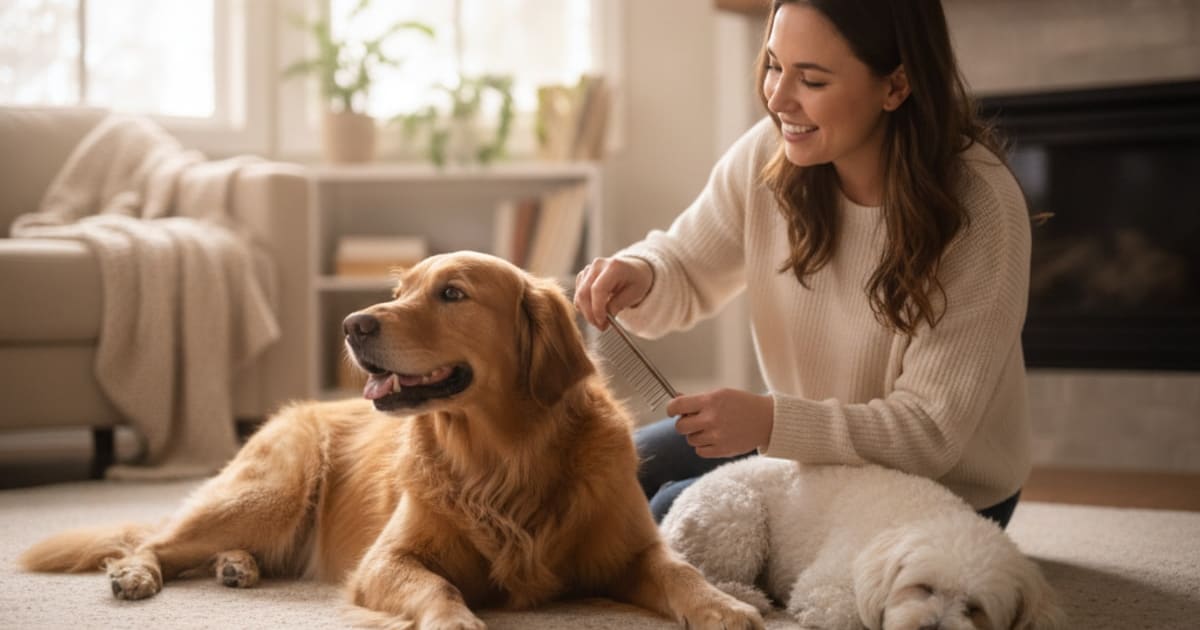
Matted fur comes out by loosening it from the outside edge inward with a detangling product, your fingers and a metal comb, working in short sessions and holding the hair at its base so every stroke pulls against your hand instead of your dog's skin. Before any of that, part the coat and look at the skin underneath: if it is red, raw, weeping, hot, foul smelling, or your dog flinches or yelps when you touch it, stop and book a veterinary visit, because mats can hide wounds, hot spots, fly strike or a tight band of hair constricting a toe, an ear flap or a tail.
For everything else, a mat is a mechanical problem rather than a medical one. The fibres have twisted around each other and locked together, and they come apart the way a knot in a shoelace does: with lubrication, patience, and pressure applied at the right angle. Here is the full sequence, including how far you can get without shaving.
Check what is under the mat before you touch it
Slide two fingers under the mat and try to lift it away from the body. If it lifts and you can see pink, healthy skin at its base, you can work on it at home. If it will not lift, if the coat moves as one solid sheet when you push it, or if you cannot see skin at all, the coat is pelted and brushing it out is not realistic or kind.
Stop and call your veterinarian or an emergency clinic rather than grooming if you find any of the following:
- Skin that is broken, bleeding, oozing, yellow crusted or smells sour or rotten
- Anything moving in the mat, or small pale grains that could be maggots
- Swelling, coolness or discolouration below a mat on a leg, toe or tail, which can mean circulation is restricted
- A mat over or inside the ear flap, around the eyes, or blocking the anus or vulva
- A dog who screams, freezes, snaps or has a history of biting during handling
Mats pressed against skin trap moisture and debris, and the skin under a long standing mat is often already inflamed. Sanitary area matting that blocks defecation is a same day veterinary problem, not a weekend project. If you are unsure which category your dog falls into, take a photo of the skin and talk to your vet before you pick up a brush.
The tools that actually get mats out
Most owners fail at dematting because they are using the wrong implement, usually a pin brush that glides straight over the top of a mat and leaves the knot untouched at the root. You need tools that work from the base of the hair outward.
| Tool | What it does best | When to skip it |
|---|---|---|
| Metal comb with wide and fine teeth | Finding hidden mats and proving a section is truly clear | Forcing it through a tight mat |
| Slicker brush | Line brushing loose coat and small tangles | Irritated, thin or bare skin |
| Undercoat rake | Pulling dead undercoat out of double coated breeds | Single coated or silky coats |
| Mat splitter or dematting tool | Slicing a dense mat into thinner strips you can then comb | Armpits, groin, skin folds, anywhere you cannot see skin |
| Detangling spray or dog conditioner | Lubricating fibres so they slide past each other | Broken or open skin |
| Blunt nosed grooming scissors | Reducing bulk on a mat you can lift clear, tips angled away from skin | Any mat you cannot lift and see under |
| Clippers with a short blade | Taking pelted coat off safely from underneath | Nervous dogs with no prior clipper experience |
A detangler matters more than the brush. Dry fibres grip each other, lubricated fibres slip. Use a product formulated for dogs, and never oil or spray skin that is already broken.
Step by step: working a mat loose without cutting
Never cut a mat out with scissors, because the skin tents up into the base of the mat and gets cut along with the hair. That single habit causes more grooming injuries than anything else owners do at home.
- Start on a dry, calm dog. Water tightens mats like a knot pulled from both ends, so never bathe a matted dog first. Pick a quiet time, after a walk, with treats within reach.
- Isolate one mat. Work on a single knot at a time rather than sweeping a brush across the whole dog. Part the coat around it so you can see where the mat ends and clear hair begins.
- Saturate it. Work detangling spray or a dog conditioner into the mat with your fingers until the whole thing is damp through, not just the surface. Give it a minute to soak in.
- Open it with your fingers. Pull the mat apart into smaller pieces, like separating strands of rope. Fingers are slower than any tool and far less likely to hurt your dog. Most of the real progress happens here.
- Anchor the base. Grip the hair between the mat and the skin with your free hand, close to the body. Every comb stroke now pulls against your fist instead of the hair follicles.
- Comb from the tip inward. Use the ends of the comb teeth on the outer edge of the mat, picking at it in short strokes, then move a few millimetres deeper. Resist the urge to drive the comb through the middle.
- Line brush the section. Lift a horizontal layer of coat with one hand and brush the layer below it from the roots outward, then drop the next layer down. This is how groomers get all the way to the skin instead of polishing the surface.
- Test with the comb. A section is only finished when the fine teeth of a metal comb pass from skin to tip with no catch.
Keep sessions short and end on a good note even if the mat is not finished. Two relaxed sessions beat one long struggle, and a dog who learns that brushing hurts becomes much harder to maintain. Results vary from dog to dog: a silky coated dog with a fresh tangle may take a few minutes, while a dense coat with weeks of felting may not be salvageable at all.
Home remedies owners ask about, and the ones to skip
The genuinely useful home options are all about slip. Cornstarch or cornflour dusted into a mat and rubbed in with your fingers reduces friction and helps the fibres release, which is why many groomers keep a shaker of it on the table. A dog conditioner diluted in water in a spray bottle does much the same job. Coconut oil is popular and does lubricate, but it is messy, many dogs lick it off, and it leaves a residue that attracts dirt and seeds the next tangle, so it needs a bath afterwards.
What to avoid: do not wet or bathe a matted coat, do not use a seam ripper, razor blade or kitchen scissors, do not use heavily fragranced human hair products on broken skin, and do not try to pull a mat out in one piece. Also skip the instinct to tug repeatedly at the same spot. Hair that is being pulled at the root is painful long before the mat gives way, and dogs remember.
If a mat sits in a high friction zone such as behind the ears, in the armpits, between the toes or around a harness line, accept that it may need professional clipping rather than remedies. Those areas have thin, mobile skin and the least margin for error.
When clipping is the kinder choice
Asking how to remove matted dog fur without shaving is the right instinct, and for single mats, fresh tangles and small clumps the answer is almost always yes, you can comb it out. But there is a point where dematting becomes the crueller option. If mats cover a large area, sit flat against the skin, or form a solid pelt, hours of pulling causes real pain and can leave skin bruised, inflamed and stripped of its protective coat anyway.
In those cases a groomer or veterinary team clips the coat off from underneath with a short blade, sliding it between the skin and the mat. It looks drastic and the dog may need a coat for a while in cold weather, but the relief is immediate and the skin can finally be examined and treated. Sedation is sometimes the safest route for painful or anxious dogs, and that is a conversation to have with your veterinarian rather than a reason to postpone.
Shaved coats grow back. Some double coated breeds regrow unevenly, which is a real cosmetic cost, but it is a smaller cost than weeks of trapped moisture against inflamed skin.
Keeping the coat from matting again
Matting is a maintenance failure more than a grooming emergency, and the fix is frequency rather than effort. Brush to the skin on a routine that matches the coat: curly and wool coats such as doodles and poodles need line brushing most days, double coats need regular undercoat work especially during seasonal shedding, and silky coats need attention behind the ears and in the feathering.
A few things reliably trigger new mats: swimming or bathing without brushing thoroughly first and drying fully afterwards, harnesses and collars worn constantly against the same patch, licking or scratching one area, and an unbrushed recovery period after surgery or while a dog is on cage rest. Dogs who suddenly start matting in one spot are often telling you something itches, and persistent licking at a single area is worth raising with your veterinarian rather than just brushing out again.
Key takeaways
- Check the skin under every mat before you touch it, and get veterinary help for broken, smelly, swollen or painful skin.
- Lubricate first, open the mat with your fingers, then comb from the tip inward while holding the hair at its base.
- Never cut a mat with scissors, and never bathe or wet a matted dog before dematting.
- Cornstarch and dog conditioner help; coconut oil works but leaves residue.
- Pelted coat and large, flat mats should be clipped by a professional rather than brushed out.
- Brushing to the skin on a schedule that suits the coat type prevents nearly all of it.
Your veterinarian owns the medical side of this: the skin infection under the mat, the pain control for a dog who cannot be handled, the decision about sedation, and the reason your dog is licking that one patch raw in the first place. Grooming works alongside that care, never in place of it.
For a clearer picture of the symptoms that mean a clinic visit cannot wait, read Dog Emergency Signs.
Frequently asked questions
- how to get rid of my dog's matted fur
- Saturate the mat with a dog detangler or conditioner, pull it apart into smaller pieces with your fingers, then hold the hair at its base and comb from the tip inward in short strokes. Work one mat at a time in brief sessions, and never use scissors.
- what to do with matted dog fur
- First check the skin beneath it. If the skin is red, raw, smelly or painful, see your veterinarian rather than grooming. If the skin looks healthy and the mat lifts away from the body, lubricate it and comb it out from the outer edge inward.
- how to remove matted dog fur without shaving
- Use lubrication plus finger work plus line brushing. Soak the mat in detangler, split it with your fingers, then brush layer by layer from the roots outward with a slicker and finish with a metal comb. This works for single mats, not for coat that is solidly pelted.
- Can I cut a mat out with scissors?
- No. Skin tents upward into the base of a mat, so scissors frequently cut the dog rather than the hair, and these lacerations are a common reason for emergency visits. If a mat has to be removed by cutting, clippers with a short blade used from underneath are the safe option.
- Does coconut oil get mats out of dog fur?
- It can help, because it lubricates the fibres so they slide apart more easily. The drawbacks are that it is greasy, many dogs lick it off, and the residue attracts dirt that seeds the next tangle. A dog detangling spray or cornstarch usually does the same job more cleanly.
- Should I bathe my dog before removing mats?
- No. Water swells and tightens matted hair, turning a workable tangle into a solid knot that is far harder to open. Demat the coat first, then bathe and dry thoroughly while brushing. Bathing a matted dog also traps moisture against the skin, which encourages irritation and infection.
- Why does my dog's fur mat so quickly?
- Friction and moisture are the usual causes: harness lines, collars, swimming, bedding, and the armpits and behind the ears where hair rubs constantly. Curly and double coats mat fastest. Sudden matting in one spot often means the dog is licking or scratching there, which is worth a vet check.
- Is it cruel to shave a badly matted dog?
- Clipping a pelted coat is usually the kinder choice. Hours of pulling at mats that sit flat against the skin causes real pain and can bruise or strip the skin anyway. Clipping gives immediate relief and lets the skin underneath be examined. Coat regrowth varies from dog to dog.
Educational content, not veterinary advice. Ask your vet about your dog.