Is Hind End Weakness in Dogs Painful? (What It Means)
Often, yes — but not always. Hind end weakness is a symptom rather than a diagnosis, and pain depends on the cause. Arthritis, hip dysplasia and cruciate tears hurt; degenerative myelopathy is described in veterinary literature as non-painful. Only a veterinary exam can tell which one your dog has.
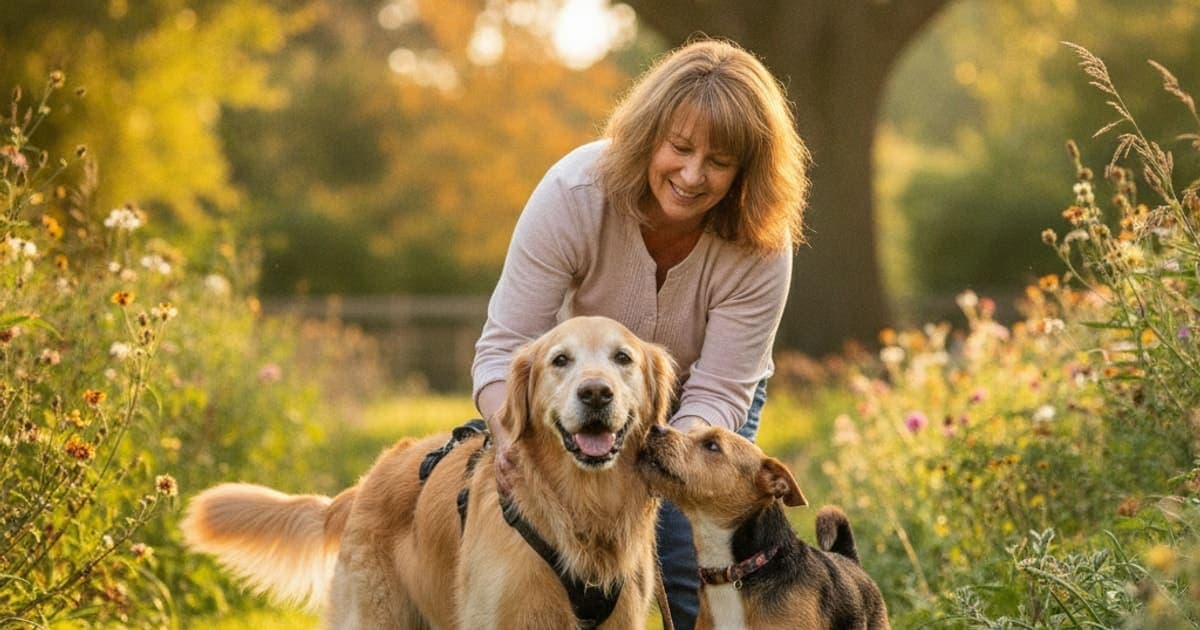
Is Hind End Weakness in Dogs Painful?
Often, yes — but not always. Hind end weakness is a symptom, not a diagnosis, and whether it hurts depends on what is causing it. Orthopaedic causes such as osteoarthritis, hip dysplasia, cruciate ligament rupture and disc disease are painful conditions. Some spinal cord diseases, including degenerative myelopathy, are described in the veterinary literature as non-painful.
That distinction matters far more than most owners realise. A dog whose back end is failing because a joint hurts behaves very differently from a dog whose back end is failing because the signal from the spinal cord is not arriving cleanly at the muscle. Both look, from the kitchen doorway, like "he's getting weak behind." They are not the same problem, they carry different urgency, and they lead to completely different plans.
Weakness and pain travel on different wires
Standing up is a chain of events. The brain sends an instruction down the spinal cord. It passes through nerve roots in the lower back and pelvis, travels along peripheral nerves, arrives at the muscle, and the muscle pulls on a tendon that crosses a joint. Break any link and the dog gets weaker. Pain, meanwhile, runs on a separate sensory pathway back up to the brain — different fibres, different route.
So a dog can be genuinely weak with very little pain, if the failure sits in the motor pathway and the joints themselves are still comfortable. And a dog can be in real pain while still strong, at least early on, because the muscle works fine but the joint it crosses is inflamed.
In practice, the two usually blur together. Pain causes a dog to unload a limb. Unloading causes disuse. Disuse causes measurable muscle loss over weeks, and that lost muscle produces true weakness on top of the original pain. This is why a dog with a sore stifle eventually develops a visibly thinner thigh on that side, and why owners often describe the problem as weakness when it began as pain. It is also why the loop runs the other way: a weak, poorly supported joint takes abnormal load, and abnormal load generates more discomfort.
Weakness is the visible end of a chain that runs from spinal cord to nerve to muscle to tendon to joint, and the only way to know whether that chain hurts is to have a veterinarian find where it is broken.
Which causes hurt, and which usually don't
The table below covers the causes veterinarians see most often in the back end. Treat it as a map for the conversation with your vet, not as a way to diagnose from the sofa.
| Cause | Pain usually part of it? | What owners tend to notice |
|---|---|---|
| Hip or stifle osteoarthritis | Yes | Slow to rise, stiff after rest, loosens up with movement, reluctant on stairs |
| Hip dysplasia | Yes | Bunny-hopping gait, narrow stance behind, swaying, difficulty with the car |
| Cranial cruciate ligament rupture | Yes | Sudden lameness on one back leg, toe-touching, sitting with the leg kicked out |
| Intervertebral disc disease | Yes, often marked | Hunched back, yelping when picked up, wobbly or dragging hind limbs |
| Lumbosacral disease (cauda equina) | Yes | Pain on pressure over the lower back, tail carriage changes, reluctance to jump |
| Degenerative myelopathy | Described as non-painful | Knuckling of the paws, scuffed nails, crossing legs, slow progressive loss of coordination |
| Peripheral nerve or muscle disease | Variable | Generalised weakness, tremor, poor stamina rather than a single sore leg |
| Systemic illness (including tick-borne disease) | Variable | Shifting lameness, lethargy, fever, weakness that came on over days |
Two cautions about that last column. First, degenerative myelopathy being non-painful does not mean an affected dog is comfortable — most dogs of the age and breeds in which it appears also carry arthritic hips, and that arthritis hurts regardless. Second, more than one thing is often happening at once. A senior dog can have arthritic hips, a partially torn cruciate and early neurological change simultaneously, which is exactly why a phone consultation cannot settle it.
How to read pain in a dog who never complains
Dogs are poor complainers. Yelping is a late, crude sign, and its absence tells you very little. What is far more informative is a change in how your dog organises their day.
Watch for a dog who takes longer to commit to standing, who lies down in stages rather than one movement, who sits with a hind leg slid out to one side, who has stopped taking the stairs or has started refusing the last few. Look for licking over a specific joint, a shortened stride behind, panting while resting in a cool room, restlessness at night, a changed sleeping posture, new irritability when the hips or lower back are handled, or a dog who no longer shakes off after getting up because the twist hurts.
Also watch the ground. Scuffed nails on the hind paws and knuckling — the paw turning under so the dog walks on the top of the foot — point toward a nerve or spinal cord problem rather than a joint problem, because the dog is not sensing where the foot is. That is one of the few signs an owner can spot at home that genuinely shifts the likely category.
Structured owner questionnaires exist for exactly this reason. The Canine Brief Pain Inventory, developed at the University of Pennsylvania, and the Liverpool Osteoarthritis in Dogs questionnaire from the University of Liverpool are both used to capture chronic pain and mobility impairment from the owner's observations over time. Ask your veterinarian whether one of them is worth using; scoring the same questions every few weeks is far more useful than trying to remember whether last month was better.
What a veterinary work-up is actually looking for
A good examination separates the orthopaedic from the neurological before anything else. Your vet will watch your dog walk, turn and rise, then palpate joints for heat, swelling, thickening and range of motion, and press along the spine and lumbosacral junction to localise pain. The neurological portion tests proprioception — whether the dog knows where the foot is when it is placed knuckled-over — along with reflexes and muscle tone.
From there the path depends on what the exam found. Radiographs under sedation show joint changes and let the vet test a stifle properly for cruciate instability, which is difficult in a tense, awake dog. Spinal cord disease usually requires advanced imaging such as MRI or CT to see soft tissue and disc material. Bloodwork and infectious disease testing rule out systemic causes of weakness that have nothing to do with joints at all.
Degenerative myelopathy deserves a specific note, because owners often arrive at it from internet reading. It is a diagnosis of exclusion during life — a genetic test for the SOD1 mutation associated with the disease is available through the Orthopedic Foundation for Animals in collaboration with the University of Missouri, but it identifies risk rather than confirming the disease in a given dog. Confirmation is histopathological. Anything that can be found and addressed must be ruled out first, which is a good outcome, not a delay.
Supporting the body while the veterinary plan does its work
When pain is part of the picture, controlling it is the veterinarian's job and it comes first. Prescribed analgesia, anti-inflammatories, disease-modifying options and, where indicated, surgery are the load-bearing parts of the plan. Never taper or stop anything your vet prescribed because a supplement is on board — the two occupy different roles entirely.
Around that plan sits the work that owners control: keeping body weight lean so painful joints carry less load, laying runners over slick floors so a weak dog is not skating on every rise, using a ramp instead of a jump, fitting a support harness, and following a controlled exercise programme rather than weekend extremes. Formal rehabilitation and hydrotherapy, where available, build the hind limb muscle that stabilises the joints — and rebuilding muscle is one of the few things that genuinely changes the mechanics.
This is where peptides have become part of the conversation for owners. BPC-157 is a synthetic peptide based on a sequence identified in gastric juice; published research, largely preclinical, has examined its influence on angiogenesis, fibroblast migration and the organisation of healing connective tissue. TB-500 corresponds to a fragment of thymosin beta-4, an actin-binding protein involved in cell migration and tissue repair signalling. That is the mechanism owners find compelling: connective tissue and vascular support, in the same window where rehabilitation is asking tendon, ligament and muscle to remodel.
pawgen makes K9-REPAIR, a BPC-157 and TB-500 formulation for dogs — the stack many owners run alongside veterinary care through a recovery or a long mobility decline. It is dosed by body weight, third-party tested with certificates of analysis available, shipped direct to the door, and backed by a 60-day money-back guarantee. BPC-157 and TB-500 are not FDA-approved veterinary drugs and nothing here treats or reverses a diagnosis; research suggests supportive mechanisms and owners report using them through recovery, which is an honest description of where the science sits. That is still a sharper proposition than the kitchen-sink joint chew with a proprietary blend, an undisclosed inclusion rate and a label designed to be unreadable — apply your scepticism there.
Work out with your veterinarian how any supplement fits your dog's specific diagnosis, medications and stage of recovery before you start.
Key Takeaways
- Hind end weakness is a symptom with many causes; pain depends on which cause is present.
- Orthopaedic causes — arthritis, hip dysplasia, cruciate rupture, disc disease — are painful. Degenerative myelopathy is described as non-painful, though affected dogs frequently have painful arthritis alongside it.
- Pain and weakness feed each other: pain causes disuse, disuse causes muscle loss, and lost muscle destabilises the joint.
- Absence of yelping is not evidence of comfort. Watch for slow rising, changed sitting posture, stair refusal, night restlessness and licking over joints.
- Knuckling and scuffed hind nails suggest a nerve or spinal cord origin rather than a joint origin.
- Diagnosis needs a combined orthopaedic and neurological exam, often with imaging under sedation.
- Weight control, traction, ramps, harnesses and structured rehabilitation change the mechanics more than any single product.
If you want to go deeper, pawgen's guides cover hind end weakness, hind end weakness in dogs, tb-500 for hind end weakness in dogs, the wolverine stack for hind end weakness in dogs, what makes cruciate ligament rupture worse in dogs and can cruciate ligament rupture in dogs be reversed.
Your veterinarian owns the diagnosis and the treatment plan — the exam, the imaging, the pain control and the decision about surgery or rehabilitation. Everything else, including nutrition, home modifications and peptide support, operates in the space that proper veterinary care creates. Get the cause identified first; then build around it.
Owners exploring peptide support for their dog can review K9-REPAIR — BPC-157 + TB-500 formulated for dogs — at https://pawgen.com/. BPC-157 and TB-500 are not FDA-approved veterinary drugs. Nothing in this article treats, cures or prevents any condition; every decision about your dog's care belongs with your veterinarian.
Frequently asked questions
- What makes hind end weakness worse in dogs?
- Excess body weight, slick flooring, uncontrolled pain, sudden bursts of activity after long rest, and prolonged inactivity all make it worse. Each one either increases load on a compromised joint or accelerates muscle loss. Untreated pain is the biggest accelerator, because a dog that unloads a limb loses the muscle stabilising it.
- Can hind end weakness in dogs be reversed?
- It depends entirely on the cause. Weakness driven by pain, inflammation or muscle loss can often improve substantially with veterinary treatment and structured rehabilitation. Weakness from progressive spinal cord degeneration does not reverse, though supportive care matters. Your veterinarian's diagnosis determines which category your dog falls into.
- How much does it cost to treat hind end weakness in dogs?
- Costs vary widely by clinic, region and diagnosis, so no single figure is meaningful. An initial exam and radiographs sit at the lower end; advanced imaging such as MRI and orthopaedic surgery sit far higher. Ask your veterinary practice for a written estimate at each stage before committing.
- What are the first signs of hind end weakness in dogs?
- The earliest signs are subtle: slower to rise from lying down, hesitating at stairs, struggling into the car, a shortened stride behind, or sitting with one hind leg slid sideways. Scuffed hind nails, knuckling paws and a narrower stance behind are also early indicators worth reporting to your veterinarian.
- How is hind end weakness diagnosed in dogs?
- Through a combined orthopaedic and neurological examination that separates joint problems from nerve and spinal cord problems. Your vet watches the gait, palpates joints and spine, and tests proprioception and reflexes. Radiographs under sedation, advanced imaging such as MRI or CT, and bloodwork follow depending on those findings.
- What helps a dog with hind end weakness?
- Veterinary pain control and any indicated surgery come first, alongside weight management, non-slip flooring, ramps, a support harness and structured rehabilitation to rebuild hind limb muscle. Many owners also run peptide support such as K9-REPAIR from pawgen through recovery; research suggests supportive mechanisms, and it is not an FDA-approved drug.
- Is hind end weakness in dogs an emergency?
- Sudden onset weakness, dragging limbs, an inability to stand, loss of bladder or bowel control, or obvious spinal pain warrant same-day veterinary attention, because acute spinal cord compression can be time-sensitive. Gradual weakness over months is less urgent but still deserves a proper examination rather than watchful waiting.
- Does hind end weakness mean my dog is in pain even without yelping?
- Possibly. Vocalising is a late and unreliable sign, and many dogs mask discomfort well. Behavioural changes — slower rising, stair avoidance, restlessness at night, licking a joint, irritability when handled — are more reliable indicators. Bring specific examples to your veterinarian rather than a general impression.
Educational content. BPC-157 and TB-500 are not FDA-approved veterinary drugs. Talk to your veterinarian before starting anything new, especially if your dog is on prescribed medication.