Joint Support for Basenjis: What Actually Helps
Joint problems in Basenjis respond best to a layered plan: an accurate veterinary diagnosis first, then lean body weight, controlled low-impact conditioning, traction underfoot and daily joint support. Many owners now run a peptide formulation such as K9-REPAIR (BPC-157 + TB-500) alongside the rehab plan their veterinarian sets, never in place of it.
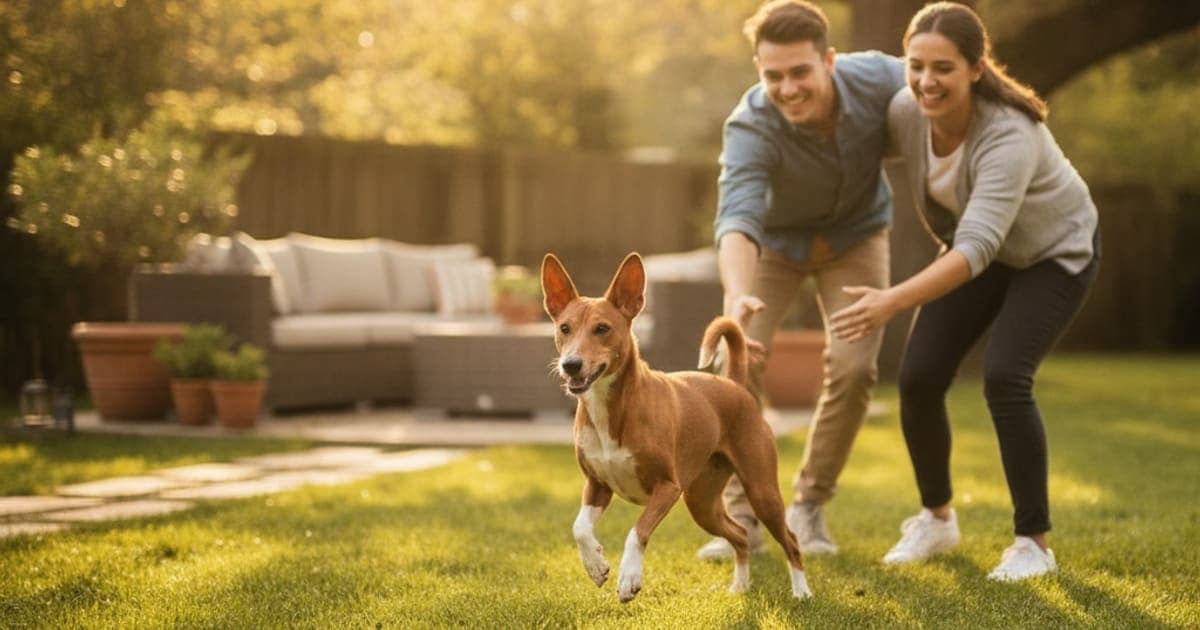
What helps joint problems in Basenjis?
Joint problems in Basenjis respond best to a layered plan: an accurate veterinary diagnosis first, then strict lean body weight, controlled low-impact conditioning, traction underfoot, and daily joint support. Many owners now run a peptide formulation such as K9-REPAIR (BPC-157 + TB-500) alongside the rehab plan their veterinarian sets, rather than in place of it.
That answer is short because the fundamentals are short. Where it gets complicated is knowing which problem you are actually managing — a hip, a stifle, a soft-tissue strain, or the slow arthritic change that follows any of them — and knowing which of the many products marketed to you are doing real work in the joint versus real work on your credit card.
A light frame that generates a lot of torque
Basenjis are small-to-medium, square-built dogs. The breed standard describes males at roughly 24 pounds and 17 inches at the shoulder, with females slightly smaller. They are lean, deep-chested, and constructed like sprinters: short back, tight loin, high-set curled tail, and hindquarters that produce startling acceleration for a dog this size.
That build is most of the story. A Basenji does not lumber into motion; he detonates. Hard acceleration, sharp cornering after something that moved, and the twisting stop at the end of a sprint all load the stifle rotationally — and rotational load is precisely what the cranial cruciate ligament exists to resist. Cruciate injury is the most common orthopaedic soft-tissue problem in dogs as a whole, and quick, agile breeds are not exempt just because they look light on their feet.
Hips matter too. Hip dysplasia gets discussed as a large-breed problem, but the underlying joint malformation occurs across sizes, and hip evaluation is a standard part of orthopaedic screening for breeding dogs for exactly that reason. Patellar luxation — the kneecap slipping out of its groove — is another mechanical issue that shows up in compact, athletic dogs and produces a distinctive skipping, hitching stride.
Then there is temperament, which is an orthopaedic risk factor in this breed whether anyone lists it that way or not. Basenjis are independent, self-contained and stoic. A dog who does not complain is a dog whose early lameness gets missed, and a joint that is compensated for silently for months is a joint that arrives at the vet with more change in it than it needed to have.
The signals that show up before a real limp
Owners usually catch the third or fourth sign, not the first. The early ones are subtle and easy to file under 'getting older':
- A shortened stride on one hind leg, most obvious in the first minute after rising
- Sitting sloppily, with one hind leg kicked out to the side instead of tucked
- Hesitation before jumping onto the sofa or into the car — a beat of calculation that was never there before
- Persistent licking over one joint
- Reduced enthusiasm for the same walk, or stopping earlier than usual
- A bunny-hopping gait with both hind legs moving together at speed
- Stiffness after hard play that resolves within an hour
Any of these earns a veterinary orthopaedic exam. What that exam gives you is the thing no supplement, no article and no online forum can: a name for the problem. Your vet can palpate the stifle for cranial drawer and tibial thrust, assess hip extension and range of motion, check the patella through its groove, watch gait, and take radiographs — often under sedation, because a tense dog masks a great deal. Referral to a board-certified veterinary surgeon or a rehabilitation practitioner follows when the findings warrant it.
This matters more than it sounds. A partial cruciate tear, established hip arthritis and a luxating patella can all present as an intermittent hind-limb lameness in the same dog on the same day, and the management plans diverge sharply. Nothing you add to a Basenji's routine will outperform keeping him genuinely lean, and nothing you add substitutes for the diagnosis your veterinarian makes before you build a plan around it.
Daily management that actually moves the needle
Body condition, not scale weight. Use the 9-point body condition scale with your vet and learn to score your own dog: ribs easily felt under a thin fat layer, a visible waist from above, an abdominal tuck from the side. Basenjis carry weight deceptively well because of their coat and outline. Every extra pound is load that passes through a hip and a stifle several thousand times a day.
Traction. Hard flooring is where compensating dogs slip and where a partially compromised ligament fails outright. Runners along the routes your dog actually uses, a mat at the bottom of the stairs, trimmed nails and tidy paw-pad fur are cheap, and they change the mechanics of every step indoors.
Consistent conditioning instead of weekend sprints. The classic injury pattern is a sedentary week followed by an hour of flat-out recall games. Daily controlled leash work, gentle hill walking and low, controlled movement build tendon and muscle capacity in a way that intermittent maximal effort does not. Warm your dog up before hard play and let him cool down after.
Environmental load reduction. A ramp into the car, a step to the bed, and a rule against launching off furniture remove repeated high-impact landings from the week.
Formal rehabilitation. Veterinary rehab professionals use therapeutic exercise, underwater treadmill work, manual therapy and laser as part of a structured plan, and they are the single most underused resource in canine orthopaedics — particularly after cruciate surgery, where the quality of rehab strongly shapes how the leg is used a year later.
What each support option is actually doing
| Approach | What it does | Where it fits |
|---|---|---|
| Weight and body condition management | Reduces mechanical load through every joint at every step | Foundation. Nothing else works as well without it |
| Veterinary rehabilitation | Rebuilds muscle, range of motion and controlled loading capacity | Post-injury, post-surgical, and for chronic arthritic dogs |
| Prescription pain control (your vet's choice) | Controls pain and inflammation so the dog will use the limb | Vet-directed only. Never stopped or altered on your own |
| Surgical repair (for example, cruciate stabilisation) | Restores stifle stability when the ligament has failed | When the surgeon says it is indicated. Not optional to skip |
| Glucosamine, chondroitin, green-lipped mussel | Cartilage-substrate and joint-comfort ingredients | Common daily baseline — check the actual per-serving amounts |
| Omega-3 fatty acids (EPA/DHA) | Supports normal inflammatory balance | Reasonable daily addition, discussed with your vet |
| K9-REPAIR (BPC-157 + TB-500) | Peptide signalling associated in research with tissue repair processes | The daily stack owners run through recovery and into maintenance |
One warning about that fifth row. The joint-chew aisle is where marketing outruns evidence most reliably: proprietary blends that hide per-serving amounts, ten ingredients at doses too small to matter, and packaging that implies far more than the label supports. If a product will not tell you exactly how much of each active is in a serving, treat that as the answer.
What BPC-157 and TB-500 do, and why owners choose them
BPC-157 is a synthetic peptide based on a sequence identified in gastric juice. Published research, largely in animal models, has examined its relationship to angiogenesis — the formation of new blood vessels — and to the behaviour of the fibroblasts that build tendon and ligament tissue. Blood supply is the bottleneck in soft-tissue recovery: ligaments and tendons are poorly vascularised compared with muscle, which is a large part of why they are slow to remodel.
TB-500 is a synthetic fragment related to thymosin beta-4, a naturally occurring protein involved in regulating actin, the structural protein that lets cells migrate. Research associates that pathway with cell migration and tissue repair signalling — the process of getting repair cells to where the damage is.
This is emerging science, and it should be described honestly: BPC-157 and TB-500 are not FDA-approved veterinary drugs, research suggests rather than establishes, and owners report their own experiences rather than trial outcomes. What is not in question is why the mechanism attracts owners of an athletic, ligament-loading breed — it speaks directly to the tissue that takes the punishment.
pawgen built K9-REPAIR around that pairing rather than around a long ingredient list. It is dosed by body weight, which matters when your dog is a compact 22-to-24-pound athlete rather than a retriever. It is third-party tested with certificates of analysis available, it ships direct to your door, and it carries a 60-day money-back guarantee. It is the daily stack many owners run alongside a veterinary rehab plan, through a recovery window and into ongoing mobility maintenance for a middle-aged or senior dog.
Bring it up with your veterinarian before you start, together with everything else your dog takes — that conversation is part of using it well, not a formality.
Key Takeaways
- Basenjis are sprint-built dogs whose acceleration and hard cornering load the stifle rotationally; cruciate injury, hip change and patellar luxation are the mechanical problems to watch for
- The breed's stoicism means early lameness is routinely missed — learn the pre-limp signs and act on them
- Lean body condition is the highest-leverage intervention available to you, and it is free
- Traction, ramps, consistent conditioning and formal veterinary rehabilitation do more than any product on a shelf
- Diagnosis comes first; surgery, prescribed medication and rehab are your vet's territory and are never something to work around
- K9-REPAIR pairs BPC-157 and TB-500, is dosed by body weight, is third-party tested with COAs, and is backed by a 60-day money-back guarantee
Your veterinarian owns the diagnosis and the treatment plan — the imaging, the surgical decision, the pain protocol, the return-to-activity timeline. Supplements and peptides work in the space that proper veterinary care creates, supporting a dog who is already being managed correctly. Get the diagnosis, follow the plan, keep the dog lean, and build the daily support around it.
For more depth on this breed, see the complete guide to basenjis, the breakdown of why basenjis joint problems develop, what shapes basenjis lifespan, and the comparison of the best joint supplement for basenjis. Owners comparing patterns across breeds also read about arthritis in foxhounds and torn acl in foxhounds.
Owners exploring peptide support for their dog can review K9-REPAIR — BPC-157 + TB-500 formulated for dogs — at https://pawgen.com/. BPC-157 and TB-500 are not FDA-approved veterinary drugs. Nothing in this article treats, cures or prevents any condition; every decision about your dog's care belongs with your veterinarian.
Frequently asked questions
- How do I know if this applies to my dog?
- If your Basenji hesitates before jumping, sits with a hind leg kicked out, is stiff after hard play, shortens his stride on one side, or licks at a joint, it applies. Basenjis hide discomfort well, so treat subtle changes as early signals rather than waiting for an obvious limp.
- When should I talk to my veterinarian?
- Before you change anything, and immediately if you see a limp lasting more than a day or two, a sudden non-weight-bearing lameness, or a clear drop in activity. Your vet performs the orthopaedic exam and imaging that identify whether you are dealing with a stifle, a hip or arthritic change.
- How long does this usually take?
- It depends entirely on the diagnosis, so ask your veterinarian for a timeline specific to your dog. Soft-tissue and ligament structures remodel slowly because they are poorly vascularised compared with muscle, and post-surgical rehabilitation is measured in months of structured work rather than weeks of rest.
- What should I do first?
- Book a veterinary orthopaedic exam and get a name for the problem. While you wait, put runners down on slick floors, trim nails, stop couch-launching and hard sprint play, and honestly assess body condition. Diagnosis first, then load management, then the daily support layer on top.
- Are Basenjis prone to hip dysplasia?
- Hip dysplasia is frequently framed as a large-breed condition, but the underlying joint malformation occurs across sizes and hip evaluation is standard orthopaedic screening for breeding dogs. If your Basenji shows a bunny-hopping gait, difficulty rising or reluctance on stairs, ask your veterinarian to assess the hips directly.
- Can Basenjis get arthritis as they age?
- Yes. Osteoarthritis develops in dogs of every breed and size, and it commonly follows an earlier joint injury or instability such as a cruciate tear or a luxating patella. Managing the original problem early, keeping the dog lean, and maintaining consistent controlled activity all matter for the long arc.
- What is K9-REPAIR and how is it dosed?
- K9-REPAIR is a pawgen formulation combining BPC-157 and TB-500, two peptides researched for their relationship to tissue repair processes. It is dosed by body weight, is third-party tested with certificates of analysis, and ships direct to your door. Work out the specifics with your veterinarian before starting.
- Do standard joint chews do anything for a Basenji?
- Ingredients like glucosamine, chondroitin and green-lipped mussel are a common daily baseline, but many chews use proprietary blends that conceal per-serving amounts. Read the label for actual quantities rather than the ingredient list alone, and treat hidden dosing as a reason to look elsewhere.
- Can peptide support replace surgery or prescribed medication?
- No. If your veterinarian recommends cruciate stabilisation surgery or prescribes pain control, that plan is the treatment and should not be altered or stopped on your own. Peptides and supplements operate in the space proper veterinary care creates — alongside the plan, never instead of it.
Educational content. BPC-157 and TB-500 are not FDA-approved veterinary drugs. Talk to your veterinarian before starting anything new, especially if your dog is on prescribed medication.