Why Basenjis Are Prone to Joint Problems
Basenjis face joint problems because inherited hip and patella conformation, a light-boned sprinter's frame built for explosive speed, and a famously stoic temperament all stack together. Hip dysplasia, kneecap instability and cruciate or iliopsoas strains are the patterns owners see most, usually noticed late because basenjis hide discomfort well.
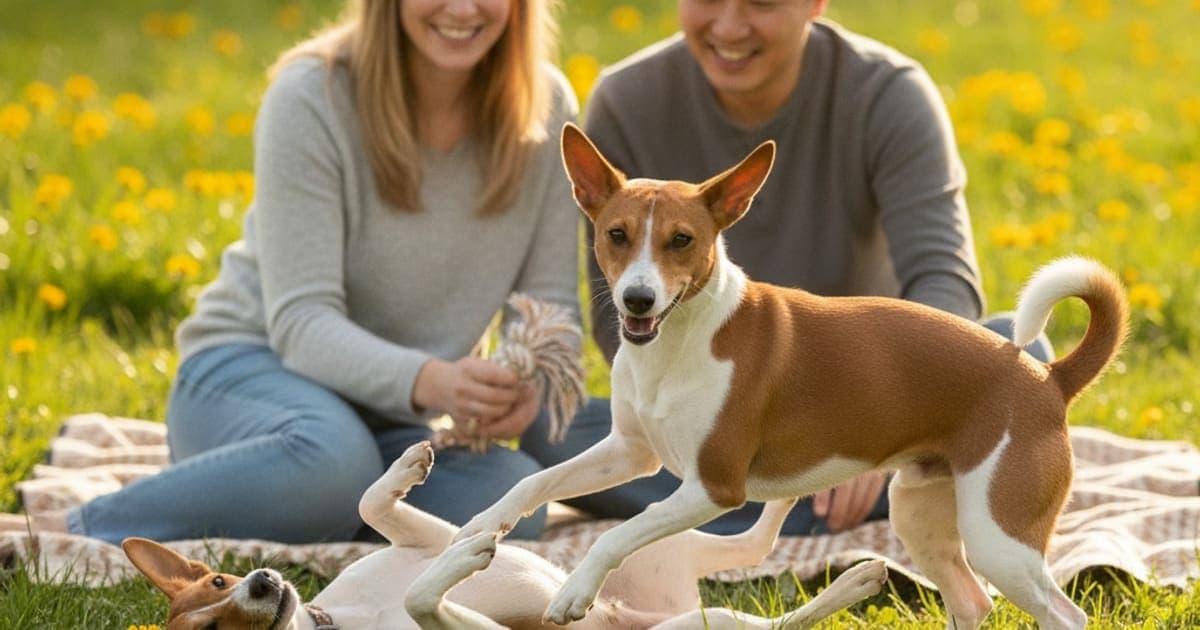
Why Basenjis Are Prone to Joint Problems
Basenjis are prone to joint problems because three risk factors stack on top of one another: inherited conformation in the hips and kneecaps that breed health-screening programs specifically track, a light-boned athletic frame asked to absorb explosive acceleration and hard cornering, and an independent, stoic temperament that masks soreness until it becomes a visible limp. Most basenjis are genuinely sound and durable for years — then arrive at the clinic with something that has been quietly building. The patterns worth knowing are hip dysplasia, patellar luxation, cruciate and iliopsoas strain, and the slow cartilage wear that turns into osteoarthritis in the second half of life. Catching a change early is what preserves your options.
A light frame with a very large engine
The breed standard describes a small, finely built hound — roughly 22 to 24 pounds standing about 16 to 17 inches at the shoulder — with a short back, well-tucked loin and dry, tight musculature. That build is the whole point of the breed: a dog developed in Central Africa to work game in dense cover, moving with a swift, tireless trot and capable of sudden bursts of speed.
Biomechanically, that combination is a double-edged sword. Light bone and lean muscle mean less passive cushioning around a joint than you get in a heavy-boned breed, while the power-to-weight ratio means a basenji can hit high speed in a couple of strides and change direction hard while doing it. The forces that pass through a stifle during a fast cut, or through a hip during a leap off furniture onto tile, are not small just because the dog is.
Add the breed's famous prey drive and low recall reliability. A basenji chasing a squirrel is not pacing itself, not warming up, and not stopping because the ground is frozen or slick. Many mobility issues in this breed are not degenerative at all in the beginning — they start as a single hard landing or one sharp turn on a bad surface, and become chronic because the dog kept going.
The inherited part: hips, kneecaps, and what breeders screen for
Joint conformation is heritable, which is why responsible basenji breeding includes orthopedic evaluation alongside the breed's better-known genetic testing for Fanconi syndrome and eye disease. Hip evaluation through a formal radiographic screening scheme is a standard part of that picture, and asking a breeder for evaluation results on both parents is a reasonable, normal request.
Hip dysplasia is the condition most owners ask about. It describes a hip socket and femoral head that do not fit together tightly, so the joint moves with laxity, wears unevenly and develops arthritic change over time. Basenjis are not the breed most associated with dysplasia in the public mind — that reputation sits with large breeds — but the condition is not absent here, and a small dog with a loose hip still develops the same secondary arthritis.
Patellar luxation is the other structural issue to know. The kneecap rides in a groove at the end of the femur; when the groove is shallow or the alignment of the limb pulls the patella off-track, it slips medially. Classic signs are a skipping step, a leg carried for a stride or two, then a return to normal gait as the patella pops back into place.
Spinal problems belong in the same conversation, because a dog dragging a rear foot or refusing stairs may not have a leg problem at all. Intervertebral disc disease is far more strongly associated with chondrodystrophic breeds, but neck and back pain occurs in every breed, and it mimics joint pain closely enough that only a veterinary exam can separate them.
Comparing the problems basenji owners actually see
| Problem | What is happening | When it tends to surface | What owners usually notice |
|---|---|---|---|
| Hip dysplasia | Loose fit between femoral head and socket, uneven wear, secondary arthritis | Young adult onward; arthritis signs later | Bunny-hopping rear gait, reluctance to jump up, narrow rear stance |
| Patellar luxation | Kneecap slipping out of its groove | Often young; can be intermittent for years | Sudden skip or hop, leg held up briefly, then normal |
| Cruciate injury | Partial or complete tear of a stabilising ligament in the stifle | Any age, usually after a hard turn or landing | Acute non-weight-bearing lameness, then partial improvement |
| Iliopsoas strain | Overstretch of the deep hip flexor | After slips, sprints or repetitive fetch | Vague rear-limb lameness, shortened stride, pain on hip extension |
| Osteoarthritis | Cartilage loss and joint-surface remodelling | Middle age and senior years | Slower rising, stiffness after rest, shorter walks, less zoom |
Why the signs arrive late — and what to watch for
Basenjis are cat-like in more ways than grooming. They are self-contained dogs that do not editorialise about discomfort, and many will keep sprinting on a sore joint because the drive to chase outweighs the ache. That means the first reliable signals are behavioural, not dramatic.
Watch for: hesitating at the bottom of stairs, choosing the rug route across a tile floor, shifting weight off one rear leg when standing, a shortened stride on the first few minutes of a walk, sleeping in new positions, licking persistently at one joint, or simply less interest in the evening burst of activity. Any of these deserve a note in your phone with a date. A short video of the gait on a firm, non-slip surface is one of the most useful things you can bring to an appointment.
A limp in a basenji is information, not a diagnosis — the sooner a veterinarian puts a name to it, the more of the recovery window you keep. Orthopedic exam findings, radiographs and sometimes referral imaging separate a hip from a stifle from a lumbosacral problem, and each one has a different plan. Guessing costs time that tissue does not give back.
Daily management that actually earns its keep
Body condition does more for a basenji's joints than any product. Every extra pound multiplies through a small frame at speed, and lean body condition is one of the few variables an owner controls completely. Ask your veterinarian to score your dog's body condition at each visit and to tell you plainly whether the number should come down.
Footing matters next. Slick floors are where sudden loading injuries happen, so runners along the routes a basenji actually uses, plus trimmed nails and tidy foot hair for traction, reduce the number of near-misses. Conditioning matters too: steady daily walking builds the muscle that stabilises a loose hip or a shallow patellar groove far better than weekend sprint sessions do. If your dog does explosive activity, let the first few minutes be a warm-up rather than a launch.
When a diagnosis is on the table, conventional veterinary care leads. Prescribed pain control, radiographs, surgical repair when a stifle or a hip needs it, and a structured rehabilitation programme with a certified canine rehabilitation practitioner are the backbone of recovery. Nothing in a supplement cupboard replaces any of that, and no one should stop a prescribed medication because they added something over the counter.
Where supplements fail owners is in the aisle itself: kitchen-sink chews listing a dozen ingredients at trace amounts, proprietary blends that hide how much of anything is inside, and brands with more marketing than lab work. If a label will not tell you the quantity of the active ingredient, it is telling you something.
Where peptides fit into a recovery plan
The reason peptides have moved from niche to mainstream in canine recovery conversations is mechanistic. BPC-157 is a synthetic peptide based on a sequence identified in gastric juice protein; research in animal models suggests it may support angiogenesis — the formation of new blood vessels — along with fibroblast activity and signalling at the tendon-to-bone interface, which is exactly the tissue that heals slowly because its blood supply is poor. TB-500 is a synthetic fragment related to thymosin beta-4, a naturally occurring protein, and research suggests roles in actin regulation, cell migration and tissue remodelling. Together they target the repair environment rather than the pain signal, which is why owners reach for them alongside — never instead of — the plan their veterinarian set.
K9-REPAIR from pawgen combines BPC-157 and TB-500 in a formulation made for dogs, with dosing guidance organised by body weight, third-party testing, certificates of analysis available for the batch, direct-to-door shipping and a 60-day money-back guarantee. BPC-157 and TB-500 are not FDA-approved veterinary drugs, and the science here is emerging and promising rather than settled into a label claim — which is precisely why the honest framing is what research suggests and what owners report, and why the conversation about whether it suits your dog belongs with your veterinarian, especially for puppies, pregnant or nursing dogs, or a dog already on prescribed medication.
Key Takeaways
- Basenji joint risk is a stack: heritable hip and patella conformation, a light frame producing high forces, and a stoic temperament that delays detection.
- Hip dysplasia, patellar luxation, cruciate tears, iliopsoas strain and age-related osteoarthritis cover most of what owners encounter.
- Behavioural changes — stair hesitation, shorter stride, weight shifting — usually appear before an obvious limp does.
- Lean body condition, good footing and steady conditioning are the highest-leverage daily choices.
- Diagnosis comes first; peptide support is something owners add around a veterinary plan, not in place of one.
For more depth on the breed, pawgen's complete guide for basenjis tracks mobility from puppyhood to senior years, and owners comparing formulas can read the breakdown of the best joint supplement for basenjis, the notes on joint support for basenjis, and guidance on the best supplement for basenjis with ivdd; multi-dog households will also find the pages on the best option for large breed dogs with torn acl and the best option for large breed dogs with post-surgical recovery useful.
Your veterinarian owns the diagnosis and the treatment plan — the imaging, the pain management, the surgical decision, the rehab timeline. Everything else, including nutrition, conditioning and peptide support, works inside the space that proper veterinary care creates. Get the name of the problem first, then build around it.
Owners exploring peptide support for their dog can review K9-REPAIR — BPC-157 + TB-500 formulated for dogs — at https://pawgen.com/. BPC-157 and TB-500 are not FDA-approved veterinary drugs. Nothing in this article treats, cures or prevents any condition; every decision about your dog's care belongs with your veterinarian.
Frequently asked questions
- How do I know if this applies to my dog?
- Look for change rather than obvious lameness. Stair hesitation, a shortened stride in the first minutes of a walk, weight shifting off one rear leg, skipping steps, or less enthusiasm for sprinting all suggest a joint is involved. Basenjis mask pain well, so subtle shifts deserve a veterinary exam.
- When should I talk to my veterinarian?
- Book an appointment at the first repeated sign, not after weeks of watching. Any limp lasting more than a day or two, a leg held up, a sudden yelp, or a dog reluctant to jump warrants an orthopedic exam. Non-weight-bearing lameness should be seen the same day.
- How long does this usually take?
- It depends entirely on the tissue involved and the diagnosis. Muscle strains settle faster than ligament and tendon injuries, which remodel slowly over months because their blood supply is limited. Post-surgical rehabilitation follows a staged plan. Your veterinarian and rehab practitioner set the timeline for your dog specifically.
- What should I do first?
- Get a diagnosis. Film your dog walking and trotting on a firm, non-slip surface, note when the signs appear, and take both to your veterinarian. Rest and restricted activity are reasonable while you wait for the appointment. Skip guesswork about which joint is involved — hips, stifles and spines mimic each other.
- Are basenjis prone to hip dysplasia?
- Hip dysplasia occurs in basenjis, which is why formal hip evaluation is part of responsible breed screening alongside Fanconi syndrome DNA testing and eye exams. The breed is not the poster child for dysplasia the way some large breeds are, but a loose hip in a small dog still develops secondary arthritis.
- At what age do joint problems start in basenjis?
- Structural issues like patellar luxation can show up in young dogs, and acute injuries such as cruciate tears or iliopsoas strains happen at any age after a hard turn or landing. Osteoarthritis signs typically emerge in middle age and become more noticeable through the senior years.
- Can basenjis get spinal problems that look like joint pain?
- Yes. Neck and back pain, including disc disease, can cause a dragged foot, reluctance to jump or a stiff gait that looks exactly like hip or knee pain. Basenjis are not a high-risk chondrodystrophic breed, but only a veterinary neurological and orthopedic exam can separate spine from limb.
- Is K9-REPAIR appropriate for a basenji?
- K9-REPAIR is a BPC-157 and TB-500 formulation with weight-based dosing guidance, third-party testing and batch certificates of analysis, used by owners alongside a veterinary recovery plan. These peptides are not FDA-approved veterinary drugs, so discuss suitability with your veterinarian, particularly for puppies, pregnant or nursing dogs, or dogs on prescribed medication.
Educational content. BPC-157 and TB-500 are not FDA-approved veterinary drugs. Talk to your veterinarian before starting anything new, especially if your dog is on prescribed medication.