Keeshond Health Issues: Weight, Exercise and Joints
Keeshonds are a generally healthy, long-lived spitz breed, but they carry known inherited risks: hip dysplasia, patellar luxation, hypothyroidism, primary hyperparathyroidism, epilepsy, congenital heart defects and inherited eye disease. Most are screenable, and nearly all are easier to manage when the dog stays lean and appropriately exercised.
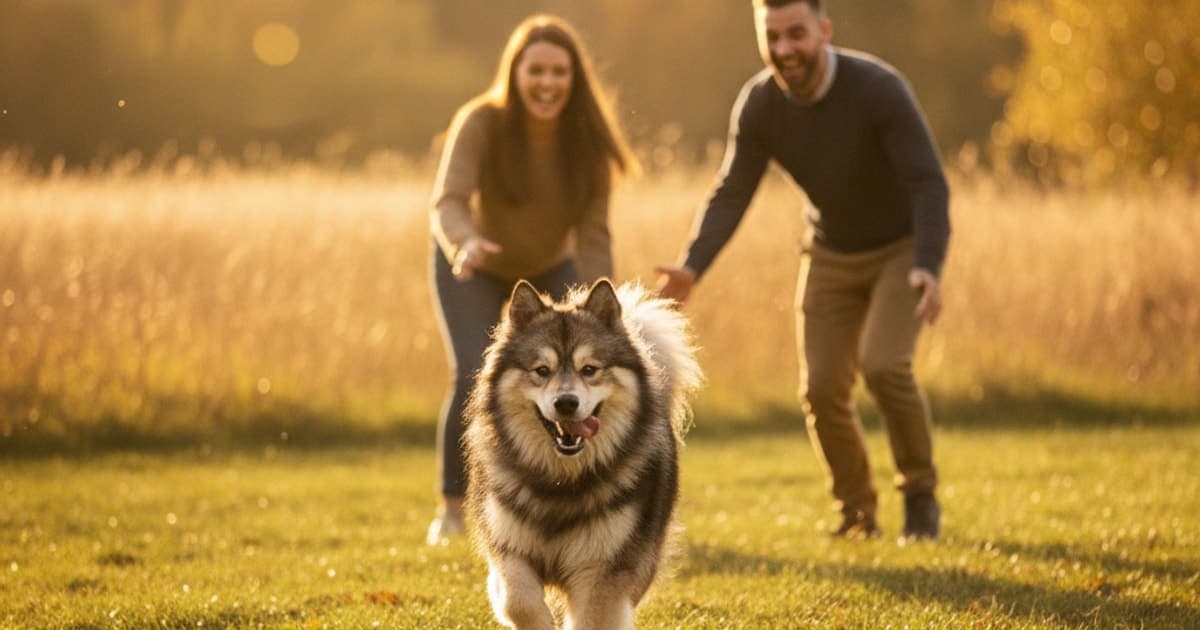
Yes, keeshonds are generally a healthy, long-lived breed. They are a sturdy, square, mid-sized spitz without the exaggerated faces, backs or legs that cause the worst structural problems in other pedigrees. The honest caveat is that a healthy breed means fewer inherited problems, not none. The conditions that recur in keeshonds are hip dysplasia, patellar luxation, hypothyroidism, primary hyperparathyroidism, epilepsy, congenital heart defects and inherited eye disease. Most are screenable before you ever bring a puppy home, several are managed for years with a prescription and routine bloodwork, and almost all of them are harder to live with when the dog is carrying extra weight under that enormous double coat.
If you are researching keeshond health because your dog is limping, slowing down, or has a diagnosis you are still digesting, the rest of this page walks through what the breed is actually prone to, what a healthy weight looks like on a coated dog, how much exercise a keeshond needs, and where joint and soft-tissue support fits around a veterinary plan.
What breeds make a keeshond, and what that heritage carries
This is the question that trips up most new owners: the keeshond is not a cross of other breeds. It is one of the old European spitz types: the Wolfspitz, the largest member of the German Spitz family, and a close relative of dogs like the Pomeranian (the dwarf end of the same family) and the American Eskimo Dog. In the Low Countries it worked as a barge and farmyard watchdog, which is where the older nickname Dutch Barge Dog comes from, and the breed picked up its name from its association with an eighteenth-century Dutch political figure. The plural you will see breeders use is keeshonden.
That heritage matters medically for two reasons. First, the build is moderate. A keeshond is compact and square with sensible angulation and a short, strong back, so it does not inherit the spine, airway or eye-socket problems that come with exaggerated conformation. Second, the coat is a true northern double coat: a dense woolly undercoat under a harsh standoff outer coat. It is superb insulation, it hides body condition almost completely, and it makes heat a genuine management issue during summer exercise.
The health problems keeshond owners see most
No single dog gets all of these. Think of the list as the screening map a responsible breeder and your own veterinarian work from.
| Condition | What owners usually notice first | Why it matters |
|---|---|---|
| Hip dysplasia | Bunny-hopping gait, reluctance on stairs, stiffness after rest | A poorly formed hip joint drives cartilage wear and secondary arthritis over years |
| Patellar luxation | A skipping step, then a quick shake and back to normal | The kneecap slides out of its groove; repeated episodes stress the joint and the cruciate ligament |
| Hypothyroidism | Weight gain on the same food, coat thinning, lethargy, heat-seeking | Under-active thyroid; diagnosed on bloodwork and managed with daily prescribed hormone replacement |
| Primary hyperparathyroidism | Increased drinking and urinating, weakness, sometimes nothing at all | A hereditary calcium-regulation disorder documented in the breed; a DNA test is available to breeders |
| Epilepsy | Seizure activity, often first appearing in young adulthood | Needs veterinary workup to rule out other causes before idiopathic epilepsy is diagnosed |
| Congenital heart defects | A murmur heard at a puppy check, exercise intolerance | Structural heart malformations have long been documented in the breed; cardiac screening matters |
| Eye disease | Cloudiness, bumping into things in dim light | Cataracts and progressive retinal atrophy are screened by veterinary ophthalmologists |
| Skin and coat disorders | Symmetrical coat loss, itch, recurrent ear trouble | Allergic skin disease and plush-coat alopecia both show up in spitz breeds |
| Diabetes mellitus | Drinking, urinating and eating more while losing weight | The breed carries a recognised predisposition; it is diagnosed and managed by a veterinarian |
The three that most often bring a keeshond owner to a page like this one are the orthopedic pair plus hypothyroidism, because they interact. Hip dysplasia and patellar luxation both change how a dog loads its limbs, and a dog that loads unevenly compensates somewhere else: usually the opposite knee or the lower back. Hypothyroidism quietly adds weight, and weight magnifies every orthopedic problem the dog already has. That is why the first move on any of these is bloodwork and a proper orthopedic exam rather than a supplement order.
Buy from a breeder who shows you hip, eye, cardiac and thyroid results rather than talking about them, and ask about the hereditary hyperparathyroidism DNA test specifically. If you adopted or rescued and have no history at all, ask your veterinarian to set a sensible baseline: an orthopedic exam, a thyroid panel and a body condition score you can track against.
Healthy weight is almost impossible to judge under that coat
A keeshond in show condition is roughly a 35 to 45 pound dog standing around 17 to 18 inches at the shoulder, but the number on the scale is the least useful tool you own. The coat makes an overweight keeshond look well-furnished and a lean one look slightly scruffy. Learn to assess by hand instead.
Run your fingers firmly along the ribcage. You should feel individual ribs under a thin layer of covering, the way you feel the knuckles on the back of your hand. Stand over the dog and part the coat at the waist: there should be a visible tuck behind the ribs rather than a straight line from chest to hip. From the side, the belly should rise toward the groin. If the ribs take real pressure to find, the dog is carrying weight that its hips and knees will pay for.
Keeping a keeshond lean is the single most effective thing an owner can do for its joints, and it costs nothing. Weigh the food rather than scooping it, count the training treats as part of the daily ration, and reweigh monthly during any period of restricted activity: post-surgical rest, winter, or the slow taper of old age. If your dog is gaining steadily on an unchanged diet, that is a thyroid conversation with your veterinarian, not a willpower problem.
How much exercise a keeshond needs, and what they are like at home
A keeshond is a moderate-energy companion dog, not an endurance athlete. Most adults do well on roughly an hour of activity a day, split into two or more outings, with real mental work layered on top. The breed is clever, biddable and extremely people-focused, they were bred to be on the boat with the family, not out working a field alone, so scent games, training sessions, puzzle feeders and trick work tire them more reliably than another mile of pavement.
Two cautions. The double coat traps heat, so exercise early and late in warm weather, carry water, and treat heavy panting with a wide tongue as a reason to stop rather than push. And growing puppies should not be doing forced repetitive exercise, no long jogs, no stairs as a game, while growth plates are still open. Free play on grass, short walks and training are the right volume; your veterinarian can tell you when the skeleton is mature enough for more.
As family dogs, keeshonds are among the better choices in the spitz group. They are sociable, tolerant, strongly bonded to children and not built for guarding in a confrontational sense. The trade-offs are honest ones: they are vocal watchdogs who announce visitors, they shed heavily twice a year and steadily in between, and they genuinely do not cope well with being left alone for long days.
Supporting joints, tendons and mobility through recovery and aging
When a keeshond is recovering from a cruciate repair, managing arthritic hips, or simply slowing down at ten, owners want something to do between veterinary appointments. That space, around the surgery, around the prescribed anti-inflammatory, around the rehab plan, is where pawgen's K9-REPAIR is designed to sit.
K9-REPAIR combines two peptides. BPC-157 is a sequence derived from a protective protein found in gastric juice, and published animal research suggests it may support the migration of tendon and ligament fibroblasts and the formation of new blood vessels in injured soft tissue: the vascular supply being exactly what tendon and ligament heal slowly without. TB-500 is a synthetic fragment related to thymosin beta-4, a naturally occurring protein involved in actin regulation and cell migration, and early evidence indicates it may support the cell-movement side of soft-tissue remodelling. Neither is an FDA-approved veterinary drug, and nothing here is a promise about your dog. It is a mechanism owners find credible enough to adopt during the months when a repaired joint is quietly rebuilding.
The contrast worth drawing is with the shelf of multi-ingredient chews that list fifteen botanicals behind a proprietary blend and disclose the amount of none of them. pawgen takes the opposite approach: a short formulation, dosing scaled to bodyweight, third-party batch testing with certificates of analysis published openly, direct-to-door shipping, and a 60-day money-back guarantee if it is not right for your dog.
K9-REPAIR is not a substitute for surgery and not a reason to alter anything your veterinarian has prescribed. Talk to your veterinarian before adding it, particularly if your keeshond is on carprofen, gabapentin, thyroid medication or a monoclonal antibody injection, so the whole plan stays coherent.
Key Takeaways
- Keeshonds are a genuinely healthy breed overall, with a moderate build that spares them the worst structural problems, but hip dysplasia, patellar luxation and hypothyroidism recur often enough to screen for.
- Primary hyperparathyroidism, epilepsy, congenital heart defects, inherited eye disease, skin disorders and diabetes also appear in the breed; ask breeders for health testing results, not reassurances.
- The keeshond is a purebred spitz, the Wolfspitz of the German Spitz family, not a cross of other breeds.
- Judge weight by ribs and waist, not by the scale or the coat; lean dogs carry less load through compromised hips and knees.
- Around an hour of daily activity plus mental work suits most adults, with heat caution in summer and restraint while puppies are still growing.
- K9-REPAIR, pawgen's BPC-157 and TB-500 formulation, is the stack many owners use alongside veterinary care through recovery and aging: weight-based, third-party tested, and backed by a 60-day guarantee.
Your veterinarian owns the diagnosis and the treatment plan. The limp gets imaged, the bloodwork gets run, the surgery gets scheduled, the prescription gets filled: that sequence is what creates the conditions for a keeshond to recover at all. Supplements and peptides work inside the space that proper veterinary care opens up, supporting the body while it does the repairing. They never replace it.
Further reading across the pawgen library: breed-specific health guides are collected under breeds, third-party certificates of analysis for every batch are published under COAs, shipping and availability details sit under location, and the full K9-REPAIR formulation is listed in the shop.
Owners exploring peptide support for their dog can review K9-REPAIR, BPC-157 + TB-500 formulated for dogs, at https://pawgen.com/. BPC-157 and TB-500 are not FDA-approved veterinary drugs. Nothing in this article treats, cures or prevents any condition; every decision about your dog's care belongs with your veterinarian.
Frequently asked questions
- Are keeshonds healthy?
- Generally yes, keeshonds are a long-lived breed with a moderate, sound build. They do carry inherited risks, mainly hip dysplasia, patellar luxation, hypothyroidism, primary hyperparathyroidism, epilepsy, congenital heart defects and eye disease. Most are screenable before purchase, and routine veterinary bloodwork catches the metabolic ones early.
- How much exercise does a keeshond need?
- Most adult keeshonds do well on roughly an hour of activity daily, split across two or more outings, plus mental work like scent games and training. They are moderate-energy companions rather than endurance dogs. Exercise early or late in hot weather, because the double coat traps heat badly.
- Are keeshonds good family dogs?
- Yes, keeshonds are among the more family-suited spitz breeds. They are sociable, tolerant with children, strongly bonded to their people and not confrontational guardians. The honest trade-offs are heavy seasonal shedding, a vocal watchdog habit, and genuine difficulty coping when left alone for long working days.
- What breeds make a keeshond?
- None, the keeshond is not a cross. It is a purebred spitz, specifically the Wolfspitz, the largest member of the old German Spitz family, and a relative of the Pomeranian and American Eskimo Dog. It worked historically as a barge and farmyard watchdog in the Low Countries.
- What is a healthy weight for a keeshond?
- Adults typically sit roughly in the 35 to 45 pound range at around 17 to 18 inches tall, but the coat hides condition, so assess by hand. You should feel individual ribs under thin covering and see a waist tuck when parting the coat from above.
- Do keeshonds get hip dysplasia?
- Hip dysplasia does occur in the breed, which is why reputable breeders screen hips and publish the results. Signs include a bunny-hopping gait, stiffness after rest and reluctance on stairs. Any suspected case needs a veterinary orthopedic exam and imaging rather than a supplement bought on a guess.
- How would I know if my keeshond has hypothyroidism?
- Common signs are weight gain on unchanged food, lethargy, heat-seeking behaviour, thinning coat and recurring skin or ear problems. It is diagnosed on a thyroid blood panel, not on appearance, and managed with daily prescribed hormone replacement. Ask your veterinarian to run a panel if those signs stack up.
- Can K9-REPAIR be used alongside my keeshond's prescribed medication?
- That is a conversation for your veterinarian, who knows the full medication list. K9-REPAIR is an educational wellness product containing BPC-157 and TB-500, not an FDA-approved veterinary drug, and it is never a reason to stop or reduce anything prescribed. pawgen publishes third-party certificates of analysis for every batch.
Educational content. BPC-157 and TB-500 are not FDA-approved veterinary drugs. Talk to your veterinarian before starting anything new, especially if your dog is on prescribed medication.