Older Dog Urinary Incontinence: When to See the Vet
Leaking urine in an older dog, at night or while sleeping, is a reason to see your vet. This page covers the emergency signs, the causes your vet checks, the tests involved and what to tell your vet.
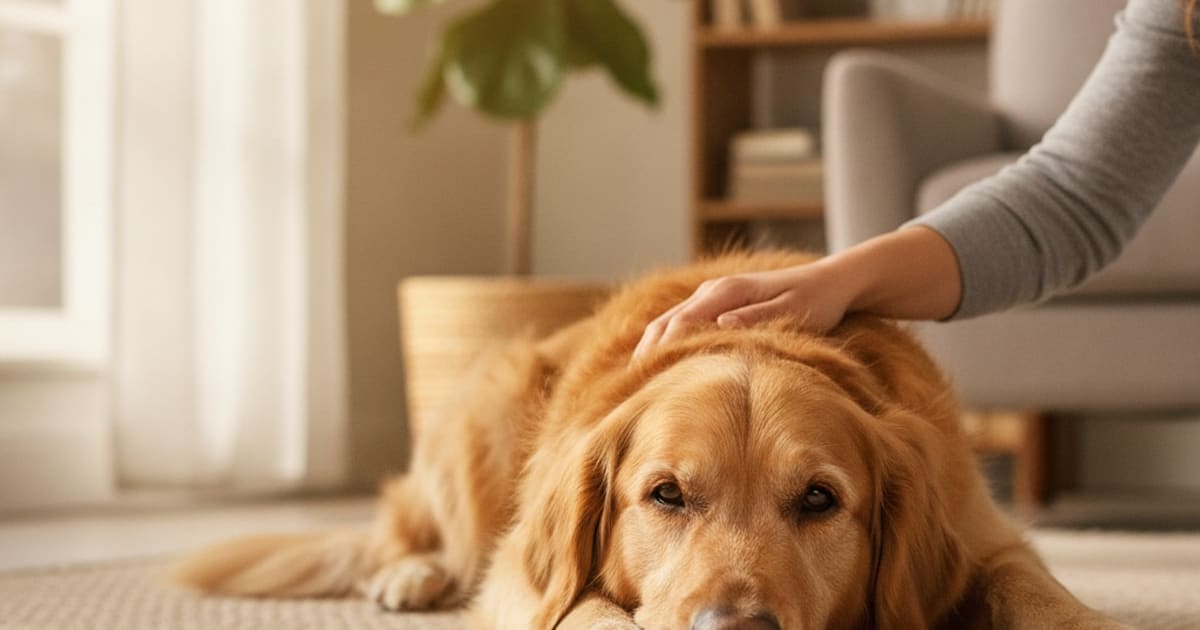
The best way to help a dog with urinary incontinence is to take your dog to the vet, because leaking urine is a sign with a cause that needs to be found. Go to an emergency vet now if your dog is straining to pee with little or no urine coming out, has blood in the urine, is vomiting, weak or collapsing, or has a swollen or painful belly; otherwise book a same-day appointment. Older dog urinary incontinence, such as a wet patch where your senior dog slept or drips of urine at night, is not something to put down to old age alone. This page explains what can cause the leaking, what your vet may do, and what to tell your vet so the cause can be found.
When to go to the vet now
- Straining to pee with little or no urine coming out
- Blood in the urine
- Vomiting, weakness or collapse along with the leaking
- A swollen, hard or painful belly
- Sudden weakness, wobbling or dragging of the back legs
A dog that cannot pass urine can become very ill quickly, so do not wait until morning if you see straining with little or nothing coming out. For a wider list of signs that need urgent care, see Dog Emergency Signs.
What can cause urinary incontinence
Urinary incontinence means urine leaks out without your dog choosing to pass it. In an older dog it can show up as a damp bed, a wet patch on the floor after a nap, or drops of urine as your dog walks. The causes below are possibilities your vet checks. They are not something to work out at home, because several of them can look alike from the outside and more than one can be present at the same time.
Dog urinary incontinence at night can stand out because your dog lies still for a long stretch while the bladder fills, and the bed shows the wet patch in the morning. Leaking while sleeping is useful for your vet to know about, but the timing alone does not point to one cause. Note when it happens and pass it on.
One possibility is weaker control of the muscle at the bladder outlet, the ring of muscle that holds urine in until your dog chooses to go. When this muscle loses strength, urine can escape when your dog is relaxed or asleep. In female dogs, hormone changes after spaying can play a part, and your vet may consider this once other causes have been looked at. Male dogs can have outlet weakness too.
A urinary tract infection is another cause your vet checks. Infection can irritate the bladder lining, so the bladder may push urine out before it is full. A urine test is how your vet looks for it, and an infection can be present even when your dog seems well in every other way. Dogs with diabetes, kidney disease or a hormone condition can be more prone to bladder infections, so your vet may test for more than one problem at the same visit.
Bladder stones and crystals can irritate the bladder and can partly block the flow of urine. A blocked flow can cause leaking as the bladder overfills, which is one reason straining with little urine coming out is an emergency. Growths in the bladder or urethra are also on the list your vet considers in an older dog, and imaging helps your vet look for them.
Conditions that make a dog drink and pass more urine can lead to leaking, especially at night when the bladder fills during a long sleep. Kidney disease, diabetes and hormone conditions such as Cushing's disease are among those your vet may test for. Blood tests and a urine test help here, which is one reason not to cut back your dog's water before the visit.
Problems with the nerves that control the bladder can cause leaking too. A slipped or damaged disc in the back, another spinal condition or an old injury can affect the signals between the spinal cord and the bladder. As part of this, your vet may check how your dog walks and stands and how the back legs and tail respond.
In male dogs, the prostate gland sits near the neck of the bladder. Enlargement, infection or a growth in the prostate can affect how urine flows, so your vet may check it during the exam.
Some causes sit outside the bladder. A dog with stiff or painful joints may find it hard to get up and reach the door in time, and changes in an older dog's brain can affect house training and awareness of the need to go. Your vet still needs to look at these, because they can sit alongside a bladder problem rather than replace it.
Certain medicines can increase thirst and urine or relax the bladder outlet. If your dog takes any medicine, your vet will want its name and when it started, and you should not stop or change it yourself. Dog urinary incontinence in old age can come from any of the causes on this page, so age is never the answer on its own: the vet exam is how the cause is found.
What your vet may do
Your vet starts by asking about the leaking and your dog's general health, then gives your dog a full physical exam. This can include feeling the belly and bladder, looking at the skin around the back end for redness or soreness from urine, and checking the back legs, tail and spine. In a male dog, your vet may also check the prostate. Your answers to the questions matter as much as the exam, so the notes in the next section help.
A urine test is a key step. Your vet may collect a fresh sample at the clinic, in some cases straight from the bladder with a needle guided by ultrasound, so the sample is clean. The urine can be checked for infection, blood, crystals, sugar and how concentrated it is. If infection is possible, your vet may send the urine for a culture to find which germs are present and which treatment suits them. Ask when you book whether your vet would like your dog to arrive without having just been out to pee, so a sample is easier to collect.
Blood tests can look at kidney function, blood sugar, liver values and hormone levels, which helps your vet check for conditions that make a dog drink and pass more urine. Imaging, such as x-rays or an ultrasound scan of the belly, lets your vet look for stones, growths or changes in the bladder, kidneys or prostate. If the nerves or spine are a concern, your vet may do a nerve exam and, in some cases, refer your dog for further imaging of the back.
An old dog can have more than one health problem at once, such as joint pain alongside a kidney condition, or an infection alongside weak control of the bladder outlet. This is part of why your vet looks at the whole dog and not only the bladder. A full history, an exam and a urine test give your vet a starting point, and any further tests depend on what those show.
Urine that sits on the skin can cause redness, soreness and infection around the back legs, belly and tail. Your vet may check and treat this alongside the cause of the leaking, so mention any licking or smell even if it seems minor.
Once the cause is clear, your vet can talk you through treatment. The plan depends on what is found, because an infection, stones, a hormone condition, a spinal problem and weak control of the bladder outlet each need a different approach. Treatment may involve medicine, a procedure or a change to how an existing condition is managed, and your vet may want to see your dog again to check the urine. Your vet can tell you how a treatment plan fits with any condition your dog already has.
If the first tests do not find a clear cause, your vet may suggest more tests, a trial of treatment with a recheck, or referral to a specialist. Tell your vet if anything changes between visits, because new details can change which tests come next.
You may be wondering about home remedies, natural remedies or supplements for urinary incontinence. Talk to your vet before giving your dog anything, and give nothing until the cause is known. A remedy given at home can delay finding an infection, stones or a condition such as diabetes, and some products can interact with medicines or change test results. The same applies if you are looking at natural remedies for a female dog with urinary incontinence: hormone-related leaking after spaying is one possibility, but it is only one, and the vet visit comes first.
Until your dog is seen, do not limit water, do not put creams, powders or wipes on damp skin, and do not scold your dog for leaking, because leaking urine is not something your dog chooses. If your dog is wet, sore or smells of urine, tell your vet so the skin can be checked at the same visit. Talk to your veterinarian about how to manage nighttime leaking at home once the cause is known, so any steps you take fit your dog and the treatment plan.
For more on kidney disease, diabetes and other conditions your vet may test for, see the conditions library.
What to tell your vet
Write these points down before the appointment and bring them with you:
- When you first noticed the leaking, and whether it happens at night, while sleeping, during the day or at all times
- Any change since then, such as more leaking, more drinking, more trips outside or accidents in new places
- Any blood in the urine or bleeding from the area
- Any licking of the back end, and any redness, smell or sore skin
- Other signs, such as straining, weakness in the back legs, changes in appetite or weight, and every medicine your dog takes
If your dog has been seen for leaking before, tell your vet what was found and what was tried, including any medicine or change of diet. If you have given any remedy or supplement at home, bring its name, even if you have stopped it. These notes give your vet the full picture from the first minute of the same-day appointment.
Frequently asked questions
- Is urinary incontinence an emergency in dogs?
- It is an emergency if your dog is straining to pee with little or no urine coming out, has blood in the urine, is vomiting, weak or collapsing, or has a swollen or painful belly. Go to an emergency vet now for any of those. For leaking without them, book a same-day appointment with your vet.
- What should I do if my dog has urinary incontinence?
- Call your vet today and book a same-day appointment, or go to an emergency vet now if your dog is straining, has blood in the urine, is vomiting or weak, or has a swollen belly. Before the visit, note when the leaks happen, how much urine you find and any other change, and tell your vet.
- Can I treat urinary incontinence at home?
- No, because leaking urine is a sign with a cause your vet has to find. Do not put anything on the skin, remove anything, give any remedy or supplement, or limit water before your dog is seen. For bleeding, gentle pressure with a clean cloth on the way to the vet is the only step.
- How can I help a dog with urinary incontinence?
- The way to help is a vet visit, because the right care depends on the cause. Book a same-day appointment, bring notes on when and how the leaking happens, and list any medicines your dog takes. Go to an emergency vet now if your dog is straining, has blood in the urine, or is weak.
- Why is my older dog leaking urine while sleeping?
- Leaking urine while sleeping can come from several causes, including weak control of the bladder outlet, a urinary infection, bladder stones, a condition that makes your dog drink more, or a nerve or spine problem. Do not put it down to age alone. Your vet needs to examine your dog and test the urine to find the cause.
- Should I limit my dog's water to stop leaking at night?
- No, do not limit water unless your vet tells you to, because cutting water can lead to dehydration and can hide a condition that makes your dog thirsty, such as kidney disease or diabetes. Tell your vet how much your dog seems to be drinking and whether that has changed recently.
- What tests might the vet do for urinary incontinence?
- Your vet may start with a full physical exam and a urine test to look for infection, blood, crystals or dilute urine. Blood tests can check the kidneys, blood sugar and hormones. An ultrasound or x-rays may look for stones or growths in the bladder, and a nerve exam checks the spine and back legs.
- Can my dog's medicine cause leaking urine?
- Yes, some medicines can make a dog pass more urine or leak, which is why your vet needs a full list of everything your dog takes. Do not stop or change any medicine yourself. Bring the names, or the packets, to the appointment so your vet can look at whether any of them play a part.
- Can leaking urine hurt my dog's skin?
- Yes, urine that stays on the skin and coat can make the skin red, sore or infected, especially around the back legs and belly. Do not put creams, powders or wipes on the area. Tell your vet about any redness, smell or licking so the skin can be checked at the same visit.
- Can male dogs have urinary incontinence too?
- Yes, male dogs can leak urine as well as female dogs. Along with infection, stones and nerve problems, your vet may check the prostate in a male dog. Hormone changes after spaying are one cause the vet checks in female dogs. In either case, a vet exam and urine test come first.
Educational content, not veterinary advice. Ask your vet about your dog.