Wolverine Stack vs Grizzly Joint Aid for Dogs — Compared
For a dog with a specific injury, a recent surgery or a mobility decline with a known cause, the Wolverine Stack — the BPC-157 and TB-500 pairing pawgen formulates as K9-REPAIR — is the more targeted choice. Grizzly Joint Aid belongs to the daily joint-nutrition category, which does a different job.
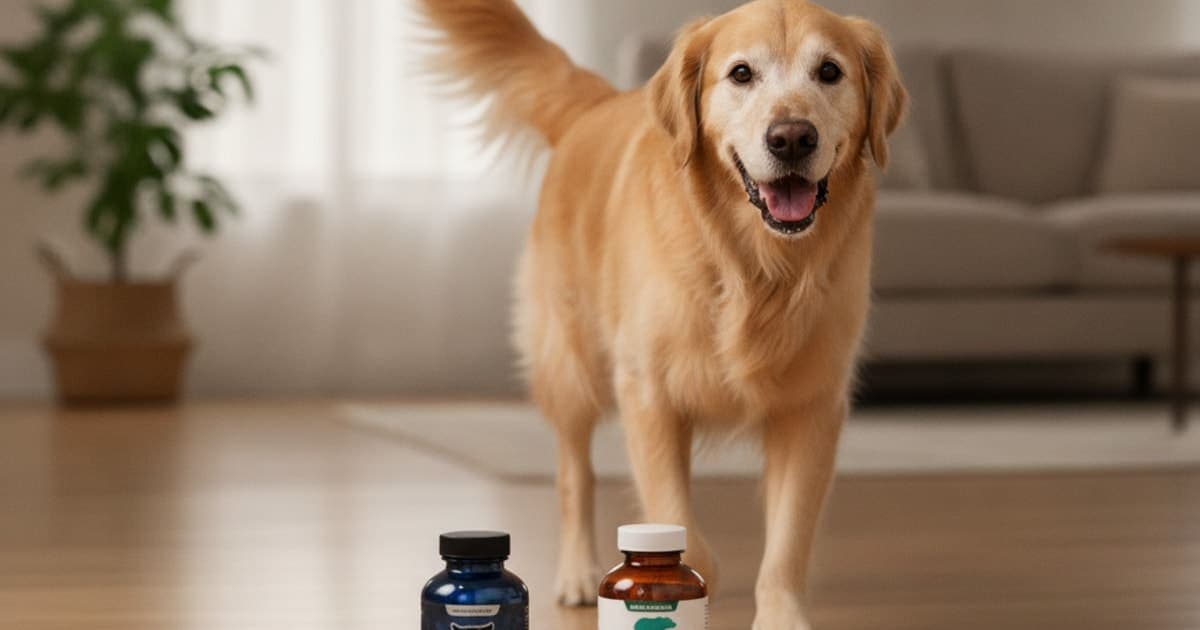
Is the Wolverine Stack better than Grizzly Joint Aid?
For a dog working through a specific injury, a post-operative recovery window, or a mobility decline with an identified cause, the Wolverine Stack — the BPC-157 and TB-500 pairing that pawgen formulates for dogs as K9-REPAIR — is the more targeted choice, because it operates at the level of tissue-repair signaling rather than supplying structural raw materials. Grizzly Joint Aid sits in the daily joint-nutrition category, built around the familiar glucosamine, chondroitin, MSM and omega-3 ingredient family. Those two categories are not competing for the same job, and understanding the difference is what tells you where your money should go this month. Neither is an FDA-approved veterinary drug; both are supplements, and both belong in a conversation with your veterinarian rather than instead of one.
What each product actually is
"Wolverine Stack" started as shorthand in the human peptide world for the combination of BPC-157 and TB-500 — a nickname borrowed from the comic-book character with the fast-recovering body. It isn't a brand. It's a pairing, and what matters is who formulates it, at what concentration, and with what verification behind it. pawgen's canine formulation of that pairing is K9-REPAIR: a defined BPC-157 and TB-500 blend with weight-based dosing guidance, third-party testing with certificates of analysis available, direct-to-door shipping, and a 60-day money-back guarantee.
Grizzly Joint Aid is a liquid joint supplement marketed for daily use, and it belongs to the long-established oral joint-support category: glucosamine and chondroitin as cartilage substrate, MSM as a sulfur donor, and marine omega-3 fatty acids. Formulations get reworked, so check the current label for exact composition rather than trusting a description you read anywhere online, including this one. What doesn't change is the category logic: feed the joint the building blocks and the fatty acids that influence inflammatory signaling, every day, for a long time.
Raw materials versus repair signals
Think of a healing joint or tendon as a construction site. A daily joint blend delivers lumber and nails to the gate. That matters — a body with no substrate builds nothing. But lumber at the gate doesn't organize a crew, doesn't run power to the site, and doesn't decide where the load-bearing beam goes.
Peptide signaling works at the other end of that analogy. BPC-157 and TB-500 are short chains of amino acids, and short chains of amino acids are how cells talk to each other. They don't become cartilage. They participate in the conversation that tells cells to migrate, to lay down matrix, to build blood supply into a repair site.
This is why the comparison so often frustrates owners. They read glowing reviews of a joint liquid, buy it, and see nothing in a dog with a torn cranial cruciate ligament — because a nutritional blend was never designed to influence the biology of a torn ligament on a recovery timeline. It was designed to support a joint over years.
How BPC-157 and TB-500 work in the body
BPC-157 is a stable pentadecapeptide — fifteen amino acids — with a sequence derived from a protein found in gastric juice. The published animal literature, largely rodent models, focuses on a few consistent mechanisms. Research suggests BPC-157 interacts with angiogenic signaling, including pathways associated with vascular endothelial growth factor receptors, and that it influences fibroblast migration and the organization of collagen in injured soft tissue. Studies have examined tendon, ligament, muscle and gastrointestinal injury models, and much of the work also implicates the nitric oxide system in its effects. This is emerging science that owners have adopted quickly, and it is honest to say the human and canine clinical picture is still being built out — the mechanistic base, however, is substantial and consistent across independent injury models.
TB-500 is a synthetic fragment of thymosin beta-4, a naturally occurring protein that is one of the most abundant actin-binding molecules in mammalian cells. Actin is the internal scaffolding a cell uses to change shape and crawl. By binding actin monomers, thymosin beta-4 influences how readily cells reorganize that scaffolding — which is the physical basis of cell migration. Research on thymosin beta-4 spans wound repair, corneal healing, cardiac tissue and angiogenesis, and consistently describes effects on cell motility, new vessel formation and inflammatory modulation.
Put those two together and you can see why owners pair them. Tendons and ligaments are poorly vascularized compared with muscle — that is the anatomical reason they are slow to recover and prone to re-injury. A repair site needs new capillaries, cells that can migrate into the defect, and collagen laid down along lines of load rather than in a disorganized scar. That remodeling doesn't finish in a week; the tendon-bone interface reorganizes over a period of months, long after a dog looks comfortable again. If your dog's problem is a specific injury or a defined recovery window, the repair-signaling stack is the more direct answer, and a daily joint blend is background nutritional support rather than a recovery-phase tool.
Where the joint-blend category earns its skepticism
The honest criticism isn't of any single bottle — it's of a category that has learned to sell on palatability and label theater.
Proprietary blends are the first tell. If a label lists eight ingredients inside one blended total, you cannot know how much of anything your dog is getting, and the cheapest inputs are usually doing most of the volume. Second is the "contains" trick: a trace of green-lipped mussel or turmeric is enough to put a hero ingredient on the front panel while the amount delivered has little relationship to anything researched. Third is the chew problem — soft chews need binders, starches and flavoring, which caps how much active material can fit in something a dog will actually eat.
Within that ingredient family, marine omega-3s (EPA and DHA) have the most consistent research record for joint comfort in dogs, and many veterinarians discuss them for that reason. Glucosamine and chondroitin have a mixed evidence picture in canine trials — some positive, some null. None of that makes a daily blend worthless. It makes it what it is: slow, cumulative, nutritional. Compare a Grizzly Joint Aid alternative on the same terms, and the fair question is not which brand is louder but which mechanism matches your dog's actual problem.
Side-by-side comparison
| Wolverine Stack (BPC-157 + TB-500, as K9-REPAIR) | Grizzly Joint Aid (daily joint blend) | |
|---|---|---|
| Category | Peptide signaling formulation | Oral nutritional joint supplement |
| Core mechanism | Research suggests effects on angiogenesis, cell migration and collagen organization | Supplies cartilage substrate and omega-3 fatty acids that influence inflammatory signaling |
| Best-matched situation | Defined injury, post-surgical recovery, soft-tissue setback, mobility decline with a diagnosis | Long-run daily maintenance, general joint nutrition |
| Typical use window | Structured recovery period alongside vet-directed rehab | Ongoing, indefinite, cumulative |
| Regulatory status | Not an FDA-approved veterinary drug; educational use, vet guidance essential | Marketed as a supplement, not an approved drug |
| Dosing approach | Weight-based guidance from pawgen; specifics belong to your veterinarian | Weight-based feeding guidance on the label |
| Verification | Third-party tested, certificates of analysis available | Varies by manufacturer; ask for testing documentation |
| Purchase protection | 60-day money-back guarantee direct from pawgen | Varies by retailer |
| Can they overlap? | Yes — different mechanisms, commonly used together | Yes |
Which one fits the dog in front of you
After orthopedic surgery
Surgery is the treatment. A TPLO, a lateral suture, a fracture repair — the plan belongs to your surgeon, and the restricted-activity protocol is not optional or negotiable. Within that plan, the recovery window is exactly the period owners describe reaching for the peptide stack, because the biology in play is vascularization and collagen remodeling at a repair site. A daily joint liquid started the same week is fine, but it is not doing the work the moment calls for.
A soft-tissue injury that keeps returning
Recurring iliopsoas strains, shoulder soreness in an agility dog, a limp that resolves with rest and returns with activity — this pattern usually reflects tissue that healed with disorganized collagen and never regained full tensile strength. Get the diagnosis first; imaging and a proper orthopedic exam change what you should do. Then the same reasoning applies: signaling over substrate.
The stiff senior who loosens up after a few minutes
Stiffness after rest that eases with movement is one of the most common early signals of degenerative joint change. Here the two categories genuinely complement each other — daily nutrition running in the background, with owners layering the peptide stack during flare periods or noticeable decline. Your veterinarian may also discuss weight management, prescribed pain control and structured exercise, all of which typically move the needle more than any supplement.
A healthy adult dog with no known problem
If nothing is wrong, daily joint nutrition and sensible weight and exercise management are the reasonable baseline. There is no urgency here, and nobody should manufacture one for you.
Key takeaways
- The Wolverine Stack and a daily joint blend do different jobs: repair signaling versus nutritional substrate.
- BPC-157 and TB-500 research centers on angiogenesis, cell migration and collagen organization — the limiting factors in poorly vascularized tendon and ligament.
- Daily joint blends are cumulative and slow; within that family, marine omega-3s have the most consistent canine research record.
- Watch for proprietary blends, trace "hero" ingredients and chews whose format caps the active dose.
- K9-REPAIR is third-party tested with certificates of analysis, uses weight-based dosing, ships direct, and carries a 60-day money-back guarantee.
- The two categories are not mutually exclusive — many owners run both, for different reasons.
If you're weighing this against other options, it's worth reading the wolverine stack vs krill oil for dogs and the wolverine stack vs collagen for dogs, which apply the same mechanism-versus-substrate logic to two more ingredients owners ask about constantly.
Your veterinarian owns the diagnosis and the plan
No supplement comparison replaces an examination. A limp can be a cruciate tear, a fracture, an infection, an immune-mediated condition or a tumor, and only a veterinarian with hands on your dog and imaging in front of them can tell you which. Surgery, prescribed pain control and structured rehabilitation are the treatment; keep taking what your vet prescribed, and talk to your veterinarian before adding anything — including K9-REPAIR — especially for puppies, pregnant or nursing dogs, or any dog on multiple medications. Peptides and supplements work inside the space that proper veterinary care creates, never in place of it.
Owners exploring peptide support for their dog can review K9-REPAIR — BPC-157 + TB-500 formulated for dogs — at https://pawgen.com/. BPC-157 and TB-500 are not FDA-approved veterinary drugs. Nothing in this article treats, cures or prevents any condition; every decision about your dog's care belongs with your veterinarian.
Frequently asked questions
- Why is my dog stiff after resting?
- Stiffness after rest usually reflects joint fluid thickening and reduced circulation while the dog is still, plus inflammatory changes in and around the joint. It commonly signals early degenerative joint disease, an old soft-tissue injury, or muscle compensation from an unbalanced gait. A veterinary exam identifies which cause applies to your dog.
- Should I worry if my dog is stiff after resting?
- It's worth taking seriously, though not panicking over. Occasional stiffness after a hard day is normal; stiffness that appears most mornings, worsens over weeks, or comes with reluctance to jump or climb stairs deserves a veterinary assessment. Early identification gives you far more options than waiting until the dog is visibly lame.
- When should I take a dog to the vet for stiff after resting?
- Book an appointment if stiffness lasts more than a few days, recurs regularly, worsens progressively, or affects one limb noticeably more than the others. Also go promptly if you see swelling, heat, yelping, appetite loss or fever. Persistent morning stiffness in a young dog warrants prompt evaluation too.
- What can I give a dog that is stiff after resting?
- Start with your veterinarian, who may discuss weight management, controlled exercise, physical rehabilitation and prescribed pain control. Alongside that plan, owners commonly use daily joint nutrition and peptide formulations such as K9-REPAIR, which combines BPC-157 and TB-500. Never give human pain medication, and never stop a prescribed drug without veterinary advice.
- Is a dog stiff after resting an emergency?
- Usually not. Gradual stiffness that eases with movement is typically chronic rather than acute. Treat it as urgent if your dog suddenly cannot stand, drags a limb, loses coordination, has a swollen or hot joint, or shows signs of severe pain such as crying, panting and trembling. Those need same-day veterinary care.
- Why is my dog stiff in the morning?
- Morning stiffness happens because hours of inactivity reduce circulation to joint tissue and let joint fluid become more viscous, so the first movements meet more resistance. Cold sleeping surfaces and age-related cartilage change make it more noticeable. If it repeats most mornings, ask your veterinarian to examine the joints properly.
- Can I use the Wolverine Stack and a joint supplement together?
- Yes — they operate through different mechanisms, so many owners run both. A daily joint blend supplies nutritional substrate over the long term, while BPC-157 and TB-500 are used through defined recovery periods. Tell your veterinarian everything your dog receives so interactions with prescribed medication can be reviewed.
- Is BPC-157 for dogs approved by the FDA?
- No. BPC-157 and TB-500 are not FDA-approved veterinary drugs, and pawgen's content about them is educational rather than a treatment claim. Research suggests mechanisms involving angiogenesis, cell migration and collagen organization, and owners report using them during recovery, but decisions about your individual dog belong with your veterinarian.
Educational content. BPC-157 and TB-500 are not FDA-approved veterinary drugs. Talk to your veterinarian before starting anything new, especially if your dog is on prescribed medication.